Executive Summary:
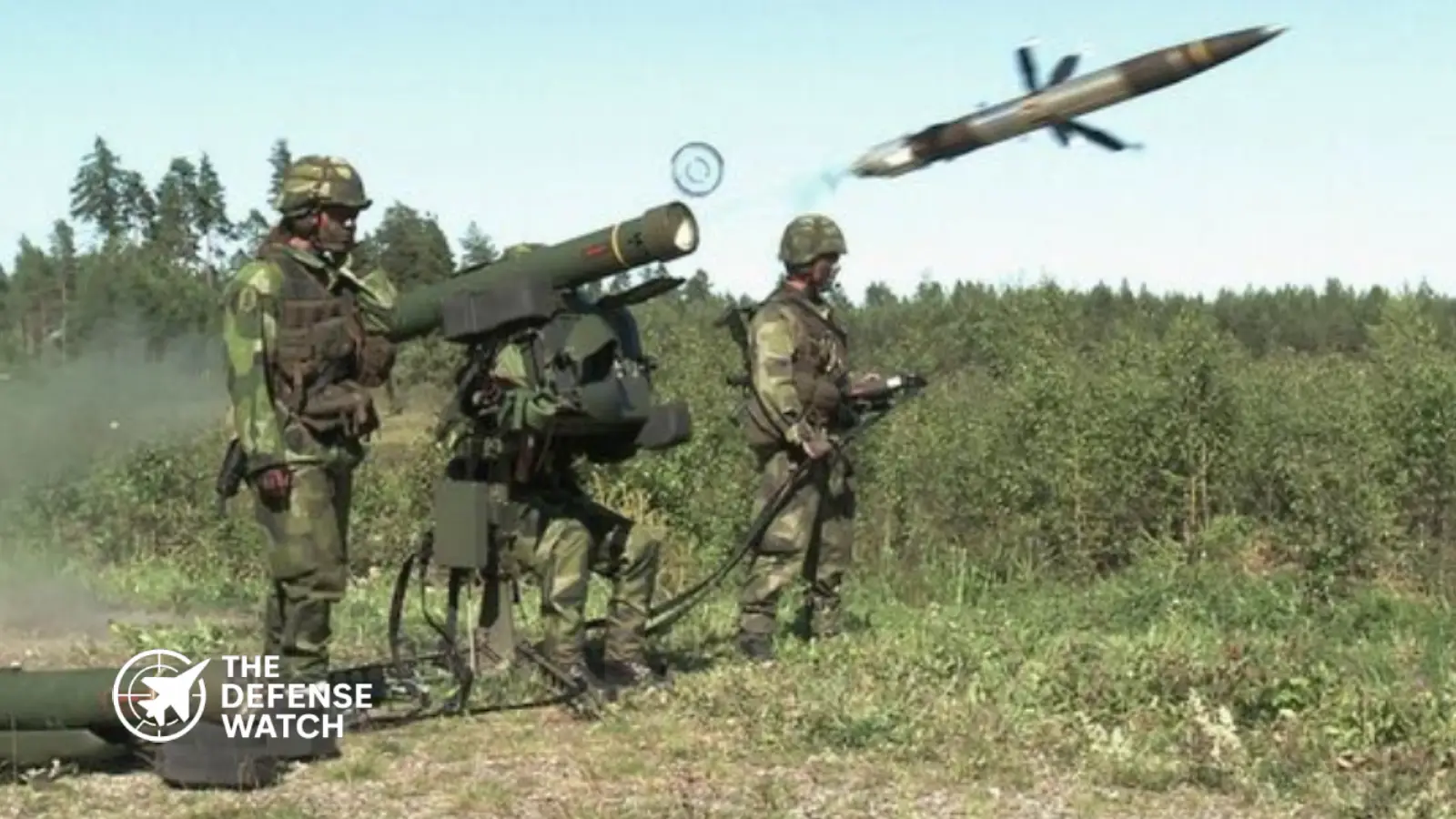
Finland has authorized the procurement of Saab’s RBS 70 NG short range ground based air defense system as part of a €108 million modernization effort. The acquisition is intended to improve nationwide protection against drones and low flying aircraft while expanding the Finnish Defence Forces’ existing layered air defense network.
Finland Moves Forward With RBS 70 NG Air Defense Procurement
Finland’s planned RBS 70 NG procurement marks another significant step in strengthening the country’s layered air defense architecture following its accession to NATO. The Finnish Ministry of Defence announced on July 3 that Defense Minister Antti Häkkänen has authorized the Finnish Defence Forces (FDF) to procure Saab’s latest short range ground based air defense system, valued at €108 million.
The procurement package includes launchers, munitions, training equipment, and maintenance systems. According to the ministry, the capability is expected to reach full operational status before the end of the decade.
Although Finland has approved the acquisition, Saab confirmed that a final production contract had not yet been signed at the time of the announcement.
Procurement Strengthens Existing Finnish Air Defense
Rather than introducing an entirely new capability, the purchase expands an air defense family already familiar to Finnish operators.
The Finnish Defence Forces currently field the ITO05M, a locally designated version of the earlier RBS 70 system. The RBS 70 NG builds on that foundation with improved fire control, enhanced target tracking, and greater effectiveness against modern aerial threats, particularly unmanned aircraft systems.
Defense Minister Antti Häkkänen said the acquisition forms one element of Finland’s broader effort to modernize its national air defense against a full spectrum of aerial threats.
Training for professional soldiers, reservists, and conscripts will primarily be conducted by the Salpausselkä Air Defence Battalion within the Karelia Brigade, ensuring the new capability is integrated into Finland’s large reserve force structure.
RBS 70 NG Technical Overview
The RBS 70 NG is a laser beam riding short range air defense system designed to engage helicopters, fixed wing aircraft, cruise missiles, and increasingly, small unmanned aerial systems.
According to Saab and Finnish defense officials, the system offers several improvements over previous variants.
| Capability | RBS 70 NG |
|---|---|
| Effective range | More than 9 km |
| Maximum engagement altitude | Up to 5 km |
| Missile | Bolide |
| Missile speed | Approximately Mach 2 |
| Deployment time | About 45 seconds |
| Reload time | Less than 5 seconds |
| Guidance | Laser beam riding |
Unlike infrared homing MANPADS, the laser beam riding guidance method makes the missile highly resistant to many conventional infrared countermeasures. This provides advantages against aircraft employing flares while also reducing susceptibility to electronic interference.
Why The Procurement Matters
The purchase reflects the changing character of European air defense following lessons observed in recent conflicts, where inexpensive drones, loitering munitions, and low flying cruise missiles have become persistent battlefield threats.
Modern layered air defense increasingly requires multiple engagement zones, combining long range interceptors with mobile short range systems capable of protecting maneuver forces and critical infrastructure.
The RBS 70 NG fills that lower tier by providing mobile units with an effective means of engaging targets that penetrate beyond higher altitude missile defenses.
For Finland, whose territory spans more than 338,000 square kilometers and shares one of NATO’s longest borders with Russia, expanding distributed air defense coverage offers important operational flexibility. Mobile short range systems can defend dispersed military formations, transportation hubs, logistics networks, and strategic infrastructure without relying exclusively on fixed installations.
Integration With Finland’s Broader Defense Strategy
The procurement also aligns with Finland’s long standing territorial defense doctrine.
Rather than concentrating air defense assets around a limited number of locations, Finland emphasizes geographically dispersed forces capable of operating across the country during national mobilization.
Because the RBS 70 family is already in Finnish service, introducing the NG variant minimizes training and logistics challenges while improving capability against emerging aerial threats.
The decision also reflects growing Nordic defense cooperation. Saab has become an increasingly important supplier of air defense systems across Northern Europe, with neighboring countries also investing in modern short range ground based air defense capabilities to strengthen NATO’s northern flank.
Regional Security Implications
Finland’s decision comes as European governments continue accelerating investments in integrated air and missile defense following Russia’s invasion of Ukraine.
Many NATO members are expanding inventories of systems capable of defeating drones and low altitude threats, recognizing that traditional high end missile defenses alone cannot provide comprehensive protection.
The Finnish acquisition complements broader alliance efforts to create layered defensive networks combining long range interceptors, medium range systems, and mobile short range weapons capable of responding rapidly to evolving threats.
For the United States and NATO planners, Finland’s investment enhances collective defense across Northern Europe while improving interoperability with allied forces operating throughout the Baltic and Arctic regions.
Outlook
Once finalized, the €108 million procurement will strengthen Finland’s short range air defense capability without requiring a major transition to an unfamiliar system.
By expanding an already established weapon family, Finland can field additional launchers more rapidly while leveraging existing operator experience, maintenance infrastructure, and training pipelines.
As drone warfare continues reshaping battlefield air defense requirements, investments such as the RBS 70 NG demonstrate how NATO members are reinforcing the lower layers of integrated air defense with systems specifically designed to counter modern low altitude threats.