Bell and KAI Sign MOU to Explore MV-75 Cheyenne II for South Korea’s Next-Generation Helicopter Requirement
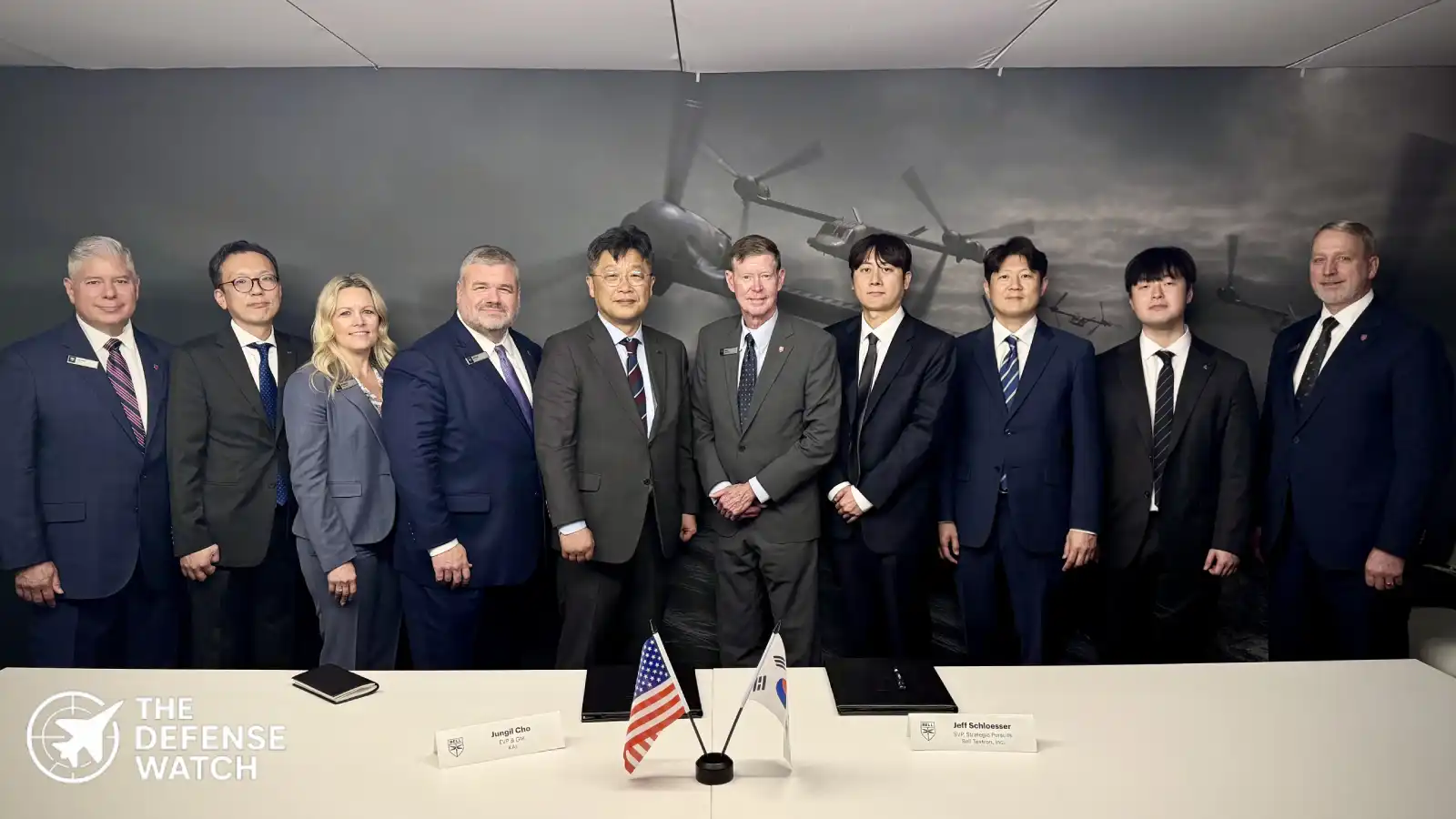
Bell Textron and Korea Aerospace Industries signed a Memorandum of Understanding to explore solutions based on the MV-75 Cheyenne II tiltrotor for South Korea’s High Speed Medium Utility Helicopter (HSMUH) program, the two companies announced April 28, 2026. The agreement — signed at Bell’s Fort Worth, Texas, headquarters — marks the first publicly disclosed international cooperation effort tied to the MV-75 since the U.S. Army formally named the aircraft the Cheyenne II earlier in April.
- Bell Textron and Korea Aerospace Industries (KAI) signed an MOU on April 27–28, 2026, at Bell’s headquarters in Fort Worth, Texas, to explore MV-75 Cheyenne II solutions for South Korea’s High Speed Medium Utility Helicopter (HSMUH) program.
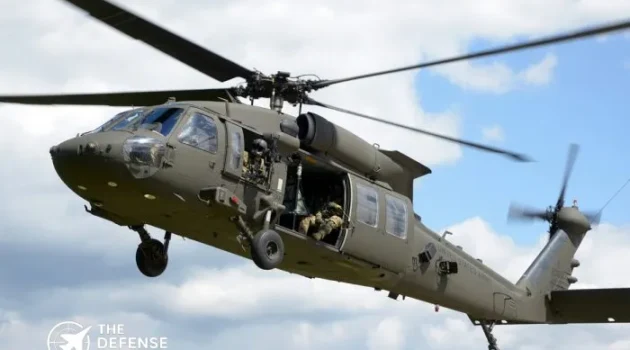
- The MV-75 Cheyenne II is the U.S. Army’s selected Future Long-Range Assault Aircraft (FLRAA), offering more than twice the speed and range of the UH-60 Black Hawk it is designed to replace.
- This is the first publicly disclosed international cooperation effort tied to the MV-75, signaling Washington’s intent to extend next-generation tiltrotor capability to allied forces in the Indo-Pacific.
- The exploratory work is supported under U.S. Army Contracting Command Contract No. W58RGZ-23-C-0001, tying any potential South Korean variant directly to the Army’s program of record and future U.S. export policy decisions.
- Both companies will evaluate a Modular Open Systems Approach (MOSA) to allow South Korean forces to modify and upgrade the platform affordably over time, reducing long-term dependency on a single supplier.
The Big Picture
The United States is actively working to extend its most advanced defense platforms to close allies, and vertical-lift aviation represents one of the clearest examples of this effort. As Washington deepens its focus on Indo-Pacific deterrence, ensuring that allies like South Korea operate compatible, interoperable platforms becomes strategically essential.
South Korea sits at the crossroads of one of the world’s most volatile security environments. The Korean Peninsula borders a nuclear-armed North Korea, exists within striking range of Chinese military assets, and demands a defense posture that can respond rapidly across difficult terrain — mountainous, coastal, and urban. The Republic of Korea Army relies heavily on rotary-wing aviation for troop transport, logistics, and close support, making the HSMUH program a high-priority modernization effort.
Simultaneously, the U.S. Army’s own FLRAA program is maturing rapidly. Rolls-Royce began ground testing the AE 1107F turboshaft engines that will power the MV-75 in December 2025. Collins Aerospace received contracts in April 2026 to supply five onboard systems including main power generation, the interconnect drive system, and the SmartProbe air data system. Bell opened a dedicated Wichita Assembly Center for MV-75 fuselage production on April 27, 2026 — one day before the KAI MOU was announced. The domestic program’s accelerating pace creates the conditions necessary for international offers to become credible.
What’s Happening
Bell Textron and KAI signed the MOU on April 27 (local time) at Bell’s Fort Worth headquarters. The signing was attended by KAI Rotary Wing Business Division Head Jo Jung-il and Bell Senior Vice President of Strategic Pursuits Jeff Schloesser.
Under the agreement, the two companies will assess MV-75-based solutions for South Korea’s HSMUH requirement. The scope includes evaluating a Modular Open Systems Approach (MOSA) framework to allow the Republic of Korea Armed Forces to modify the platform’s weapons systems rapidly and affordably as operational needs evolve.
Bell and KAI will also explore areas for industrial cooperation as the program matures. The press release notes the effort is “aligned with U.S. Government priorities and policies,” language that signals the partnership’s scope is bounded by Washington’s export authorization framework. Critically, the work is supported under U.S. Army Contracting Command Contract No. W58RGZ-23-C-0001 — the same FLRAA development contract that funds the domestic MV-75 program. That structure directly ties any future South Korean variant to U.S. policy decisions on technology transfer.
The MV-75 Cheyenne II is derived from Bell’s V-280 Valor demonstrator, which the U.S. Army selected for FLRAA in December 2022. The platform offers more than twice the speed and range of the UH-60 Black Hawk it is designed to replace, using tiltrotor technology to combine vertical-takeoff-and-landing capability with fixed-wing cruise efficiency.
Why It Matters
The Bell-KAI MOU carries significance on multiple levels — industrial, operational, and geopolitical.
For the ROK military, the HSMUH requirement represents a generational leap. South Korea’s current utility helicopter fleet, including aging UH-60 variants and domestically produced Surion helicopters, operates at conventional speeds and ranges. A tiltrotor-based replacement would dramatically expand the operational reach of ROK ground forces, enabling faster troop insertion, logistics support, and medical evacuation across a broader area of operations.
For Bell, the MOU represents the first concrete step toward internationalizing the MV-75 platform. Defense contractors rarely recoup development costs from a single-nation program of record. Export sales extend production runs, reduce per-unit costs, and generate revenue streams that sustain long-term program health. Establishing a partnership with KAI early — before the domestic program reaches initial operational capability — positions Bell to shape the HSMUH competition on its terms.
For the U.S.-ROK alliance, interoperability is the key operational dividend. If South Korea fields a variant of the same tiltrotor platform the U.S. Army operates, combined arms planning, logistics, and maintenance support become significantly simpler in a conflict scenario. That alignment has tangible value in a theater where American and South Korean forces train together under the Combined Forces Command structure.
Strategic Implications
The MOU carries strategic weight beyond its immediate industrial scope.
Tiltrotor technology represents a genuine capability gap relative to China’s current rotary-wing aviation inventory. The People’s Liberation Army Ground Force operates conventional helicopters — the Z-8, Z-9, and Z-20 families — none of which match the projected speed and range envelope of the MV-75. A South Korea operating tiltrotors alongside U.S. forces would widen that advantage and complicate Chinese planning assumptions about the pace at which allied forces could maneuver in a Peninsula contingency or Taiwan Strait escalation scenario.
The MOSA requirement embedded in the MOU also reflects a deliberate strategic choice. By designing a framework that allows South Korea to modify weapons systems without relying on a single supplier, the arrangement hedges against potential export control friction in a future crisis. This approach mirrors the philosophy Washington has applied to the F-35 program — providing advanced platforms while retaining control over the most sensitive subsystems through strict access agreements.
The fact that this cooperation is explicitly tied to a U.S. Army contract rather than structured as a pure foreign military sale adds another dimension. It keeps the program within the oversight architecture of U.S. defense acquisition law, ensuring Washington retains visibility and approval authority over how MV-75 technology flows to a third party — even a close treaty ally.
Competitor View
China will note this MOU as part of a broader pattern of the United States extending advanced military aviation to Indo-Pacific allies. Beijing has watched the U.S. deepen defense industrial cooperation with Japan, Australia, and South Korea through multiple channels, and the prospect of a tiltrotor-equipped ROK Army adds another layer to the military balance on the Peninsula and in the broader region.
North Korea’s military planners face a more immediate concern. The Korean People’s Army relies on a mix of Soviet-era helicopters for assault and logistics missions. A South Korean fleet equipped with tiltrotors capable of faster infiltration speeds, longer operational radii, and greater payload flexibility would significantly complicate DPRK air defense planning, particularly for high-value targets deeper inside North Korean territory.
Russia’s defense establishment, closely watching Western military technology proliferation, has tracked the MV-75 program with interest. Moscow understands the FLRAA concept and has invested in its own high-speed rotorcraft research — the Mil Mi-X1 compound helicopter program — though Russian development timelines have been substantially disrupted by the Ukraine war and associated industrial pressures.
What To Watch Next
The MOU is a framework for exploration, not a procurement commitment. Several milestones will determine whether this agreement matures into a formal program.
The MV-75’s domestic development timeline remains the first gating factor. Army Program Acquisition Executive Maj. Gen. Clair Gill stated in April 2026 that the first flight will happen “when it’s going to happen,” declining to commit to a specific date. Until the aircraft demonstrates flight performance, any South Korean variant remains conceptual.
Watch for indicators of formal South Korean government engagement. The HSMUH program has been discussed in Seoul’s defense acquisition circles for several years, but budget allocation and a formal Request for Information or Proposal have not yet been publicly announced. Korean defense budget decisions in the 2027–2028 timeframe will signal whether this program accelerates or remains in long-range planning.
Industrial cooperation terms will also shape the deal’s political viability. South Korea’s defense procurement process strongly favors domestic industrial participation — offsets, technology transfer, and co-production arrangements. How Bell and KAI structure any future workshare agreement will be a decisive factor in Korean governmental support for the MV-75 bid.
Capability Gap
South Korea’s current medium utility helicopter fleet faces several operational limitations relevant to the threat environment on the Peninsula. Conventional helicopter speeds — typically 140 to 160 knots cruise — limit rapid vertical envelopment and deep insertion operations. The Korean terrain, which combines mountainous interior regions with urbanized coastal corridors, demands aviation assets that can transition quickly between low-observable infiltration profiles and high-speed transit.
The MV-75 tiltrotor concept directly addresses this gap. Tiltrotor aircraft cruise at speeds approaching 280 knots — nearly double conventional helicopter performance — while retaining helicopter-style vertical lift capability for confined-area operations. For a military facing a threat from the north that values speed and surprise, this performance differential is operationally significant.
The MOU’s MOSA framework addresses a separate but equally important gap: long-term platform adaptability. Legacy South Korean helicopter programs have faced challenges integrating new sensors, weapons, and communications systems as technology evolved. A platform designed from the outset for modular upgrades reduces that friction and extends operational relevance without costly and time-consuming airframe redesigns.
Limitations remain. The MV-75 is still in development; first flight has not been achieved and production timelines remain unconfirmed. Any South Korean variant would follow the U.S. Army’s own procurement schedule by several years at minimum. The export authorization process adds further uncertainty, as tiltrotor technology — with its military performance implications — will require careful review under U.S. International Traffic in Arms Regulations.
The Bottom Line
The Bell-KAI MOU moves the MV-75 Cheyenne II beyond a single-nation Army program and into the broader architecture of U.S. Indo-Pacific alliance strategy — a signal that Washington intends next-generation vertical lift to become a shared capability, not a unilateral advantage.
Get real time update about this post category directly on your device, subscribe now.