F-35B StormBreaker Test Demonstrates Higher Strike Capacity
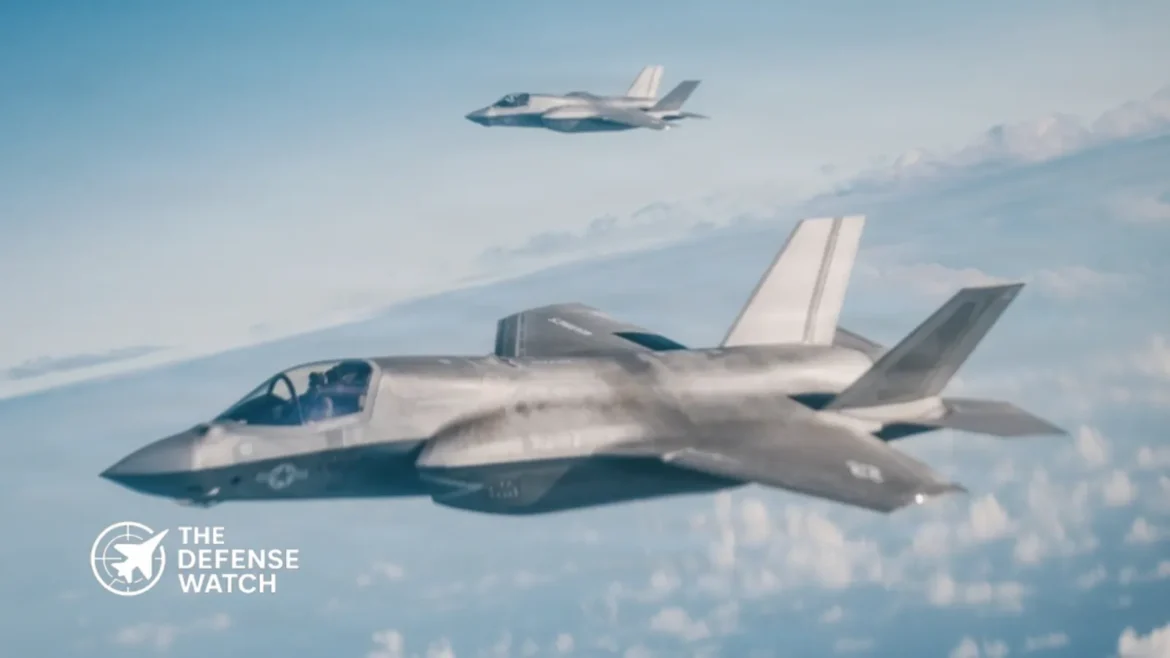
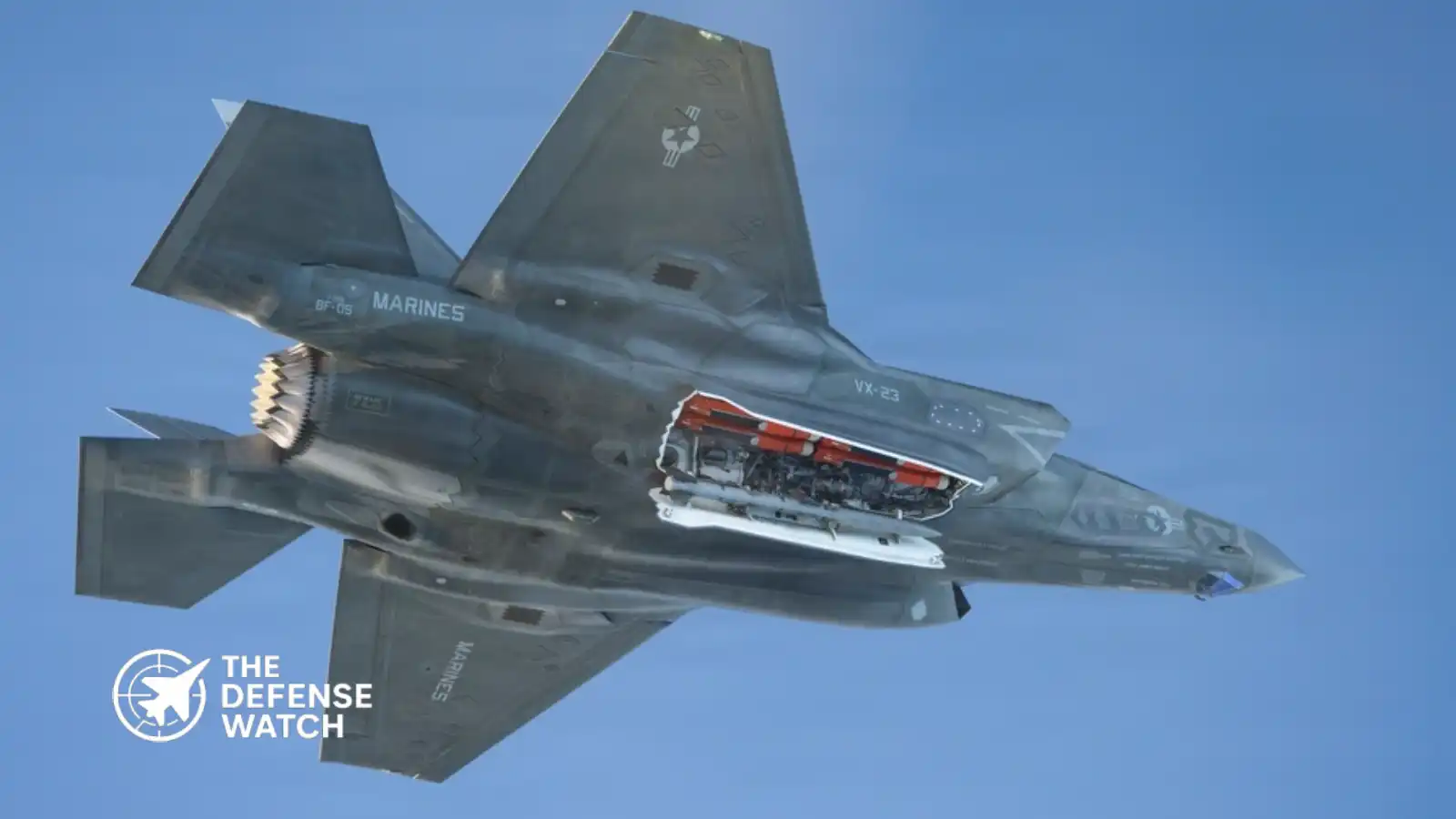
The F-35B StormBreaker weapons integration effort has reached another test milestone, with Raytheon reporting that an F-35B launched eight GBU-53/B StormBreaker smart weapons simultaneously during a recent flight test in Arizona. The company said the demonstration validated the weapon’s ripple eight capability, allowing one aircraft to release eight weapons in a closely coordinated sequence.
Takeaways
Raytheon says an F-35B launched eight StormBreaker weapons simultaneously during an Arizona flight test, demonstrating a higher-volume precision strike capability against moving targets.
The test is significant because StormBreaker is designed specifically for precision engagement of moving and stationary targets under difficult weather and visibility conditions. The U.S. Navy identifies the GBU-53/B as an air-launched precision strike weapon intended to engage moving and fixed targets while using network connectivity to receive updated target information during flight.
The latest demonstration does not by itself establish a new operational deployment date for StormBreaker on the F-35B. Instead, it demonstrates progress in integrating the weapon with the fifth-generation fighter and in expanding the number of weapons that can be employed during a single mission.
What The Eight-Weapon Demonstration Shows
The central feature of the Arizona test is the simultaneous launch of eight StormBreakers from an F-35B.
Raytheon describes this as ripple eight, a capability intended to allow one aircraft to prosecute multiple targets during a single attack sequence. The company said the test was focused on increasing the number of targets an individual aircraft could engage during one mission.
That distinction matters because StormBreaker is not simply a smaller version of a conventional guided bomb. Its design combines a compact airframe with a seeker and network architecture intended to support engagements against targets that can move after weapon release.
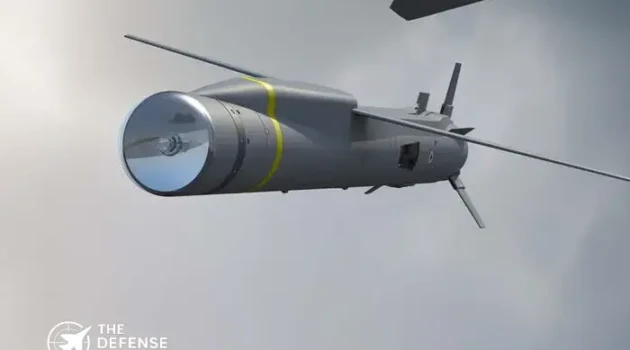
The U.S. Navy lists the GBU-53/B as a 250-pound-class weapon with a listed weight of 208 pounds, a length of 70 inches and a diameter of seven inches. Its compact dimensions are central to the weapon’s value on aircraft with limited internal weapons-bay volume.
StormBreaker GBU-53/B At A Glance
Capability GBU-53/B StormBreaker Weapon designation GBU-53/B Program name Small Diameter Bomb Increment II Manufacturer Raytheon Weight 208 pounds Length 70 inches Diameter 7 inches Primary targets Moving and stationary targets Guidance Imaging infrared, millimeter-wave radar, semi-active laser Navigation GPS-aided inertial navigation Network Link 16 and UHF data links Moving-target range More than 45 miles, according to Raytheon F-35 threshold platforms F-35B and F-35C Source: U.S. Navy, NAVAIR, U.S. Department of Defense and Raytheon.
A Tri-Mode Seeker For Difficult Conditions
One of StormBreaker’s most important characteristics is its tri-mode seeker.
The weapon combines millimeter-wave radar, imaging infrared and digital semi-active laser guidance. These sensing modes allow the weapon to operate across conditions in which conventional electro-optical or laser-guided weapons can face limitations.
Millimeter-wave radar provides the ability to detect and track targets through conditions such as rain and other degraded visibility environments. Imaging infrared provides another method of target detection and discrimination, while the semi-active laser mode allows the weapon to engage a target designated by an aircraft or ground operator.
The combination is particularly relevant to moving targets. A weapon intended to hit a stationary coordinate can rely heavily on precise navigation to a known location. A weapon attacking a moving vehicle must instead locate and track the target as its position changes.
StormBreaker was designed around that problem.
Network Connectivity Adds Another Layer
StormBreaker’s capabilities also extend beyond the seeker itself.
NAVAIR states that the weapon can receive updated target coordinates while in flight through two-way datalink communications. Link 16 and UHF communications can allow airborne or ground controllers to provide updated information, while the weapon also has an abort capability after release.
This network-enabled architecture changes the tactical problem from simply releasing a weapon toward a predetermined coordinate to maintaining a connection between the weapon, aircraft and wider force.
That capability becomes more relevant when targets are mobile, when the target picture changes after launch, or when the original target position is no longer valid.
The F-35’s own sensor and networking architecture provides an important complement. The aircraft is designed to collect information from multiple sensors and distribute relevant targeting information across the force. StormBreaker adds a weapon that can use networked information after release.
Why The F-35B Integration Matters
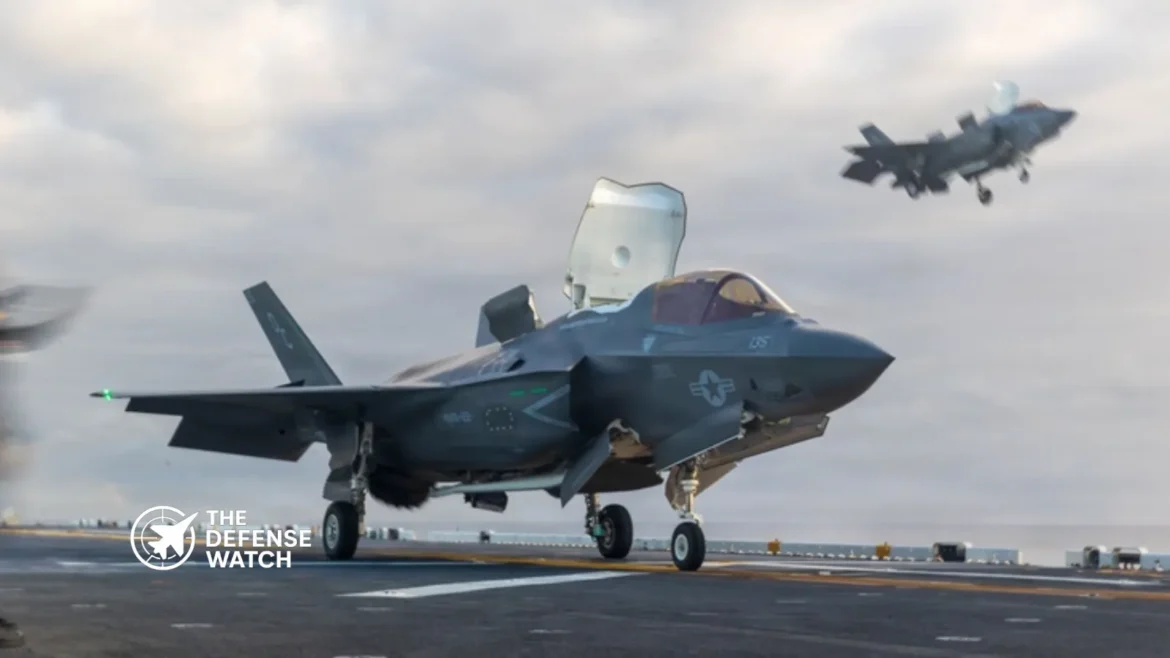
The F-35B presents a particularly demanding integration challenge because it combines fifth-generation aircraft characteristics with short-takeoff and vertical-landing requirements.
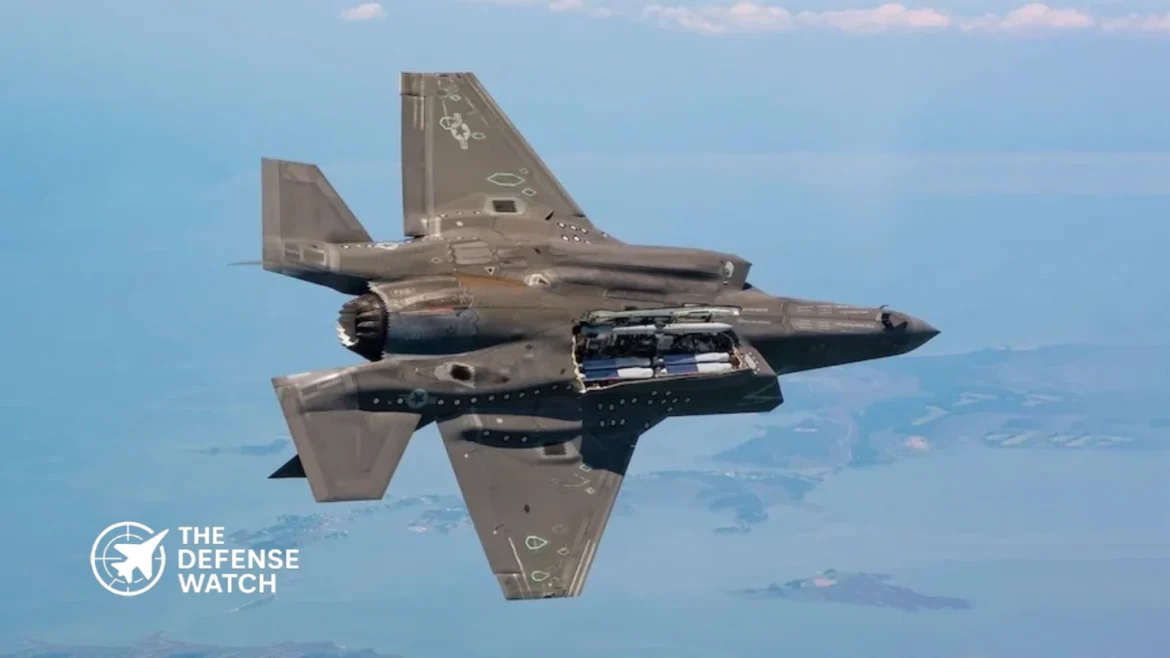
Earlier U.S. Navy testing established that StormBreaker could be integrated into the F-35B’s internal weapons configuration. Navy aviation documentation described the weapon as part of the effort to expand the F-35B and F-35C weapon inventory while preserving the aircraft’s low-observable configuration.
The latest eight-weapon demonstration therefore builds on a longer integration effort rather than representing the beginning of StormBreaker work on the F-35B.
The internal carriage issue is especially important. Carrying weapons internally allows the F-35B to retain the aerodynamic and signature advantages associated with its low-observable configuration.
External weapons carriage can increase available payload, but it also changes the aircraft’s signature and aerodynamic characteristics. Internal carriage is consequently valuable for missions in which survivability against sophisticated air defenses remains a priority.
From F-15E To F/A-18E/F And F-35
StormBreaker has progressed beyond developmental testing on the F-15E.
The U.S. Air Force approved the GBU-53/B for operational flights on the F-15E in 2020, and an Air Force operational unit subsequently employed the weapon during evaluation activities. The F-15E’s larger weapons capacity also highlights the weapon’s small physical footprint.
The U.S. Navy has since advanced the weapon on the F/A-18E/F Super Hornet. NAVAIR announced initial operational capability for the SDB II on the Super Hornet in February 2026, following limited early operational use in 2025.
Raytheon also announced in February 2026 that the Navy had approved StormBreaker for operational use on the Super Hornet fleet. The company said the weapon provides the aircraft with a precision-strike capability against moving and stationary targets in both favorable and adverse weather.
The continuing F-35 integration effort therefore extends an existing weapon capability across multiple U.S. tactical aircraft rather than creating an entirely separate weapon ecosystem.
The Operational Value Of More Weapons Per Sortie
The most important implication of the Arizona test is the relationship between aircraft numbers and target capacity.
A fighter can only attack as many targets as its available weapons, targeting information and engagement sequence permit. Increasing the number of precision weapons carried by an aircraft can allow a smaller force package to engage more targets during a mission, assuming sufficient target-quality information and weapon availability.
Raytheon specifically highlights this feature of StormBreaker, stating that its compact design can allow aircraft to carry more weapons and engage a greater number of targets without requiring additional aircraft. The company also states that the weapon can fly more than 45 miles against mobile targets.
The practical value is therefore not simply eight weapons released at once. It is the potential combination of aircraft survivability, weapon quantity, target discrimination, networking and standoff range.
That combination is relevant to contested environments where aircraft may face layered air defenses and where mobile targets can relocate quickly.
What The Test Does Not Establish
The Arizona demonstration should not be interpreted as evidence that every F-35B unit can immediately employ eight StormBreakers operationally under all mission conditions.
Flight testing validates specific aspects of weapon and aircraft integration. Operational fielding also depends on certification, software, tactics development, maintenance procedures, training, logistics and formal authorization.
The U.S. government continues to describe F-35B and F-35C as threshold platforms for the SDB II program, while StormBreaker has already achieved operational status on other aircraft.
The distinction between a successful flight demonstration and full operational availability is important when evaluating defense technology announcements.
A Broader Shift Toward Networked Precision Weapons
StormBreaker represents a broader U.S. shift toward weapons that combine precision guidance with onboard sensing and network connectivity.
Traditional precision weapons can be highly effective against fixed coordinates, but moving targets create a more difficult engagement problem. A mobile target can change position between target identification, weapon release and impact.
StormBreaker’s architecture addresses that challenge through a combination of onboard sensing, navigation and networked updates.
For the F-35B, the value is amplified by the aircraft’s ability to operate from amphibious assault ships and austere locations. A weapon capable of engaging moving targets at standoff distance gives the aircraft another option for precision strike without relying exclusively on larger weapons.
The latest test therefore represents more than a weapons release demonstration. It is a step toward increasing the number of precision engagements a fifth-generation aircraft can conduct during a single mission while maintaining the advantages of a compact, network-enabled weapon.
Outlook
Raytheon’s eight-weapon F-35B demonstration adds another milestone to the StormBreaker integration program and shows how the GBU-53/B is being developed as a multi-platform precision weapon for the U.S. tactical aviation fleet.
The weapon is already operational on the F-15E and has reached initial operational capability on the F/A-18E/F. Continued F-35 integration could extend its combination of moving-target capability, adverse-weather performance and networked targeting to the Joint Strike Fighter fleet.
For U.S. forces, the larger issue is capacity. A precision weapon that can fit in a fighter’s internal weapons bay, identify moving targets and receive updated targeting information can increase the number of useful engagements generated by each aircraft.
The Arizona test indicates that Raytheon and U.S. military test teams are continuing to push that capability toward a more mature F-35 employment option.

The test marks a key step toward giving the F-35B a longer-range precision strike option designed for contested air defense environments.
Executive Summary:
Lockheed Martin and UK industry partners have completed the first flight test of the F-35B Lightning II carrying the SPEAR 3 precision strike missile. The milestone supports the United Kingdom’s effort to field a long-range stand-off weapon optimized for high-threat combat environments.
F-35B SPEAR 3 Integration Advances UK Strike Capability
The F-35B SPEAR 3 missile integration program reached a major milestone after the aircraft completed its first flight carrying the MBDA-developed precision strike weapon. The test was conducted as part of the continuing effort to integrate advanced air-to-surface capabilities onto the fifth-generation fighter.
The flight marks the first time the F-35B has flown with the SPEAR 3 missile configuration.
The integration effort is being led in cooperation with the United Kingdom Ministry of Defence and European missile manufacturer MBDA. The weapon is intended to provide the F-35B with a compact stand-off strike capability capable of engaging defended targets at extended ranges.
The SPEAR 3 missile is designed for internal carriage within the F-35B weapons bay, preserving the aircraft’s low observable characteristics while expanding precision strike options.
What SPEAR 3 Adds To The F-35B
SPEAR 3, short for Select Precision Effects At Range Capability 3, is a network-enabled miniature cruise missile developed primarily for the Royal Air Force. The weapon combines low collateral damage targeting with stand-off range and multi-target engagement capability.
The missile uses a turbojet propulsion system rather than a traditional rocket motor, allowing greater range and flexible attack profiles. It is also designed to operate in electronically contested environments, an increasingly important requirement as air defense systems become more advanced.
The F-35B already operates as a multirole platform with stealth, sensor fusion, and electronic warfare capabilities. Integrating SPEAR 3 could significantly improve its ability to conduct precision strikes against mobile air defenses, command nodes, and hardened targets without entering heavily defended zones.
That capability has growing relevance as NATO air forces prepare for potential operations against integrated air defense networks fielded by near-peer competitors.
Strategic Importance For The United Kingdom
The United Kingdom remains one of the leading international partners in the F-35 program and operates the short takeoff and vertical landing F-35B variant through both the Royal Air Force and Royal Navy.
Britain’s carrier strike strategy relies heavily on the F-35B operating from the Queen Elizabeth-class aircraft carriers. Adding SPEAR 3 to the platform would provide UK carrier air wings with a longer-range strike option against time-sensitive and defended targets.
The integration effort also supports Britain’s broader defense modernization plans focused on deep precision fires, networked warfare, and survivable air combat systems.
Unlike larger cruise missiles, SPEAR 3’s compact size allows multiple weapons to be carried internally, potentially increasing strike density during combat operations while maintaining stealth performance.
This reflects a wider trend among Western air forces seeking smaller, networked precision weapons capable of operating in high-threat environments where survivability is critical.
Broader NATO And Industrial Implications
The F-35B SPEAR 3 missile program also highlights the growing role of multinational defense cooperation within NATO. The aircraft itself is produced by Lockheed Martin, while the missile is developed by MBDA with substantial British industry participation.
The successful flight test demonstrates continued progress in integrating European-made weapons onto the U.S.-built stealth fighter platform. That interoperability is strategically important as allied nations seek to maintain operational flexibility across joint missions.
The integration may also strengthen export prospects for SPEAR 3 among existing and future F-35 operators looking for compact stand-off precision weapons.
Analysts have increasingly noted that future air campaigns will likely depend on stealth aircraft carrying larger numbers of network-enabled munitions rather than relying solely on a small number of expensive long-range cruise missiles.
SPEAR 3 fits within that operational concept by combining reduced size with precision guidance and extended reach.
Testing And Future Development
The recent flight represents an early but important phase in the broader weapons integration campaign. Additional testing will likely focus on environmental performance, weapons separation, guidance validation, and live-fire demonstrations before operational deployment.
Neither Lockheed Martin nor the UK Ministry of Defence disclosed a formal operational fielding timeline. However, the milestone indicates steady progress toward bringing the capability into frontline service.
The F-35 program continues to expand its weapons portfolio as partner nations seek greater flexibility for regional deterrence and expeditionary operations.
As air defense systems evolve, stand-off precision strike weapons like SPEAR 3 are expected to play an increasingly central role in NATO combat aviation planning.
Executive Summary
The UK Ministry of Defence has approved the purchase of the GBU-53/B StormBreaker precision-guided bomb for the F-35B fleet. The move is intended to provide an interim standoff strike capability while the domestically developed SPEAR 3 missile remains delayed.The decision highlights ongoing pressure on Britain’s F-35 weapons integration roadmap and reflects growing concern over maintaining credible strike options in contested airspace.
UK Confirms F-35 Standoff Bomb Buy
The UK F-35 standoff bomb acquisition marks a significant shift in Britain’s approach to sustaining operational strike capability for its fifth-generation fighter fleet.
Britain has approved the procurement of the U.S.-made GBU-53/B Small Diameter Bomb II, also known as StormBreaker, through the Foreign Military Sales process. The weapon will serve as an interim solution until the delayed MBDA SPEAR 3 missile enters operational service.
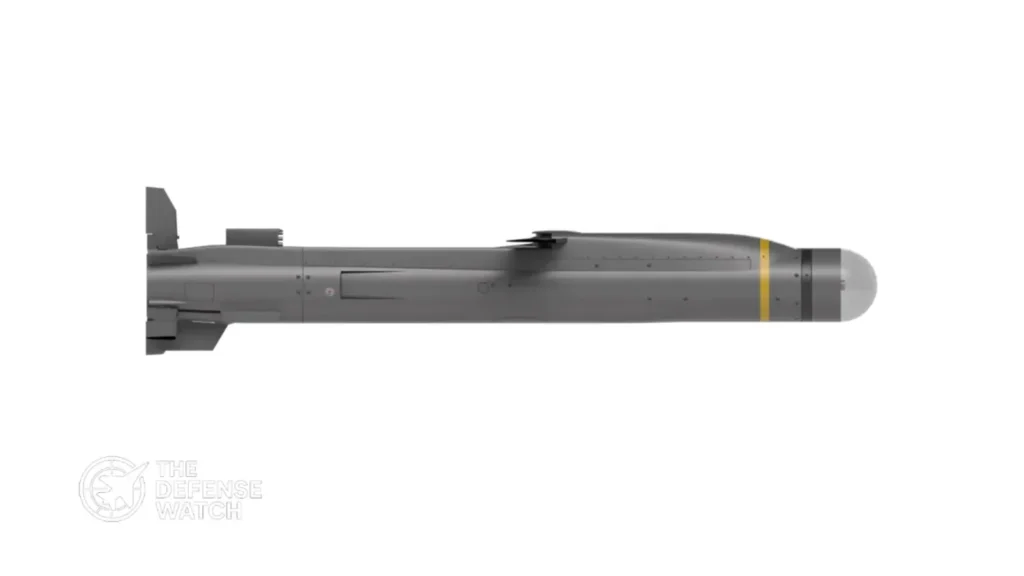
The decision follows mounting scrutiny over the limited air-to-ground weapons currently available to the UK’s F-35B Lightning II aircraft. At present, British F-35Bs primarily rely on the Paveway IV precision-guided bomb for strike missions. Analysts and parliamentary oversight bodies have repeatedly warned that the aircraft lacks sufficient long-range standoff capability against advanced air defense systems.
Why Britain Is Buying StormBreaker
The StormBreaker weapon offers the UK an immediate capability increase without waiting for SPEAR 3 integration to be completed.
Manufactured by RTX, the GBU-53/B is designed to engage moving and stationary targets in poor weather and contested environments. The weapon combines millimeter-wave radar, infrared imaging, semi-active laser guidance, and GPS-assisted navigation. Its glide capability allows engagement ranges exceeding 100 kilometers under optimal launch conditions.
For the UK, the purchase addresses a growing operational gap.
SPEAR 3 was originally intended to become the primary precision strike weapon for British F-35Bs. The missile, developed by MBDA, features a turbojet-powered design with a reported range exceeding 140 kilometers. It was specifically engineered for internal carriage inside the F-35B weapons bay to preserve stealth characteristics.
However, the program has experienced repeated delays tied to integration challenges, supplier performance issues, and broader schedule adjustments associated with F-35 Block 4 modernization efforts. British officials now expect SPEAR 3 operational deployment to begin around fiscal year 2028-29, while some reports suggest full service entry could slip further into the early 2030s.
Strategic Impact On UK Carrier Strike Operations
The purchase has direct implications for Britain’s carrier strike strategy.
The Royal Navy’s Queen Elizabeth-class aircraft carriers depend heavily on the F-35B as their principal strike aircraft. Without an effective long-range precision weapon, the survivability and operational flexibility of carrier-based air wings could be constrained in high-threat environments.
StormBreaker provides a temporary solution that allows British F-35Bs to engage targets from safer stand-off distances while preserving low observable characteristics. The acquisition also aligns the UK more closely with U.S. F-35 operational weapon standards, potentially simplifying coalition interoperability during NATO operations.
The move also reflects a broader pattern among Western militaries seeking near-term capability solutions while next-generation weapons programs face development delays.
Pressure On Britain’s F-35 Modernization Plans
The UK F-35 standoff bomb decision also exposes wider challenges surrounding Britain’s combat air modernization timeline.
Britain completed delivery of its first 48 F-35B aircraft earlier this year and continues evaluating future procurement plans tied to broader defense spending reviews.
Yet weapons integration has emerged as a persistent weakness within the program.
While other F-35 operators have integrated a wider range of stand-off munitions, the UK’s aircraft have remained comparatively limited in strike flexibility. Parliamentary oversight bodies and defense analysts have increasingly questioned whether delays to SPEAR 3 risk undermining the long-term effectiveness of Britain’s carrier strike force.
The interim StormBreaker acquisition suggests the Ministry of Defence is prioritizing immediate operational readiness over waiting for a fully sovereign solution.
At the same time, Britain continues investing heavily in SPEAR 3 development. The missile remains central to the UK’s long-term concept for deep precision strike operations and future combat air integration.
Broader NATO And Operational Relevance
The decision comes amid renewed focus across NATO on survivability in contested airspace.
Modern integrated air defense systems, including long-range surface-to-air missile networks, have reinforced demand for air-launched precision weapons capable of engaging targets from outside high-risk engagement zones.
By moving ahead with the StormBreaker acquisition, the UK ensures its F-35B fleet retains a relevant strike capability while more advanced domestic weapons continue development.
The procurement also reflects the increasing importance of rapid capability adaptation in current defense planning cycles, particularly as European militaries seek to close gaps exposed by recent operational assessments and evolving regional security threats.

UK F-35B Procurement Reaches First Major Milestone
UK F-35B procurement has entered a new phase after the delivery of the 46th, 47th and 48th aircraft, completing Britain’s first contracted batch of fifth-generation fighters. The milestone marks the end of the initial acquisition phase for the Royal Air Force and Royal Navy Lightning Force.
KEY FACTS AT A GLANCE- The United Kingdom has received aircraft numbers 46, 47 and 48, completing its initial F-35B procurement phase.
- The three jets arrived at RAF Marham, home of Britain’s Lightning Force.
- The F-35B is jointly operated by the Royal Air Force and Royal Navy for land and carrier operations.
- London still states a long-term goal of acquiring up to 138 F-35 aircraft.
- No confirmed timetable has been announced for purchases beyond the first 48 jets.
The aircraft were delivered to RAF Marham in Norfolk, the main operating base for the UK fleet. Britain’s F-35B force is jointly manned by the RAF and Royal Navy and forms the core of the country’s carrier air wing aboard the Queen Elizabeth-class aircraft carriers.
Why The F-35B Matters To Britain
The F-35B variant is the short takeoff and vertical landing model designed for operations from smaller decks and austere runways. That makes it essential to UK carrier strike operations because Britain’s aircraft carriers were built without catapult launch systems.
In practical terms, the jet gives London a modern stealth aircraft able to deploy from sea without relying on foreign bases. That provides political flexibility during crises and supports NATO maritime operations in Europe, the Mediterranean, and beyond.
For the United States and allied planners, Britain’s F-35B fleet is also valuable because it adds another carrier-capable fifth-generation force that can integrate with U.S. Marine Corps and NATO air assets.
Procurement Complete, But Bigger Questions Remain
While the first phase of UK F-35B procurement is now complete, future numbers remain unresolved. Successive British governments have maintained a headline ambition of 138 F-35 aircraft over the life of the program, but no firm contract has yet been announced for the next batch.

Image Source: Royal Air Force That matters because fleet size determines operational tempo. A carrier may deploy 24 or more aircraft during high-end operations, but training, maintenance cycles, and homeland requirements reduce the number available at any given time.
A fleet of 48 delivered aircraft, with one previously lost in a 2021 crash, gives Britain meaningful capability, but limited depth for sustained simultaneous operations.
Upgrade Delays Could Shape Combat Value
Another issue is software modernization. Wider F-35 Block 4 upgrades are needed for expanded weapons integration and future capability growth. British weapons such as Meteor air-to-air missiles and SPEAR 3 precision strike weapons are tied to that roadmap.
That means future combat power depends not only on buying more jets, but on receiving timely upgrades, weapons clearance, and sustainment support.
Strategic Outlook
The completion of the first UK F-35B procurement phase is a clear achievement for London, but it is also a decision point. Britain must now choose whether to expand its carrier air wings, diversify with more land-based fighters, or shift resources toward future programs such as GCAP.
For now, the delivery of jet number 48 confirms that the UK remains one of the leading non-U.S. operators of the F-35 and a key contributor to NATO airpower.
KEY FACTS AT A GLANCE- RAF F-35B stealth fighter jets shot down two hostile drones during a mission over Jordan.
- The aircraft used ASRAAM air-to-air missiles and operated alongside RAF Typhoon fighters and a Voyager tanker.
- The engagement marks the first confirmed operational combat kill for the United Kingdom’s F-35 fleet.
- The mission was launched from RAF Akrotiri in Cyprus amid rising Iranian drone activity across the region.
- The incident highlights the growing role of fifth-generation fighters in counter-drone air defense missions.
RAF F-35B Shoots Down Hostile Drones In First Combat Kill
RAF F-35B stealth fighters have achieved their first operational combat kills after intercepting and destroying two hostile drones during a mission over Jordan. The milestone engagement marks the first time the United Kingdom’s F-35 fleet has successfully destroyed aerial targets during combat operations.
(adsbygoogle = window.adsbygoogle || []).push({});The aircraft were operating as part of a defensive patrol supported by RAF Typhoon fighters and a Voyager air-to-air refueling tanker. During the mission, the F-35 pilot detected the unmanned aerial systems on radar and engaged them using AIM-132 ASRAAM air-to-air missiles.
British officials confirmed the mission took place amid heightened regional tensions and an increase in drone activity targeting Western and allied interests in the Middle East.
The Big Picture
Drone warfare has rapidly reshaped modern air defense priorities. Low-cost unmanned aerial systems are now widely used by state and non-state actors to strike military bases, infrastructure, and logistics hubs.
In recent years, Iranian-designed one-way attack drones, including Shahed-type systems, have emerged as a persistent threat across the Middle East and Eastern Europe. Their relatively low cost and ability to fly long distances make them difficult targets for traditional air defense networks.
Western air forces increasingly rely on a layered approach to counter these threats. Ground-based missile systems, electronic warfare units, and fighter aircraft all play roles in detecting and intercepting hostile drones.
The RAF F-35B combat kill demonstrates how fifth-generation fighter aircraft are becoming part of that defensive architecture.
What’s Happening
The engagement occurred during a defensive patrol over Jordanian airspace as part of regional security operations. The F-35B aircraft had deployed to RAF Akrotiri in Cyprus earlier in the year to support British and coalition missions in the Middle East.
While on patrol, the stealth fighter detected two hostile drones approaching the area. The pilot coordinated with accompanying Typhoon aircraft to verify the targets before engaging.
Correct identification was critical because the airspace was crowded with aircraft from multiple allied nations conducting simultaneous operations.
After confirming the targets as hostile unmanned aerial systems, the pilot launched ASRAAM missiles that successfully destroyed both drones.
The interception followed a separate drone incident in which a small unmanned aircraft struck RAF Akrotiri, raising concerns about the vulnerability of regional bases to low-cost aerial threats.
Why It Matters
The RAF F-35B combat kill represents a significant operational milestone for the United Kingdom’s fifth-generation fighter program.
Although the F-35 platform has been used in combat by several operators, including the United States and Israel, this marks the first time the UK’s stealth fighter fleet has destroyed an aerial target during operations.
The engagement also highlights the versatility of the F-35B. Originally designed to penetrate contested airspace and conduct precision strikes, the aircraft is increasingly used for air defense and counter-drone missions.
Its advanced sensor suite allows pilots to detect small targets at long distances while maintaining situational awareness across complex battle environments.
In crowded operational theaters such as the Middle East, this capability becomes critical for preventing friendly-fire incidents while responding quickly to emerging threats.
Strategic Implications
The successful interception reflects the evolving role of stealth fighters in integrated air defense.
Traditional fighter aircraft often rely on ground-based radar networks for targeting information. The F-35, however, acts as a sensor node within a broader combat network.
Its onboard radar, electronic surveillance systems, and data fusion capabilities allow it to track multiple targets and share information with other aircraft, ships, and ground forces.
In practice, this turns the aircraft into a command-and-control asset as well as a strike platform.
(adsbygoogle = window.adsbygoogle || []).push({});For NATO and coalition operations, that capability strengthens the ability to defend forward bases and allied territory against increasingly sophisticated drone threats.
The mission also underscores the importance of RAF Akrotiri as a strategic hub for British military operations in the Middle East.
Competitor View
Adversaries closely monitor operational performance of Western stealth aircraft.
Iran and Russia have invested heavily in drone technology as a cost-effective way to challenge Western air superiority. Shahed-type systems, for example, are designed to overwhelm defenses through numbers rather than speed or survivability.
The RAF F-35B interception demonstrates that advanced fighters can effectively counter these platforms when supported by networked sensors and allied aircraft.
However, it also highlights the economic asymmetry of drone warfare. Air-to-air missiles used by fighter jets often cost significantly more than the drones they destroy.
This dynamic continues to drive research into lower-cost counter-drone technologies such as directed energy weapons, electronic warfare systems, and rapid-fire gun defenses.
What To Watch Next
The RAF continues to expand operational experience with the F-35B as the aircraft becomes a central element of Britain’s air power strategy.
Future deployments will likely focus on integrating the stealth fighter with naval carrier strike groups and allied air defense networks.
The United Kingdom also plans to grow its F-35 fleet over the coming decade, supporting both Royal Air Force and Royal Navy operations.
Operational data from real-world missions such as this interception will shape future tactics for counter-drone warfare and airspace management.
Capability Gap
The incident highlights a growing challenge for modern militaries: defending against large numbers of inexpensive drones.
While advanced fighters can intercept individual targets effectively, relying on high-value aircraft and expensive missiles for routine counter-drone operations may not be sustainable in large-scale conflicts.
To address this gap, Western militaries are investing in layered defenses that combine fighters, ground-based air defense systems, electronic warfare tools, and emerging directed energy weapons.
(adsbygoogle = window.adsbygoogle || []).push({});The goal is to create a cost-effective system capable of defeating both high-end missiles and swarms of inexpensive unmanned aircraft.
The Bottom Line
The RAF F-35B’s first combat kill demonstrates how fifth-generation fighters are becoming critical assets in modern counter-drone air defense operations.
■ KEY FACTS AT A GLANCE- ► RAF F-35B Lightnings shot down uncrewed aerial systems over Jordanian airspace.
- ► The intercept marked the first operational kill for a British F-35 aircraft.
- ► The aircraft were operating in defense of Jordan.
- ► The UK Ministry of Defence confirmed the engagement.
- ► The F-35B Lightning II is the short takeoff and vertical landing variant used by the RAF and Royal Navy.
RAF F-35B Records First Operational Kill
The British F-35B operational kill was confirmed after Royal Air Force Lightnings shot down uncrewed aerial systems while operating over Jordanian airspace in defense of the country.
According to the UK Ministry of Defence, the engagement marked the first time a British-operated F-35 has destroyed a target during live operations.
The aircraft involved were F-35B Lightning II jets assigned to the Royal Air Force. The F-35B is the short takeoff and vertical landing variant of the Joint Strike Fighter family, operated by both the RAF and the Royal Navy’s Fleet Air Arm.
The intercept took place over Jordanian territory, where UK aircraft were deployed as part of ongoing regional security operations.
Operational Context
The United Kingdom maintains a sustained military presence in the Middle East, including air assets based in Jordan and other regional locations. RAF fast jets have previously conducted counter-ISIS missions and regional deterrence patrols from Jordanian bases.
While officials did not disclose the specific type of uncrewed aerial system engaged, the use of drones by state and non-state actors across the Middle East has sharply increased in recent years. Low-cost one-way attack drones and reconnaissance platforms are now common in regional conflicts.
The British F-35B operational kill demonstrates that fifth generation aircraft are now actively contributing to counter-drone defense missions, not solely high end air superiority or strike roles.
Significance For The RAF
This event marks a milestone for the UK’s F-35 program. The United Kingdom is the only Tier 1 partner in the multinational F-35 program and operates the STOVL F-35B variant from both land bases and the aircraft carriers HMS Queen Elizabeth and HMS Prince of Wales.
Although US and Israeli F-35s have reportedly conducted combat operations in recent years, this is the first confirmed operational kill by a British F-35.
From a capability perspective, the engagement underscores the F-35B’s role as a multi-mission platform. Equipped with advanced sensors, data fusion, and beyond-visual-range weapons, the aircraft can detect and engage aerial threats with limited external cueing.
The use of a high end stealth fighter against uncrewed systems also reflects a broader shift in air warfare. Drones have become persistent threats, often launched in swarms or used to test air defenses. Western air forces increasingly rely on layered defense systems, combining ground-based air defense, electronic warfare, and combat air patrols.
Counter-Drone Implications
The British F-35B operational kill also highlights a cost and force management challenge. Shooting down relatively low-cost drones with advanced fighters raises questions about sustainability in prolonged conflicts.
However, in environments where speed, reach, and rapid decision making are required, fifth generation aircraft provide immediate response capability. The F-35’s sensor suite allows pilots to identify and classify airborne objects at extended ranges, reducing ambiguity in congested airspace.
Jordan sits at a strategic crossroads near Iraq, Syria, and Israel, regions where drone activity has become routine. Defensive patrols over Jordan reflect a precautionary posture amid broader regional instability.
Strategic Message
Beyond the tactical intercept, the event carries signaling value. The UK’s ability to deploy F-35Bs to the region and conduct live engagements reinforces its role as a security partner in the Middle East.
It also confirms that British F-35Bs have now transitioned fully from training and deterrence roles into active combat operations.
For London, the milestone supports long term investment in fifth generation airpower and validates the operational readiness of its Lightning force.
As drone proliferation continues across regional theaters, the integration of stealth fighters into counter-UAS missions will likely expand. The British F-35B operational kill may be the first of its kind for the RAF, but it is unlikely to be the last.
Japan Deploys F-35B Fighter Jets in First Operational Service
Japan has officially deployed U.S.-made F-35B fighter jets into operational service, marking a significant milestone in the country’s defense modernization and maritime airpower expansion. The deployment represents the first time Japan has placed the short takeoff and vertical landing variant of the F-35 Lightning II into frontline service, strengthening its ability to operate fixed-wing combat aircraft from short runways and modified naval platforms.
(adsbygoogle = window.adsbygoogle || []).push({});According to information released by Japan’s Ministry of Defense and reported by Army Recognition, the aircraft are now assigned to operational units under the Japan Air Self-Defense Force, or JASDF. The move reflects Tokyo’s growing emphasis on flexible power projection and rapid response capabilities in the Indo-Pacific region.
The F-35B deployment also underscores deepening defense integration between Japan and the United States, as both countries seek to enhance interoperability amid evolving regional security challenges.
A New Capability for Japan’s Air and Maritime Forces
The F-35B is uniquely suited for Japan’s operational needs due to its short takeoff and vertical landing capability. Unlike conventional fighters, the aircraft can operate from shorter runways and austere locations, reducing reliance on large, fixed air bases that could be vulnerable during a conflict.
Japan’s F-35B fleet is expected to support operations from land bases as well as from modified Izumo-class helicopter destroyers, which are being converted to support fixed-wing aircraft. These modifications include reinforced flight decks, heat-resistant coatings, and updated aviation support systems.
By integrating the F-35B into service, Japan gains a flexible air combat platform capable of operating closer to contested areas, particularly in the southwestern island chain.
Strengthening Deterrence in the Indo-Pacific
The operational deployment of the F-35B fighter jets aligns with Japan’s broader defense strategy aimed at strengthening deterrence and response capabilities in the Indo-Pacific. The region has seen increased military activity, including expanded naval operations and air patrols by regional powers.
Japanese defense planners have emphasized the need for distributed and resilient force structures. The F-35B supports this approach by enabling aircraft dispersal across multiple locations, complicating adversary targeting efforts.
U.S. defense officials have repeatedly highlighted the importance of Japan’s F-35 program to alliance readiness, noting that common platforms improve combined operations, logistics, and training.
Integration with U.S. and Allied Forces
Japan’s F-35B deployment further enhances interoperability with U.S. Marine Corps and U.S. Navy forces, both of which operate the same variant. Joint training, shared maintenance practices, and common mission systems allow allied forces to operate more seamlessly during exercises and real-world contingencies.
(adsbygoogle = window.adsbygoogle || []).push({});The aircraft’s advanced sensor fusion, stealth design, and networked warfare capabilities allow it to act as both a shooter and an information node. This is particularly valuable in joint and combined operations involving naval, air, and ground forces.
Industrial and Strategic Implications
Japan is one of the largest international customers for the F-35 program, with final assembly and maintenance activities conducted domestically at facilities operated by Mitsubishi Heavy Industries. The introduction of the F-35B adds a new layer of technical complexity and operational expertise to Japan’s aerospace sector.
From a strategic perspective, the deployment signals Tokyo’s willingness to invest in capabilities that extend beyond traditional homeland air defense. While Japan maintains a constitutionally defensive posture, the F-35B provides options for maritime air defense, island protection, and coalition operations.
Defense analysts note that the move reflects lessons learned from recent conflicts, where survivability, dispersion, and rapid response have proven critical.
Future Outlook for Japan’s F-35B Fleet
Japan plans to continue expanding and refining its F-35B operations through additional training, shipboard integration trials, and joint exercises with U.S. and allied forces. As modifications to the Izumo-class ships progress, operational concepts for sea-based air operations are expected to mature.
(adsbygoogle = window.adsbygoogle || []).push({});The deployment of the F-35B fighter jets represents a long-term shift in Japan’s defense posture, one focused on adaptability, alliance cooperation, and advanced aerospace capabilities.
As regional security dynamics continue to evolve, Japan’s investment in fifth-generation aircraft positions it as a central player in maintaining stability across the Indo-Pacific.