
- Home
- Defense Systems
- Tanks & Armored Vehicles
- Challenger 2 Tank
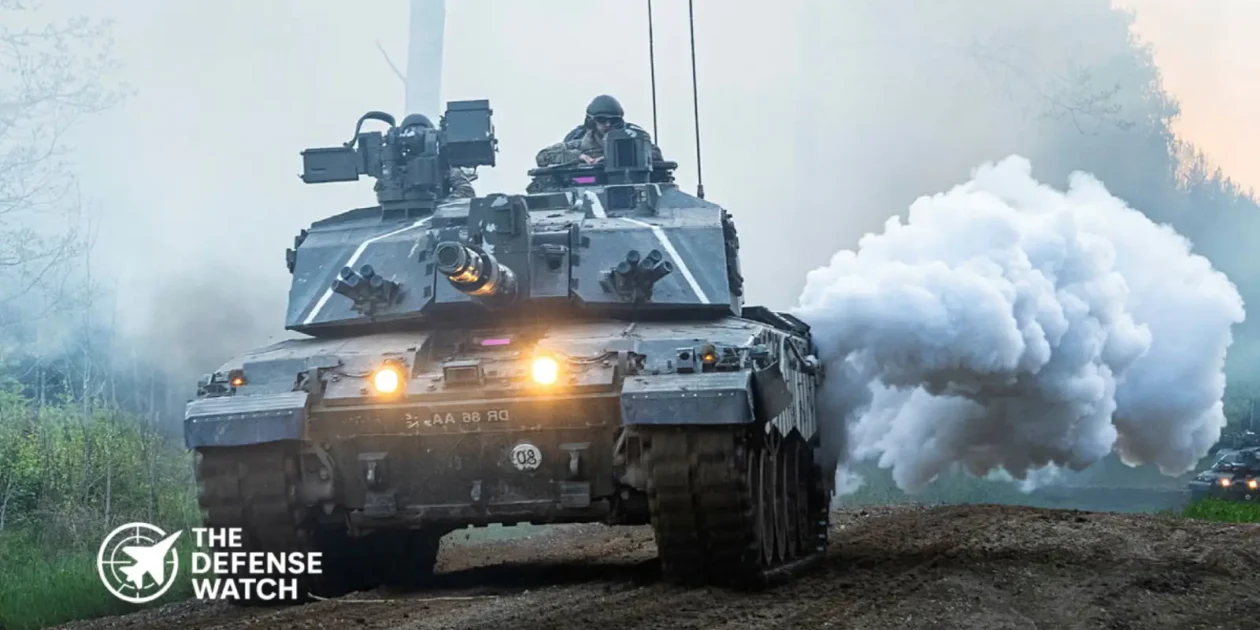
Challenger 2 Tank
Defense Systems Full Specifications
1. General Information
| Vehicle Name | Challenger 2 |
| Type / Role | Main Battle Tank (MBT) |
| Manufacturer | BAE Systems Land UK |
| Country of Origin | United Kingdom |
| In Service | Yes |
| Year Introduced | 1998 |
| Unit Cost | USD 4–6 million |
| Crew | 4 |
2. Dimensions & Weight
| Length (Gun Forward) | 11.3 m |
| Width | 3.5 m |
| Height | 2.49 m |
| Weight | 62.5–75 tons (combat loaded varies) |
| Ground Clearance | 0.5 m |
| Chassis Material | Chobham / Dorchester composite armor with steel base |
3. Performance
| Engine Type | Perkins CV12 12-cylinder diesel |
| Engine Power | 1,200 hp |
| Power-to-Weight Ratio | ~18–19 hp/ton (combat loaded) |
| Transmission | David Brown TN54E automatic |
| Maximum Speed (Road) | 59 km/h |
| Maximum Speed (Off-Road) | ~40 km/h (terrain dependent) |
| Operational Range | ~450 km |
| Suspension Type | Hydrogas suspension system |
4. Armament
| Main Gun | 120 mm L30A1 rifled gun |
| Ammunition Capacity | 50 rounds (approx.) |
| Secondary Armament | 1 × 7.62 mm L94A1 coaxial MG, 1 × 7.62 mm L37A2 pintle MG |
| Gun Elevation/Depression | +20° / -10° |
| Fire Control System | Computerized digital fire control system |
| Stabilization | Dual-axis gun stabilizer |
| Rate of Fire | 6–10 rounds per minute (crew dependent) |
5. Protection & Armor
| Armor Type | Chobham / Dorchester composite armor |
| Reactive Armor | Not standard, limited modular upgrades in refit programs |
| Active Protection System (APS) | No standard APS in baseline variant (planned upgrades under evaluation) |
| NBC Protection | Yes |
| Smoke Grenade Launchers | 2 × 5-barrel launchers |
| Fire Suppression System | Automatic crew compartment system |
| Mine Protection | Reinforced hull belly with blast-resistant design |
6. Mobility & Capability
| Maximum Gradient | ~60% |
| Side Slope | ~30% |
| Trench Crossing | ~2.8 m |
| Vertical Obstacle | ~0.9 m |
| Fording Depth | 1.1 m (up to ~2 m with preparation kit) |
| Turning Radius | Neutral steer capability |
| Amphibious Capability | No |
7. Sensors & Electronics
| Fire Control Computer | Digital integrated system |
| Thermal Imaging | Gunner and commander sights |
| Night Vision | Infrared based systems |
| Laser Rangefinder | Yes |
| Ballistic Computer | Yes |
| Communication System | Secure battlefield radio |
| Battlefield Management System | Limited integration, upgrade dependent |
8. Operational Info
| Service Branch | British Army |
| Primary Operator | United Kingdom, Oman (earlier export operator) |
| Combat Experience | Iraq War (2003) |
| Upgrade Packages | Challenger 2 LEP, Life Extension Programme |
| Export Status | Limited export history |
| Production Status | No longer in full-rate production (upgrade programs ongoing) |
PROS
- Extremely strong composite armor protection
- Proven combat record with high survivability
- Accurate 120 mm rifled main gun
- Advanced thermal imaging and fire control system
- High crew safety standards
CONS
- Slower compared to modern western MBTs
- Heavier logistical and maintenance requirements
- Limited export success
- Older platform architecture
- Lower ammunition compatibility with NATO smoothbore standard
Challenger 2 Main Battle Tank
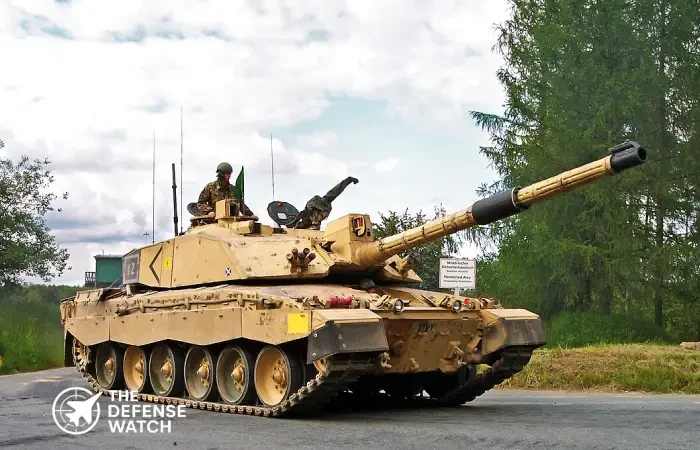
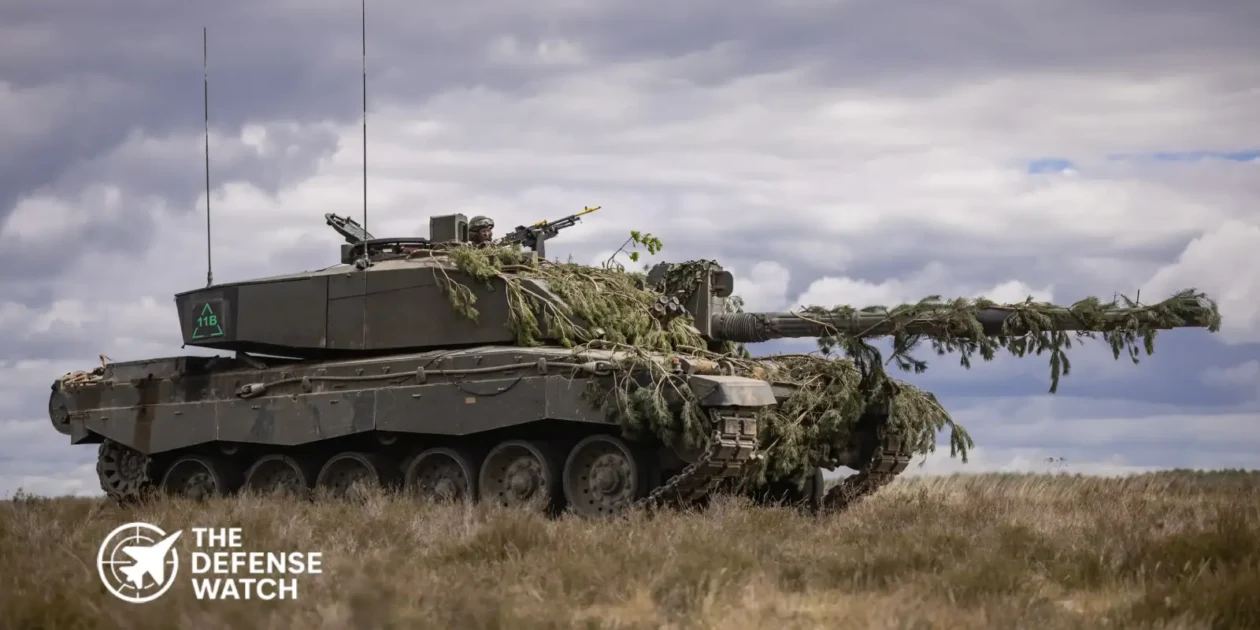
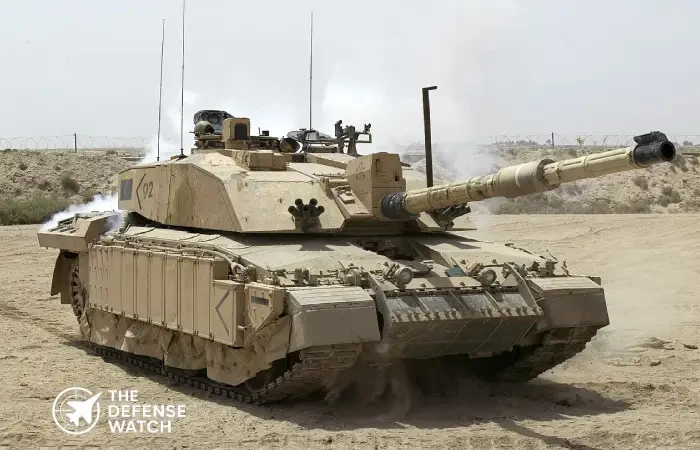
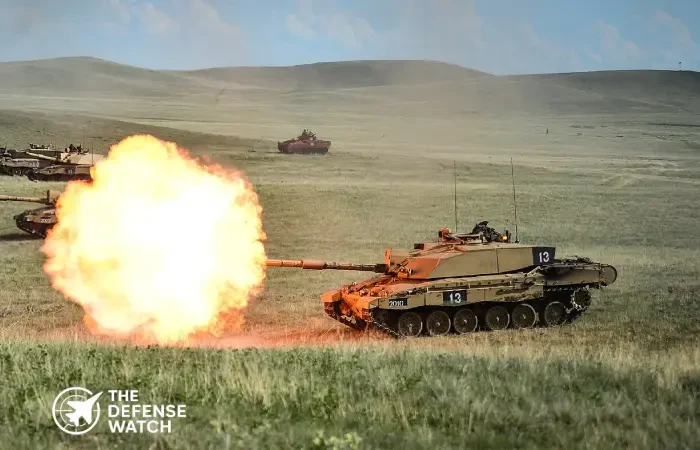
The Challenger 2 is a third generation main battle tank designed for battlefield survivability, long range engagement, and high crew protection. Built for the British Army, it has earned a reputation for strong defensive capability and consistent performance in combat environments. One of its most notable operational records came during the 2003 Iraq conflict, where Challenger 2 units reportedly sustained no losses to enemy fire, highlighting its protection and crew survivability under real combat conditions.
The tank is equipped with a 120 mm rifled main gun, advanced thermal imaging, and a digital fire control system that allows accurate targeting in day and night conditions. Its design emphasizes heavy armor protection using Chobham based composite systems, making it one of the most protected tanks in service. It is primarily used for armored warfare, breakthrough operations, and defensive frontline roles.
Manufacturer
The Challenger 2 was originally developed by Vickers Defence Systems, now part of BAE Systems Land UK. It was designed in the United Kingdom and entered service in 1998 as an upgrade over earlier British tank platforms.
Speed and Range
The tank is powered by a Perkins CV12 diesel engine producing around 1,200 horsepower. It can reach a maximum road speed of approximately 59 km/h with an operational range of about 450 km depending on terrain and mission load. While not focused on speed, it balances mobility with heavy armor protection.
Cost/Price
The unit cost of the Challenger 2 is estimated between 4 million and 6 million USD depending on upgrade configuration and support systems.
Disclaimer Note
The information provided on TheDefenseWatch.com is for general informational purposes only. While we strive to ensure the accuracy, completeness, and timeliness of our content regarding defense and aerospace products, technologies, and specifications, we cannot guarantee that all information is 100% accurate or up-to-date due to the evolving nature of military technology and classified data.TheDefenseWatch.com does not warrant the reliability, suitability, or availability of the information for any specific purpose. Users are advised to consult official sources, such as manufacturers, government publications, or defense agencies, for precise and verified data before making decisions based on our content.We are not affiliated with any defense manufacturers, governments, or military organizations mentioned. Opinions, reviews, and ratings reflect expert analysis but are subjective and should not be considered endorsements. TheDefenseWatch.com is not responsible for any errors, omissions, or consequences arising from the use of this website’s content.External links are provided for convenience and do not imply endorsement. TheDefenseWatch.com reserves the right to update or modify content without prior notice. By using this website, you agree to our Privacy & Cookies Policy.



New Arrivals


Popular Comparisons
-
 J-10C vs JF-17 Thunder: Which Fighter Is More Capable?
View Comparison →
J-10C vs JF-17 Thunder: Which Fighter Is More Capable?
View Comparison → -
Tejas vs Gripen: Key Differences and Capabilities
View Comparison →
-
Tejas vs MiG-21 Bison: How India Replaced Its Iconic Supersonic Fighter
View Comparison →
-
F-35 vs F-16: Stealth, Sensors and Combat Roles
View Comparison →
-
Tejas Fighter Jet vs F-16 Fighting Falcon: Capability Compared
View Comparison →
-
Rafale Fighter Jet vs F-16 Fighting Falcon : Which Fighter Has the Edge?
View Comparison →
-
Su-57 Fighter Jet vs J-20 Fighter Jet: Stealth and Air Combat Compared
View Comparison →
-
Mirage 2000 vs Tejas Mk1A: Legacy Combat Power vs Indigenous Modernization
View Comparison →
-
Rafale Fighter Jet vs F-22 Raptor: Which Air Dominance Fighter Has the Edge?
View Comparison →
-
Tejas Fighter Jet vs. Rafale Fighter Jet: India’s Indigenous Fighter Meets France’s Proven Multirole Combat Aircraft
View Comparison →


- Ukrainian F-16 vs. Russian Su-35: What Happened, How the Engagement Unfolded and Why It Matters

- Canada’s Fighter Jet Fleet Faces a Critical Transition as F-35 Review Continues
- New Zealand Signs Deal for Five MH-60R Seahawk Helicopters
- U.S. Air Force Test Pilot School Adds Water Landings to Training
- F-22 Takes Control of YFQ-44A as U.S. Air Force Advances Collaborative Combat Aircraft Testing
- U.S. Army Tests Humanoid Robots for Military Missions
- Pentagon and BAE Systems Agree to Expand APKWS Production to 25,000 Kits a Year
- Saab Launches Cloud-Based Mission System for Space Operations
- Lockheed Martin Scales Up Production for Long-Range ER GMLRS Rockets
- L3Harris Delivers 1,000th Shipset of Key F-35 TR-3 Avionics Components


Fighter Jets
-
 SU-57 Felon Stealth Fighter
-
Boeing F/A-XX Fighter
-
JF-17 Thunder Fighter Jet
-
F-47 Fighter Jet
-
MIG-31 Fighter Jet
-
J-10CE Fighter Jet
-
Chengdu J-10 Fighter Jet
-
Chengdu J-10C Fighter Jet
-
Gripen E Fighter Jet
-
Tejas Mk1A Fighter Jet
-
Tejas Mk‑2 Fighter Jet
-
F-16V Viper Block 70 Fighter Jet
-
F-15EX Eagle II Fighter
-
F-15E Strike Eagle Fighter
-
F/A-18E/F Super Hornet Fighter Jet
-
Saab Gripen F Fighter Jet
-
JAS 39E/F Gripen Fighter Jet
-
JAS 39 Gripen Fighter Jet
-
F-35A Lightning II Fighter Jet
-
F/A-18F Super Hornet
-
J-50 Fighter Jet
-
Spanish EF-18 Hornet Fighter
-
F-35i Adir Fighter Jet
-
F-16 Fighting Falcon






Recent Compares
-
J-10C vs JF-17 Thunder: Which Fighter Is More Capable?
View Comparison →
-
Tejas vs Gripen: Key Differences and Capabilities
View Comparison →
-
Tejas vs MiG-21 Bison: How India Replaced Its Iconic Supersonic Fighter
View Comparison →
-
F-35 vs F-16: Stealth, Sensors and Combat Roles
View Comparison →
-
Tejas Fighter Jet vs F-16 Fighting Falcon: Capability Compared
View Comparison →
Latest Defense Systems
10 Compares Defense Systems
-
J-10C vs JF-17 Thunder: Which Fighter Is More Capable?
View Comparison →
-
Tejas vs Gripen: Key Differences and Capabilities
View Comparison →
-
Tejas vs MiG-21 Bison: How India Replaced Its Iconic Supersonic Fighter
View Comparison →
-
F-35 vs F-16: Stealth, Sensors and Combat Roles
View Comparison →
-
Tejas Fighter Jet vs F-16 Fighting Falcon: Capability Compared
View Comparison →
-
Rafale Fighter Jet vs F-16 Fighting Falcon : Which Fighter Has the Edge?
View Comparison →
-
Su-57 Fighter Jet vs J-20 Fighter Jet: Stealth and Air Combat Compared
View Comparison →
-
Mirage 2000 vs Tejas Mk1A: Legacy Combat Power vs Indigenous Modernization
View Comparison →
-
Rafale Fighter Jet vs F-22 Raptor: Which Air Dominance Fighter Has the Edge?
View Comparison →
-
Tejas Fighter Jet vs. Rafale Fighter Jet: India’s Indigenous Fighter Meets France’s Proven Multirole Combat Aircraft
View Comparison →
- Ukrainian F-16 vs. Russian Su-35: What Happened, How the Engagement Unfolded and Why It Matters
- Canada’s Fighter Jet Fleet Faces a Critical Transition as F-35 Review Continues
- New Zealand Signs Deal for Five MH-60R Seahawk Helicopters
- U.S. Air Force Test Pilot School Adds Water Landings to Training
- F-22 Takes Control of YFQ-44A as U.S. Air Force Advances Collaborative Combat Aircraft Testing