
Executive Summary:
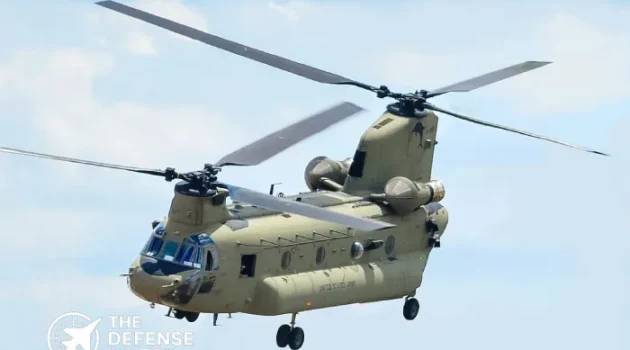
The CH-47F Block II Chinook helicopter is entering low-rate production at the exact moment three NATO air forces — Germany, the United Kingdom, and Switzerland — are committing billions of euros and pounds to the tandem-rotor platform to replace aging heavy-lift fleets. Even as the US Army pauses its own full-rate procurement decision to let frontline units evaluate the aircraft, European demand for the H 47 Chinook helicopter is accelerating, driven by NATO’s eastern-flank reinforcement requirements and a lack of any credible near-term alternative.
Sixty-four years after it first entered service, the Chinook helicopter is not winding down — it is being rebuilt into a heavier, longer-ranged, digitally networked platform for a battlefield defined by contested logistics. Three separate NATO air arms have placed nine-figure and ten-figure contracts on Boeing’s production line in Philadelphia within the past twelve months, while the US Army itself has quietly pumped the brakes on the very upgrade program it created. That contradiction — surging allied demand against domestic institutional caution — is the real story of the CH-47F helicopter in 2026, and it says as much about the future of NATO tactical mobility as it does about any single airframe.
- The Tactical Lift Backbone of Contested Logistics
- The Army’s Own Hesitation
- NATO’s Eastern Flank Is Buying Anyway
- Germany’s €7 Billion Heavy Transport Helicopter Program
- The UK’s H-47(ER) and a Second Tranche on the Horizon
- Switzerland and the Widening European Buyers’ Club
- Comparative Snapshot: NATO Chinook Procurement, 2026
- Where Chinook Fits Alongside FLRAA and NGAD-Era Modernization
- The Esports Parallel: Why Allies Keep Drafting the Same Veteran Unit
- FAQ
- The Strategic Takeaway
The Tactical Lift Backbone of Contested Logistics
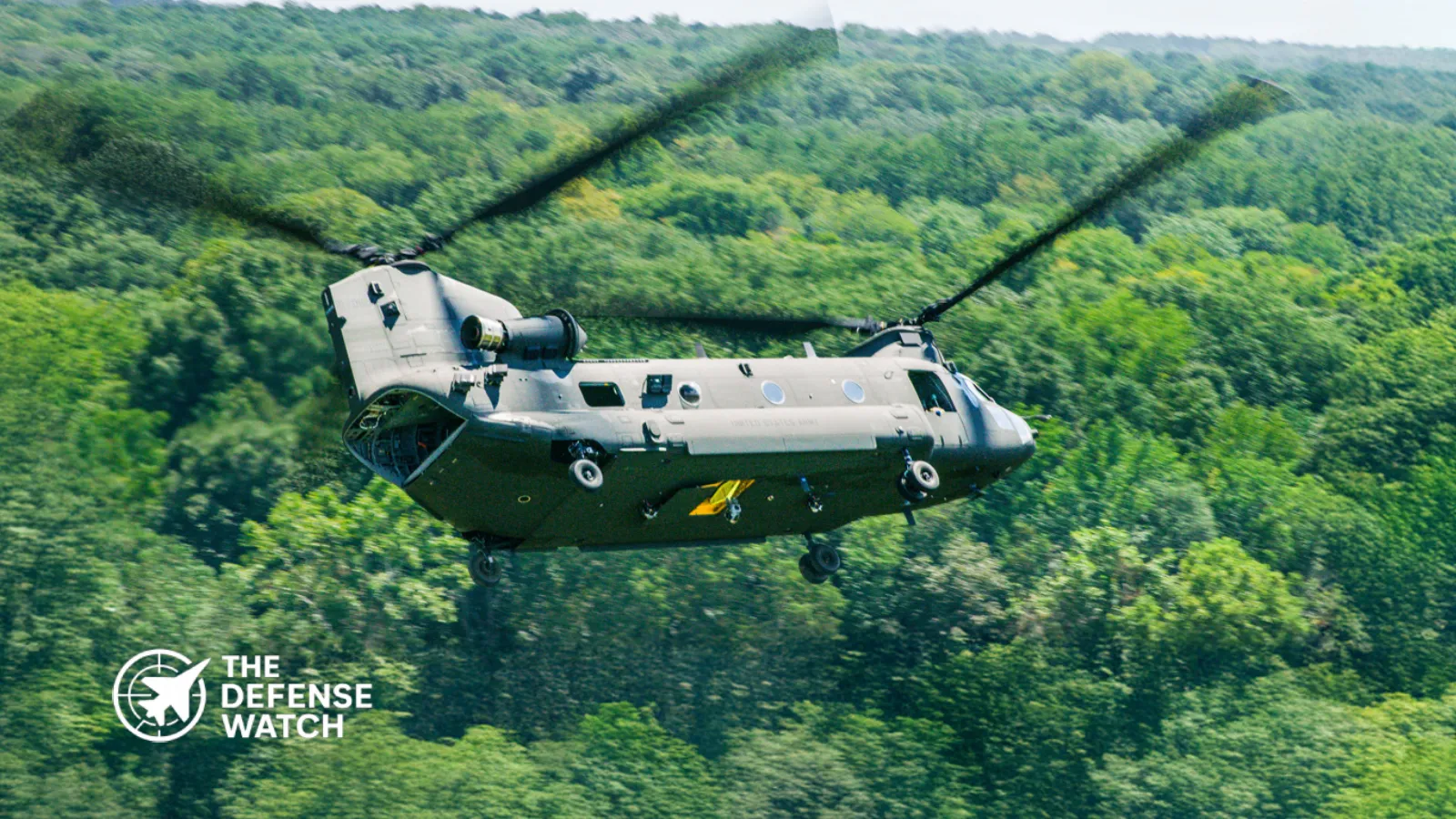
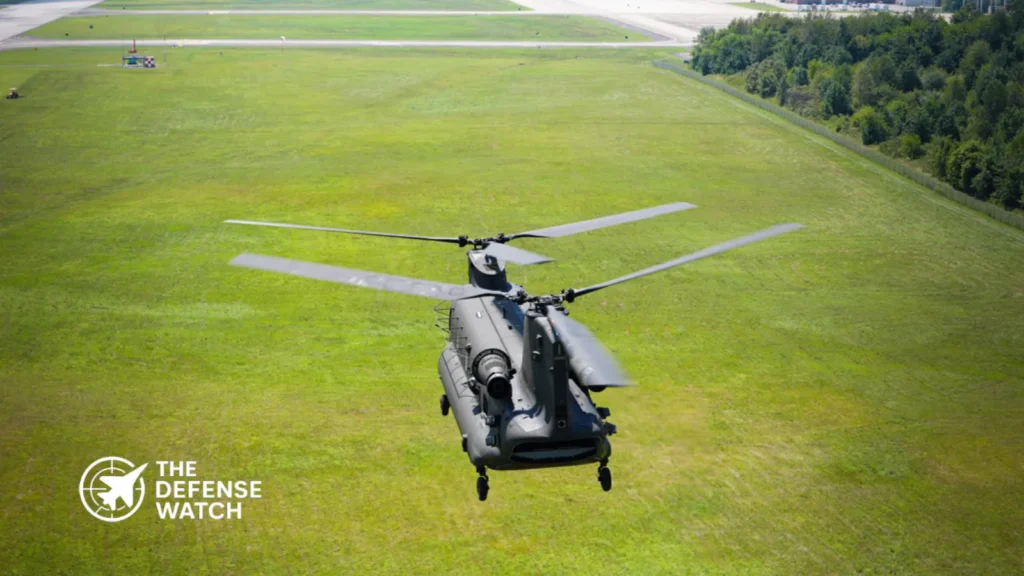
No rotary-wing platform in the Western inventory moves as much mass, as far, as reliably as the tandem-rotor Chinook. The CH-47F Block II upgrade — a recapitalization of existing Block I airframes rather than a clean-sheet design — strengthens the drivetrain and airframe to increase maximum gross weight by roughly 4,000 pounds while improving the fuel system and overall sustainment. The Army has explicitly tied the upgrade to operating in “contested logistics environments,” the doctrinal term for battlefields where GPS jamming, air defense threats, and dispersed forces make traditional resupply lines fragile.
The Department of War’s plan calls for upgrading roughly 465 CH-47F Block I helicopters to the Block II standard, a fleet-wide recapitalization rather than a limited buy. That scale matters: it signals the Chinook is being treated as a multi-decade backbone asset, not a bridge platform awaiting replacement.
CH-47F Block II: What Actually Changed
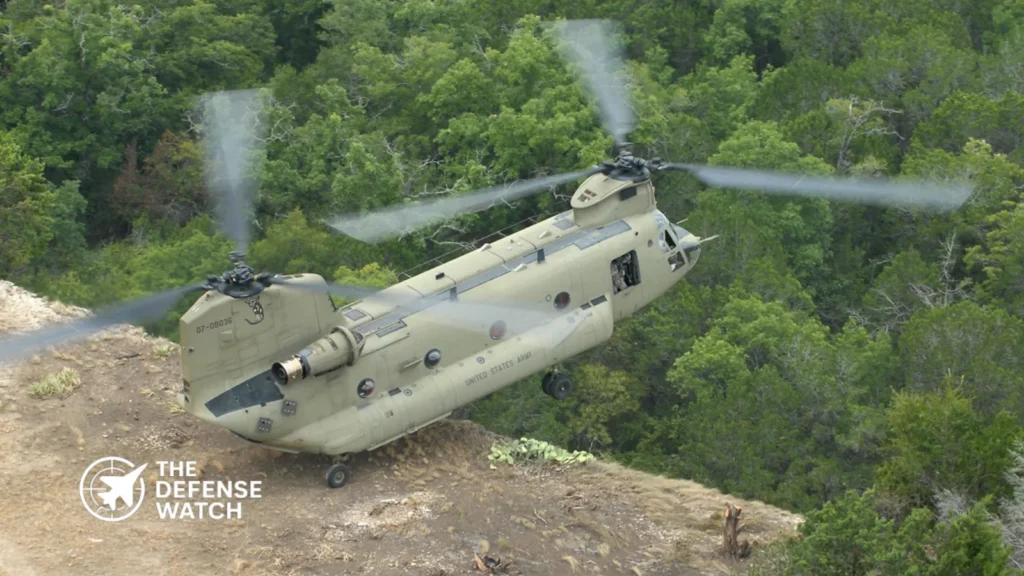
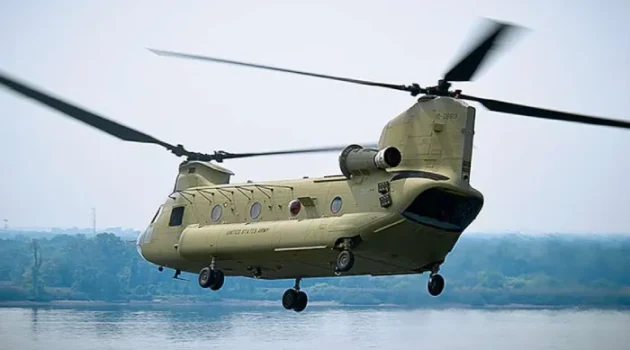
The Block II package is a structural and drivetrain upgrade layered onto a design whose fundamentals — twin Honeywell T55-GA-714A turboshaft engines, three-hook external cargo system, tandem-rotor configuration with no tail rotor — trace back to the CH-47D. Key elements include:
- Increased gross weight capacity, adding approximately 4,000 lb over Block I, aimed at improved hot-and-high hover performance for carrying vehicles like the Joint Light Tactical Vehicle
- Redesigned fuel cells, combining sponson fuel cells into single larger tanks to reduce weight and simplify the fuel system
- Improved drivetrain components to support the added gross weight without sacrificing service life
- Open avionics architecture, building on the existing Rockwell Collins Common Avionics Architecture System (CAAS) cockpit to enable future digital upgrades
- Digital Advanced Flight Control System (DAFCS) refinements, including an active parallel actuator system for more precise torque splitting between the two rotor systems
The baseline CH-47F already carries twin T55-GA-714A engines producing enough power to lift payloads exceeding 20,000 pounds under favorable conditions, with a cruise speed near 290 km/h and long-range ferry capability. The CAAS cockpit and DAFCS give the aircraft moving-map displays, GPS/INS navigation, and secure communications, while survivability is layered through missile warning systems, radar warning receivers, ballistic protection, and countermeasure dispensers.
The Army’s Own Hesitation
Here is where the CH-47F helicopter story gets genuinely interesting for procurement watchers. In late 2025, the Army authorized rapid fielding of Block II aircraft using FY2025 and FY2026 funds, planning to modernize the heavy-lift fleet across two Combat Aviation Brigades, each fielding twelve Block I airframes. Contract awards followed steadily — nine additional aircraft under Lots 4 and 5, then six more Block II Chinooks in April 2026 under a $324 million Lot 6 contract, bringing the total under contract to 24.

Then the signal shifted. By April 2026, senior Army officers indicated they would hold off on committing to full-rate Block II production beyond the 24 aircraft already on contract, choosing instead to let frontline units evaluate the type before deciding on a larger buy. That is a materially different posture than the “rhetorical commitment” to full-rate production the service had signaled back in 2024. The Army is simultaneously juggling Black Hawk, Apache, and Chinook procurement decisions inside a constrained modernization budget shaped by the Future Vertical Lift portfolio and its FARA/FLRAA priorities — and for now, Chinook is the program absorbing the caution.
NATO’s Eastern Flank Is Buying Anyway
While Washington pauses, Berlin is moving at speed — and treating the H 47 Chinook helicopter as a cornerstone of its post-Zeitenwende force structure.
Germany’s €7 Billion Heavy Transport Helicopter Program
Germany’s Heavy Transport Helicopter (Schwerer Transporthubschrauber, STH) program will replace the Luftwaffe’s aging CH-53G Sea Stallion fleet with 60 CH-47F Block II aircraft, in the German-specific “Block II SR AAR” configuration — Standard Range with Air-to-Air Refuelling capability. The scale of commitment is substantial:
- A $876.4 million hybrid contract awarded in October 2025 to deliver up to 60 CH-47F Block II helicopters, funded through FY2026 Germany Foreign Military Sales case money
- The broader German program is valued at approximately €7 billion, financed from the €100 billion Sondervermögen special defense fund created after 2022
- A second contract worth approximately $119 million, announced in January 2026, for additional production and integration work
- Aircraft will be based primarily at Holzdorf and Laupheim with Helicopter Wing 64, directly supporting NATO’s eastern-flank rapid reinforcement plans
Production milestones are tracking on schedule. Final assembly of the first German airframe began in April 2026, with the first Chinook expected to arrive in Germany in the fourth quarter of 2027 and the final aircraft of the 60-strong order arriving in the fourth quarter of 2032. By 2030, when the CH-53 fleet reaches the end of its service life, the Luftwaffe expects to already be operating roughly 40 Chinooks.
The UK’s H-47(ER) and a Second Tranche on the Horizon
The Royal Air Force’s Chinook fleet — already the largest of its kind in Europe at 60 aircraft — is being reshaped by the H-47 Extended Range program. The new H-47(ER) will carry 55 personnel or 10 tonnes of cargo, similar to the existing HC6 fleet, but with roughly double the operational range of the RAF’s current Chinooks, a capability the MoD has flagged as particularly suited to special forces missions. The aircraft will also field a 300 km/h top speed, an advanced digital cockpit, a modernized airframe, and a digital automatic flight control system enabling hover in reduced visibility.
The program has not been without friction. The original delivery schedule slipped roughly three years due to budget prioritization, with the UK ultimately negotiating over £300 million in savings on the £1.4 billion ($2 billion) deal. Deliveries of the 14 aircraft are now proceeding, with the first two airframes in build at Boeing’s Philadelphia facility and initial deliveries expected from 2027, replacing the RAF’s oldest Chinooks on a phased schedule designed to avoid a capability gap.
Notably, London is not stopping at 14 aircraft. The Ministry of Defence has confirmed plans for a second tranche of Chinook procurement, with Defence Minister Luke Pollard disclosing to Parliament that deliveries would begin in the mid-2030s and sustainment funding for the H-47 family is expected to be secured until at least 2060. That is a four-decade institutional bet on the platform, not a stopgap purchase.
Switzerland and the Widening European Buyers’ Club
Germany and the UK are not alone. Switzerland’s Heavy Transport Helicopter procurement program will see the Swiss Air Force receive a total of 60 CH-47F Block II Chinooks beginning in 2027 — a striking figure for a traditionally non-aligned air force, underscoring how broadly the Block II standard is being adopted across the continent. Interoperability training is already happening in practice: in April 2026 the German Luftwaffe trained alongside Dutch CH-47s and German CH-53s at Holzdorf, rehearsing personnel and materiel transport as well as hot-refueling procedures.
Comparative Snapshot: NATO Chinook Procurement, 2026
Nation Program Quantity Configuration Est. Program Value First Delivery United States Rapid Fielding (Army) 24 on contract (2 CABs planned) CH-47F Block II $324M+ per recent lot Mid-2024 (ongoing) Germany Heavy Transport Helicopter (STH) 60 CH-47F Block II SR AAR ~€7 billion Q4 2027 United Kingdom H-47 Extended Range 14 (+ second tranche planned) H-47(ER) £1.4 billion ($2B) 2026–2027 Switzerland Heavy Transport Helicopter 60 CH-47F Block II Undisclosed 2027 US Special Operations Command MH-47G modernization 51+ MH-47G Block II Ongoing Continuous Where Chinook Fits Alongside FLRAA and NGAD-Era Modernization
The Army’s hesitation on full-rate Block II production is not a vote of no confidence in the Chinook helicopter itself — it reflects budget triage across a crowded rotary-wing modernization slate. The Future Vertical Lift portfolio, encompassing the Future Long-Range Assault Aircraft (FLRAA) intended to eventually replace the medium-lift UH-60 Black Hawk, competes for the same procurement dollars as heavy-lift Chinook recapitalization and ongoing AH-64E Apache remanufacture lines. Army aviation officials have described the current approach as evaluating Black Hawk, Apache, and Chinook procurement “in real time” rather than locking in multi-year commitments — a posture that keeps Block II production alive at a modest rate while the service decides how much of its heavy-lift future rests on an airframe whose basic layout dates to the early 1960s versus next-generation vertical-lift designs still years from fielding.
For NATO allies without their own next-generation heavy-lift program in the pipeline, that debate is largely academic. Germany and Switzerland evaluated alternatives — including the Sikorsky CH-53K King Stallion — before committing to the Chinook, ultimately favoring the type’s decades-deep NATO interoperability and established sustainment ecosystem over a clean-sheet design with a thinner operational track record.
The Esports Parallel: Why Allies Keep Drafting the Same Veteran Unit
Strategic gaming communities will recognize the pattern. In competitive squad-based titles, teams facing a balance patch that nerfs a flashy new unit don’t necessarily bench the reliable, unglamorous workhorse that’s carried every roster for a decade — they keep drafting it, because proven synergy with the rest of the composition beats theoretical upside from an unproven pick. The Chinook is that pick for NATO air mobility: not the newest airframe in the meta, but the one every allied logistics chain, training pipeline, and maintenance depot is already built around. Germany and Switzerland didn’t choose the CH-47F Block II because it was cutting-edge; they chose it because interoperability compounds — every hour of joint training, every shared spare-parts pool, and every interchangeable aircrew qualification is value that a technically superior but isolated platform cannot replicate on short notice.
FAQ
What is the difference between the CH-47F and the CH-47F Block II?The Block II is a recapitalization of existing Block I airframes that increases maximum gross weight by roughly 4,000 pounds, redesigns the fuel system for reduced weight and greater capacity, upgrades the drivetrain, and refines the digital flight control system — all while retaining the CH-47F’s twin T55-GA-714A engines and CAAS cockpit architecture.
Why is the US Army slowing Chinook Block II procurement while allies are buying more?The Army is currently evaluating the aircraft with frontline units before committing beyond the 24 examples already under contract, balancing Chinook recapitalization against parallel Black Hawk, Apache, and Future Long-Range Assault Aircraft modernization priorities within a constrained budget. European allies, lacking a comparable next-generation heavy-lift alternative in development, face no equivalent trade-off.
How many CH-47F Chinooks has Germany ordered?Germany’s Heavy Transport Helicopter program covers 60 CH-47F Block II SR AAR helicopters, valued at approximately €7 billion, with deliveries beginning in the fourth quarter of 2027 and continuing through 2032.
What makes the H 47 Chinook helicopter suited to NATO’s eastern flank?Its heavy external sling-load capacity, tandem-rotor stability on unprepared terrain, and — in the German and UK configurations — extended range and air-to-air refueling capability make it well suited to rapid reinforcement and sustainment missions across the Baltic and Central European theater, where contested logistics and dispersed basing are central planning assumptions.
The Strategic Takeaway
The Chinook helicopter’s endurance is not nostalgia — it is the product of NATO allies independently concluding that interoperable heavy lift, backed by a mature global sustainment network, outweighs the theoretical advantages of an unproven next-generation design. Germany, the UK, and Switzerland are collectively committing well over $10 billion to CH-47F Block II variants through the early 2030s, locking in the platform’s relevance for at least another generation regardless of how quickly Washington resolves its own Future Vertical Lift priorities. Watch the US Army’s full-rate production decision closely: if it lands in favor of a larger Block II buy, it will likely follow — not lead — the momentum already set in Berlin, London, and Bern.