












@2026 – All Right Reserved. TheDefenseWatch.com
- Home
- Catalog
- Radar Systems
- AN/APG-83 SABR Radar
AN/APG-83 SABR Radar
Full Specifications
1. General Information
| Name / Designation | AN/APG-83 SABR |
| Manufacturer | Northrop Grumman |
| Country of Origin | United States |
| Type / Role | Airborne AESA fire control radar |
| Operational Domain | Air |
| Status | Operational and in production |
2. Technical Specifications
| Frequency Band | Not publicly disclosed |
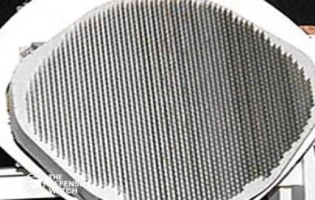
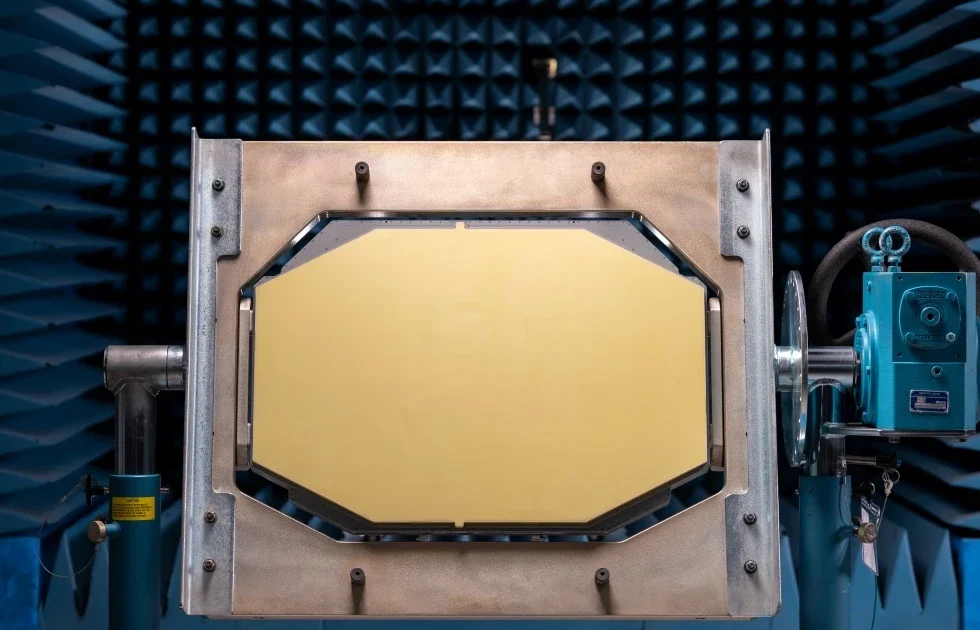
| Antenna Type | Active Electronically Scanned Array |
| Antenna Aperture / Size | Not publicly disclosed |
| Power Output | Not publicly disclosed |
| Detection Range | Not publicly disclosed |
| Tracking Range | Not publicly disclosed |
| Target Tracking Capacity | Not publicly disclosed |
| Elevation Coverage | Not publicly disclosed |
| Azimuth Coverage | Not publicly disclosed |
| Beam Steering | Electronic |
| Pulse Repetition Frequency (PRF) | Not publicly disclosed |
| Resolution | Not publicly disclosed |
| Update Rate | Rapid electronic target updates |
| Clutter Rejection / ECCM | Advanced electronic protection and clutter-management capabilities |
3. Functional Capabilities
| Primary Functions | Air-to-air search, tracking, air-to-ground targeting, SAR mapping |
| Target Types | Airborne and ground targets |
| Integration / Networking | F-16 avionics and mission systems |
| IFF Capability | Aircraft-level integration, specific radar details not publicly disclosed |
| Data Link / Networking | Compatible with aircraft mission and data systems |
| Weather & Terrain Resistance | All-weather operation |
| Mobility / Mounting | Fixed aircraft nose installation |
4. Physical & Operational Characteristics
| Dimensions | Not publicly disclosed |
| Weight | Not publicly disclosed |
| Power Requirement | Designed around F-16 existing power provisions |
| Cooling System | Designed around existing F-16 cooling provisions |
| Operating Temperature Range | Not publicly disclosed |
| Deployment Platform | F-16 and compatible aircraft configurations |
| Crew Requirement | No dedicated crew; operated by aircraft crew |
5. Software & Processing
| Signal Processor Type | Integrated digital radar processing architecture |
| Processing Speed | Not publicly disclosed |
| AI / Automation Features | Automated radar processing and SAR target-location functions; no specific AI specification publicly confirmed |
| Data Output / Interface | Aircraft mission-system interfaces |
| Software Upgradeability | Software-based capability updates supported |
6. Operational History
| Year Introduced | Development and flight testing began in the 2010s; production deliveries began in 2016 |
| Users / Operators | United States and international F-16 operators |
| Notable Deployments | F-16 modernization programs in the United States and allied countries |
| Successor / Predecessor | Successor to legacy mechanically scanned F-16 fire control radars |
7. Export / Compliance Data
| Export Availability | Available through approved F-16 modernization and foreign military programs |
| ITAR / MTCR Status | U.S.-controlled defense technology; specific licensing classification is not publicly detailed here |
| Cost Estimate | No standard public unit price |
PROS
- AESA technology improves search and tracking performance
- Supports simultaneous multi-mode operations
- Derived technology from F-22 and F-35 radar programs
- Designed for F-16 retrofit without major structural changes
- Supports advanced synthetic aperture radar mapping
CONS
- Exact performance figures are largely not public
- Integration costs vary by aircraft modernization package
- Requires compatible aircraft avionics and cooling systems
- Does not provide stealth capability by itself
- Performance remains dependent on aircraft and mission configuration
AN/APG-83 SABR AESA Radar
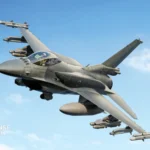
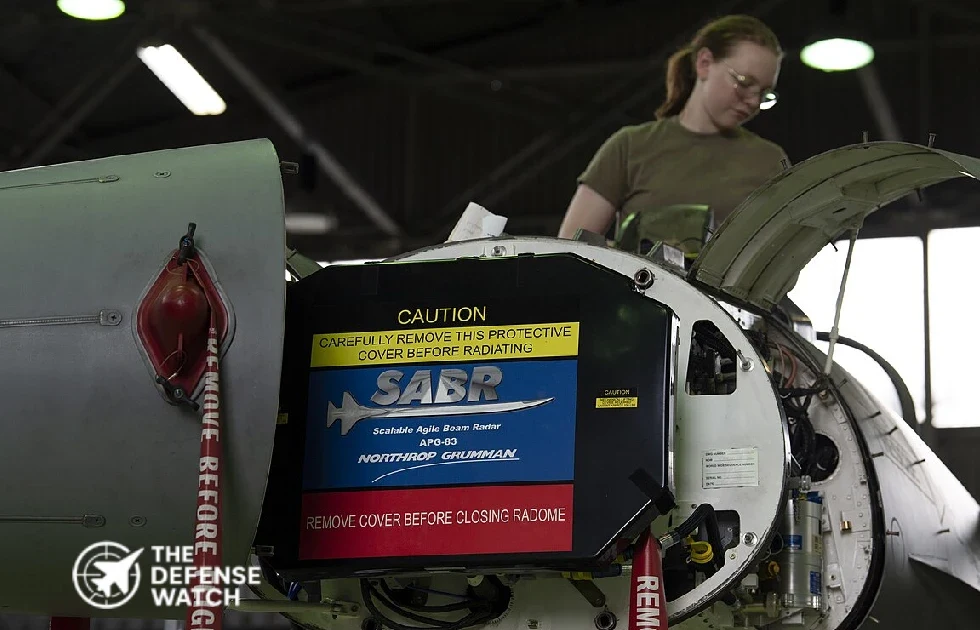
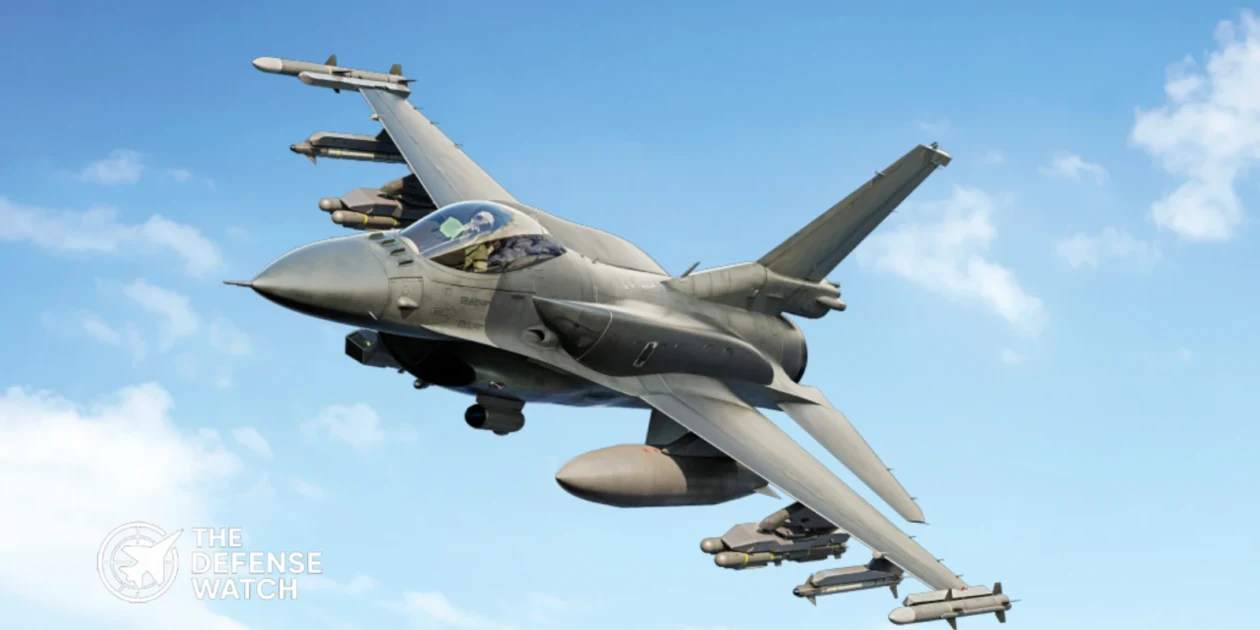
The AN/APG-83 Scalable Agile Beam Radar (SABR) is an Active Electronically Scanned Array (AESA) fire control radar developed to modernize fourth-generation fighters, particularly the F-16. It replaces older mechanically scanned radar systems with electronically steered beams, allowing faster searches, rapid target updates, simultaneous air-to-air and air-to-ground operations, and improved electronic protection. Northrop Grumman says SABR incorporates technology and operating modes derived from its AN/APG-77 and AN/APG-81 AESA radars used on the F-22 and F-35.
Manufacturer
SABR was developed and manufactured by Northrop Grumman in the United States. The radar was selected for F-16 modernization programs and was designed to fit within the aircraft’s existing structural, electrical power, and cooling constraints, reducing the need for major airframe changes.
Speed and Range
Because the APG-83 is a radar rather than an aircraft or missile, it has no independent speed or physical range. Its operational detection and tracking performance depends on aircraft configuration, target characteristics, operating conditions, and classified software settings. Northrop Grumman publicly describes SABR as providing earlier and longer-range detection compared with legacy F-16 radar technology, but does not publish a universal maximum detection range.
Cost/Price
Northrop Grumman does not publicly list a standard unit price for the AN/APG-83. Procurement costs vary according to aircraft modernization scope, integration, software, support, training, and the number of systems purchased.
Key Operational Role
SABR supports beyond-visual-range air combat, air-to-ground targeting, synthetic aperture radar mapping, moving-target detection, and electronic protection. Its software and hardware architecture also supports integration with electronic warfare systems such as the Integrated Viper Electronic Warfare Suite.
FAQs
What is the AN/APG-83 SABR radar?
The AN/APG-83 SABR is an AESA fire control radar developed by Northrop Grumman primarily to upgrade F-16 fighters with modern radar capabilities.
What aircraft uses the APG-83 radar?
The F-16 is the primary aircraft associated with the APG-83, including upgraded and new-production configurations.
Is the APG-83 an AESA radar?
Yes. The APG-83 uses Active Electronically Scanned Array technology and provides electronically steered radar beams.
What is the range of the APG-83 radar?
Northrop Grumman does not publish a single maximum detection range for SABR. Actual performance depends on target, environment, aircraft configuration, and mission conditions.
How does APG-83 improve the F-16?
It provides faster electronic scanning, improved target detection and tracking, synthetic aperture radar mapping, multi-mode operation, and electronic protection while fitting within existing F-16 structural, power, and cooling constraints.
Reviews
Disclaimer Note
The information provided on TheDefenseWatch.com is for general informational purposes only. While we strive to ensure the accuracy, completeness, and timeliness of our content regarding defense and aerospace products, technologies, and specifications, we cannot guarantee that all information is 100% accurate or up-to-date due to the evolving nature of military technology and classified data.TheDefenseWatch.com does not warrant the reliability, suitability, or availability of the information for any specific purpose. Users are advised to consult official sources, such as manufacturers, government publications, or defense agencies, for precise and verified data before making decisions based on our content.We are not affiliated with any defense manufacturers, governments, or military organizations mentioned. Opinions, reviews, and ratings reflect expert analysis but are subjective and should not be considered endorsements. TheDefenseWatch.com is not responsible for any errors, omissions, or consequences arising from the use of this website’s content.External links are provided for convenience and do not imply endorsement. TheDefenseWatch.com reserves the right to update or modify content without prior notice. By using this website, you agree to our Privacy & Cookies Policy.

New Arrivals
-
 Lynx XM30 Infantry Fighting Vehicle
-
Bell 407M Helicopter
-
Bell 412 EPX Helicopter
-
Robin Radar IRIS Drone Detection Radar
-
C-130J Super Hercules Aircraft
-
Saab Gripen F Fighter Jet
-
F-22s Raptor Fighter Jet
-
Airbus A330 MRTT+ Refueling Tanker
-
Airbus A330 MRTT Refueling Tanker
-
AIM-424 Malice Missile
-
Dovbush T40 Drone
-
MiG-25 Foxbat Fighter Jet
Popular Comparisons
-
 Su-57 Fighter Jet vs J-20 Fighter Jet: Stealth and Air Combat Compared
View Comparison →
Su-57 Fighter Jet vs J-20 Fighter Jet: Stealth and Air Combat Compared
View Comparison → -
Mirage 2000 vs Tejas Mk1A: Legacy Combat Power vs Indigenous Modernization
View Comparison →
-
Rafale Fighter Jet vs F-22 Raptor: Which Air Dominance Fighter Has the Edge?
View Comparison →
-
Tejas Fighter Jet vs. Rafale Fighter Jet: India’s Indigenous Fighter Meets France’s Proven Multirole Combat Aircraft
View Comparison →
-
F-22 Raptor vs. F-35 Joint Strike Fighter: Which Fifth Generation Fighter Has the Edge?
View Comparison →
-
F-35A vs. F-22 Raptor: Which U.S. Stealth Fighter Dominates Modern Air Combat?
View Comparison →
-
AGM-114 Hellfire vs. AGM-179 JAGM: Which U.S. Precision Missile Is Better?
View Comparison →
-
Patriot (PAC-3) vs. THAAD: Complete Missile Defense System Comparison, Capabilities, Range, and Strategic Roles
View Comparison →
-
AIM-120 AMRAAM vs. AIM-9X Sidewinder: Complete Air-to-Air Missile Comparison, Range, Speed, and Combat Roles
View Comparison →
-
BGM-109 Tomahawk vs. AGM-158 JASSM: Which Long Range Precision Strike Missile Offers Greater Strategic Advantage?
View Comparison →
- Lockheed Martin Highlights F-16 Block 70/72 As Advanced Multirole Fighter

- ASELSAN Unveils TOLUN Deep-Strike Variants For Bayraktar AKINCI
- General Electric Secures $2.87 Billion Navy Deal For F414 Engine Logistics
- War Department Expands GenAI.mil With ChatGPT And Grok
- Denmark Moves To Reinforce Greenland As Arctic Tensions Rise
- USS Abraham Lincoln Arrives In Thailand After 286 Days At Sea
- Top 10 Most Superb Modern European Military Aircraft in 2026
- Rheinmetall Delivers First Lynx XM30 Prototype To U.S. Army For Bradley Replacement Test
- TEKEVER Acquires Flowcopter To Expand Heavy-Lift Autonomous Drone Capability
- Naval Group Secures $5 Billion Deal For Four Swedish FDI Frigates