
























@2026 – All Right Reserved. TheDefenseWatch.com
- Home
- Defense Systems
- Fighter Jets
- MiG-25 Foxbat Fighter Jet
MiG-25 Foxbat Fighter Jet
Defense Systems Full Specifications
General Information
| Name | MiG-25 Foxbat |
| Manufacturer | Mikoyan-Gurevich |
| Country of Origin | Soviet Union |
| Type / Role | Interceptor, reconnaissance aircraft |
| Generation | 3rd |
| Status | Retired from many operators, limited service remains |
| First Flight | March 6, 1964 |
| Introduction / In Service Since | 1970s |
| Number Built | Approximately 1,186 |
| Operators | Soviet Union/Russia, India, Iraq, Syria, Algeria and others |
Dimensions & Structure
| Length | 23.82 m |
| Wingspan | About 14.0 m |
| Height | 6.10 m |
| Wing Area | About 61.4 m² |
| Empty Weight | About 20,000 kg |
| Maximum Takeoff Weight (MTOW) | Up to about 41,000 kg, configuration dependent |
| Internal Weapons Bay | None |
| External Hardpoints | 4 |
Performance
| Maximum Speed | Mach 2.83, about 3,000 km/h |
| Range | Up to about 2,575 km ferry, configuration dependent |
| Combat Radius | Approximately 1,250 km, configuration dependent |
| Service Ceiling | About 20,700 to 23,000 m |
| Rate of Climb | About 19,000 m in 6.6 minutes |
| Thrust-to-Weight Ratio | About 0.61 |
| G Limits | Approximately +5 g, variant dependent |
Powerplant
| Engine Type | Tumansky R-15BD-300 afterburning turbojet |
| No. of Engines | 2 |
| Thrust (each) | About 112 kN with afterburner |
| Thrust Vectoring | No |
| Fuel Capacity | About 15,245 kg internal fuel, configuration dependent |
Armament
| Gun | None on standard interceptor versions |
| Missiles (Air-to-Air) | R-40, R-60; some variants could use other missiles |
| Missiles (Air-to-Ground) | Kh-58 on MiG-25BM |
| Bombs | Free-fall bombs on reconnaissance/strike variants |
| Hardpoints | 4 external stations |
| Payload Capacity | About 2,000 kg, configuration dependent |
Avionics & Systems
| Radar | RP-25 Smerch-A; later Safir-25 variants |
| Radar Range | About 85 km for early RP-25 |
| Electronic Warfare (EW) System | Radar warning, ECM and countermeasure equipment on selected variants |
| Targeting System | Radar-guided fire control |
| Helmet Display | None |
| Navigation | Soviet-era navigation and radio systems |
| Autopilot / AI Assistance | Conventional autopilot, no AI assistance |
| Communication | Military VHF/UHF-era Soviet communication systems |
Stealth & Technology
| Radar Cross Section (RCS) | Large, not publicly standardized |
| Stealth Features | None |
| Infrared Signature Reduction | None of modern stealth standard |
| Sensor Fusion | None by modern fighter standards |
| Networking Capabilities | Legacy Soviet tactical data and communications systems |
Variants
| Special Export Versions | MiG-25P, MiG-25PD, MiG-25R/RB, MiG-25PU/RU, MiG-25BM |
Operational History
| Major Conflicts / Deployments | Lebanon, Iran-Iraq War, Gulf War, Operation Southern Watch and other regional operations |
| Notable Operators | Soviet Union, Iraq, Syria, India, Algeria, Libya, Ukraine and others |
| Combat Proven? | Yes |
| Mission Types | Interception, reconnaissance, electronic warfare, air-defense suppression and strike |
Cost & Program
| Unit Cost | Estimated $3 million to $5 million historically, not an official confirmed figure |
| Development Cost | No reliable public figure |
| Program Name | Ye-155 / MiG-25 program |
| Funding Countries | Soviet Union |
Additional Information
| Upgrades Planned | Historical upgrades included improved radar, avionics, ECM and missile integration |
| Future Replacement | MiG-31 |
| Export Restrictions | Subject to Soviet and later national export controls |
| Notable Achievements | Among the fastest and highest-flying combat aircraft to enter operational service |
| Competitors | F-106 Delta Dart, English Electric Lightning, later MiG-31 |
PROS
- Exceptional high-altitude performance
- Maximum speed around Mach 2.83
- Powerful long-range interception capability
- Large radar and missile carrying capacity
- Proven reconnaissance variants
CONS
- Very high fuel consumption
- Limited maneuverability compared with modern fighters
- Heavy and large airframe
- Older radar and avionics architecture
- No internal weapons bay or standard cannon
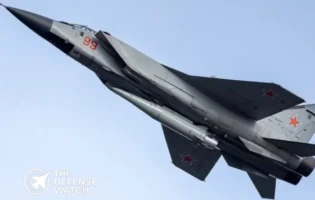
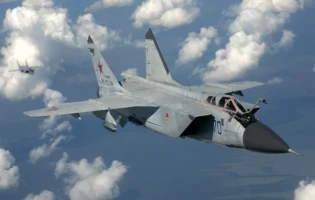
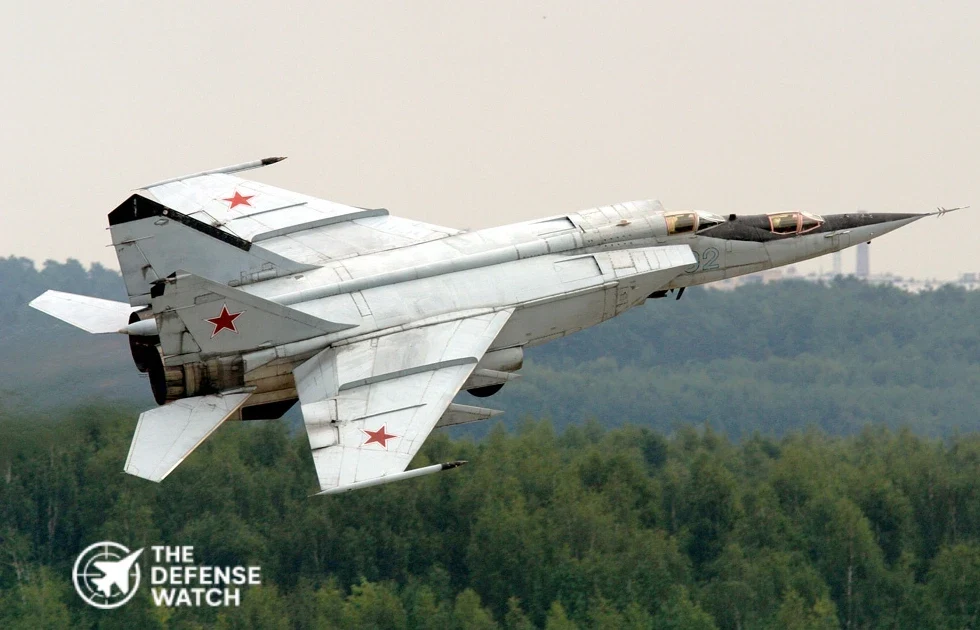
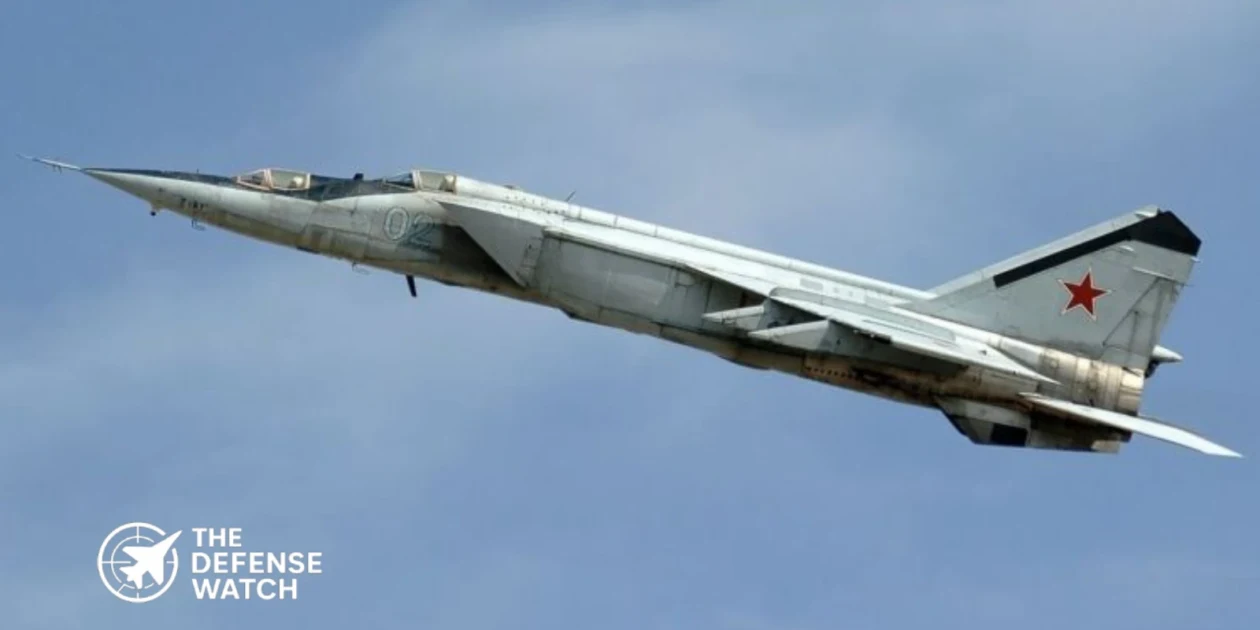
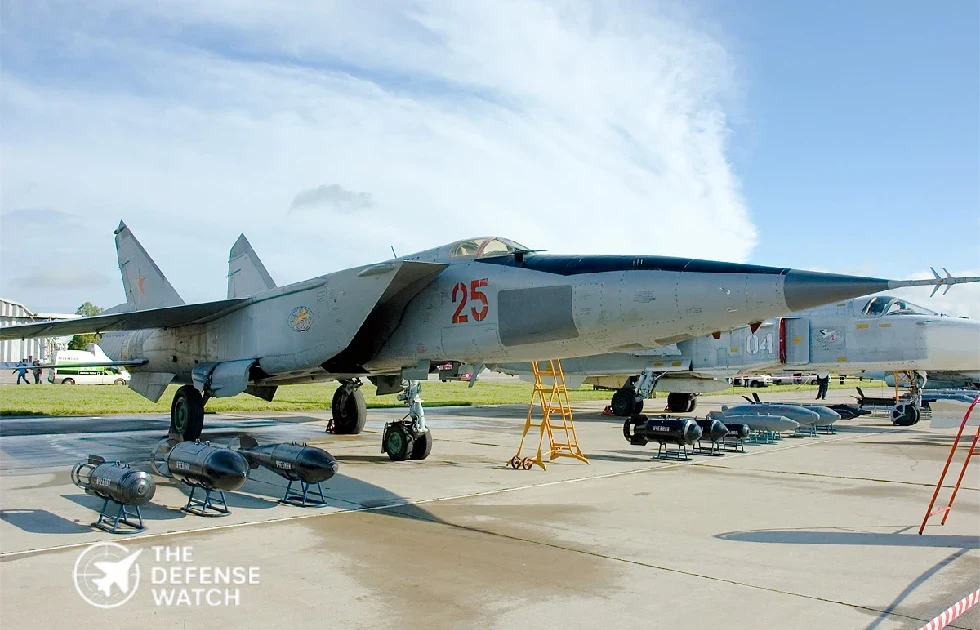
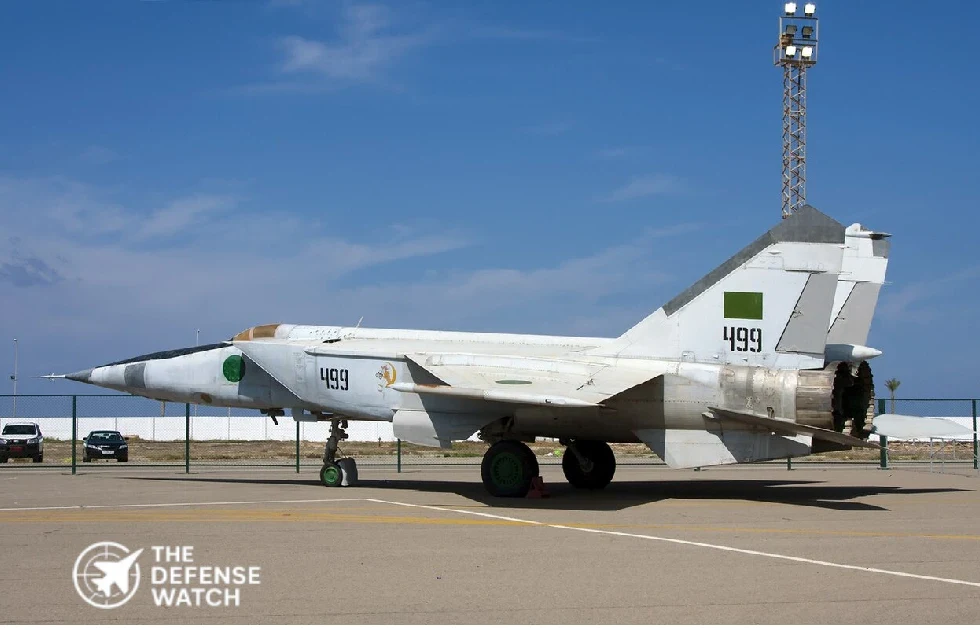
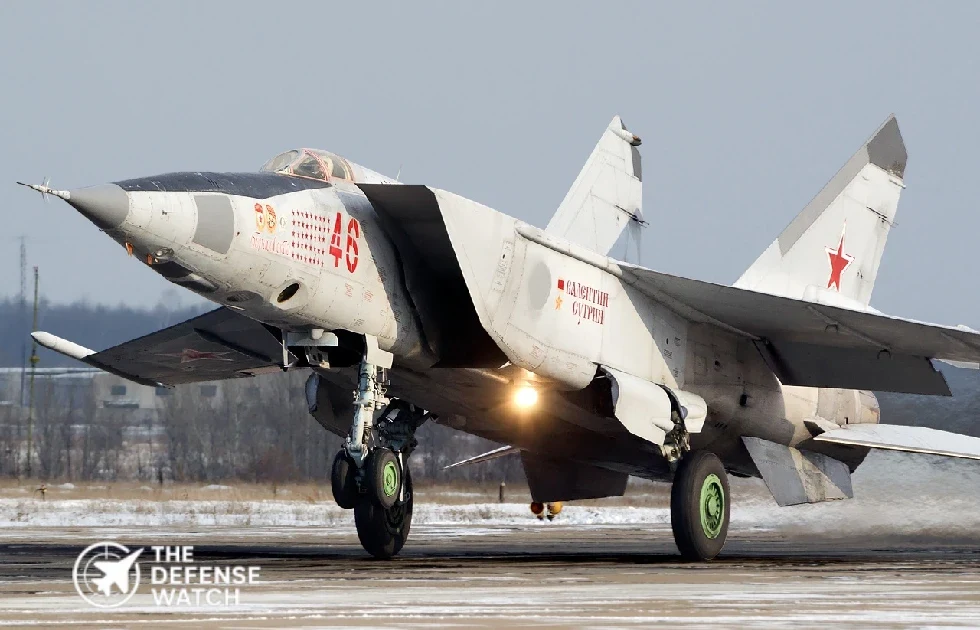
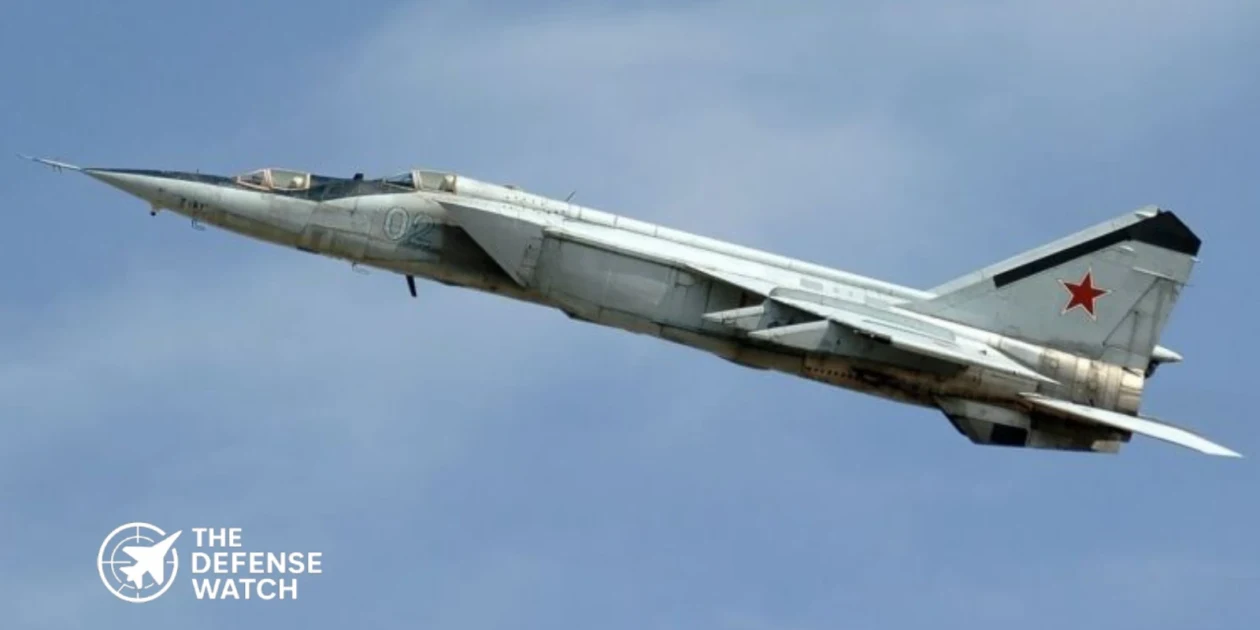
The MiG-25 Foxbat remains one of the most recognizable high-speed interceptor aircraft of the Cold War. Developed by the Soviet Mikoyan design bureau during the 1960s, it was designed primarily to intercept high-altitude bombers and reconnaissance aircraft while also serving in dedicated reconnaissance and strike roles. The aircraft first flew in 1964 and entered operational service in the early 1970s.
Manufacturer and Purpose
The MiG-25 was manufactured in the Soviet Union by the Mikoyan-Gurevich design bureau, with production centered at the Gorky aircraft plant. Its large airframe, powerful engines, and high-temperature-resistant construction allowed it to operate at extreme speeds and altitudes.
The interceptor versions used the RP-25 Smerch-A radar and were normally armed with up to four R-40, NATO AA-6 Acrid, air-to-air missiles. Later MiG-25PD aircraft received improved radar and could also carry R-60 missiles.
Speed and Range
The MiG-25 could reach approximately Mach 2.83, or about 3,000 km/h, at high altitude. Its service ceiling was roughly 20,700 meters, while published range figures vary by configuration and mission profile. Some sources list a ferry range approaching 2,575 km.
The Foxbat was not designed as a modern multirole fighter. Its strengths were speed, altitude, acceleration, and interception. Reconnaissance versions carried cameras, electronic intelligence equipment, or side-looking radar, while the MiG-25BM specialized in suppressing enemy air defenses.
Cost and Price
A reliable official unit price is difficult to establish because the MiG-25 was developed and produced under the Soviet defense economy. Some secondary sources estimate historical unit costs at roughly $3 million to $5 million, but these figures should be treated as estimates rather than verified procurement prices.
Disclaimer Note
The information provided on TheDefenseWatch.com is for general informational purposes only. While we strive to ensure the accuracy, completeness, and timeliness of our content regarding defense and aerospace products, technologies, and specifications, we cannot guarantee that all information is 100% accurate or up-to-date due to the evolving nature of military technology and classified data.TheDefenseWatch.com does not warrant the reliability, suitability, or availability of the information for any specific purpose. Users are advised to consult official sources, such as manufacturers, government publications, or defense agencies, for precise and verified data before making decisions based on our content.We are not affiliated with any defense manufacturers, governments, or military organizations mentioned. Opinions, reviews, and ratings reflect expert analysis but are subjective and should not be considered endorsements. TheDefenseWatch.com is not responsible for any errors, omissions, or consequences arising from the use of this website’s content.External links are provided for convenience and do not imply endorsement. TheDefenseWatch.com reserves the right to update or modify content without prior notice. By using this website, you agree to our Privacy & Cookies Policy.
New Arrivals
Popular Comparisons
-
 Tejas vs Gripen: Key Differences and Capabilities
View Comparison →
Tejas vs Gripen: Key Differences and Capabilities
View Comparison → -
Tejas vs MiG-21 Bison: How India Replaced Its Iconic Supersonic Fighter
View Comparison →
-
F-35 vs F-16: Stealth, Sensors and Combat Roles
View Comparison →
-
Tejas Fighter Jet vs F-16 Fighting Falcon: Capability Compared
View Comparison →
-
Rafale Fighter Jet vs F-16 Fighting Falcon : Which Fighter Has the Edge?
View Comparison →
-
Su-57 Fighter Jet vs J-20 Fighter Jet: Stealth and Air Combat Compared
View Comparison →
-
Mirage 2000 vs Tejas Mk1A: Legacy Combat Power vs Indigenous Modernization
View Comparison →
-
Rafale Fighter Jet vs F-22 Raptor: Which Air Dominance Fighter Has the Edge?
View Comparison →
-
Tejas Fighter Jet vs. Rafale Fighter Jet: India’s Indigenous Fighter Meets France’s Proven Multirole Combat Aircraft
View Comparison →
-
F-22 Raptor vs. F-35 Joint Strike Fighter: Which Fifth Generation Fighter Has the Edge?
View Comparison →
- U.S. Navy Funds SM-6 Block IAU Transition as Production Expands

- Rheinmetall Gives Germany Direct Access to Dedicated SAR Satellites
- NASA Sets Oct. 9 Departure for Northrop Grumman CRS-24 Cygnus
- NASA’s SpaceX Crew-12 Closes Dragon Hatch Ahead of ISS Departure
- Indonesia Expects Chinese J-10 Fighters Within Six Months
- Pakistan Tests Extended-Range Fatah-4 Cruise Missile
- U.S. Marines Rehearse NMESIS Anti-Ship Tactics in Hawaii
- U.S. Navy Uses Gray Flag to Test E-2D Hawkeye Tactics and Integration
- Trump, Hegseth Announce $6.6 Billion Arsenal-2 Shipyard in Maryland
- At Least 81 U.S. Military Aircraft Lost or Damaged in Iran War : Report