Rheinmetall’s Lynx XM30 Enters U.S. Army Testing
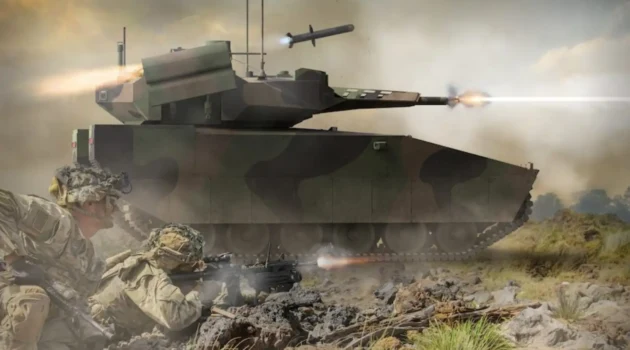
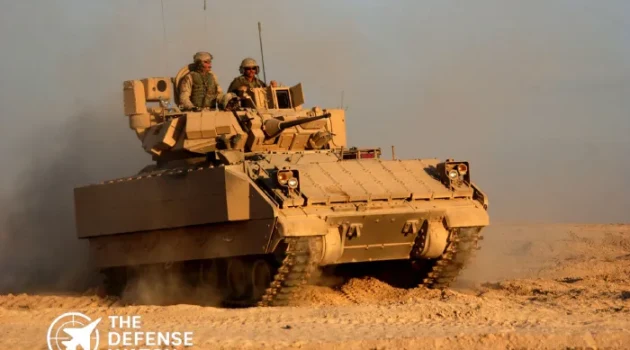
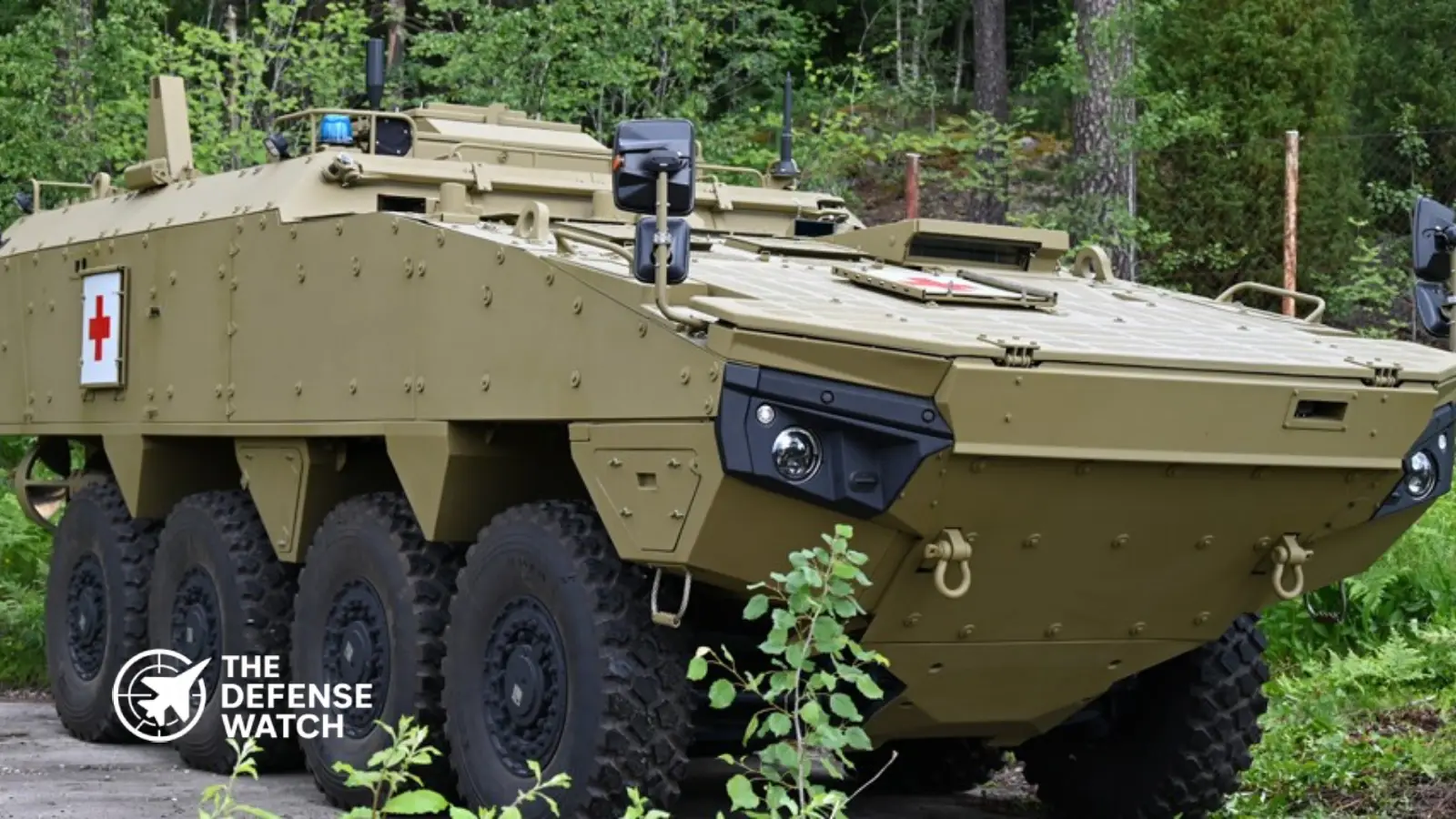
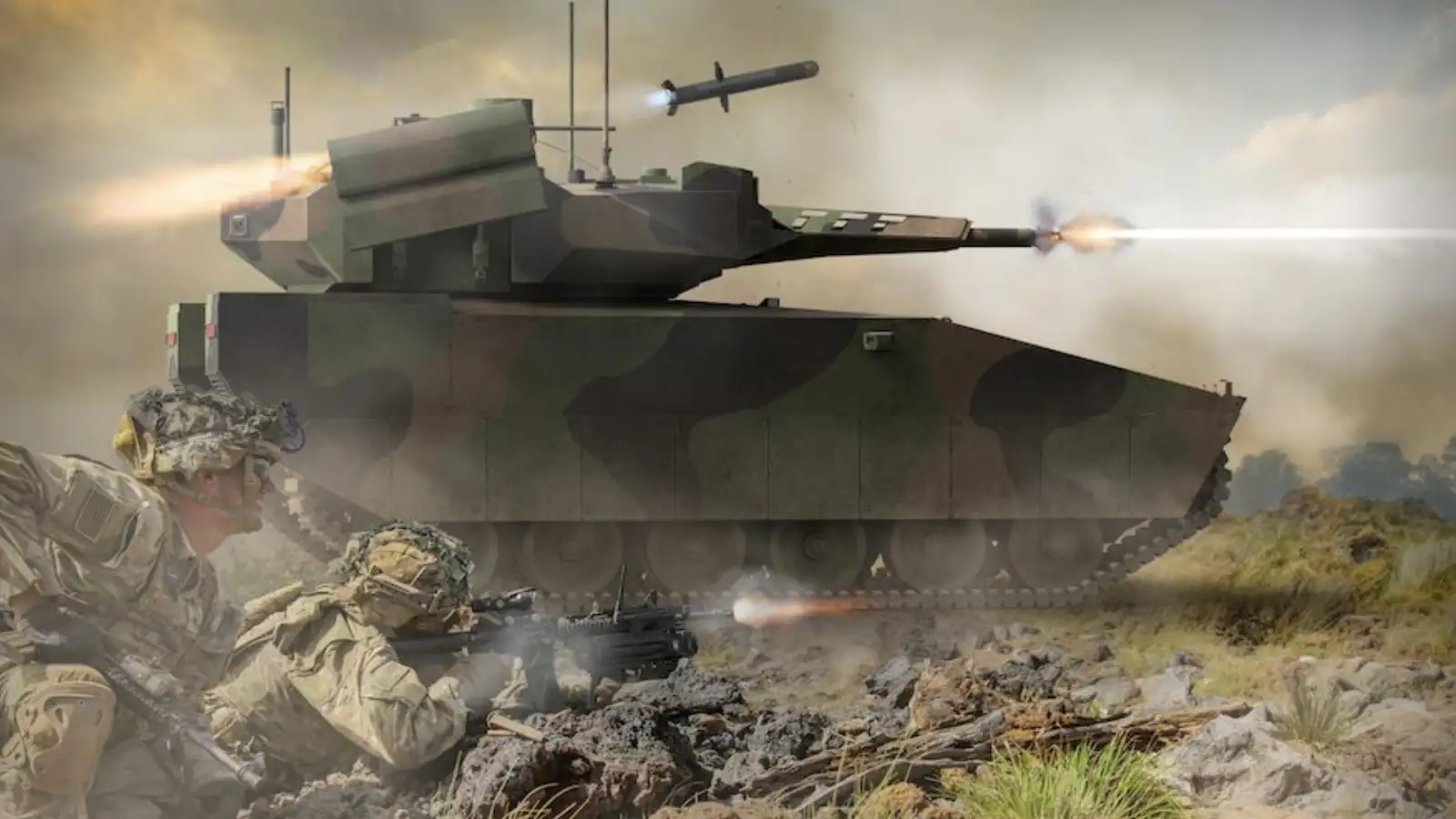
The Lynx XM30 U.S. Army program has entered a major testing phase after American Rheinmetall delivered the first of eight prototype infantry fighting vehicles to the service. The delivery moves Team Lynx from detailed design and prototype development into government-led developmental and performance evaluation as the Army seeks a replacement for the M2 Bradley Fighting Vehicle.
- Rheinmetall’s Lynx XM30 Enters U.S. Army Testing
- Takeaways
- Eight Prototypes Will Support Testing And Training
- Lynx XM30 Program At A Glance
- Hybrid Electric Powertrain Is A Key Difference
- 50mm Weapon And Unmanned Turret
- Designed Around Open Architecture
- Survivability In A Changing Ground War
- Team Lynx Builds Around A U.S. Industrial Network
- General Dynamics Remains The Competing Design
- Why The XM30 Matters For The U.S. Army
- Testing Will Determine The Next Phase
Takeaways
American Rheinmetall has delivered the first Lynx XM30 prototype to the U.S. Army, moving the Bradley replacement program into government-led developmental and performance testing.
The U.S. Army’s Project Manager XM30 identifies the vehicle as its future infantry fighting vehicle for armored formations, with a mission that includes maneuvering with joint combined-arms forces and controlling maneuver robotics and semi-autonomous systems. The program is explicitly intended to replace the Bradley.
The first Lynx prototype is part of American Rheinmetall’s Phase 3/4 Engineering and Manufacturing Development effort, which the company values at approximately $764 million. The work covers digital design, physical prototype production and full-system validation.
Eight Prototypes Will Support Testing And Training
American Rheinmetall plans to deliver the remaining seven Lynx XM30 prototypes later in 2026. Those vehicles are expected to support operational unit training while technical evaluations continue under the Army’s Transformation in Contact 2.0 initiative.
The Army’s approach is significant because the XM30 program is being evaluated through both technical testing and soldier interaction. Earlier Army development work used soldier touchpoints and simulations to assess crew arrangements, mission tasks and vehicle configurations before physical prototypes entered testing.
The newly delivered prototype will undergo government developmental and performance testing. Following initial military safety checks, soldiers are expected to conduct field maneuvers, with the broader evaluation culminating in large-scale combat simulations.
This testing phase is intended to establish how well the vehicle performs against the Army’s requirements rather than simply demonstrate that the prototype can operate under controlled conditions.
Lynx XM30 Program At A Glance
Program Element Current Status Program XM30 Mechanized Infantry Combat Vehicle Primary mission Infantry fighting vehicle Legacy vehicle being replaced M2 Bradley Rheinmetall prototype Lynx XM30 Prototypes from Rheinmetall Eight Phase Phase 3/4 EMD Rheinmetall EMD value Approximately $764 million Army evaluation Developmental and performance testing Key architecture Modular, adaptive open architecture Powertrain Hybrid-electric Primary competitors American Rheinmetall and General Dynamics Land Systems Planned production decision Limited competition following prototype evaluation The Army awarded Phase 3 and Phase 4 contracts to American Rheinmetall Vehicles and General Dynamics Land Systems in 2023. The combined value of the two awards was approximately $1.6 billion, and the Army said the vendors would compete later in the program based on demonstrated vehicle performance.
Hybrid Electric Powertrain Is A Key Difference
One of the most closely watched features of the Lynx XM30 is its hybrid-electric powertrain.
Rheinmetall describes the system as providing additional power-generation capacity while supporting vehicle mobility. The company also says the vehicle is designed around a modular architecture that can accommodate new technologies throughout its service life.
The importance of additional electrical power extends beyond propulsion. Modern armored vehicles increasingly depend on electronic sensors, communications, computing systems, active protection equipment and other power-intensive subsystems.
That makes electrical generation and distribution a core combat capability rather than simply an automotive consideration.
The practical test for the XM30 will therefore be whether the hybrid-electric architecture can deliver the required power without creating unacceptable penalties in weight, thermal management, maintenance burden, reliability or logistics.
Those questions can only be answered through Army testing under representative operating conditions.
50mm Weapon And Unmanned Turret
The Lynx XM30 is also designed around a larger-caliber weapon system than the 25mm cannon traditionally associated with the Bradley.
Army material has identified a 50mm cannon, remote turret and anti-tank guided missiles among the intended XM30 capabilities. The Army has separately advanced development of the XM1202 50mm training ammunition to support XM30 testing.
Rheinmetall previously identified the Lynx XM30 as featuring an unmanned 50mm turret with third-generation forward-looking infrared sensors, along with active protection and an open systems architecture.
The move toward a larger cannon reflects the Army’s requirement for greater direct-fire capability against a broader range of battlefield threats.
For the XM30 competition, however, the critical issue will not be the caliber alone. The Army will need to evaluate the complete weapon system, including target acquisition, fire control, ammunition handling, stabilization, reliability and integration with the vehicle’s digital architecture.
Designed Around Open Architecture
The XM30 program places significant emphasis on digital engineering and modular open systems.
The Army describes the XM30 as a vehicle developed through a digital acquisition environment, with Modular Open Systems Approach principles intended to support faster integration of future hardware and software.
Rheinmetall’s Lynx configuration follows the same broad approach through an adaptive open architecture.
This matters because the service expects the vehicle to remain in operation for decades. A platform that cannot accept new sensors, communications systems, electronic warfare equipment, protection technologies or software updates without major redesign would face increasing obsolescence as threats evolve.
The XM30’s architecture is therefore as important to its long-term value as the physical vehicle itself.
Survivability In A Changing Ground War
The Army is developing the XM30 for an environment in which armored formations face a wider range of threats than previous generations of infantry fighting vehicles encountered.
Rheinmetall specifically cites drones, precision weapons and electronic warfare as factors shaping the Lynx XM30 design. The company says the vehicle combines modular construction, active protection and secure real-time connectivity to support survivability and battlefield awareness.
This reflects a broader shift in armored warfare.
A modern infantry fighting vehicle must increasingly operate as part of a networked formation rather than as an isolated weapons platform. Its sensors, communications systems and onboard computing must contribute to a wider tactical picture while remaining functional under electronic attack and degraded communications conditions.
The Army’s own XM30 description also assigns the vehicle a role in controlling maneuver robotics and semi-autonomous systems. That creates another requirement: the vehicle must be capable of serving as both an armored fighting platform and a node for increasingly distributed robotic operations.
Team Lynx Builds Around A U.S. Industrial Network
American Rheinmetall is the prime contractor for Team Lynx.
The industrial team includes Textron Systems, Raytheon, L3Harris Technologies, Allison Transmission and Anduril Industries, alongside a broader U.S. supplier network.
The prototype production process is also distributed across several U.S. locations.
Rheinmetall says turret fabrication is conducted in Plymouth, Michigan, while hull and chassis integration takes place in Slidell, Louisiana. Completed vehicles undergo automotive shakeout testing before returning to Louisiana for final finishing and inspection. The Defense Contract Management Agency participates in the final inspection before government acceptance.
For the Army, this industrial arrangement has implications beyond the XM30 itself.
A future production decision will involve not only vehicle performance but also the ability of the winning contractor and its suppliers to manufacture, maintain and upgrade the platform at the scale required by the Army.
General Dynamics Remains The Competing Design
Rheinmetall’s delivery does not represent a selection for production.
The Army awarded competing XM30 development contracts to American Rheinmetall Vehicles and General Dynamics Land Systems. Both companies are developing prototypes for Army testing before a later production competition.
General Dynamics says its Wolf XM30 completed its Critical Design Review and moved into prototype construction, with prototypes scheduled for testing in 2026. Its design also uses Modular Open Systems Approach principles and a digital engineering model.
The competition therefore extends beyond traditional vehicle characteristics.
The Army will have to compare mobility, protection, lethality, crew workload, electronics, software architecture, reliability, maintainability and production readiness across both platforms.
The service has previously stated that it intended to select a single vehicle for production following the competitive prototype and test phase. Army program material in 2026 continues to identify Phase 3/4 design and testing, followed by a Phase 5 rapid-fielding effort and a planned first unit equipped phase.
Why The XM30 Matters For The U.S. Army
The XM30 represents a major change in how the Army approaches its infantry fighting vehicle fleet.
The M2 Bradley entered service in the early 1980s and has received successive modernization packages. The XM30 is intended to provide a new architecture rather than another incremental Bradley upgrade.
The Army’s requirements reflect lessons from modern combat, where armored formations must contend with precision fires, persistent surveillance, unmanned systems and electronic warfare.
The program also demonstrates the Army’s growing reliance on digital engineering. Rather than waiting until late development to identify design problems, the service has used digital models, simulation and soldier feedback throughout the XM30 development process.
That approach could reduce some development risks, but the physical prototype phase remains decisive.
Digital models cannot fully reproduce the mechanical stresses, thermal loads, maintenance requirements, crew workload and battlefield conditions that affect a heavily armored vehicle.
The Army’s evaluation of the Lynx XM30 and its General Dynamics competitor will therefore provide the first major opportunity to compare the competing designs using real hardware.
Testing Will Determine The Next Phase
The arrival of the first Lynx XM30 marks the transition from design development to a much more demanding phase of the program.
The Army will now have to determine whether Rheinmetall’s design can translate its advertised architecture into measurable performance across mobility, lethality, survivability, power generation, reliability and soldier usability.
The broader XM30 competition is also important because the Army is seeking a platform capable of operating with future robotic and semi-autonomous systems while remaining adaptable to new technologies.
For now, no production winner has been selected.
The immediate milestone is the beginning of government testing. The results of that evaluation, together with testing of General Dynamics’ competing Wolf XM30, will shape the Army’s eventual decision on the next infantry fighting vehicle for its armored formations.