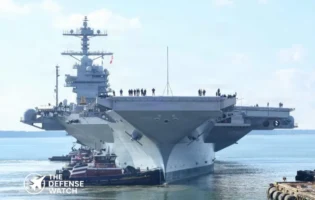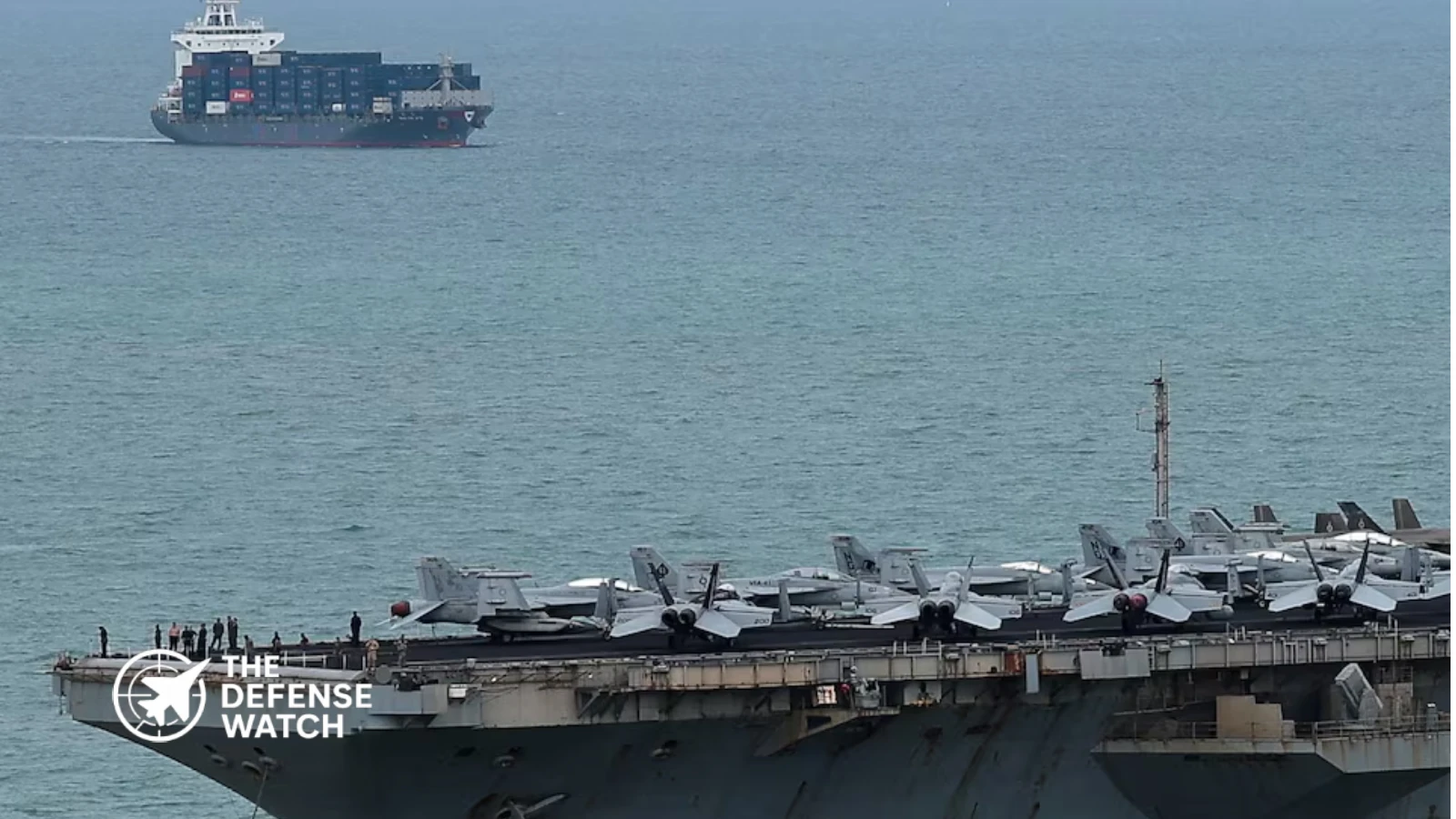
After nearly 10 months at sea, the USS Abraham Lincoln has reached Thailand for a five-day rest and recovery stop following an extended combat deployment in the Middle East.
USS Abraham Lincoln Arrives In Thailand After Extended Deployment
The USS Abraham Lincoln Thailand arrival marks a significant pause for one of the U.S. Navy’s longest recent carrier deployments. The Nimitz-class aircraft carrier entered Laem Chabang port on September 2 after spending 286 days at sea, including an extended period supporting U.S. military operations in the Middle East.
Takeaways
The USS Abraham Lincoln has arrived in Thailand after an unusually prolonged deployment that kept the carrier at sea for 286 days.
The carrier arrived with roughly 5,000 sailors and Marines aboard. Reuters reported that the deployment has been described by Democratic lawmakers as a modern-day record for consecutive days at sea. The unusually long deployment has also generated concerns about conditions aboard the ship and the effect of sustained operations on crew welfare.
The Thailand visit is intended to provide a break from the prolonged operational cycle. Thai officials said the U.S. carrier strike group will remain in the country for five days for rest and recuperation.
A Record-Setting Carrier Deployment
The USS Abraham Lincoln aircraft carrier is the centerpiece of Carrier Strike Group 3 and operates with an embarked Carrier Air Wing 9 and other supporting elements.
The U.S. Navy said the force arriving in Thailand includes the Abraham Lincoln, the staffs of Carrier Strike Group 3, Carrier Air Wing 9 and Destroyer Squadron 21, as well as nine squadrons assigned to the carrier air wing.
The deployment began in November 2025 and included nearly seven months operating in the U.S. Central Command area of responsibility, according to reporting from Thailand’s Nation and U.S. military information. The carrier strike group subsequently moved into the U.S. Seventh Fleet area of operations.
The operational tempo illustrates the demands placed on U.S. Navy carrier forces when regional conflicts require sustained maritime presence. Carrier strike groups are designed to remain forward deployed and provide aviation, command, air defense and strike capabilities without relying on a fixed land base for every mission.
The length of the Lincoln’s deployment, however, is notable because U.S. Navy deployments commonly involve planned periods for maintenance, replenishment, training and crew recovery. Reuters reported that typical naval deployments last between six and nine months, although conflicts can extend those timelines.
Middle East Operations Extended The Mission
The carrier’s deployment became substantially longer as U.S. military operations in the Middle East continued.
According to U.S. military reporting, the Abraham Lincoln Carrier Strike Group conducted operations in the U.S. Central Command region before moving toward the Indo-Pacific. U.S. Navy officials have described the Thailand stop as an opportunity for sailors and Marines to rest and recharge following the extended mission.
The deployment also demonstrates how quickly U.S. Navy carrier forces can be redirected between geographic commands. A carrier strike group can provide a mobile aviation and command capability that can shift between theaters as operational requirements change.
For the U.S. Navy carrier Thailand visit, the immediate objective is different. The stop is primarily a scheduled port visit rather than a new combat operation or major military exercise. Thai officials said the ships are in the country for rest and recuperation.
Three U.S. Navy Warships Visit Thailand
The Abraham Lincoln is not the only U.S. Navy warship making the port call.
The Arleigh Burke-class guided-missile destroyer USS Frank E. Petersen Jr. arrived at nearby Sriracha, while the Ticonderoga-class guided-missile cruiser USS Robert Smalls made a scheduled visit to Map Ta Phut.
Together, the ships represent several layers of a U.S. carrier strike group’s capabilities. The aircraft carrier provides the central aviation and command platform, while surface combatants contribute air defense, maritime security and long-range missile capabilities.
The arrival also gives the crew an opportunity to conduct normal port activities that are difficult to carry out during extended periods at sea.
Crew Welfare Becomes A Major Issue
The USS Abraham Lincoln 286 days at sea deployment has also focused attention on the human cost of maintaining a carrier at high operational tempo.
Reuters reported concerns about mental health and deteriorating conditions aboard the carrier during the extended deployment. Those concerns have drawn attention from lawmakers as the Navy manages the demands of sustained operations.
For the crew, the five-day Thailand stop provides a rare opportunity to leave the ship after months of continuous operations.
The importance of such port visits extends beyond recreation. Carrier crews require opportunities for rest, medical care, resupply and personal recovery. Those factors directly affect readiness when ships remain deployed for extended periods.
The U.S. Navy has emphasized the professionalism of the personnel who supported the prolonged deployment. Rear Adm. Robert E. Loughran, commander of Carrier Strike Group 3, described the Thailand arrival as an opportunity for sailors and Marines to rest and recharge while also highlighting the U.S.-Thailand partnership.
Thailand Remains A Key U.S. Regional Partner
The USS Abraham Lincoln Thailand arrival also carries broader significance for the U.S.-Thailand defense relationship.
Thailand is the United States’ treaty ally in mainland Southeast Asia. The two countries regularly conduct military cooperation and exercises, including Cobra Gold, one of the region’s major multinational military exercises.
Port visits provide another practical element of that relationship. They support military-to-military engagement while giving U.S. ships access to established regional infrastructure.
The current visit is not being described as a combat deployment or military exercise in Thailand. Instead, it is a scheduled stop following a demanding Middle East mission. U.S. Navy officials said the visit reinforces the enduring partnership between Washington and Bangkok.
What Happens Next For The Abraham Lincoln?
The Thailand stop represents a transition point for the carrier and its crew after an unusually long operational period.
The immediate priority is recovery and resupply. After months of sustained operations, the crew can use the port visit to rest before the carrier continues its broader deployment cycle.
The arrival also demonstrates the continuing global reach of U.S. carrier aviation. A Nimitz-class carrier can operate for extended periods far from the continental United States, while its embarked air wing and accompanying surface ships provide a flexible military force.
At the same time, the length of the Lincoln’s deployment highlights the challenge of sustaining that capability. The Navy must balance operational demand with maintenance schedules, logistics, crew readiness and personnel welfare.
For now, the focus is on the sailors and Marines returning ashore after 286 days at sea.
The USS Abraham Lincoln aircraft carrier has reached Thailand at the end of one of the most demanding deployments in its recent history. The five-day stop gives the crew a chance to recover while underscoring the continuing operational value of U.S. naval access and partnerships in the Indo-Pacific.