ASELSAN Demonstrates TOLUN Deep-Strike Capability
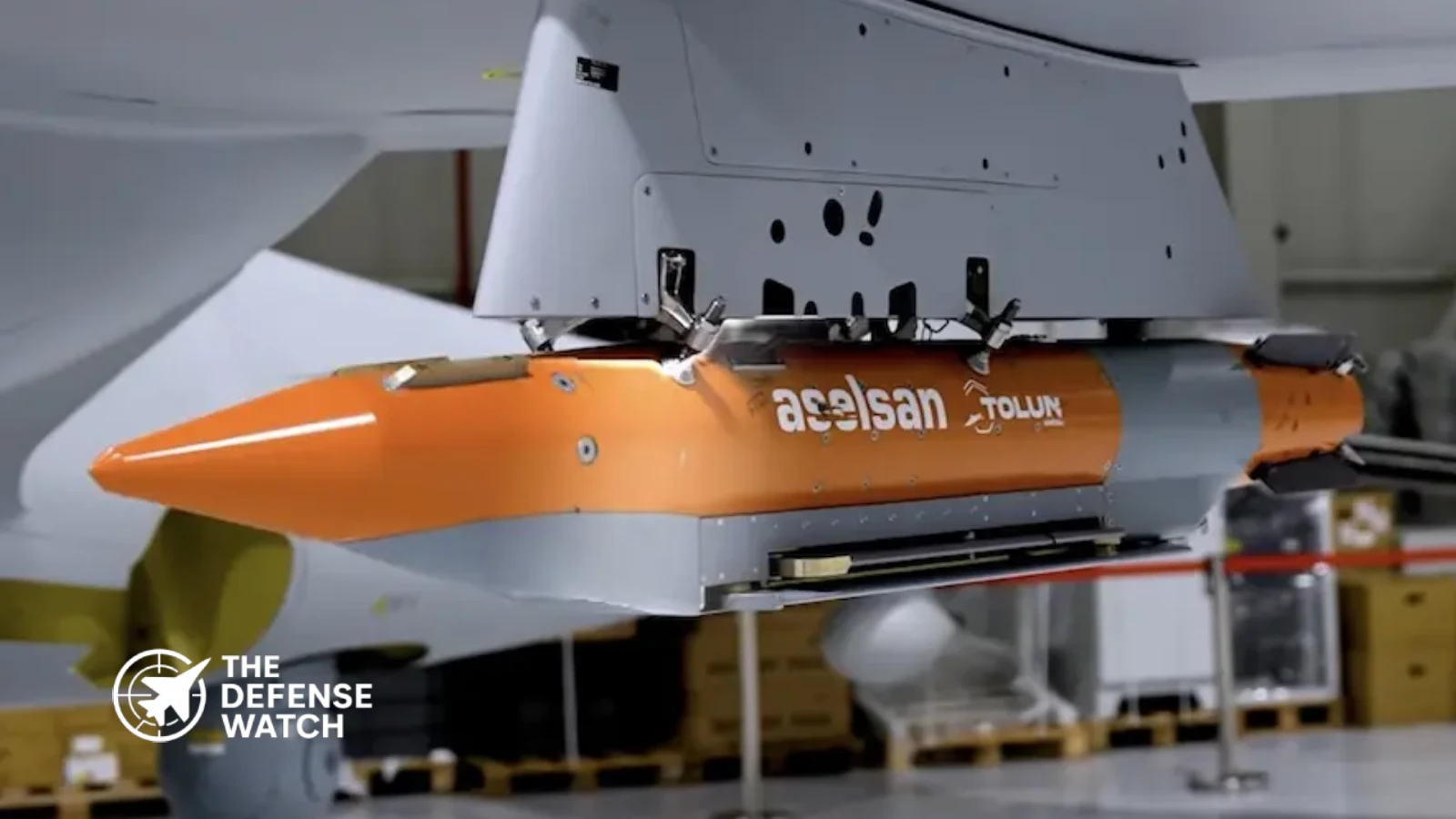
ASELSAN has demonstrated the TOLUN deep-strike munition family from a Bayraktar AKINCI during live-fire trials against containerized, armored and reinforced targets, according to reporting published September 2, 2026. The demonstration took place at the Konya Karapınar Firing Test Range on September 1 and was attended by military officials from more than 15 countries.
- ASELSAN Demonstrates TOLUN Deep-Strike Capability
- Takeaways
- TOLUN I, F And P Show Different Target Effects
- Bayraktar AKINCI Provides The Strike Platform
- SADAK-4T Enables Multiple Precision Weapons
- Navigation And Electronic-Warfare Resilience
- Why The Demonstration Matters
- A More Flexible Strike Architecture
- Implications For Unmanned Strike Operations
- The Broader Defense Significance
- Conclusion
Takeaways
ASELSAN has demonstrated three TOLUN deep-strike configurations from the Bayraktar AKINCI, showing different warhead and fuze effects against containerized, armored and reinforced targets.
Three configurations, TOLUN I, TOLUN F and TOLUN P, were employed against separate targets. ASELSAN reported successful execution of the planned engagement profiles and successful impacts in each test.
The demonstration is significant because it shows how a single unmanned combat aircraft can employ different precision-guided effects without relying on a single warhead configuration. Instead, the TOLUN family is being developed around a modular approach in which the weapon’s effect is matched to the target.
TOLUN I, F And P Show Different Target Effects
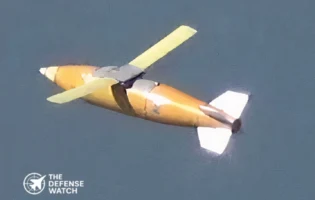
TOLUN I uses an impact fuze and fragmentation warhead. During the September 1 demonstration, it achieved a direct hit on a container, illustrating the basic impact-detonation configuration of the family.
TOLUN F is designed around a fragmentation warhead and proximity-sensing capability. During the trial, it engaged an armored personnel carrier, with the proximity sensor intended to detonate the weapon before impact and distribute fragmentation around the target.
ASELSAN’s published TOLUN F specifications identify a maximum stated range of up to 87 kilometers from fighter aircraft and up to 52 kilometers from UAVs. The weapon has a stated total weight of 119 kilograms, a 70-kilogram warhead and a claimed accuracy of less than 3 meters CEP.
TOLUN P is the hard-target configuration. During the live-fire demonstration, the weapon penetrated a two-storey concrete structure before neutralizing elements at the designated level. ASELSAN says the configuration uses a penetrating warhead, a programmable time-delay fuze and its ASAF-Hard Target Fuze.
ASELSAN’s TOLUN P documentation lists a 105-kilogram warhead, 136-kilogram total weight and a stated UAV range of up to 57 kilometers. The company also states that TOLUN P is designed to penetrate up to 1 meter of reinforced concrete under specified conditions.
TOLUN Variant Comparison
| Variant | Primary Effect | Demonstrated Target | Stated UAV Range | Total Weight |
|---|---|---|---|---|
| TOLUN I | Fragmentation, impact fuze | Container | Not specified in current source | Not specified |
| TOLUN F | Fragmentation, proximity effect | Armored personnel carrier | Up to 52 km | 119 kg |
| TOLUN P | Penetration, delayed detonation | Reinforced concrete structure | Up to 57 km | 136 kg |
The ranges above are manufacturer-published figures and can vary according to launch altitude, aircraft configuration, flight profile and operational conditions.
Bayraktar AKINCI Provides The Strike Platform
The Bayraktar AKINCI is a twin-engine unmanned combat aircraft developed by Baykar for long-range intelligence, surveillance and strike missions. Baykar lists a 20-meter wingspan, a maximum takeoff weight of 6,000 kilograms and a payload capacity of 1,500 kilograms for the current platform specification.
Baykar also identifies both line-of-sight and beyond-line-of-sight communications, autonomous flight functions and a range of air-to-ground and air-to-air weapons among the aircraft’s capabilities.
The aircraft’s payload capacity is important to the TOLUN integration. A weapon weighing roughly 120 to 140 kilograms falls within a class that can be carried in multiple numbers while leaving room for other mission equipment, although the exact number and configuration depend on aircraft loadout and rack integration.
Baykar’s own payload documentation confirms that TOLUN was integrated with AKINCI through the SADAK-4T multiple carriage system. The company lists TOLUN as a GPS/INS-guided munition intended for hard and soft ground targets, with a stated range of 55 nautical miles for the original configuration.
SADAK-4T Enables Multiple Precision Weapons
One of the most important parts of the system is not the munition itself but the carriage architecture.
ASELSAN’s SADAK-4T smart pneumatic rack is designed to carry four compatible TOLUN weapons. The rack allows multiple weapons to be released during a sortie, potentially against separate targets or in a coordinated sequence.
This changes the operational value of the weapon compared with a single-store munition. A platform can potentially engage several targets without returning to base for rearming, provided that mission planning, target availability and aircraft operating constraints permit such a loadout.
ASELSAN has previously reported successful four-round TOLUN firing tests from a fighter aircraft against four separate targets. Its 2025 annual report also records integration work involving TOLUN and the AKINCI platform, including a demonstration using the SADAK-4T rack and an anti-jam GNSS system.
Navigation And Electronic-Warfare Resilience
The TOLUN family uses GPS/INS-based navigation, but the system is not presented as dependent on an unprotected GPS signal alone.
ASELSAN’s published documentation describes anti-jamming capabilities based on a four-channel controlled reception pattern antenna and software designed to resist GPS spoofing. TOLUN P also supports waypoint navigation, selectable impact angle and retargeting during captive flight.
These functions matter because precision-guided weapons increasingly operate in environments where satellite navigation can be degraded or manipulated. Anti-jam technology can improve the probability of maintaining navigation performance, although manufacturer specifications do not establish how the weapon would perform against every possible electronic-warfare threat.
The distinction is important. Navigation resilience can reduce vulnerability to some forms of interference, but it does not make a weapon immune to electronic warfare.
Why The Demonstration Matters
The September demonstration illustrates a broader shift in the role of medium and large unmanned aircraft.
Earlier generations of armed UAVs were frequently associated with relatively small precision weapons and tactical strike missions. AKINCI’s larger payload capacity allows it to carry heavier guided weapons, including weapons intended for hardened targets.
That creates a different mission set. A UAV carrying a precision penetrator can potentially attack fortified positions, protected command facilities and other hardened structures without requiring a conventional manned strike aircraft for every engagement.
The hard-target capability is particularly relevant because destroying a reinforced structure requires more than simply achieving a precise impact. The weapon must arrive at the correct angle, penetrate the target material, survive the penetration event and initiate its warhead at the appropriate point.
TOLUN P’s programmable fuze and penetrating warhead are therefore as important as its navigation system. The September test demonstrated the complete engagement chain rather than simply a flight or separation test.
A More Flexible Strike Architecture
The three TOLUN configurations also illustrate a move toward effects-based weapon selection.
A fragmentation weapon can be appropriate for exposed personnel or lightly protected equipment. A proximity-fuzed configuration can expand the effective area around an armored or non-armored target. A penetrator is intended for structures where the desired effect must occur after the weapon passes through a hard barrier.
Putting these effects within a common weapon family can simplify training, logistics and aircraft integration compared with maintaining entirely unrelated weapon systems. It can also allow planners to select the weapon configuration according to target characteristics.
For Turkey, the approach fits a wider effort to develop indigenous aircraft, weapons, guidance systems and carriage systems as an integrated ecosystem.
ASELSAN’s 2025 annual report records the development of multiple TOLUN configurations, including TOLUN-F, TOLUN-IIR and other guidance technologies, while also noting export activity involving TOLUN and SADAK-4T.
Implications For Unmanned Strike Operations
The AKINCI-TOLUN combination is also relevant beyond Turkey because it reflects how unmanned aircraft are moving into missions traditionally associated with crewed combat aircraft.
The combination of long endurance, substantial payload capacity, beyond-line-of-sight communications and precision weapons gives the AKINCI a role that extends beyond basic close air support or tactical reconnaissance. Baykar describes the platform as capable of long-range precision air-to-ground missions and lists a range of sensor and weapon options.
At the same time, the system should not be treated as an automatic replacement for fighter aircraft. The operational effectiveness of an unmanned strike platform depends on air-defense conditions, electronic warfare, communications availability, target intelligence and the ability to operate within the weapon’s launch envelope.
The TOLUN demonstration instead shows how UAVs can expand the number of platforms capable of delivering precision effects against a wider range of targets.
The Broader Defense Significance
For NATO members and other countries evaluating affordable precision-strike options, the development is an example of the growing convergence between unmanned aviation and guided air-to-ground weapons.
The combination of a reusable unmanned aircraft, a multiple-ejector rack and specialized precision munitions can reduce the number of aircraft required for some strike packages while increasing the number of weapons available per sortie.
The critical question for any such system remains survivability. Long-range precision weapons can extend the reach of an aircraft, but the launch platform still has to operate within a contested battlespace or reach a suitable release point.
That makes the integration of navigation resilience, communications, sensors, electronic warfare support and precision weapons as important as the weapon’s published range.
The September 1 firing therefore represents more than another weapons test. It demonstrates a mature integration path in which the Bayraktar AKINCI serves as a carrier for multiple specialized TOLUN effects, while ASELSAN’s SADAK-4T provides the carriage architecture needed to turn the weapon family into a multi-target strike capability.
Conclusion
ASELSAN’s live-fire demonstration of TOLUN I, TOLUN F and TOLUN P from the Bayraktar AKINCI shows the increasing sophistication of Turkey’s indigenous unmanned strike ecosystem.
The tests demonstrated three distinct effects, from impact fragmentation to proximity-fuzed engagement and reinforced-concrete penetration. Combined with the SADAK-4T multiple carriage system and AKINCI’s substantial payload capacity, the architecture gives operators a broader set of precision-strike options from an unmanned platform.
The most important development is the integration of aircraft, carriage system, guidance technology, fuzing and specialized warheads into a single strike architecture. That approach is becoming increasingly relevant as militaries seek precision effects while reducing dependence on a limited number of high-value crewed combat aircraft.