War Department Expands GenAI.mil AI Options
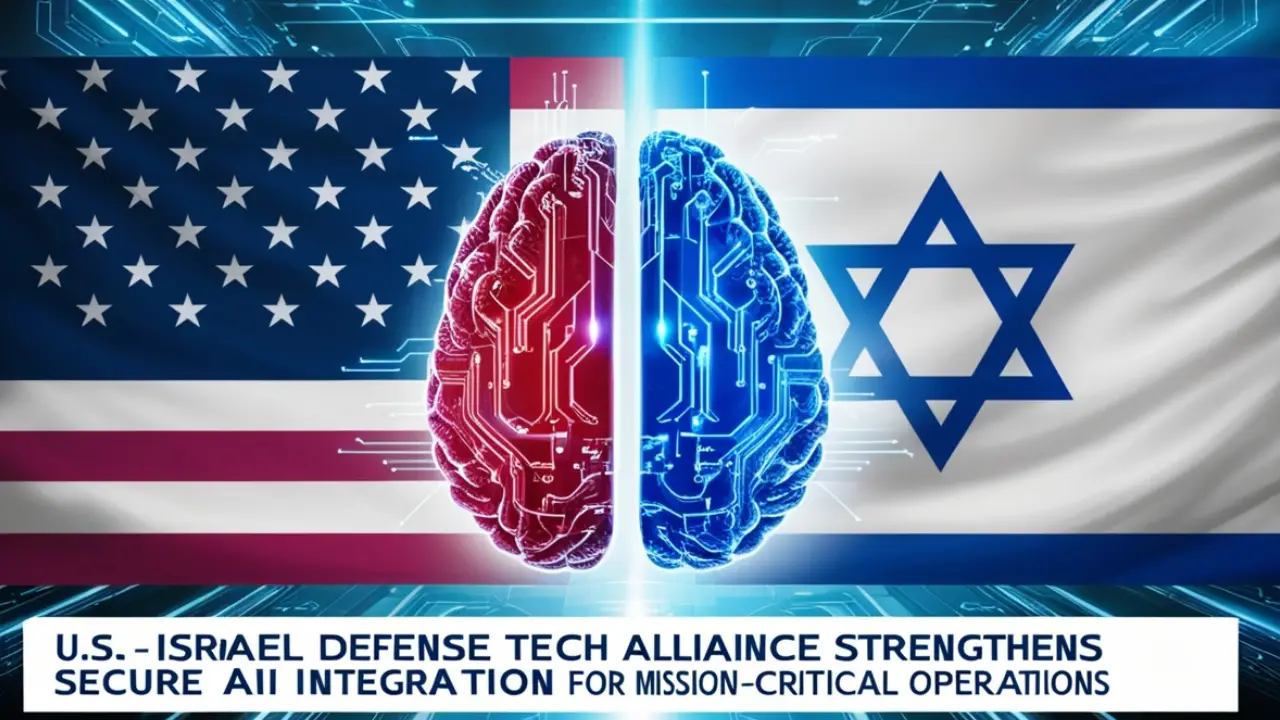
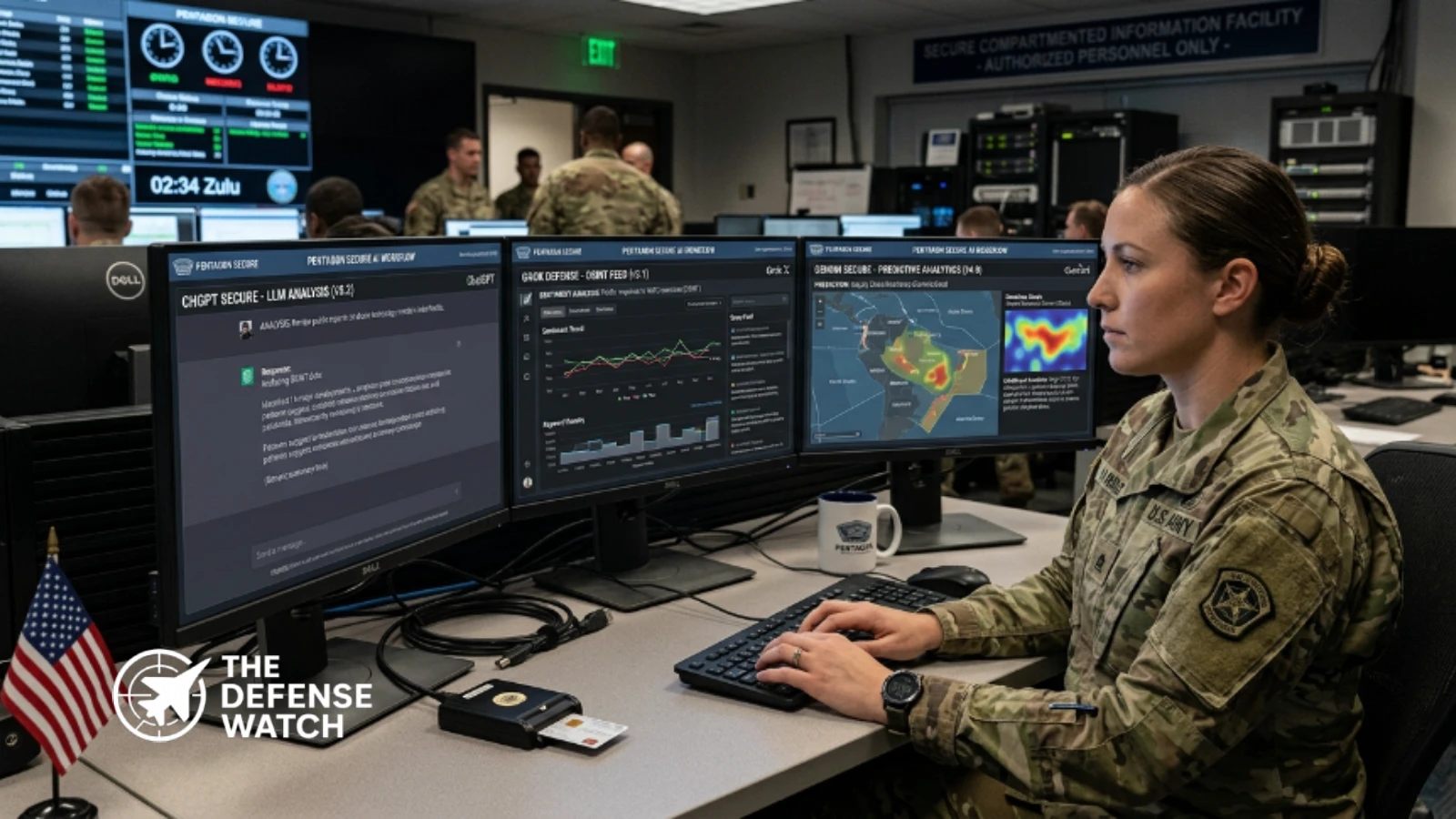
The War Department has expanded GenAI.mil with OpenAI’s ChatGPT Mil and Starshield AI’s Grok for Government, turning its enterprise AI platform into a multi-model environment alongside Google’s Gemini for Government. The department announced the additions Aug. 31, with Pentagon News reporting the expanded availability Sept. 1.
- War Department Expands GenAI.mil AI Options
- Takeaways
- ChatGPT Mil Targets Document-Heavy Defense Work
- Grok Adds Another Frontier AI Model
- Gemini Established The GenAI.mil Model
- Why A Multi-Model Military AI Platform Matters
- From Chatbots To Enterprise AI Infrastructure
- What GenAI.mil Does Not Mean
- The Broader Defense Technology Implication
Takeaways
The Department of War is turning GenAI.mil into a multi-model enterprise AI platform by adding ChatGPT Mil and Grok for Government alongside Google’s Gemini.
Both new systems are accredited for Controlled Unclassified Information at Impact Level 5, according to the department. Their deployment is part of the War Department’s broader effort to move generative AI from limited experimentation toward routine use across a workforce of more than three million military and civilian personnel.
The development is significant less because the department has adopted another chatbot and more because of the architecture it is creating. Instead of depending on a single commercial AI provider, GenAI.mil is becoming a common government environment where personnel can access multiple frontier models under approved security controls.
ChatGPT Mil Targets Document-Heavy Defense Work
The Department of War launched OpenAI’s ChatGPT Mil on GenAI.mil on Aug. 31. The system is designed for unclassified departmental work and is accredited at IL5 for CUI, according to the department’s release.
The initial experience centers on familiar ChatGPT functions including chat, files, projects and custom GPTs. The department says the platform is intended to support document-heavy activities such as planning, policy, logistics and administration.
OpenAI previously announced that its custom ChatGPT deployment would operate within authorized government cloud infrastructure and include safeguards designed for the Department’s environment. OpenAI also said information processed through GenAI.mil would remain isolated within the government environment and would not be used to train or improve its public or commercial models.
The distinction between the public ChatGPT service and ChatGPT Mil is important. The military deployment is being provided as an enterprise government capability with defined authorization and security requirements rather than simply giving personnel access to a commercial consumer application.
ChatGPT Mil At A Glance
| Area | Department Description |
|---|---|
| Provider | OpenAI |
| Deployment | GenAI.mil |
| Security level | Impact Level 5 |
| Information | Controlled Unclassified Information |
| Core functions | Chat, files, projects, custom GPTs |
| Primary uses | Planning, policy, logistics, administration |
| Intended scale | More than 3 million personnel |
Grok Adds Another Frontier AI Model
At the same time, the department launched Starshield AI’s Grok for Government on GenAI.mil. The platform is also accredited for CUI at Impact Level 5.
According to the department, Grok for Government provides deep-thinking inference, adaptive reasoning modes and customizable workspaces. It also includes persistent projects and reusable playbooks intended to capture institutional knowledge and make it available across recurring workflows.
The department identifies applications ranging from acquisition market research to supply-chain management. That places the system primarily in the enterprise and mission-support category rather than presenting it as a standalone battlefield decision system.

Grok For Government At A Glance
| Area | Department Description |
|---|---|
| Provider | Starshield AI |
| Deployment | GenAI.mil |
| Security level | Impact Level 5 |
| Information | Controlled Unclassified Information |
| Reasoning modes | Auto, Fast and Expert |
| Additional functions | Workspaces, projects and playbooks |
| Example applications | Acquisition and logistics |
Gemini Established The GenAI.mil Model
The current expansion builds on the original GenAI.mil rollout.
The War Department launched GenAI.mil in December 2025 with Google’s Gemini for Government as its first frontier AI capability. The department described the platform as a secure enterprise environment for military personnel, civilians and contractors, with the goal of accelerating adoption of generative AI across the organization.
Google later said Gemini for Government had surpassed one million unique GenAI.mil users in just over a month. Google also introduced Agent Designer, allowing Department personnel to create AI agents for unclassified tasks without traditional programming.
That progression illustrates how quickly the platform has moved beyond a single-model trial. GenAI.mil is increasingly being structured as an enterprise layer through which different AI capabilities can be introduced, tested and scaled.
Why A Multi-Model Military AI Platform Matters
The most important change is the move toward model diversity.
Different large language models can produce different answers to the same question. They can also differ in reasoning behavior, document handling, coding performance, context management and susceptibility to specific types of errors.
For defense organizations, access to several models can therefore provide an additional method of checking important analytical work. A user may compare outputs from multiple systems before a human decision-maker determines what information is accurate and appropriate to use.
That does not eliminate the fundamental reliability problem associated with generative AI. A secure model can still produce an incorrect answer, misunderstand context or present an unsupported conclusion with confidence.
Security accreditation also does not mean that every type of military information is automatically appropriate for a system. IL5 and CUI authorization establish an approved security boundary, but users must still follow information-classification, handling and operational-security rules.
This distinction will become increasingly important as AI moves deeper into military workflows.
From Chatbots To Enterprise AI Infrastructure
GenAI.mil’s development also reflects a broader shift in how the Pentagon is approaching artificial intelligence.
The original objective was largely about giving personnel access to a generative AI assistant. The newer model is closer to an enterprise AI service layer, with multiple providers, different capabilities and common security requirements.
The practical value will depend on integration.
For example, summarizing a policy document is a relatively straightforward use case. Applying AI to procurement analysis, logistics planning or large collections of administrative records creates more complex requirements around data quality, access controls, auditability and human review.
The Department’s decision to make training available at no cost is therefore an important part of the rollout. Personnel need to understand not only how to prompt an AI system, but also what information can be entered, how outputs should be verified and when human judgment must override an AI-generated recommendation.
What GenAI.mil Does Not Mean
The expansion should not be interpreted as evidence that ChatGPT, Grok or Gemini are being authorized to independently make military decisions.
The department’s public descriptions focus on productivity, document analysis, planning, policy, logistics, administration and other mission-support functions. The newly announced capabilities are being introduced within an approved enterprise environment, but the available announcements do not establish autonomous authority for these systems over weapons or military operations.
That boundary matters.
Military AI adoption involves two separate questions: whether a system can technically perform a task and whether the organization should permit it to perform that task. The second question involves policy, accountability, security, testing and human oversight.
The Broader Defense Technology Implication
The War Department’s approach also shows how AI competition is increasingly moving from individual models to enterprise deployment.
The military advantage will not necessarily come from having the single highest-performing model. It may instead depend on how effectively an organization connects AI tools with approved data, software, workflows and personnel while maintaining security and accountability.
GenAI.mil provides a mechanism for that process.
The platform started with Gemini for Government in December 2025. It now includes ChatGPT Mil and Grok for Government, giving Department personnel access to three major frontier AI offerings within the same government platform.
For the U.S. defense establishment, the next challenge is likely to be less about simply providing access to AI and more about determining where each model delivers measurable value, how its outputs can be verified, and how those capabilities can be integrated into daily defense workflows without compromising security.
The Department’s stated objective is broad adoption. The effectiveness of that strategy will ultimately depend on disciplined implementation, user training, data governance and the ability to keep human judgment at the center of consequential decisions.