(adsbygoogle = window.adsbygoogle || []).push({});Executive Summary:
The Pentagon has launched a six month review of the U.S. troop presence in Europe, signaling a potential shift in Washington’s military posture across the continent. Defense Secretary Pete Hegseth said the assessment will focus on ensuring European allies take greater responsibility for their own defense while maintaining NATO’s deterrence capabilities.
US Troop Presence In Europe Faces Strategic Review
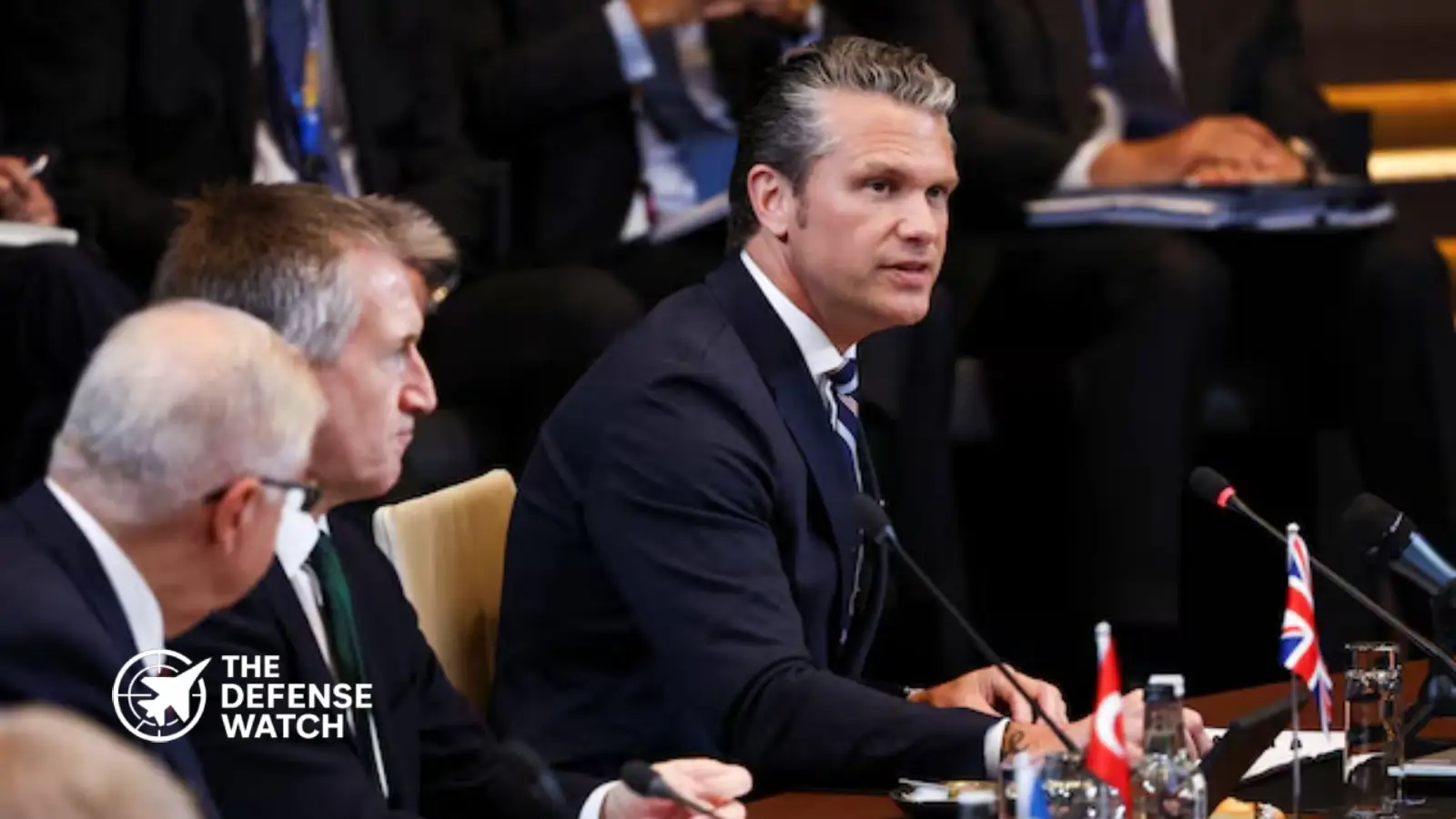
The US troop presence in Europe is set for a comprehensive Pentagon review after Defense Secretary Pete Hegseth announced a six month assessment of American military deployments across the continent during a NATO defense ministers meeting in Brussels. The move comes as Washington continues pressing European allies to increase defense spending and assume a larger share of regional security responsibilities.
Speaking to NATO counterparts, Hegseth said the review would examine whether the alliance is moving toward a structure in which European nations take primary responsibility for defending Europe while the United States maintains its broader global commitments.
The announcement adds a new dimension to ongoing discussions about NATO’s future force structure, burden sharing, and the balance between U.S. commitments in Europe and the Indo-Pacific region.
What The Pentagon Review Will Examine
According to Hegseth, the Pentagon’s review will evaluate American force posture across Europe over the next six months. The assessment is expected to consider troop deployments, access to military bases, overflight rights, and broader alliance contributions.
The defense secretary emphasized that Washington wants NATO to move “fast and irreversibly” toward a model in which European nations assume greater responsibility for continental defense.
Hegseth also criticized some allies for restricting U.S. military access and support during recent operations involving Iran, arguing that reliable access to bases and airspace remains a critical component of alliance cooperation.
Growing Pressure On NATO Allies
The review reflects a broader strategic trend within the Trump administration, which has repeatedly called on NATO members to increase defense spending and reduce dependence on American military capabilities.
While European governments have significantly increased defense budgets since Russia’s invasion of Ukraine in 2022, Washington continues to argue that additional investments are necessary to ensure long term deterrence and readiness. NATO Secretary General Mark Rutte recently noted that European allies and Canada increased defense spending substantially over the past year.
The debate is no longer centered solely on budget targets. Increasingly, discussions focus on whether European nations can generate the operational capabilities needed to replace or supplement U.S. assets in a crisis.
Potential Impact On NATO Military Capabilities
The review comes shortly after the United States reduced certain force commitments available to NATO contingency plans, including some fighter aircraft, drones, naval assets, and support capabilities. European governments are now assessing how to address potential capability gaps.
From a military planning perspective, the issue extends beyond troop numbers. American forces provide critical enablers including intelligence, surveillance, reconnaissance, air refueling, strategic mobility, missile defense integration, and nuclear deterrence support.
Many European nations are investing heavily in modernization programs, but replicating decades of U.S. military infrastructure and capability development will require substantial time and resources. German officials have warned against creating abrupt gaps in alliance defense planning while transition efforts are underway.
Strategic Implications For European Security
The US troop presence in Europe remains one of the most important pillars of NATO’s deterrence posture. American forces stationed across Germany, Poland, Italy, the United Kingdom, and other allied nations provide rapid response capabilities and reinforce the alliance’s collective defense commitments.
The Pentagon review does not automatically signal force reductions. However, it underscores Washington’s intention to reassess how military resources are distributed globally amid growing challenges in both Europe and the Indo-Pacific.
A key factor will be balancing deterrence against Russia with emerging requirements related to China and broader global security commitments. U.S. defense planners have increasingly argued that force structure decisions must account for the possibility of simultaneous crises in multiple regions.
Poland Seeks Expanded US Presence
Even as Washington reviews deployments, some Eastern European allies continue seeking a stronger American military footprint. Poland has expressed interest in hosting a permanent U.S. military base, and Polish officials indicated that discussions with the Pentagon remain active.
For countries along NATO’s eastern flank, U.S. troop deployments are viewed as both a military capability and a strategic signal of American commitment to collective defense.
Outlook
The Pentagon’s review of the US troop presence in Europe will likely become a major topic ahead of future NATO meetings and alliance planning discussions. While no immediate force reductions have been announced, the assessment highlights a continuing shift toward greater European defense responsibility within the alliance.
The outcome could influence NATO force planning, transatlantic defense cooperation, and the future distribution of U.S. military resources across multiple theaters. For European allies, the message from Washington is increasingly clear: stronger national defense capabilities will play a central role in shaping the alliance’s next phase.