- Iranian backed militia Kataib Hezbollah released footage of an FPV drone attack targeting U.S. Victory Base near Baghdad International Airport.
- The strike reportedly used a first person view attack drone capable of navigating defenses with precision guidance.
- The incident highlights the growing proliferation of low cost precision drones among Iranian aligned militia groups.
- Victory Base is part of the Baghdad Diplomatic Support Complex that houses U.S. military personnel supporting coalition operations in Iraq.
- Analysts say FPV drone attacks could complicate base defense for U.S. forces across the Middle East.
Iraqi Militia FPV Drone Attack Signals A New Phase In Base Threats
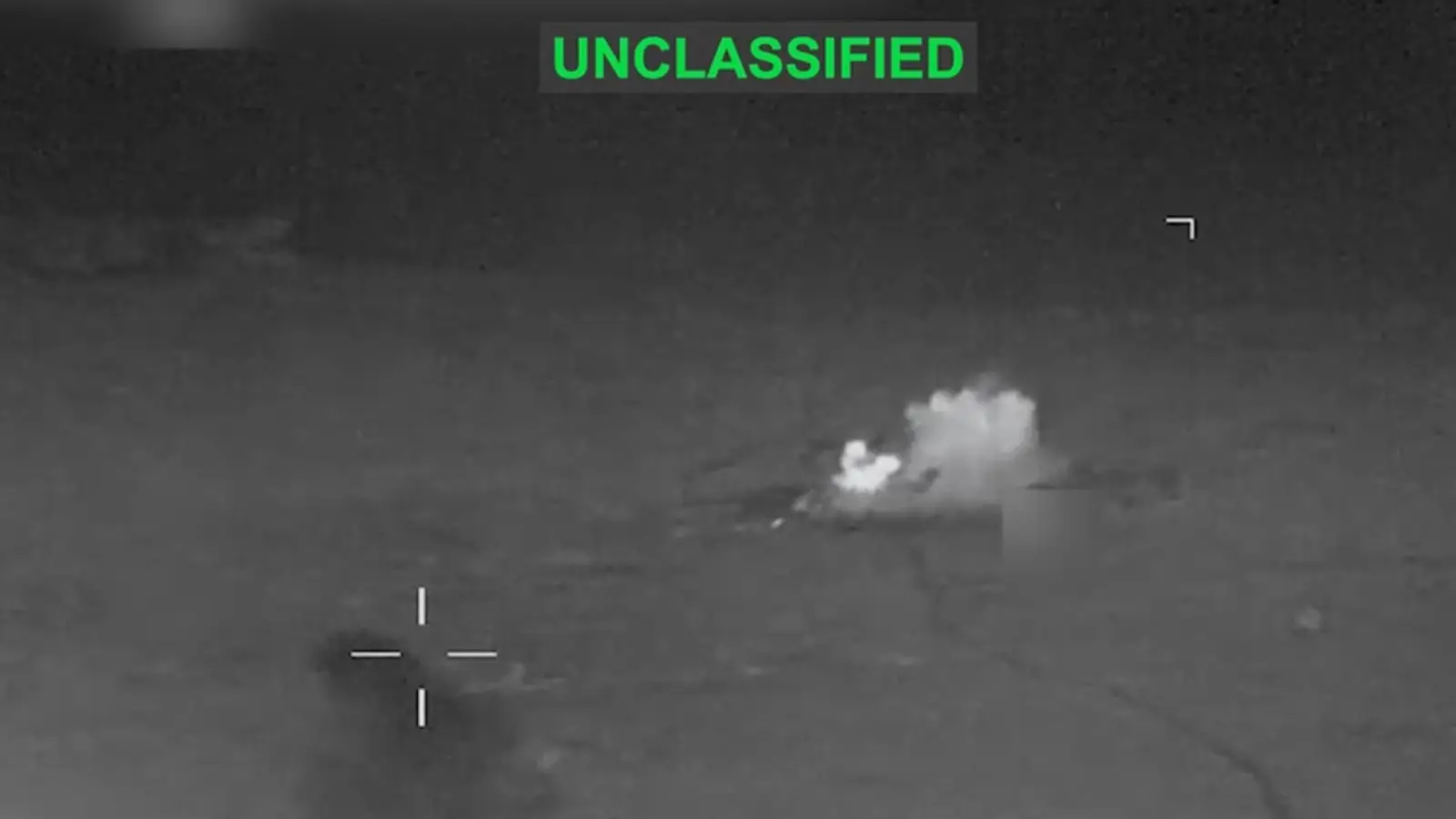
The Iraqi militia FPV drone attack targeting the U.S. Victory Base near Baghdad International Airport highlights a growing security challenge for American forces operating across the Middle East. Footage released by the Iranian backed militia group Kataib Hezbollah appears to show a small first person view drone striking a facility within the base complex, marking what may be the first publicly documented instance of the group successfully penetrating U.S. defensive measures using this type of weapon.
The video, circulated on pro militia channels, shows the drone navigating toward a structure inside the base before detonation. U.S. officials have not publicly confirmed the extent of damage or casualties.
The Big Picture
Small, low cost drones have become one of the most disruptive technologies in modern warfare. Conflicts in Ukraine, Syria, and Iraq have demonstrated how non state actors can deploy commercially derived drone systems to conduct surveillance, precision strikes, and harassment attacks against technologically superior forces.
Militant groups aligned with Iran have steadily expanded their drone capabilities over the past decade. Groups such as Kataib Hezbollah and other factions within Iraq’s Popular Mobilization Forces have used loitering munitions and one way attack drones against coalition bases, energy infrastructure, and regional military targets.
The emergence of FPV drones represents a new stage in this evolution.
Unlike traditional one way attack drones that follow pre programmed routes, FPV drones allow an operator to guide the aircraft in real time through a live video feed. This capability improves precision and allows the drone to maneuver around obstacles or defensive systems.
What’s Happening
Kataib Hezbollah released footage claiming responsibility for an FPV drone strike on Victory Base, a large U.S. military installation located adjacent to Baghdad International Airport in Iraq.
Victory Base is part of the broader Baghdad Diplomatic Support Complex and has served as a hub for U.S. military operations and logistics in Iraq since the early years of the Iraq War.
According to the militia’s statement accompanying the footage, the drone successfully penetrated base defenses before striking a target inside the compound.
Independent verification of the exact damage remains limited, and the U.S. Department of Defense has not publicly confirmed details of the incident.
However, defense analysts reviewing the footage say the drone appears consistent with commercially modified FPV strike drones increasingly used by irregular forces.
These drones are typically equipped with small explosive payloads and controlled remotely through radio links, often using inexpensive hardware widely available on the civilian market.
Why It Matters
The Iraqi militia FPV drone attack highlights a key vulnerability facing modern military installations: defending against extremely small and agile aerial threats.
Traditional air defense systems are designed to intercept aircraft, cruise missiles, or larger unmanned systems. FPV drones present a different challenge.
Their small radar signature, low altitude flight profile, and ability to maneuver manually make them difficult to detect and intercept. The cost imbalance is also significant.
A typical FPV drone can cost only a few hundred dollars. Countering it may require expensive interceptors or specialized electronic warfare systems.
This dynamic has already reshaped battlefield tactics in Ukraine, where FPV drones have become one of the most common strike weapons used by both sides.
Strategic Implications For U.S. Forces
U.S. forces in Iraq and Syria operate a network of bases that support counter terrorism operations and regional security missions. Many of these facilities were originally designed to defend against rockets, mortars, and larger drones.
The emergence of FPV strike drones complicates those defensive architectures.
Operators can launch FPV drones from relatively short distances, reducing warning time for base defenses. They can also fly through gaps in radar coverage or exploit terrain and structures for concealment.
If militia groups continue adopting this tactic, U.S. commanders may need to expand the use of electronic warfare systems, counter drone jammers, and short range air defense tools designed specifically for small unmanned systems.
Competitor And Adversary Perspective
Iran has invested heavily in drone technology as part of its asymmetric warfare strategy.
Tehran has supplied various drone systems to regional partners including militias in Iraq, Hezbollah in Lebanon, and the Houthis in Yemen. These systems range from long range attack drones to smaller tactical platforms.
The use of FPV drones by Iranian aligned militias suggests that the technology and operational concepts seen in Ukraine may be spreading rapidly across other conflict zones.
Regional adversaries of the United States may view these developments as proof that inexpensive drone systems can impose operational costs on technologically advanced militaries.
What To Watch Next
Several developments will determine how the situation evolves.
U.S. military officials are likely to conduct a detailed assessment of the attack and review base defense procedures across Iraq and Syria.
Future attacks could reveal whether militia groups possess large numbers of FPV drones or if the strike represents an isolated capability demonstration.
Defense planners will also watch how rapidly Iranian aligned groups adopt similar tactics across the region.
The proliferation of these systems could lead to increased investment in counter drone technologies such as directed energy weapons, electronic warfare systems, and autonomous interception drones.
Capability Gap
The Iraqi militia FPV drone attack highlights a growing gap between the speed of drone proliferation and the pace of defensive adaptation.
Most fixed military bases rely on layered defenses designed for rockets, artillery, and larger unmanned aircraft.
Small FPV drones exploit a gap between traditional air defense systems and point defense measures. Their low cost, high maneuverability, and widespread availability make them attractive weapons for irregular forces.
However, these systems also have limitations.
FPV drones typically have limited range and endurance, and their radio control links can be disrupted by electronic warfare systems. Weather conditions and signal interference can also affect their effectiveness.
Despite these constraints, their rapid spread across modern battlefields suggests they will remain a persistent threat.
The Bottom Line
The Iraqi militia FPV drone attack on U.S. Victory Base demonstrates how inexpensive precision drones are reshaping the threat environment facing American forces in the Middle East.