

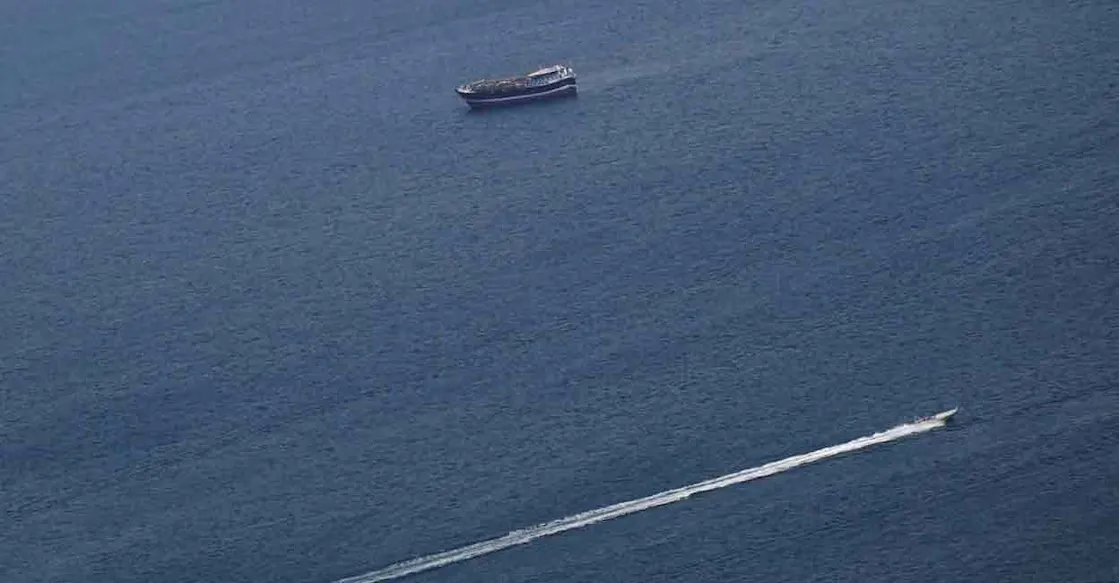
US Strait Of Hormuz Security Response After Tanker Attack
The US Strait of Hormuz security posture has shifted following a tanker incident in which a vessel was reportedly struck by projectiles, raising fresh concerns over maritime safety in the Gulf. According to reporting by Reuters, Washington has signaled readiness to assist affected shipping as risks to commercial transit increase.
Speaking publicly, Donald Trump stated that the United States would help vessels stranded or impacted in the Strait of Hormuz, a narrow but strategically vital corridor that handles roughly one fifth of global oil shipments.
- A commercial tanker was struck by projectiles while transiting the Strait of Hormuz, according to Reuters reporting.
- :contentReference[oaicite:0]{index=0} said the United States would assist ships stranded or affected in the area.
- The incident highlights renewed risks to one of the world’s most critical maritime chokepoints for energy flows.
- No immediate attribution for the attack has been officially confirmed.
- The development comes amid heightened regional tensions and ongoing security concerns in the Gulf.
The incident underscores the fragility of maritime security in a region where even limited attacks can have outsized economic and geopolitical consequences.
Tanker Attack Raises Immediate Maritime Security Concerns
Details surrounding the tanker attack remain limited. Initial reports indicate that the vessel was hit by projectiles while transiting the Strait, though the type of weapon system used has not been confirmed.
There has been no official attribution. Regional actors, including Iran and non-state groups, have previously been linked to similar maritime incidents, but no direct evidence has been presented in this case.
From a defense perspective, the ambiguity itself is significant. Unattributed attacks complicate response planning, delay escalation decisions, and create uncertainty for commercial operators. Shipping firms often react by raising insurance premiums or rerouting vessels, both of which can disrupt global energy markets.
The US Strait of Hormuz security response is therefore not just about immediate protection, but also about stabilizing confidence in the maritime domain.
Strategic Importance Of The Strait Of Hormuz
The Strait of Hormuz remains one of the most critical waterways in the global الاقتصاد. At its narrowest point, the shipping lane is only about 21 miles wide, making vessels highly vulnerable to asymmetric threats such as:
- Anti-ship missiles
- Fast attack craft
- Naval mines
- Unmanned aerial systems
Even minor disruptions can have global ripple effects. Previous incidents in the Gulf have triggered spikes in oil prices and forced naval deployments from multiple countries.
This latest tanker attack reinforces a long-standing reality. The Strait is not just a commercial artery, it is a contested security environment where state and non-state actors can exert influence with relatively low-cost capabilities.
US Naval Posture And Operational Implications
While no specific deployment changes have been formally announced, the US maintains a persistent naval presence in the region, primarily through the United States Navy and the US Fifth Fleet.
Typical capabilities in the area include:
- Guided-missile destroyers equipped with Aegis combat systems
- Maritime patrol aircraft for surveillance
- Carrier strike group elements, depending on rotation cycles
The statement from Washington suggests a potential expansion of escort operations or rapid response measures for commercial vessels. Historically, similar situations have led to convoy-style protections or increased surveillance missions.
From an operational standpoint, this places additional demand on naval assets already balancing commitments across the Indo-Pacific and Middle East.
Analysis: A Controlled Response To Avoid Escalation
The US response appears calibrated. By offering assistance without assigning blame, Washington avoids immediate escalation while still signaling deterrence.
This approach reflects a broader pattern in recent years. Rather than direct confrontation, the US has focused on:
- Maintaining freedom of navigation
- Protecting commercial shipping
- Deterring further attacks through presence
However, the risk remains that repeated incidents could force a shift toward more assertive measures.
For regional actors, ambiguity can be a tool. Limited, deniable attacks create pressure without crossing clear red lines. This dynamic complicates traditional deterrence models, which rely on clear attribution and proportional response.
In this context, the US Strait of Hormuz security framework is increasingly about managing gray-zone threats rather than conventional conflict.
Global Energy And Economic Impact
Any sustained disruption in the Strait of Hormuz has immediate global implications. Major النفط exporters, including Saudi Arabia, Iraq, and the UAE, rely heavily on this route.
Energy markets are highly sensitive to perceived risk. Even a single tanker incident can:
- Increase shipping insurance costs
- Delay cargo deliveries
- Trigger speculative price movements
For policymakers, maintaining secure transit through the Strait is therefore both a military and economic priority.
The latest tanker attack may not yet represent a systemic threat, but it reinforces the vulnerability of global supply chains to localized security incidents.
Outlook: Heightened Vigilance In A Volatile Region
The situation remains fluid. Key variables to watch include:
- Whether further attacks occur
- Any attribution by intelligence agencies
- Changes in US or allied naval deployments
If incidents increase in frequency or severity, the current posture may shift toward more visible protection measures, including escorts or multinational patrols.
For now, the US response signals readiness without escalation. It reflects a balancing act between deterrence and restraint in one of the world’s most strategically sensitive regions.
