

(adsbygoogle = window.adsbygoogle || []).push({});Executive Summary:
Fresh U.S. military strikes against Iranian military infrastructure have triggered a new round of retaliation across the Gulf, with Iran claiming missile and drone attacks against American military sites in Bahrain and Kuwait. The exchange highlights the rapid collapse of recent de-escalation efforts and underscores the growing strategic importance of protecting maritime trade routes through the Strait of Hormuz.
U.S. Strikes On Iran Trigger New Gulf Escalation
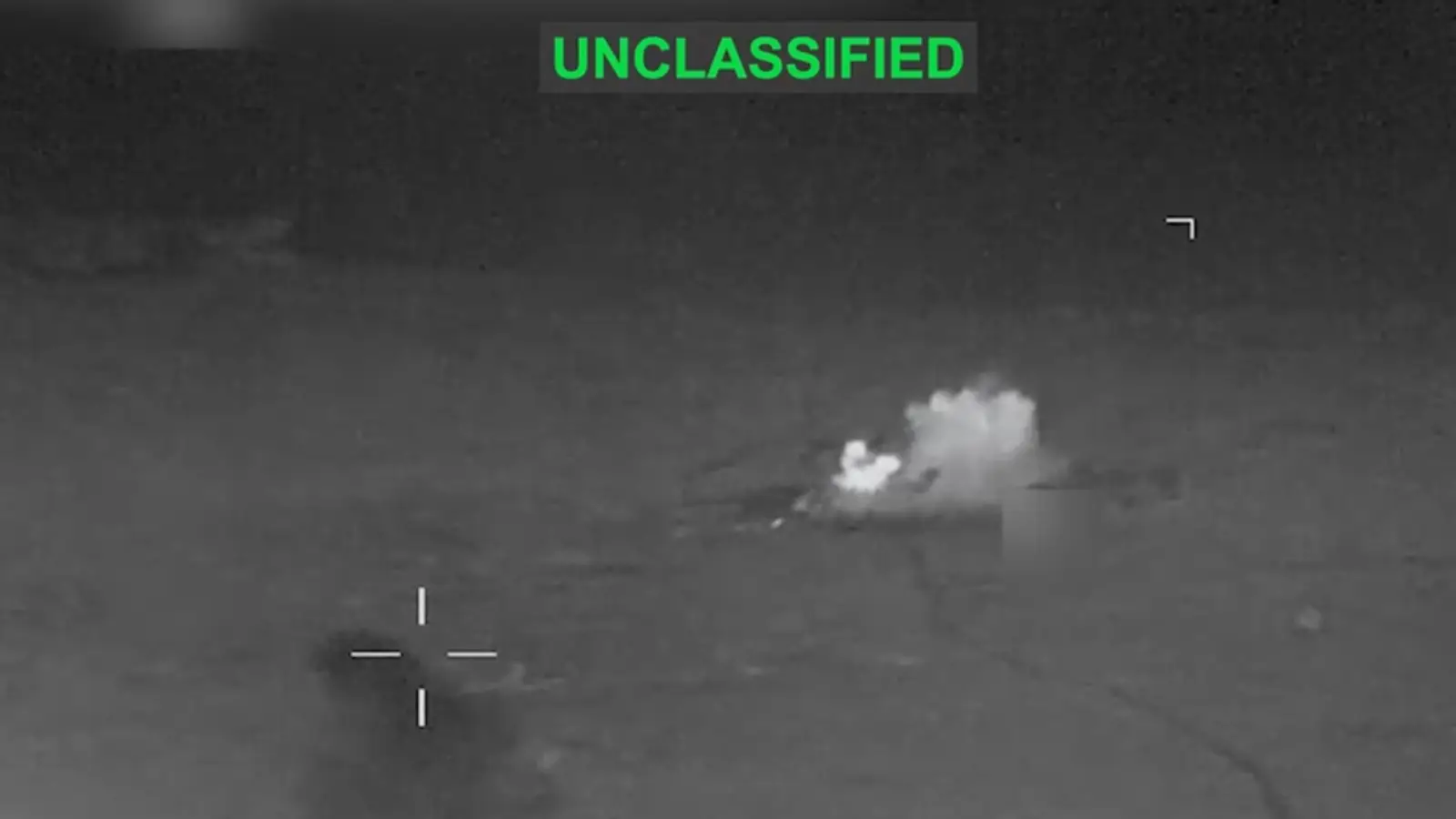
The latest U.S. strikes on Iran have sharply escalated tensions across the Middle East after Washington launched a new wave of military operations against Iranian targets, prompting Tehran to retaliate with missile and drone attacks against U.S. military facilities in Bahrain and Kuwait.
According to U.S. Central Command (CENTCOM), the American operation followed attacks on commercial shipping in the Strait of Hormuz, which Washington described as a direct threat to freedom of navigation and regional security.
Iran’s Islamic Revolutionary Guard Corps (IRGC) subsequently announced a coordinated operation targeting American military installations, including facilities associated with the U.S. Fifth Fleet in Bahrain and Ali Al Salem Air Base in Kuwait. Iranian state media also claimed that an MQ-9 unmanned aircraft had been shot down during the operation, although U.S. officials had not confirmed that claim at the time of reporting.
CENTCOM Says Strikes Focused On Maritime Security
According to U.S. officials, the strikes were intended to restore security following attacks on commercial vessels transiting the Strait of Hormuz.
CENTCOM said its operation targeted multiple Iranian military assets involved in maritime operations, including:
| Target Type | Operational Purpose |
|---|---|
| Coastal surveillance systems | Maritime monitoring |
| Air defense systems | Protection of coastal military facilities |
| Anti-ship missile positions | Threats to commercial shipping |
| Drone launch locations | Maritime strike capability |
| IRGC fast attack boats | Swarm attacks against vessels |
U.S. officials stated that degrading these capabilities was intended to reduce immediate risks to international shipping rather than conduct broader offensive operations.
Iran Responds With Missile And Drone Operations
Iran described its response as a joint missile and drone operation against American military facilities in Gulf partner nations.
Air raid sirens were activated in Bahrain and Kuwait as regional air defense systems responded to incoming threats. Kuwaiti authorities confirmed that their air defense forces engaged hostile missiles and drones, while Bahrain reported defensive measures against the attacks.
At the time of publication, there were no confirmed reports of significant damage to U.S. military infrastructure or casualties among American personnel.
Why The Strait Of Hormuz Remains The Strategic Center Of The Crisis
Although the immediate exchange involved military targets, the broader strategic issue remains control of the Strait of Hormuz.
Approximately one-fifth of globally traded crude oil passes through the narrow waterway, making uninterrupted navigation a core security interest for the United States and its regional partners.
atOptions = { ‘key’ : ‘e7d18db8b7513fb2a224cf4c3f18bbf0’, ‘format’ : ‘iframe’, ‘height’ : 90, ‘width’ : 728, ‘params’ : {} };Recent attacks on commercial shipping have reinforced Washington’s longstanding position that freedom of navigation must be protected through a sustained military presence in the Gulf. Any disruption to tanker traffic carries implications well beyond the region, affecting global energy markets, insurance costs, and naval deployment patterns.
For the U.S. Navy and CENTCOM, maintaining secure maritime corridors remains one of the highest operational priorities in the region.
Operational Implications For U.S. Forces
From a military perspective, the latest exchange illustrates several operational realities.
First, U.S. installations across Bahrain, Kuwait, Qatar, and other Gulf states remain within range of Iran’s extensive inventory of ballistic missiles, cruise missiles, and long-range drones.
Second, regional air defense networks continue to play a critical role in protecting forward-deployed American forces. Early warning systems, Patriot missile batteries, and integrated command networks provide the first layer of defense against missile and drone attacks.
Third, the incident demonstrates the increasing importance of intelligence, surveillance, and reconnaissance assets, including MQ-9 remotely piloted aircraft, which remain central to monitoring maritime activity and Iranian military movements throughout the Gulf.
Strategic Assessment
The renewed exchange represents more than another round of military retaliation.
It highlights how maritime security has become the principal flashpoint between Washington and Tehran. Rather than focusing solely on land operations, both sides are increasingly competing over control, surveillance, and freedom of movement in one of the world’s most strategically important waterways.
For U.S. defense planners, protecting commercial shipping while avoiding a wider regional conflict presents an increasingly complex operational challenge. Every strike against maritime infrastructure or commercial vessels risks triggering rapid military responses that can involve multiple Gulf partner nations hosting American forces.
At the same time, the latest events reinforce the continued importance of integrated air and missile defense, persistent intelligence collection, and multinational naval operations in preserving regional stability.
Looking Ahead
While diplomatic channels remain open, the latest exchange demonstrates how quickly localized maritime incidents can escalate into broader military confrontations.
Military analysts will closely monitor whether additional attacks occur against commercial shipping, whether further U.S. strikes are authorized, and how Gulf partners adjust force protection measures around key American military installations.
The situation remains fluid, with developments likely to influence U.S. force posture, regional deterrence efforts, and maritime security operations throughout the Persian Gulf.
