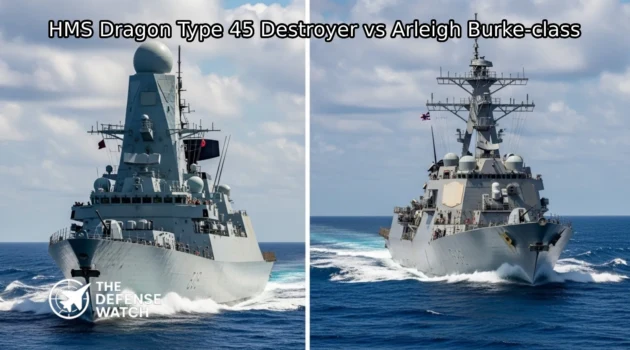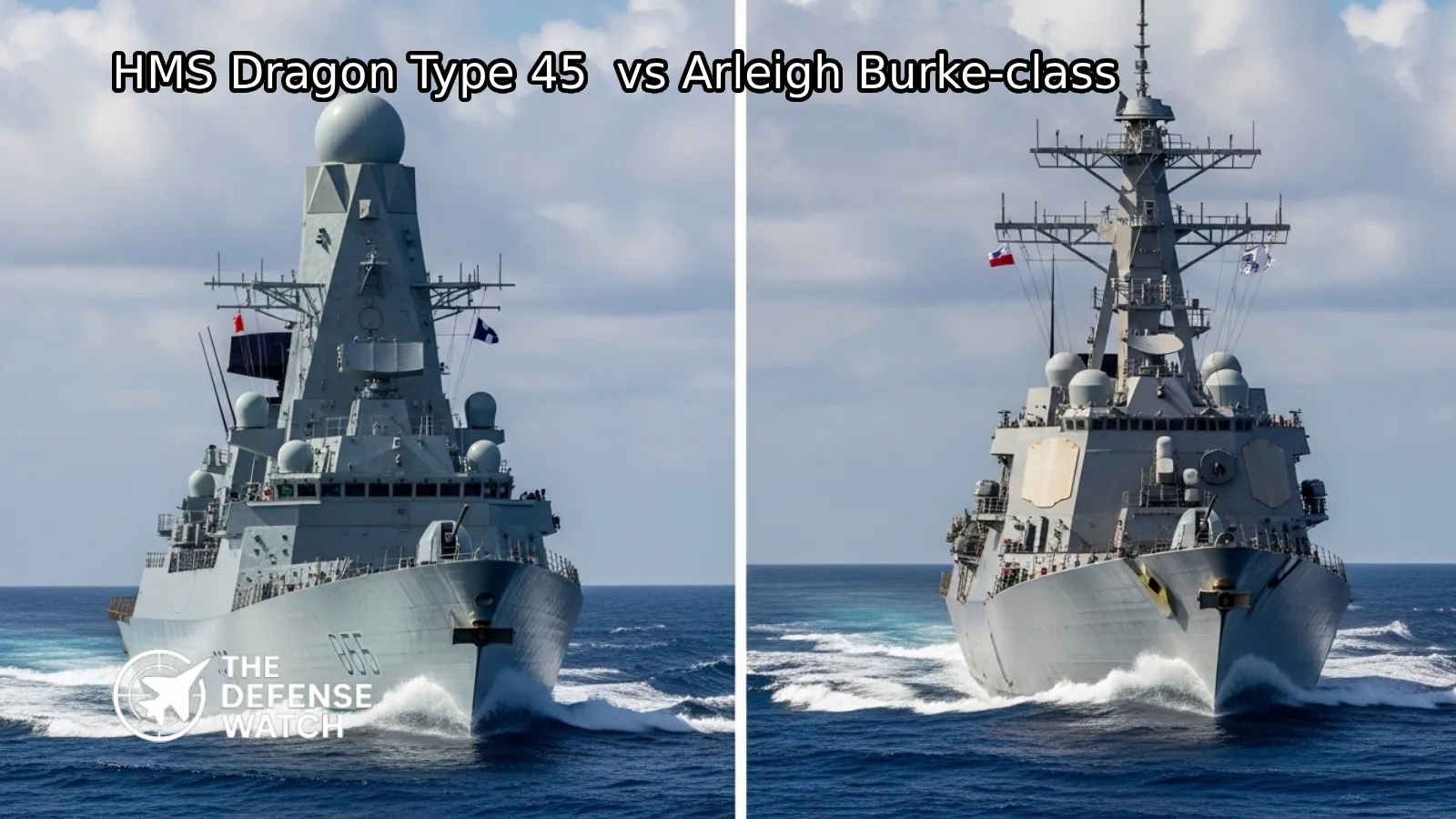
HMS Dragon Type 45 Destroyer vs Arleigh Burke-class Specs
Modern destroyers are the backbone of Western naval power. They defend carrier groups, track submarines, launch missiles, and project force across the globe. That is why the debate around HMS Dragon Type 45 Destroyer vs Arleigh Burke-class specs matters far beyond naval enthusiasts.
- HMS Dragon Type 45 Destroyer vs Arleigh Burke-class Specs Table
- HMS Dragon Type 45 Destroyer vs Arleigh Burke-class Design and Technology
- Firepower and Performance
- Operational Range and Mobility
- Combat Effectiveness
- Cost and Export Value
- HMS Dragon Type 45 Destroyer vs Arleigh Burke-class Analysis
- Where HMS Dragon Has the Edge
- Where Arleigh Burke Has the Edge
- How the U.S. Military Views Each System
- Conclusion, Which Ship Has the Edge
- FAQ, HMS Dragon Type 45 Destroyer vs Arleigh Burke-class
The United Kingdom’s HMS Dragon represents one of NATO’s most advanced dedicated air-defense warships. Meanwhile, the U.S. Navy’s Arleigh Burke-class destroyer is the world’s most successful modern destroyer program, with dozens in service and more under construction.
For U.S. readers, this comparison highlights two different design philosophies. Britain focused on fleet air defense and radar excellence. America built a highly flexible, heavily armed multi-mission combatant.
HMS Dragon Type 45 Destroyer vs Arleigh Burke-class Specs Table
| Specification | HMS Dragon (Type 45) | Arleigh Burke-class |
|---|---|---|
| Country | United Kingdom | United States |
| Service Entry | 2012 (Dragon commissioned) | 1991 |
| Full Load Displacement | Approx. 8,500 tons | Approx. 9,200 to 9,800+ tons |
| Length | 152.4 m | 154 to 156 m |
| Crew | Approx. 190 to 235 | Approx. 300+ |
| Top Speed | 29+ knots | 30+ knots |
| Main Role | Area air defense | Multi-mission warfare |
| Main Radar | SAMPSON AESA radar | AEGIS SPY-1 / SPY-6 (newer Flight III) |
| VLS Cells | 48 Sylver A50 | 90 to 96 Mk 41 |
| Main Gun | 114 mm Mk 8 | 127 mm / 5 inch gun |
| Missiles | Aster 15/30 | SM-2, SM-3, SM-6, ESSM, Tomahawk |
| Helicopter | Merlin/Wildcat | MH-60 Seahawk |
| Approx. Unit Cost | High, limited class production | Lower economies of scale by volume |
HMS Dragon Type 45 Destroyer vs Arleigh Burke-class Design and Technology
Type 45 Strength, Built for Air Defense
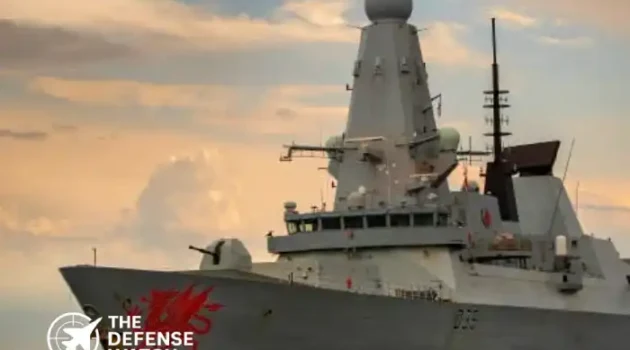
The Type 45 class was designed primarily to shield fleets from aircraft and missile attack. Its standout feature is the SAMPSON multifunction radar paired with the Sea Viper missile system. This gives ships like HMS Dragon exceptional target tracking and engagement capability.
(adsbygoogle = window.adsbygoogle || []).push({});Its sleek superstructure also reduces radar signature, helping survivability.
Arleigh Burke Strength, Multi-Mission Combat System
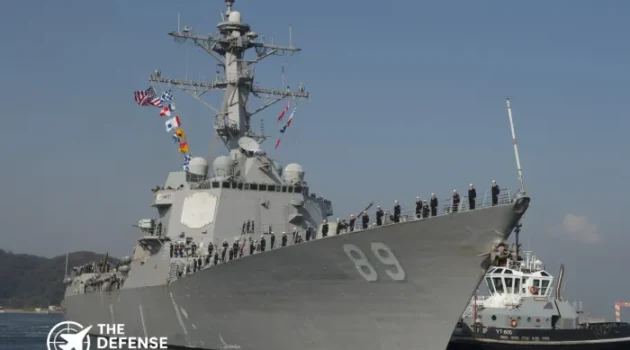
The Arleigh Burke-class destroyer uses the famous AEGIS combat system, long considered the benchmark in naval battle management. Newer Flight III ships add SPY-6 radar, improving ballistic missile defense and air tracking.
Unlike Type 45, Burke ships were built from the start for anti-air, anti-submarine, anti-surface, and land attack missions in one hull.
Verdict
Type 45 may hold an edge in specialized air-defense radar performance, while Burke wins in overall mission flexibility.
Firepower and Performance
HMS Dragon Type 45 Weapons
Type 45 carries 48 Sylver launch cells typically loaded with Aster missiles. Aster 30 provides long-range area defense, while Aster 15 supports medium-range engagements. The ship also carries a 114 mm gun, close-in weapons, and helicopter support.
Its weakness has historically been limited strike options compared with U.S. destroyers.
Arleigh Burke Weapons
Burke-class ships usually field 90 to 96 Mk 41 VLS cells. These can carry:
- SM-2 for fleet air defense
- SM-3 for ballistic missile defense
- SM-6 for long-range multi-role intercepts
- ESSM for point defense
- Tomahawk cruise missiles for land strike
- ASROC for anti-submarine warfare
That gives Burke ships enormous flexibility.
Verdict
If measuring raw firepower, the Arleigh Burke-class wins clearly due to larger missile capacity and broader weapon mix.
Operational Range and Mobility
Type 45 destroyers were built for Royal Navy expeditionary operations, escorting carriers and operating globally. They offer strong endurance but operate in smaller numbers.
Burke destroyers are optimized for constant deployments across the Pacific, Atlantic, Mediterranean, and Middle East. Supported by U.S. logistics networks, they sustain higher global presence.
Verdict
The U.S. Navy gains a strategic edge through fleet size, support infrastructure, and deployment tempo.
Combat Effectiveness
HMS Dragon Combat Record
HMS Dragon has deployed in the Mediterranean, Gulf region, and carrier escort missions. Type 45 destroyers have also contributed to missile defense and NATO security patrols.
Arleigh Burke Combat Record
Arleigh Burke-class destroyer ships have seen extensive real-world operations, including:
- Tomahawk strike missions
- Ballistic missile defense patrols
- Carrier strike group escorts
- Maritime security operations
- Indo-Pacific deterrence missions
The Burke class benefits from decades of combat deployment experience.
Verdict
Burke leads in proven wartime operational use simply because of numbers and mission tempo.
Cost and Export Value
The Type 45 program produced only six ships, limiting economies of scale. It became a highly capable but expensive niche platform.
The Arleigh Burke program became a production success, with more than 70 ships delivered or planned. While each vessel is costly, serial production lowered relative unit costs over time.
Burke systems and AEGIS technology also strengthened U.S. alliances through broader naval integration with partners.
HMS Dragon Type 45 Destroyer vs Arleigh Burke-class Analysis
This comparison is really about specialization versus versatility.
Where HMS Dragon Has the Edge
- Excellent air-defense radar performance
- Strong anti-missile capability
- Lower crew size than Burke
- High-end NATO carrier escort role
Where Arleigh Burke Has the Edge
- Larger missile load
- Land attack strike capability
- Ballistic missile defense options
- Proven combat record
- Massive fleet size and sustainment network
How the U.S. Military Views Each System
U.S. planners generally see Type 45 ships as valuable allied escorts that complement coalition naval groups. However, the U.S. Navy still prioritizes the Burke model because of its ability to perform nearly every mission from one platform.
Conclusion, Which Ship Has the Edge
In a pure fleet air-defense scenario, HMS Dragon Type 45 Destroyer vs Arleigh Burke-class specs becomes a close contest. The British ship was built for exactly that mission and remains highly respected.
In almost every broader wartime scenario, the Arleigh Burke-class has the advantage. It carries more missiles, more mission types, greater strike reach, and operates in much larger numbers.
So who wins?
- Air defense specialist mission: Type 45 is highly competitive
- All-around naval warfare: Arleigh Burke wins
- Global power projection: Arleigh Burke wins decisively
Both ships remain important pillars of NATO maritime strength.
FAQ, HMS Dragon Type 45 Destroyer vs Arleigh Burke-class
Which ship is more powerful, HMS Dragon or Arleigh Burke?The Arleigh Burke-class is generally more powerful overall because it carries more missiles and supports more mission types.
Is HMS Dragon better at air defense?Many analysts rate the Type 45 as one of the best dedicated air-defense destroyers ever built.
How many missiles can each ship carry?Type 45 usually has 48 VLS cells, while Burke ships typically have 90 to 96 cells.
Can Type 45 launch cruise missiles like Tomahawk?Not in the same operational way as Arleigh Burke-class ships, which routinely field Tomahawk capability.
Why does the U.S. Navy rely on Arleigh Burke destroyers?Because they combine air defense, missile defense, strike warfare, anti-submarine warfare, and fleet escort in one proven platform.