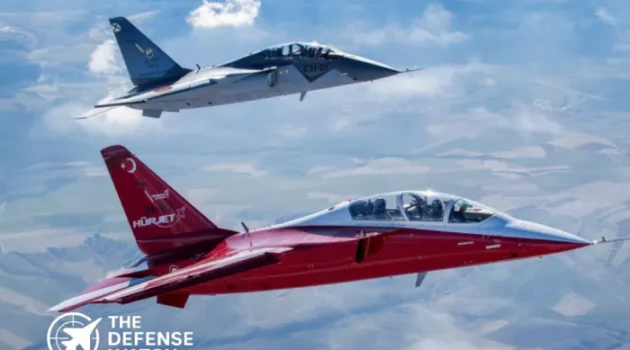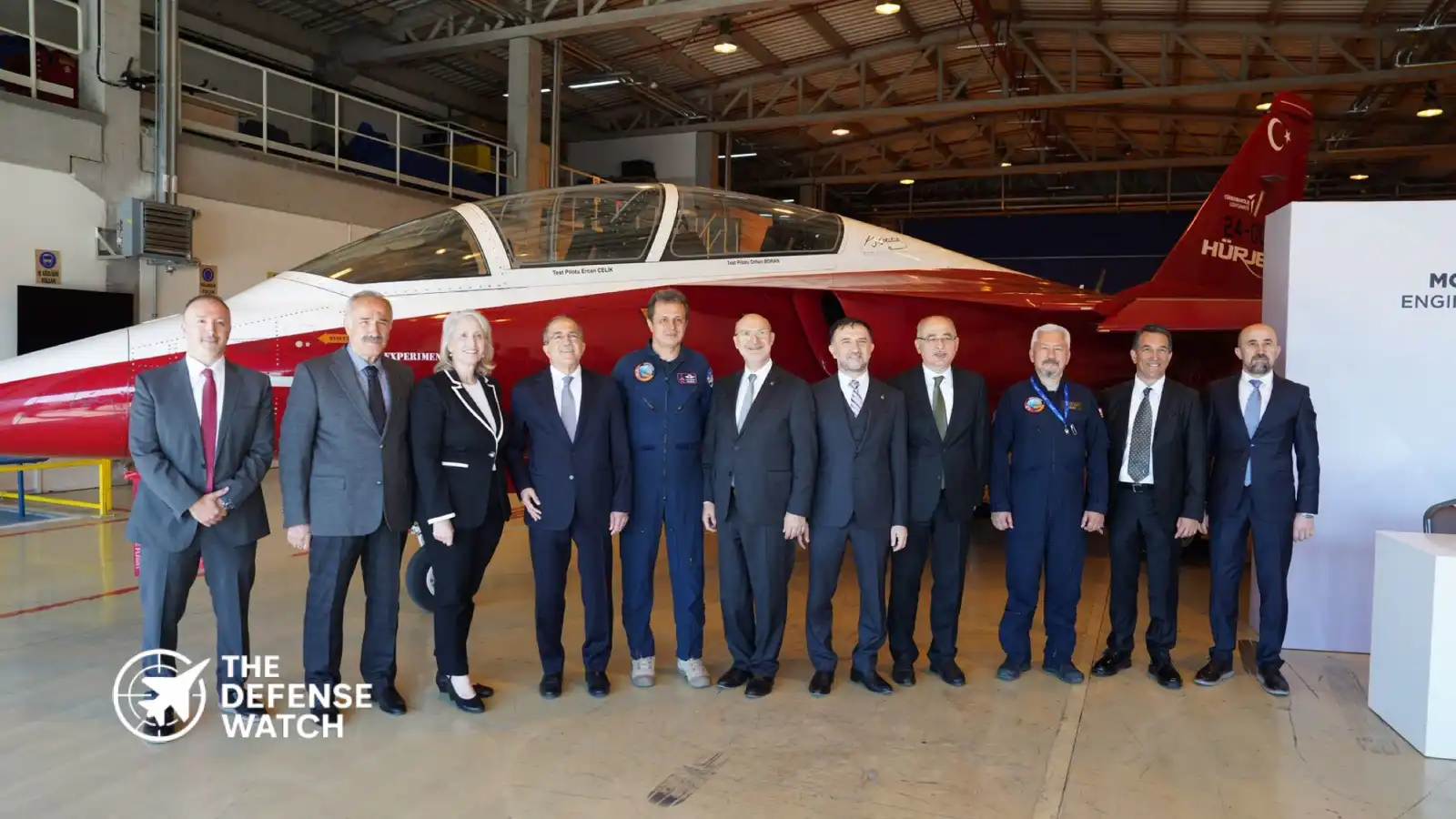
Executive Summary: Turkish Aerospace Industries (TAI) and GE Aerospace have officially signed an agreement to provide F404-GE-102 engines for the serial production of the Hürjet advanced jet trainer. This partnership secures the propulsion requirements for the first batch of aircraft, facilitating Turkey’s transition toward indigenous supersonic flight training and light combat capabilities.
Strategic Propulsion Integration for the Hürjet Program
Turkish Aerospace Industries (TAI) has reached a definitive milestone in the Hürjet program by formalizing a propulsion supply agreement with GE Aerospace. The deal ensures the delivery of the F404-GE-102 turbofan engine, a power plant renowned for its reliability in supersonic trainers and light fighter platforms globally.
The Hürjet, which conducted its maiden flight in April 2023, is designed to replace the aging Northrop T-38 Talon and NF-5 fleets within the Turkish Air Force (TuAF). By selecting the F404, TAI leverages a proven engine architecture, reducing technical risk during the critical serial production phase.
Technical Performance and Comparison
The Hürjet is positioned to compete in the high-growth advanced jet trainer (AJT) market, balancing cost-efficiency with supersonic performance. The following table compares the Hürjet against the legacy T-38 it is intended to replace.
Platform Range Payload Status Key Technology TAI Hürjet 2,222 km 2,721 kg Serial Production F404-GE-102, Glass Cockpit, FBW T-38 Talon 1,835 km Internal only Legacy / Active J85-GE-5 Turbojets (Non-FBW) Key Advantages of the F404-GE-102 Integration
The integration of the F404 engine provides several operational and logistical benefits for the Turkish Defense Industry (SSB) and the end-user:
- Supersonic Capability: The engine generates 17,600 lbs of thrust with afterburner, allowing the Hürjet to reach speeds of Mach 1.4.
- Modular Maintenance: The F404 is designed with a six-module architecture, significantly lowering the Mean Time To Repair (MTTR) and increasing fleet availability.
- Established Supply Chain: With over 4,000 units produced globally, the F404 offers a mature logistics network, ensuring long-term spare parts availability.
- Multi-Role Flexibility: Beyond training, the engine’s thrust-to-weight ratio enables the Hürjet to function as a Light Combat Aircraft (LCA) for close air support and air-policing missions.
Strategic Context and Regional Security
The Hürjet program is a cornerstone of Turkey’s broader “National Technology Move,” aimed at achieving strategic autonomy in defense procurement. By securing a reliable Western propulsion system, TAI mitigates immediate bottlenecks while continuing parallel domestic engine development programs (such as those by TRMotor).
As regional tensions necessitate rapid pilot throughput and modernization, the Hürjet serves as a bridge to fifth-generation platforms like the KAAN (TF-X). The ability to train pilots on a platform with modern Fly-By-Wire (FBW) systems and high-alpha maneuverability is essential for the transition to stealth-capable aircraft. Furthermore, the Hürjet’s export potential to nations in the Middle East and Southeast Asia is bolstered by the presence of the GE Aerospace engine, which is already familiar to many international maintenance crews.
Future Outlook for Serial Production
Following the January 2022 decision by the Defense Industry Executive Committee (SSIK) to move to serial production, TAI is scaling its facilities to meet the Turkish Air Force’s initial requirement for 16 aircraft. Deliveries are expected to commence by 2025, with the F404 agreement serving as the primary guarantor of the program’s industrial timeline.