













@2026 – All Right Reserved. TheDefenseWatch.com
- Home
- Defense Systems
- Bombers & Strategic Aircraft
- De Havilland Mosquito Aircraft
De Havilland Mosquito Aircraft
Defense Systems Full Specifications
1. General Information
| Name | De Havilland Mosquito |
| Manufacturer | de Havilland Aircraft Company |
| Country of Origin | United Kingdom |
| Introduction / In Service Since | 1941 |
| Status | Retired |
| Category | Twin Engine Multirole Combat Aircraft |
| Crew | 2 |
| Unit Cost | Approximately £9,000 to £12,000 (WWII) |
2. Dimensions & Structure
| Length | 41 ft 2 in (12.55 m) |
| Wingspan | 54 ft 2 in (16.51 m) |
| Height | 15 ft 3 in (4.65 m) |
| Wing Area | 454 sq ft (42.2 m²) |
| Empty Weight | 14,300 lb (6,486 kg) |
| Maximum Takeoff Weight (MTOW) | 25,200 lb (11,430 kg) |
3. Performance
| Maximum Speed | 415 mph (668 km/h) |
| Range | 1,500 mi (2,415 km) |
| Combat Radius | Approximately 800 mi (1,287 km) |
| Service Ceiling | 37,000 ft (11,278 m) |
| Rate of Climb | 2,500 ft/min (12.7 m/s) |
4. Powerplant
| Engine Type | 2 × Rolls Royce Merlin V-12 piston engines |
| Thrust (per engine) | Not applicable, 1,460 to 1,710 hp |
| Total Thrust | Approximately 2,920 to 3,420 hp |
5. Payload & Armament
| Internal Payload Capacity | Up to 4,000 lb bombs |
| Weapons Bay | Internal bomb bay |
| Compatible Weapons | General purpose bombs, incendiary bombs, rockets, 20 mm cannon, .303 machine guns, torpedoes (selected variants) |
| Hardpoints | External rocket rails on strike variants |
6. Avionics & Systems
| Radar System | AI Mk IV and later airborne interception radar (night fighter variants) |
| Navigation | Radio navigation and dead reckoning |
| Electronic Warfare (EW) | Basic radar warning and electronic countermeasures on late variants |
| Stealth Features | None |
7. Operational History
| Primary Operator | Royal Air Force |
| Conflict Usage | World War II |
| Notable Missions | Operation Jericho, Pathfinder operations, anti shipping strikes, photo reconnaissance |
8. Additional Information
| Variants | B Mk IV, FB Mk VI, NF Mk II, PR Mk XVI, T Mk III |
| Successor / Future Replacement | English Electric Canberra (selected roles) |
| Notable Features | Wooden airframe, exceptional speed, multirole capability |
| Estimated Operational Life | 1941 to early 1960s (varied by operator) |
PROS
- Exceptional speed for a piston engine aircraft
- Highly versatile across multiple combat roles
- Long operational range for strategic missions
- Lightweight wooden construction conserved strategic metals
- Excellent low altitude precision strike capability
CONS
- Wooden airframe required specialized maintenance
- Limited defensive armament on bomber variants
- Vulnerable to heavy anti aircraft fire during low level attacks
- Production relied on skilled woodworking techniques
- No longer operational in military service
De Havilland Mosquito: The Legendary Wooden Warplane
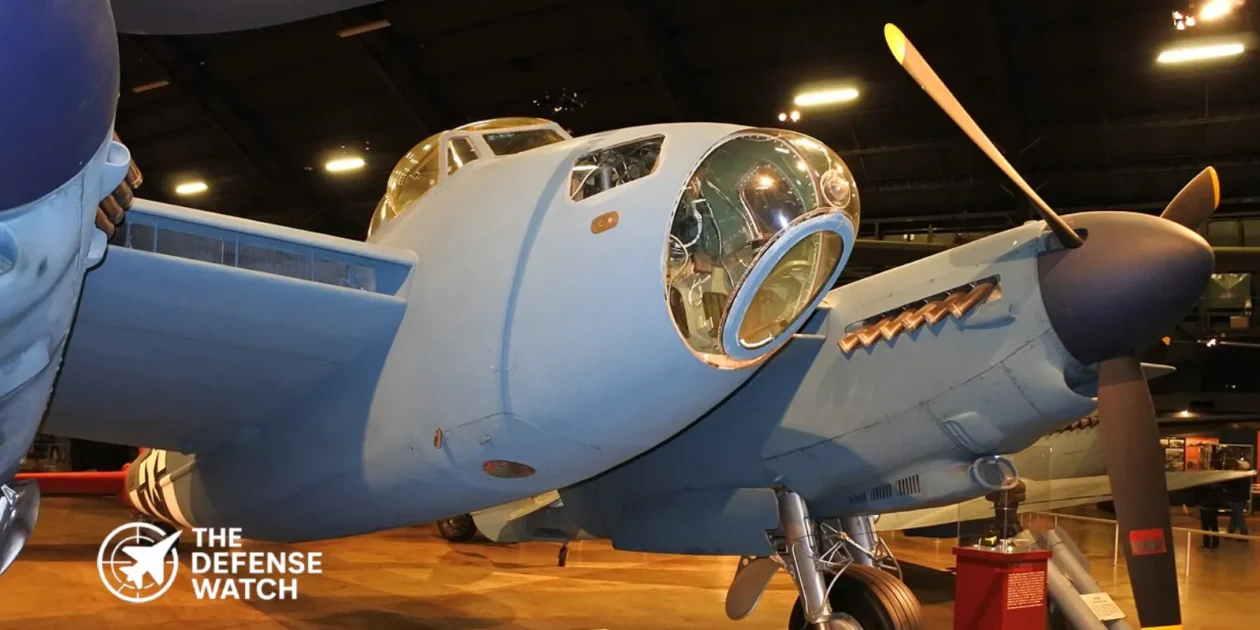
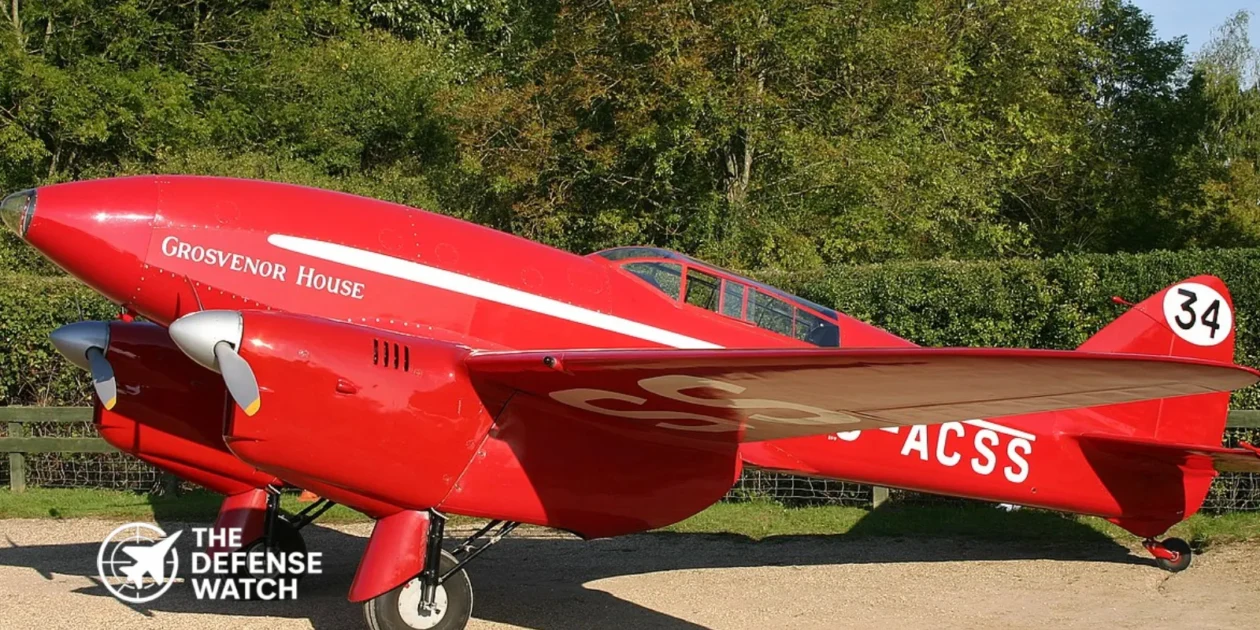
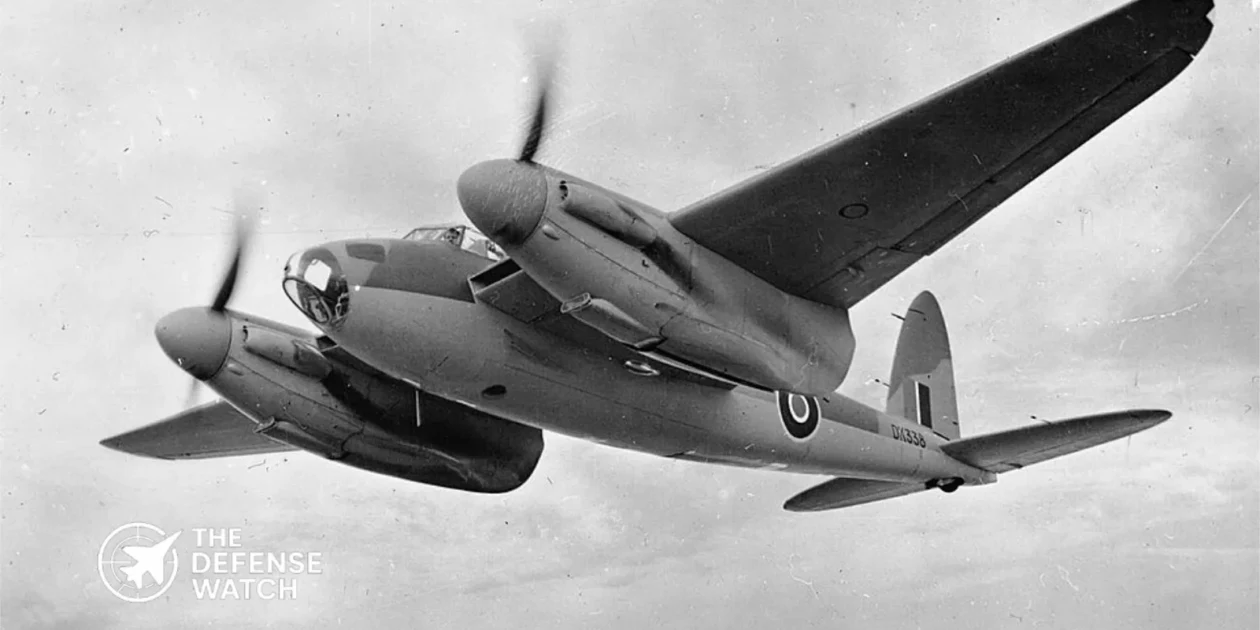
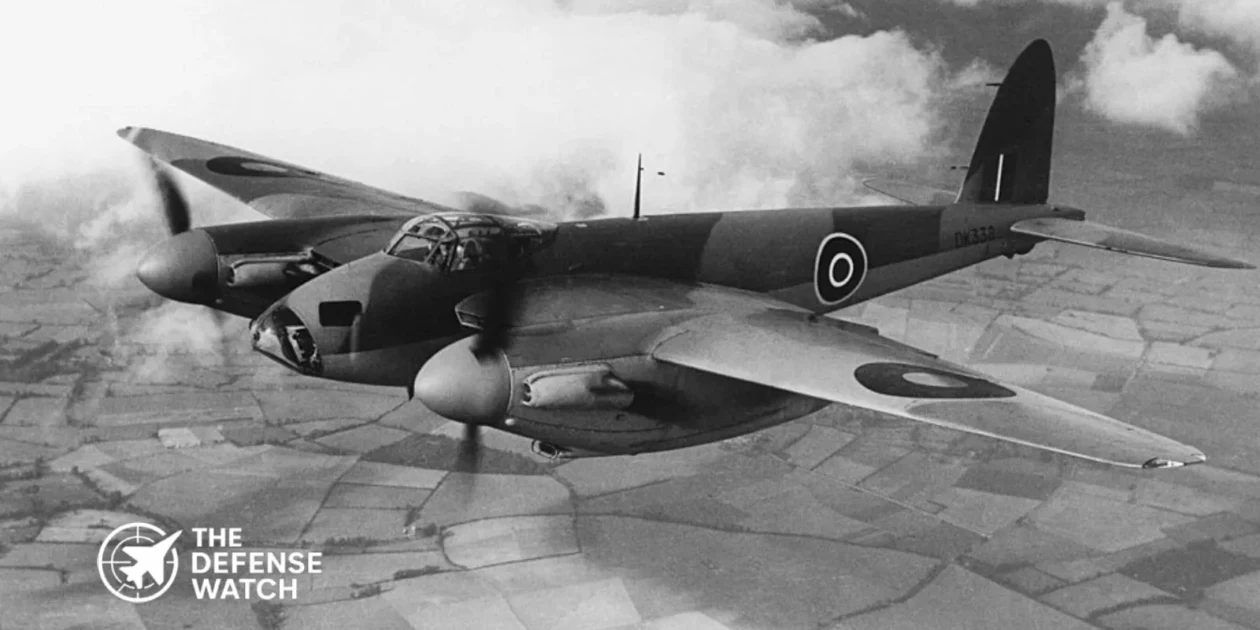
The De Havilland Mosquito was one of the most innovative military aircraft of World War II. Nicknamed the Wooden Wonder, the Mosquito combined exceptional speed, long range, and remarkable versatility in a lightweight airframe built primarily from wood. Developed to outrun enemy fighters rather than rely on heavy defensive armament, it served in numerous roles, including precision bombing, reconnaissance, night fighting, maritime strike, and pathfinding missions. Its outstanding performance made it one of the Royal Air Force’s most successful aircraft and influenced later fast attack aircraft concepts. The Mosquito also demonstrated the value of precision, low altitude strike tactics during missions such as Operation Jericho.
Manufacturer
The aircraft was designed and manufactured by de Havilland Aircraft Company in the United Kingdom. Development began in 1938, with the prototype making its first flight in November 1940. Despite initial skepticism over its wooden construction, the Mosquito proved highly durable and efficient to produce. More than 7,700 aircraft were built in multiple variants for the Royal Air Force and Allied nations throughout the Second World War.
Speed and Range
Powered by two Rolls Royce Merlin piston engines, the Mosquito achieved a maximum speed of approximately 415 mph (668 km/h), making it one of the fastest operational aircraft of its era. Depending on the variant, it offered a maximum ferry range of approximately 1,500 miles (2,415 km). The aircraft’s high speed often allowed it to evade enemy interceptors without escort, while its impressive payload capacity enabled precision bombing deep inside occupied Europe.
Cost/Price
Historical production costs varied by version and year, but a typical De Havilland Mosquito cost approximately £9,000 to £12,000 during World War II, equivalent to roughly US$600,000 to US$1 million in modern purchasing power. Today, surviving airworthy examples are museum pieces with no active production, making exact market valuations difficult.
Disclaimer Note
The information provided on TheDefenseWatch.com is for general informational purposes only. While we strive to ensure the accuracy, completeness, and timeliness of our content regarding defense and aerospace products, technologies, and specifications, we cannot guarantee that all information is 100% accurate or up-to-date due to the evolving nature of military technology and classified data.TheDefenseWatch.com does not warrant the reliability, suitability, or availability of the information for any specific purpose. Users are advised to consult official sources, such as manufacturers, government publications, or defense agencies, for precise and verified data before making decisions based on our content.We are not affiliated with any defense manufacturers, governments, or military organizations mentioned. Opinions, reviews, and ratings reflect expert analysis but are subjective and should not be considered endorsements. TheDefenseWatch.com is not responsible for any errors, omissions, or consequences arising from the use of this website’s content.External links are provided for convenience and do not imply endorsement. TheDefenseWatch.com reserves the right to update or modify content without prior notice. By using this website, you agree to our Privacy & Cookies Policy.
New Arrivals
Popular Comparisons
-
 Tejas Fighter Jet vs F-16 Fighting Falcon: Capability Compared
View Comparison →
Tejas Fighter Jet vs F-16 Fighting Falcon: Capability Compared
View Comparison → -
Rafale Fighter Jet vs F-16 Fighting Falcon : Which Fighter Has the Edge?
View Comparison →
-
Su-57 Fighter Jet vs J-20 Fighter Jet: Stealth and Air Combat Compared
View Comparison →
-
Mirage 2000 vs Tejas Mk1A: Legacy Combat Power vs Indigenous Modernization
View Comparison →
-
Rafale Fighter Jet vs F-22 Raptor: Which Air Dominance Fighter Has the Edge?
View Comparison →
-
Tejas Fighter Jet vs. Rafale Fighter Jet: India’s Indigenous Fighter Meets France’s Proven Multirole Combat Aircraft
View Comparison →
-
F-22 Raptor vs. F-35 Joint Strike Fighter: Which Fifth Generation Fighter Has the Edge?
View Comparison →
-
F-35A vs. F-22 Raptor: Which U.S. Stealth Fighter Dominates Modern Air Combat?
View Comparison →
-
AGM-114 Hellfire vs. AGM-179 JAGM: Which U.S. Precision Missile Is Better?
View Comparison →
-
Patriot (PAC-3) vs. THAAD: Complete Missile Defense System Comparison, Capabilities, Range, and Strategic Roles
View Comparison →
- Type 99B Tank Training Shows China’s Shift Toward Networked Armored Warfare

- JRC Integrated Systems Gets $47.4M SLCM-N Support Contract
- GE Aerospace Says CPP Deal Is Not a Blueprint for Broader Integration
- Lockheed Martin Receives First PAC-3 MSE Components From GM Defense
- NORAD F-16s Deploy From Alaska to High North Under Arctic Vanguard
- Lockheed Martin and U.S. move to accelerate AIM-260 production
- Operation Epic Fury Exposes U.S. Munitions Shortfalls and Industrial Bottlenecks
- General Dynamics Wins $13.8M Navy Undersea Warfare Contract
- Lockheed Martin Wins $19.3M H-1 Helicopter Electronics Contract
- Saab Secures $51.45 Million U.S. Navy Deal For Multi-Mode Radar