

Executive Summary:
Britain is moving to acquire a dedicated drone warfare testbed vessel as the Royal Navy accelerates the development of autonomous maritime capabilities. The platform will provide a flexible environment for testing uncrewed surface, underwater, and aerial systems, reflecting the UK’s broader transition toward a hybrid fleet combining crewed and autonomous platforms.
Royal Navy Plans Dedicated Drone Warfare Testbed Vessel
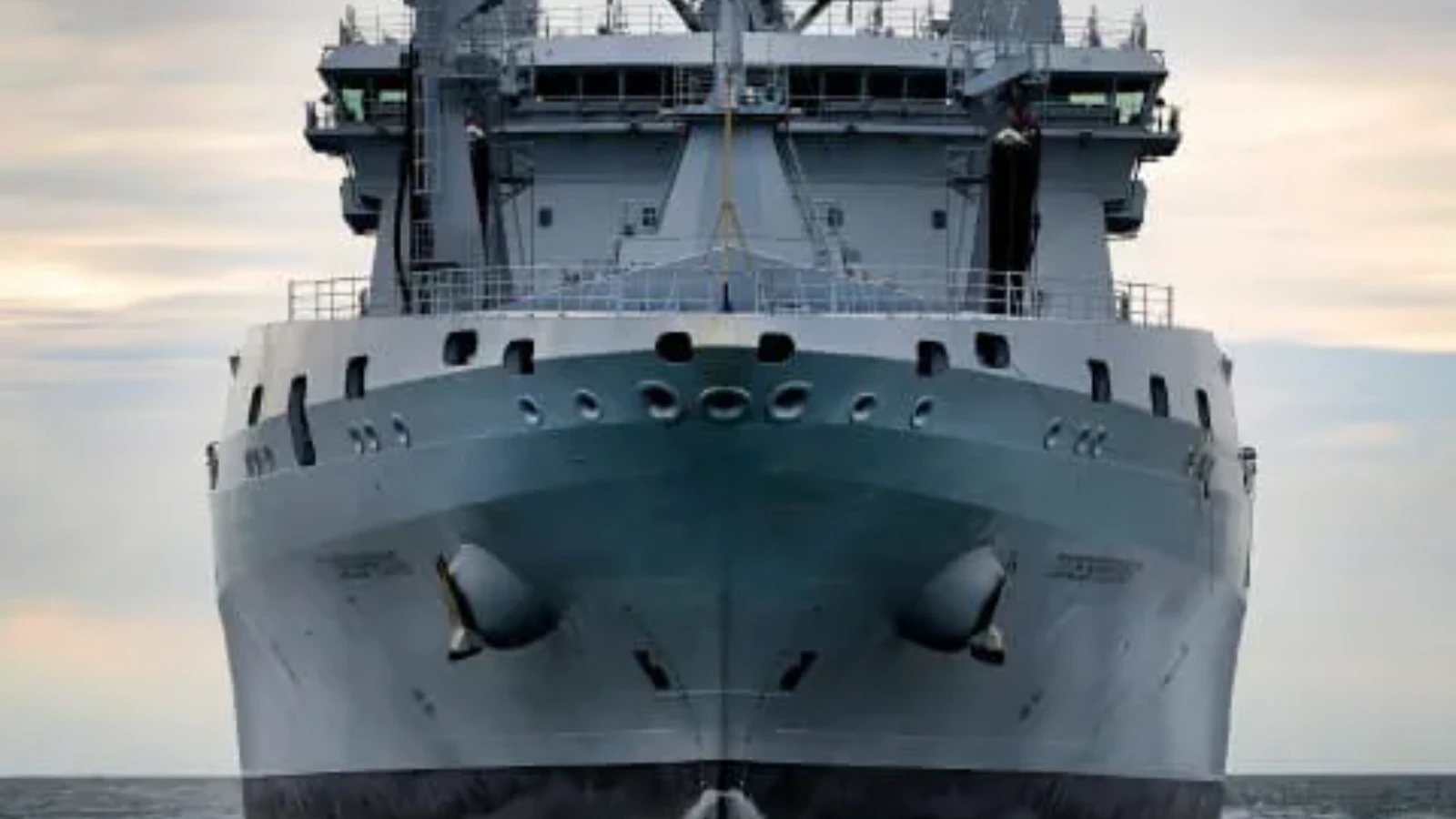
The Royal Navy drone warfare testbed vessel will become a central component of Britain’s expanding effort to integrate autonomous technologies into future naval operations. According to reporting by the UK Defence Journal, the Ministry of Defence intends to procure a dedicated experimentation platform capable of supporting trials involving multiple classes of uncrewed systems.
Rather than serving as an operational combat ship, the vessel will function as a floating laboratory where emerging technologies can be evaluated under realistic maritime conditions before entering frontline service.
The initiative aligns with the UK’s wider modernization strategy, which places increasing emphasis on autonomous systems, artificial intelligence, and distributed maritime operations.
Supporting the Royal Navy’s Hybrid Fleet Vision
The planned vessel is expected to support experiments involving:
| Capability | Intended Purpose |
|---|---|
| Uncrewed Surface Vessels (USVs) | Maritime surveillance, reconnaissance, logistics, and strike concepts |
| Uncrewed Underwater Vehicles (UUVs) | Mine countermeasures, anti-submarine warfare, seabed monitoring |
| Uncrewed Aerial Systems (UAS) | Intelligence, surveillance, communications relay, targeting |
| AI-enabled Command Systems | Autonomous mission management and human-machine teaming |
| Electronic Warfare Payloads | Testing resilience against jamming and electromagnetic threats |
The Ministry of Defence has increasingly emphasized rapid experimentation instead of waiting for lengthy acquisition cycles. A dedicated test vessel allows developers, operators, and industry partners to validate new concepts before they are integrated into operational warships.
Why the Testbed Matters
Modern naval warfare is evolving rapidly.
Recent conflicts have demonstrated that relatively inexpensive autonomous platforms can threaten traditional warships, gather intelligence, and conduct long-endurance surveillance missions.
The Royal Navy has already begun investing in autonomous technologies through several programs, including uncrewed surface vessels acquired under Project Beehive and broader efforts supporting the service’s Hybrid Navy concept.
A dedicated experimentation vessel provides several advantages:
- Faster integration of emerging technologies.
- Reduced risk before operational deployment.
- Continuous testing of software updates and AI algorithms.
- Better interoperability between air, surface, and underwater drones.
- Real-world evaluation under challenging sea conditions.
Unlike laboratory testing, maritime environments introduce unpredictable weather, sea states, communications challenges, and navigation hazards that autonomous systems must overcome before entering service.
Part of Britain’s Larger Investment in Autonomy
The procurement follows a series of British investments aimed at expanding autonomous military capabilities.
The UK government has significantly increased funding for drone and autonomous technologies under recent defense modernization plans. In addition to maritime systems, investments include new drone testing facilities, AI development initiatives, and accelerated procurement programs designed to shorten capability development timelines.
These initiatives support the Strategic Defence Review’s emphasis on rapidly fielding autonomous capabilities across all military domains.
The maritime domain remains particularly important because autonomous vessels can conduct missions that are hazardous, repetitive, or require extended endurance without exposing sailors to unnecessary risk.
Technical Role of the Test Platform
Although detailed specifications have not been released, vessels of this type generally provide modular mission spaces that allow equipment to be installed, removed, and upgraded quickly.
Expected capabilities may include:
- Flight decks for unmanned aerial systems.
- Launch and recovery equipment for autonomous surface vessels.
- Deployment systems for underwater drones.
- Mission control centers.
- Secure satellite and tactical communications.
- Open architecture software integration.
- Space for government, military, and industry experimentation teams.
The modular approach enables the platform to support multiple technology programs without requiring extensive redesign between trials.
Strategic Implications
From a U.S. defense perspective, Britain’s investment reflects a broader trend among NATO navies toward distributed maritime operations.
The United States Navy, Royal Navy, and several allied fleets increasingly view autonomous systems as force multipliers rather than direct replacements for traditional warships.
Instead of concentrating capability aboard a limited number of expensive vessels, future naval operations are expected to distribute sensors, weapons, and electronic warfare assets across networks of crewed and uncrewed platforms.
A dedicated experimentation vessel accelerates this transition by allowing concepts to mature before they are incorporated into frontline ships or multinational exercises.
It also improves interoperability with allied autonomous programs, an increasingly important consideration as NATO expands collaborative development of maritime technologies.
Challenges Remain
Despite rapid progress, several technical hurdles remain before autonomous fleets can operate routinely alongside conventional naval forces.
These include:
- Secure and resilient communications.
- Resistance to electronic warfare and cyber attacks.
- Reliable autonomous navigation in congested waters.
- Human oversight for lethal decision-making.
- Logistics and maintenance for large autonomous fleets.
- Integration with existing naval command-and-control systems.
Testing these issues under operational conditions is one of the primary reasons dedicated experimentation platforms are becoming increasingly valuable.
Looking Ahead
The planned drone warfare testbed vessel represents another step in Britain’s broader effort to transform the Royal Navy into a force capable of integrating autonomous technologies across every aspect of maritime operations.
As unmanned surface vessels, underwater drones, and AI-enabled command systems become more capable, dedicated experimentation platforms will play an increasingly important role in reducing development risks while accelerating innovation.
For allied navies, including the United States, Britain’s approach provides another example of how maritime powers are adapting procurement strategies to keep pace with rapidly evolving autonomous technologies and the changing character of naval warfare.
