
















@2026 – All Right Reserved. TheDefenseWatch.com
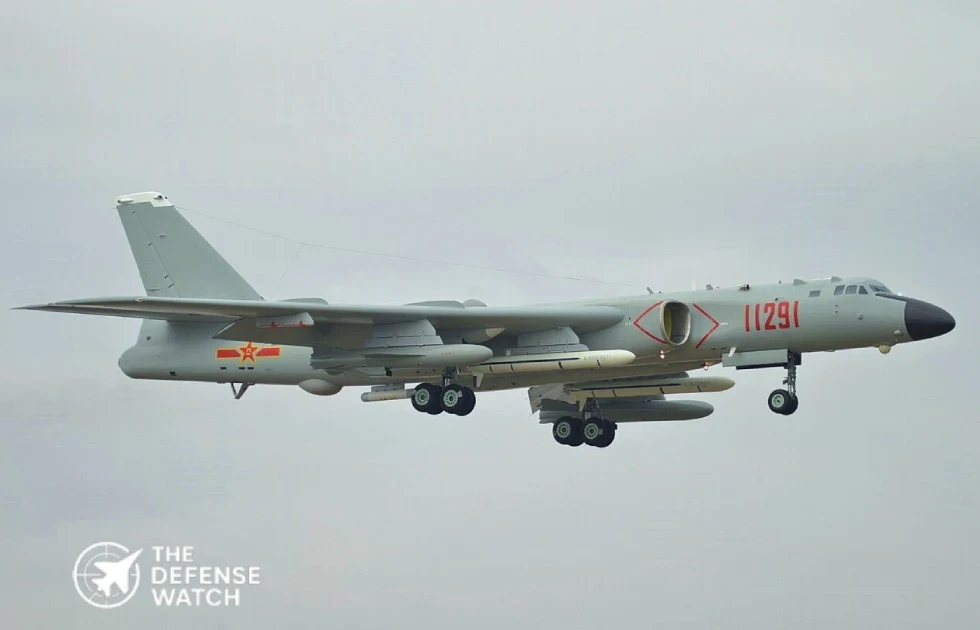
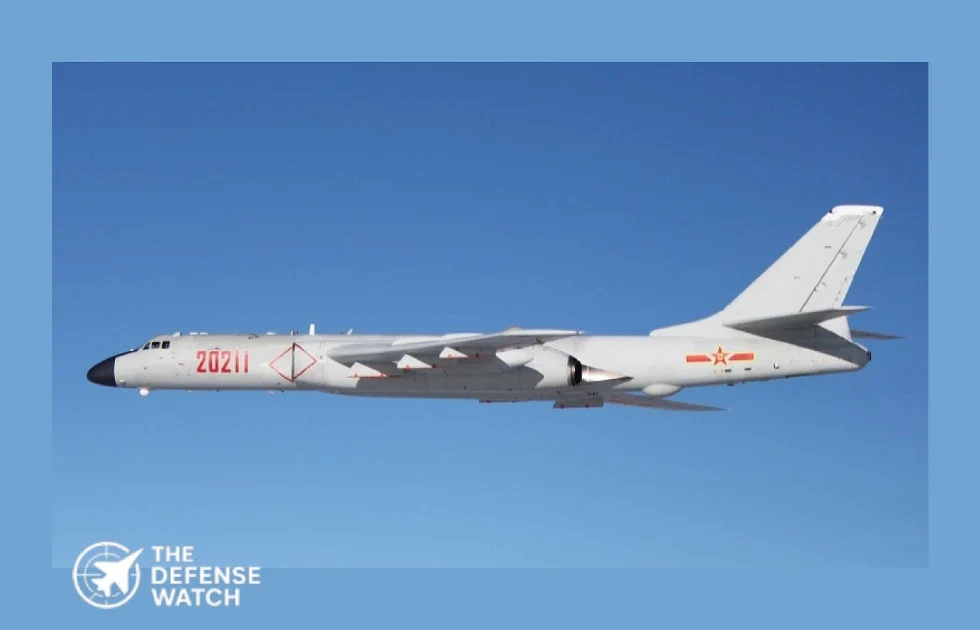
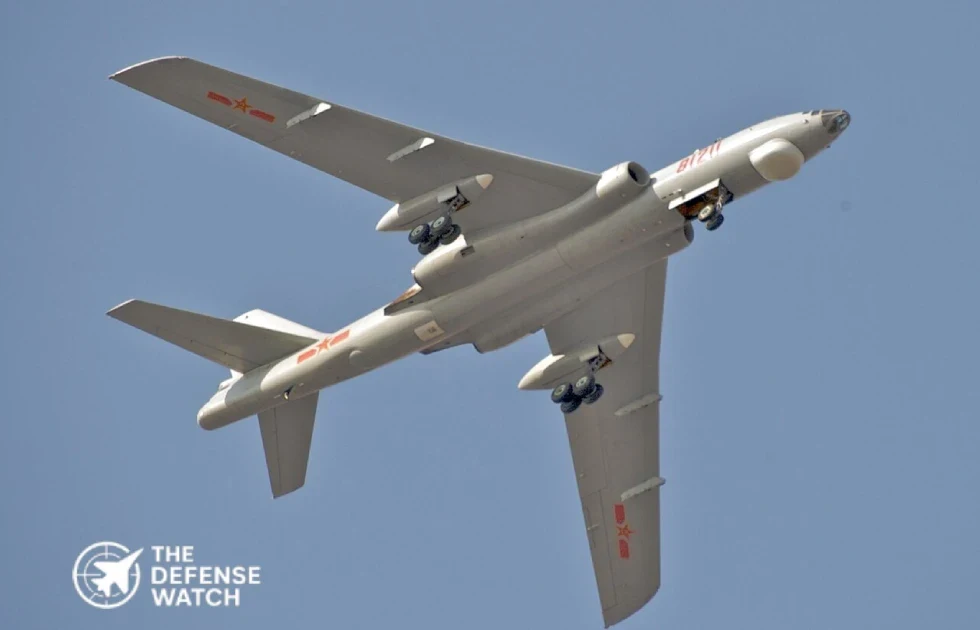
H-6N Bomber
Defense Systems Full Specifications
1. General Information
| Name | H-6N (Leishen / Thunder God) |
| Manufacturer | Xi’an Aircraft Industrial Corporation |
| Country of Origin | China |
| Introduction / In Service Since | ~2018–2019 / Active |
| Status | In service |
| Category | Strategic bomber |
| Crew | 4 |
| Unit Cost | Estimated $46–60 million (H-6 family) |
2. Dimensions & Structure
| Length | 34.8 m (114.2 ft) |
| Wingspan | 33 m (108.3 ft) |
| Height | 10.4 m (34.0 ft) |
| Wing Area | 165 m² |
| Empty Weight | ~37,200 kg |
| Maximum Takeoff Weight (MTOW) | ~95,000 kg |
3. Performance
| Maximum Speed | ~1,050 km/h |
| Range | ~6,000 km |
| Combat Radius | ~3,500 km |
| Service Ceiling | ~12,800 m |
| Rate of Climb | Not publicly detailed |
4. Powerplant
| Engine Type | 2 × Soloviev D-30KP-2 turbofans |
| Thrust (per engine) | ~118 kN (27,000 lbf) |
| Total Thrust | ~236 kN |
5. Payload & Armament
| Internal Payload Capacity | Limited (modified for external ALBM) |
| Weapons Bay | Recessed centerline for large ALBM |
| Compatible Weapons | JL-1 / CH-AS-X-13 ALBM; cruise/anti-ship missiles (CJ-10/KD-20, YJ-12, YJ-21 family) |
| Hardpoints | Underwing + centerline recess |
6. Avionics & Systems
| Radar System | Modernized nose radar (details limited) |
| Navigation | Inertial + Beidou satellite |
| Electronic Warfare (EW) | Upgraded suite, MAWS |
| Stealth Features | None significant |
7. Operational History
| Primary Operator | PLAAF (106th Brigade) |
| Conflict Usage | None confirmed for H-6N |
| Notable Missions | Joint patrols with Russian bombers; training flights |
8. Additional Information
| Variants | H-6N (specialized from H-6K) |
| Successor / Future Replacement | Potential H-20 stealth bomber |
| Notable Features | Aerial refueling probe; ALBM carriage |
| Estimated Operational Life | Ongoing with upgrades |
PROS
- Aerial refueling extends operational range substantially
- Capable of carrying nuclear-capable ALBMs (JL-1 / CH-AS-X-13 family)
- Relatively low unit cost compared with Western or Russian strategic bombers
- Flexible external stores for mixed conventional and strategic loads
- Completes China’s nuclear triad with a mobile airborne leg
CONS
- Subsonic speed limits survivability against modern air defenses
- Non-stealth airframe with high radar cross-section
- Limited production numbers (around 20 for the N variant)
- Dependent on tanker support for maximum range
- Older basic design requires ongoing upgrades for relevance
H-6N Strategic Bomber: China’s ALBM Carrier
The H-6N is China’s primary air-refuelable strategic bomber variant, designed to deliver long-range air-launched ballistic missiles (ALBMs). Derived from the Soviet Tu-16 Badger and extensively modernized, it extends the People’s Liberation Army Air Force (PLAAF) reach for regional and potential intercontinental strike missions. Publicly noted around 2018–2019, the H-6N supports China’s nuclear triad by providing a flexible airborne nuclear delivery option alongside land- and sea-based systems.
Manufacturer
Built by the Xi’an Aircraft Industrial Corporation in China, the H-6N is a specialized evolution of the H-6K. It features a redesigned fuselage with a recessed centerline bay for large external stores and a fixed aerial refueling probe on the nose. These changes distinguish it from earlier conventional H-6 models optimized for cruise missiles.
Speed and Range
Powered by two Soloviev D-30KP-2 turbofan engines, the H-6N reaches a maximum speed of approximately 1,050 km/h (about Mach 0.85). Ferry range is roughly 6,000 km, with a combat radius near 3,500 km. In-flight refueling significantly extends endurance and operational radius, enabling missions beyond the first island chain when paired with long-range ALBMs such as the JL-1 (also associated with the CH-AS-X-13).
The aircraft typically carries one large ALBM under the fuselage plus underwing hardpoints for additional cruise or anti-ship missiles. Crew consists of four. Payload capacity for modern H-6 variants is estimated in the 12,000–18,000 kg range depending on configuration. Avionics include modernized radar, satellite navigation (including Beidou), and electronic warfare systems, though the design remains non-stealthy.
Cost/Price
Unit cost estimates for the broader H-6 family fall in the $46–60 million range; specific H-6N figures are not publicly confirmed. Approximately 20 H-6Ns are reported assigned to the PLAAF’s 106th Brigade for the nuclear mission. The type has participated in joint patrols and training flights but has no confirmed combat use in its current configuration.
The H-6N prioritizes standoff strike and deterrence over penetrating air defenses, reflecting China’s approach to strategic aviation with an aging yet upgraded airframe.
Disclaimer Note
The information provided on TheDefenseWatch.com is for general informational purposes only. While we strive to ensure the accuracy, completeness, and timeliness of our content regarding defense and aerospace products, technologies, and specifications, we cannot guarantee that all information is 100% accurate or up-to-date due to the evolving nature of military technology and classified data.TheDefenseWatch.com does not warrant the reliability, suitability, or availability of the information for any specific purpose. Users are advised to consult official sources, such as manufacturers, government publications, or defense agencies, for precise and verified data before making decisions based on our content.We are not affiliated with any defense manufacturers, governments, or military organizations mentioned. Opinions, reviews, and ratings reflect expert analysis but are subjective and should not be considered endorsements. TheDefenseWatch.com is not responsible for any errors, omissions, or consequences arising from the use of this website’s content.External links are provided for convenience and do not imply endorsement. TheDefenseWatch.com reserves the right to update or modify content without prior notice. By using this website, you agree to our Privacy & Cookies Policy.
More Defense Systems from Xi'an Aircraft Industrial Corporation (AVIC)
New Arrivals
Popular Comparisons
-
 Tejas Fighter Jet vs F-16 Fighting Falcon: Capability Compared
View Comparison →
Tejas Fighter Jet vs F-16 Fighting Falcon: Capability Compared
View Comparison → -
Rafale Fighter Jet vs F-16 Fighting Falcon : Which Fighter Has the Edge?
View Comparison →
-
Su-57 Fighter Jet vs J-20 Fighter Jet: Stealth and Air Combat Compared
View Comparison →
-
Mirage 2000 vs Tejas Mk1A: Legacy Combat Power vs Indigenous Modernization
View Comparison →
-
Rafale Fighter Jet vs F-22 Raptor: Which Air Dominance Fighter Has the Edge?
View Comparison →
-
Tejas Fighter Jet vs. Rafale Fighter Jet: India’s Indigenous Fighter Meets France’s Proven Multirole Combat Aircraft
View Comparison →
-
F-22 Raptor vs. F-35 Joint Strike Fighter: Which Fifth Generation Fighter Has the Edge?
View Comparison →
-
F-35A vs. F-22 Raptor: Which U.S. Stealth Fighter Dominates Modern Air Combat?
View Comparison →
-
AGM-114 Hellfire vs. AGM-179 JAGM: Which U.S. Precision Missile Is Better?
View Comparison →
-
Patriot (PAC-3) vs. THAAD: Complete Missile Defense System Comparison, Capabilities, Range, and Strategic Roles
View Comparison →
- Bell Boeing Wins $19.8M V-22 Tactical Software Support Contract

- Honeywell Wins $53.9M Navy Contract for WSN-7 Gyro Components
- Lockheed Martin Wins $76.6M Trident II D5LE2 Development Contract
- Lockheed Martin Gets $871.2M F-35 Site Support Contract Increase
- Pete Hegseth Texas Enlistment Ceremony: Hegseth Tells Military Families, We Have Their Back
- U.S., Denmark and Greenland Reach Security Agreement to Expand American Military Presence
- SpaceX Wins Three More NASA Crew Missions in $946 Million ISS Contract
- U.S. Clears Potential $24.3 Billion F-35 Sale to Saudi Arabia
- Type 99B Tank Training Shows China’s Shift Toward Networked Armored Warfare
- JRC Integrated Systems Gets $47.4M SLCM-N Support Contract