










@2026 – All Right Reserved. TheDefenseWatch.com
- Home
- Defense Systems
- Fighter Jets
- J-20S Fighter Jet
J-20S Fighter Jet
Defense Systems Full Specifications
General Information
| Name | Chengdu J-20S |
| Manufacturer | Chengdu Aircraft Corporation, AVIC |
| Country of Origin | China |
| Type / Role | Twin-seat stealth multirole fighter |
| Generation | 5th |
| Status | Publicly confirmed variant, operational details limited |
| First Flight | Not officially disclosed |
| Introduction / In Service Since | Not officially disclosed |
| Number Built | Not officially disclosed |
| Operators | People's Liberation Army Air Force |
Dimensions & Structure
| Length | Approximately 20.4 to 21.2 m, J-20 family estimate |
| Wingspan | Approximately 13.0 to 13.5 m |
| Height | Approximately 4.5 to 4.7 m |
| Wing Area | Approximately 78 m², J-20 family estimate |
| Empty Weight | Approximately 19,391 kg, J-20 family estimate |
| Maximum Takeoff Weight (MTOW) | Approximately 37,000 kg, J-20 family estimate |
| Internal Weapons Bay | Yes |
| External Hardpoints | Yes |
Performance
| Maximum Speed | Approximately Mach 2 |
| Range | Approximately 3,240 nmi, J-20 family estimate |
| Combat Radius | Approximately 1,080 nmi, J-20 family estimate |
| Service Ceiling | Approximately 65,600 ft |
| Rate of Climb | Not officially disclosed for J-20S |
| Thrust-to-Weight Ratio | Not officially disclosed |
| G Limits | Not officially disclosed |
Powerplant
| Engine Type | Afterburning turbofan |
| No. of Engines | 2 |
| Thrust (each) | Not confirmed for J-20S |
| Thrust Vectoring | Reported on some J-20 configurations, J-20S details undisclosed |
| Fuel Capacity | Not officially disclosed |
Armament
| Gun | No confirmed internal cannon publicly identified |
| Missiles (Air-to-Air) | PL-10, PL-12, PL-15 |
| Missiles (Air-to-Ground) | Precision-guided weapons, specific J-20S loadouts undisclosed |
| Bombs | Precision-guided bombs, specific loadout undisclosed |
| Hardpoints | Internal bays plus external stations |
| Payload Capacity | Not officially disclosed |
Avionics & Systems
| Radar | AESA radar |
| Radar Range | Not publicly disclosed |
| Electronic Warfare (EW) System | Integrated electronic warfare capability |
| Targeting System | Electro-optical and infrared sensors |
| Helmet Display | Details not publicly disclosed |
| Navigation | Integrated digital navigation systems |
| Autopilot / AI Assistance | Advanced mission computing and automated data processing reported |
| Communication | Secure tactical communications and networking |
Stealth & Technology
| Radar Cross Section (RCS) | Classified / not publicly confirmed |
| Stealth Features | Low-observable shaping, internal weapons carriage and radar-signature reduction measures |
| Infrared Signature Reduction | Measures incorporated into the J-20 family, exact J-20S performance undisclosed |
| Sensor Fusion | Integrated multi-sensor architecture |
| Networking Capabilities | Tactical networking and manned-unmanned teaming |
Variants
| Special Export Versions | J-20, J-20A, J-20S |
Operational History
| Major Conflicts / Deployments | No publicly confirmed combat deployment |
| Notable Operators | People's Liberation Army Air Force |
| Combat Proven? | No |
| Mission Types | Air superiority, precision strike, electronic warfare, tactical command and control, situational awareness, manned-unmanned teaming |
Cost & Program
| Unit Cost | Not officially disclosed |
| Development Cost | Not officially disclosed |
| Program Name | J-20 family program |
| Funding Countries | China |
Additional Information
| Upgrades Planned | Continued sensor, propulsion, networking and mission-system development |
| Future Replacement | Not publicly identified |
| Export Restrictions | No confirmed J-20S export program |
| Notable Achievements | First publicly confirmed twin-seat stealth fighter design |
| Competitors | F-22 Raptor, F-35 Lightning II, Su-57, J-35 |
PROS
- Two-seat configuration supports complex missions
- Low-observable fifth-generation design
- Internal weapons carriage
- Designed for networked combat operations
- Potential manned-unmanned teaming capability
CONS
- Detailed specifications remain classified or undisclosed
- J-20S-specific performance figures are limited
- No confirmed combat record
- Unit price is not publicly available
- Actual radar and electronic warfare performance cannot be independently verified
Chengdu J-20S Twin-Seat Stealth Fighter
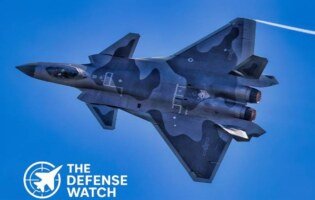
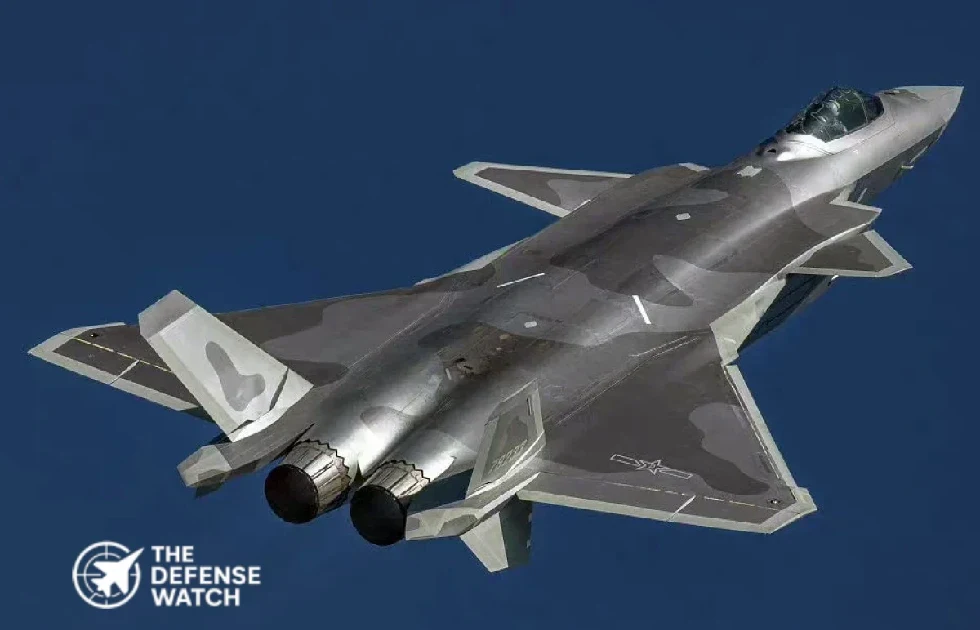
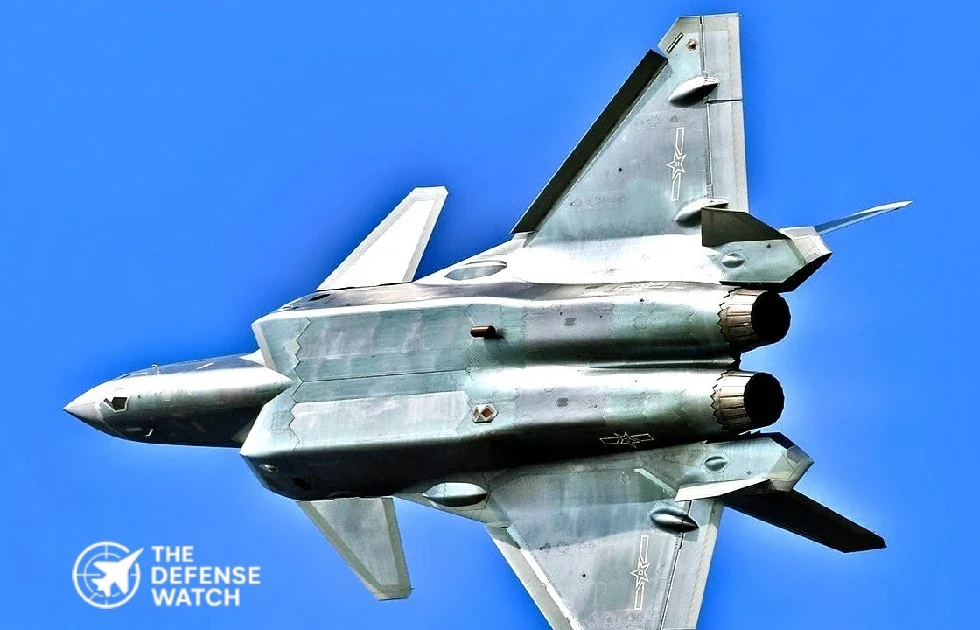
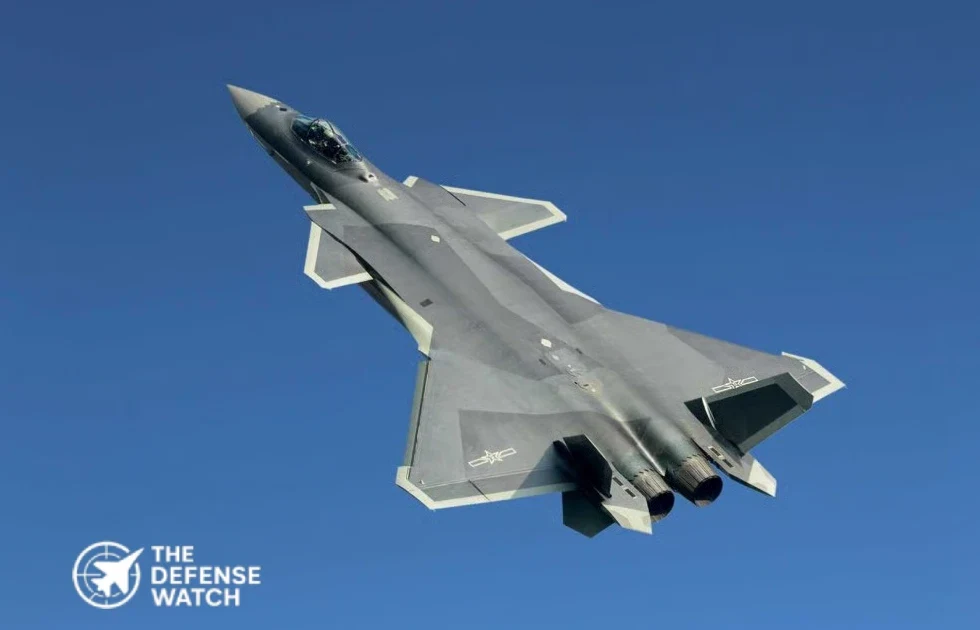
The Chengdu J-20S is a twin-seat derivative of China’s J-20 fifth-generation stealth fighter. Developed by the Chengdu Aircraft Design and Research Institute under AVIC, the aircraft was officially confirmed in 2024 and publicly displayed as a scale model at Airshow China in Zhuhai. Chinese authorities describe it as a heavy, long-range, multirole stealth fighter capable of air combat, precision strikes, electronic warfare, tactical command and control, and cooperation with unmanned aircraft.
Design and Mission
The J-20S retains the J-20 family’s low-observable configuration but adds a second crew position. This allows a rear-seat operator to manage sensors, weapons, communications, electronic warfare, or other mission systems while the pilot concentrates on flight and tactical maneuvering.
One of the aircraft’s most important reported roles is manned-unmanned teaming. Chinese sources have stated that the J-20S can coordinate with unmanned aircraft, while analysts have also identified potential tactical command and control functions.
Speed, Range and Armament
The J-20 family is generally assessed to have a maximum speed around Mach 2 and a maximum range of approximately 3,240 nautical miles, although these figures are not specifically confirmed for the J-20S. The aircraft is expected to retain internal weapons bays for maintaining its low-observable profile. Compatible weapons associated with the J-20 family include the PL-10 short-range missile, PL-15 beyond-visual-range missile, and precision-guided weapons.
Technology and Operational Role
The J-20S is associated with AESA radar, electro-optical sensors, electronic warfare systems, secure communications, and networked operations. Chinese official reporting also identifies precision attacks against land and maritime targets as potential missions.
The aircraft appeared publicly as part of China’s military aviation developments in 2025, but detailed production numbers and performance data remain undisclosed.
Cost and Price
China has not published an official J-20S unit price. Open-source estimates for the broader J-20 family range from approximately $60 million to $120 million per aircraft, but these figures should not be treated as confirmed J-20S procurement prices.
J-20 Family Variants
| J-20 | Original single-seat stealth fighter |
| J-20A | Upgraded single-seat variant |
| J-20S | Twin-seat stealth multirole variant |
| J-20 Family Upgrades | Continued propulsion, sensor and avionics improvements |
Disclaimer Note
The information provided on TheDefenseWatch.com is for general informational purposes only. While we strive to ensure the accuracy, completeness, and timeliness of our content regarding defense and aerospace products, technologies, and specifications, we cannot guarantee that all information is 100% accurate or up-to-date due to the evolving nature of military technology and classified data.TheDefenseWatch.com does not warrant the reliability, suitability, or availability of the information for any specific purpose. Users are advised to consult official sources, such as manufacturers, government publications, or defense agencies, for precise and verified data before making decisions based on our content.We are not affiliated with any defense manufacturers, governments, or military organizations mentioned. Opinions, reviews, and ratings reflect expert analysis but are subjective and should not be considered endorsements. TheDefenseWatch.com is not responsible for any errors, omissions, or consequences arising from the use of this website’s content.External links are provided for convenience and do not imply endorsement. TheDefenseWatch.com reserves the right to update or modify content without prior notice. By using this website, you agree to our Privacy & Cookies Policy.
More Defense Systems from Chengdu Aerospace Corporation (CAC)
New Arrivals
Popular Comparisons
-
 Tejas vs Gripen: Key Differences and Capabilities
View Comparison →
Tejas vs Gripen: Key Differences and Capabilities
View Comparison → -
Tejas vs MiG-21 Bison: How India Replaced Its Iconic Supersonic Fighter
View Comparison →
-
F-35 vs F-16: Stealth, Sensors and Combat Roles
View Comparison →
-
Tejas Fighter Jet vs F-16 Fighting Falcon: Capability Compared
View Comparison →
-
Rafale Fighter Jet vs F-16 Fighting Falcon : Which Fighter Has the Edge?
View Comparison →
-
Su-57 Fighter Jet vs J-20 Fighter Jet: Stealth and Air Combat Compared
View Comparison →
-
Mirage 2000 vs Tejas Mk1A: Legacy Combat Power vs Indigenous Modernization
View Comparison →
-
Rafale Fighter Jet vs F-22 Raptor: Which Air Dominance Fighter Has the Edge?
View Comparison →
-
Tejas Fighter Jet vs. Rafale Fighter Jet: India’s Indigenous Fighter Meets France’s Proven Multirole Combat Aircraft
View Comparison →
-
F-22 Raptor vs. F-35 Joint Strike Fighter: Which Fifth Generation Fighter Has the Edge?
View Comparison →
- NASA’s SpaceX Crew-12 Nears Return After Extended ISS Science Mission

- F-15E Shot Down Over Iran: How the Dude 44 Crew Was Brought Home
- Operation Mount Hope III: How Two Night Stalker Chinooks Carried a Libyan Hind Out of Chad
- North Korea Fires Ballistic Missile From Wonsan Toward East Sea
- BAE Systems Wins $70.5 Million Trident II D5 Support Contract
- Saudi Arabia Weighs Yemen Offensive to Retake Bab el-Mandeb
- L3Harris Expands WESCAM Manufacturing Focus for Mission-Ready EO/IR Systems
- Northrop Grumman Unveils FORTITUDE RF Chip for Faster Defense Systems
- Northrop Grumman YFQ-48A Talon Blue Completes Autonomous Flight Test
- U.S. Warns Defense Industry Lacks Capacity for Rapid Weapons Surge