











@2026 – All Right Reserved. TheDefenseWatch.com
- Home
- Defense Systems
- Bombers & Strategic Aircraft
- B-21 Raider Bomber
B-21 Raider Bomber
Defense Systems Full Specifications
1. General Information
| Name | B-21 Raider |
| Manufacturer | Northrop Grumman |
| Country of Origin | United States |
| Introduction / In Service Since | Initial operational capability planned for 2028 |
| Status | In development, testing and production |
| Category | Stealth strategic bomber |
| Crew | 2 |
| Unit Cost | Approx. $692 million APUC, FY2022 dollars |
2. Dimensions & Structure
| Length | Est. 52–55 ft (16–17 m) |
| Wingspan | Est. 132–150+ ft (40–47 m) |
| Height | Est. ~17–20 ft (5–6 m) |
| Wing Area | Classified |
| Empty Weight | Est. ~70,000 lb (31,750 kg) |
| Maximum Takeoff Weight (MTOW) | Est. ~180,000 lb (81,650 kg) |
3. Performance
| Maximum Speed | High subsonic (Mach 0.8+) |
| Range | Intercontinental (est. 6,000+ nm) |
| Combat Radius | Classified (long-range capable) |
| Service Ceiling | Est. ~50,000 ft (15,000 m) |
| Rate of Climb | Classified |
4. Powerplant
| Engine Type | 2 × Pratt & Whitney non-afterburning turbofans (PW9000 family / F135-derived) |
| Thrust (per engine) | Est. ~20,000–27,000 lbf |
| Total Thrust | Est. ~40,000–54,000 lbf |
5. Payload & Armament
| Internal Payload Capacity | Est. 20,000–30,000 lb |
| Weapons Bay | Internal (main bay; possible additional) |
| Compatible Weapons | B61-12, AGM-181 LRSO, JDAM family, JASSM/JASSM-ER, other conventional & nuclear munitions |
| Hardpoints | Internal only (no external hardpoints for stealth) |
6. Avionics & Systems
| Radar System | Advanced AESA (details classified) |
| Navigation | Modern integrated suite (classified) |
| Electronic Warfare (EW) | Advanced self-protection suite |
| Stealth Features | Flying-wing design, broadband all-aspect low observability, advanced materials |
7. Operational History
| Primary Operator | United States Air Force (Global Strike Command) |
| Conflict Usage | None (pre-operational) |
| Notable Missions | Flight testing (Edwards AFB); first flight Nov 2023 |
8. Additional Information
| Variants | Single production variant planned |
| Successor / Future Replacement | Intended to replace B-1 and B-2; complement B-52 |
| Notable Features | Open architecture, potential CCA control, optionally manned |
| Estimated Operational Life | Multi-decade (through mid-to-late 21st century) |
PROS
- Advanced stealth design for penetrating defended airspace
- Dual conventional and nuclear mission capability
- Long-range global strike role
- Open architecture supports future upgrades
- Designed for integration with networked systems
CONS
- Exact range and speed remain classified or undisclosed
- High acquisition and sustainment costs
- Fleet is still entering operational service
- Advanced low-observable technology adds maintenance demands
- Weapons and detailed performance data remain limited publicly
B-21 Raider Bomber: Sixth-Generation Stealth Strike
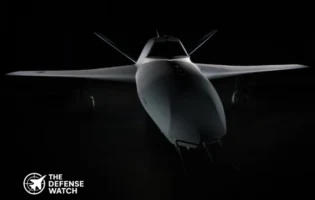
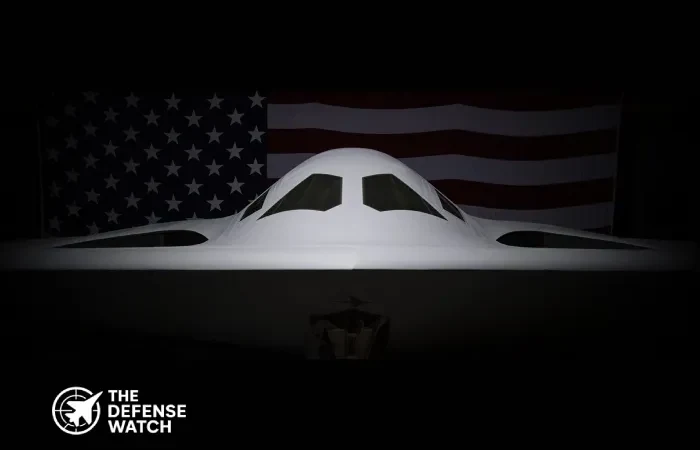
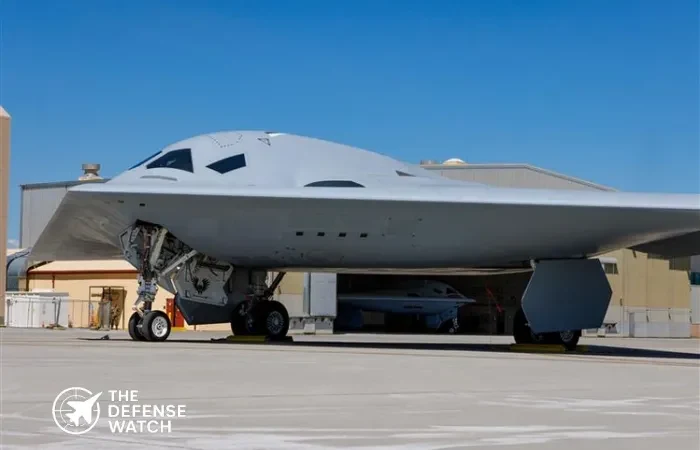
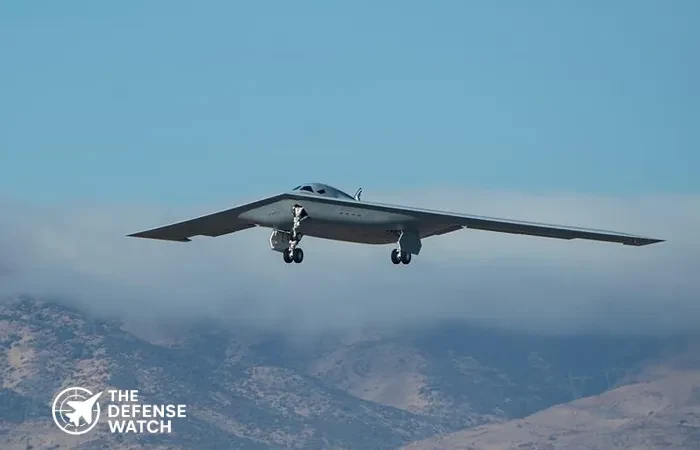
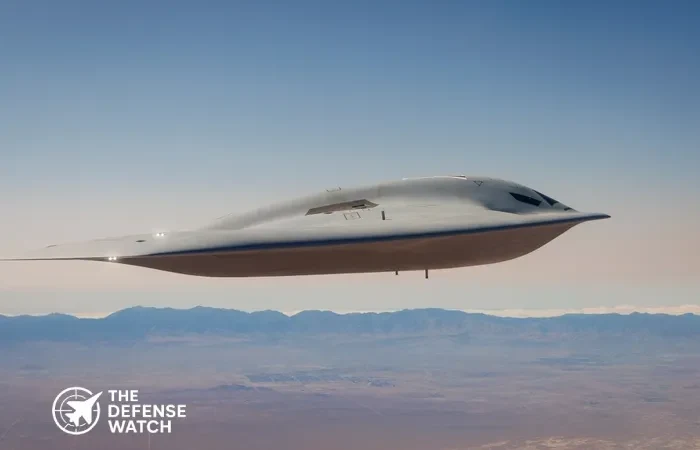
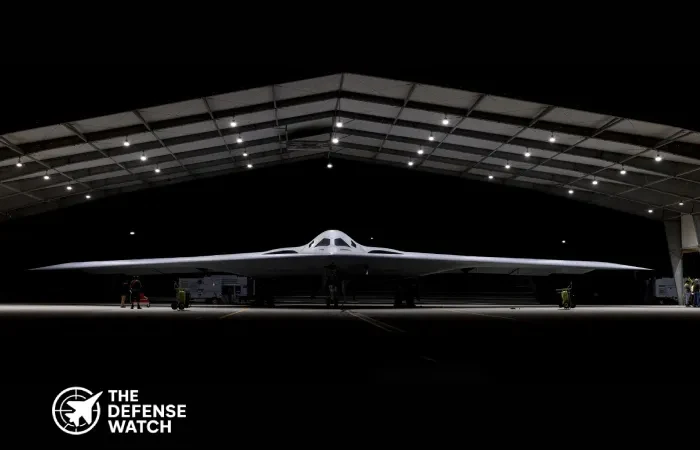
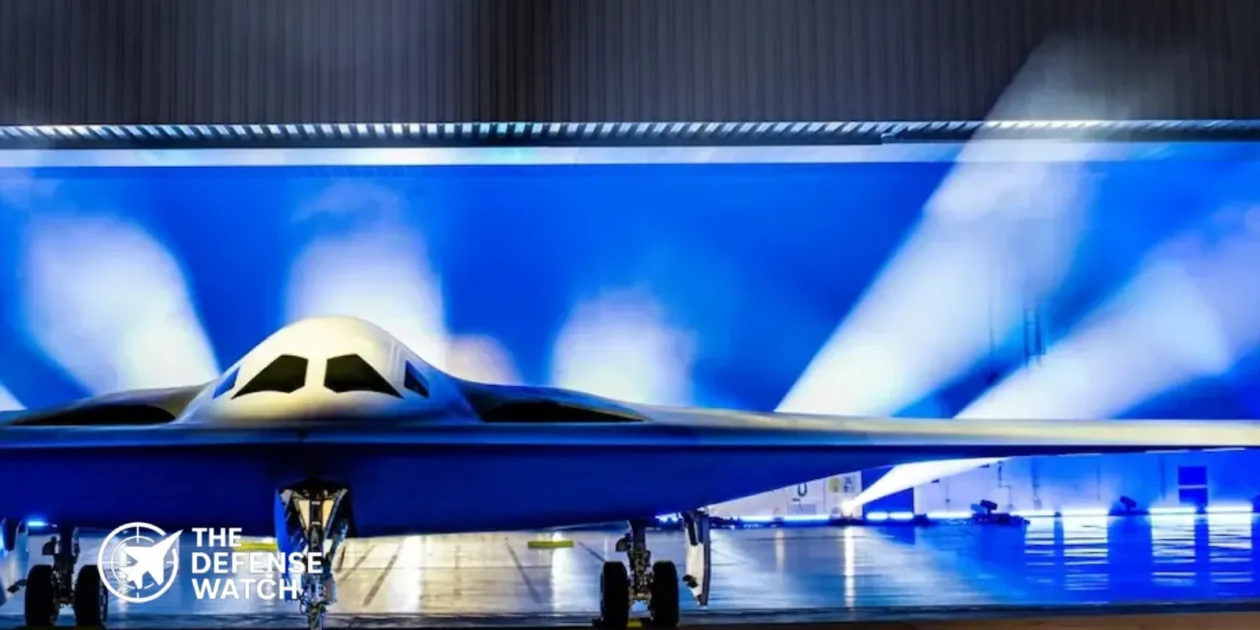
The B-21 Raider is the U.S. Air Force’s next-generation long-range stealth bomber, designed to deliver conventional and nuclear weapons against heavily defended targets. It is intended to become the backbone of the future bomber fleet alongside the B-52H Stratofortress, while replacing the B-1B Lancer and B-2 Spirit over time.
The aircraft uses a flying-wing configuration and incorporates advanced low-observable technology, digital systems, networking, and an open systems architecture. The design is intended to support future upgrades as threats and mission requirements change.
Manufacturer
Northrop Grumman is the prime contractor, selected in October 2015. The company builds the flying-wing aircraft at Plant 42 in Palmdale, California, incorporating lessons from the B-2 Spirit and modern digital engineering. Pratt & Whitney supplies the engines. The Air Force plans to acquire at least 100 aircraft, with discussions of higher numbers to expand the stealth bomber fleet.
Speed and Range
The B-21 is a high-subsonic aircraft, with estimated maximum speeds in the Mach 0.8+ range (roughly 600–650 mph / 965–1,050 km/h at altitude). Exact figures remain classified. Unrefueled range is intercontinental, estimated in the 6,000+ nautical mile class, supported by efficient engines that reduce tanker dependence compared with legacy bombers. Service ceiling is approximately 50,000 ft (15,000 m). Aerial refueling extends global reach.
Cost and Price
Average procurement unit cost is targeted at $550 million in base-year 2010 dollars, equivalent to roughly $690–700 million in recent dollars. This is substantially lower than the B-2’s unit cost and supports a larger planned fleet. Total program cost, including development, procurement of 100 aircraft, and 30 years of operations, has been estimated around $203 billion.
The B-21 features advanced all-aspect low-observable design, internal weapons bays with an estimated payload capacity of 20,000–30,000 lb, dual-capable nuclear and conventional armament (including B61-12 and AGM-181 LRSO), a two-person crew (with optional unmanned capability), and systems supporting intelligence, surveillance, reconnaissance, and potential control of collaborative combat aircraft. It is intended to complement and eventually replace the B-1 and B-2 while working alongside the modernized B-52.
Operational Role
The Raider is designed for conventional precision strike, nuclear deterrence, intelligence and electronic warfare support, and integration with a wider family of systems. The Air Force announced in July 2026 that the operational aircraft will use a two-pilot crew.ible deterrence and global reach in an era of renewed great-power competition.
Disclaimer Note
The information provided on TheDefenseWatch.com is for general informational purposes only. While we strive to ensure the accuracy, completeness, and timeliness of our content regarding defense and aerospace products, technologies, and specifications, we cannot guarantee that all information is 100% accurate or up-to-date due to the evolving nature of military technology and classified data.TheDefenseWatch.com does not warrant the reliability, suitability, or availability of the information for any specific purpose. Users are advised to consult official sources, such as manufacturers, government publications, or defense agencies, for precise and verified data before making decisions based on our content.We are not affiliated with any defense manufacturers, governments, or military organizations mentioned. Opinions, reviews, and ratings reflect expert analysis but are subjective and should not be considered endorsements. TheDefenseWatch.com is not responsible for any errors, omissions, or consequences arising from the use of this website’s content.External links are provided for convenience and do not imply endorsement. TheDefenseWatch.com reserves the right to update or modify content without prior notice. By using this website, you agree to our Privacy & Cookies Policy.
New Arrivals
Popular Comparisons
-
 Tejas Fighter Jet vs F-16 Fighting Falcon: Capability Compared
View Comparison →
Tejas Fighter Jet vs F-16 Fighting Falcon: Capability Compared
View Comparison → -
Rafale Fighter Jet vs F-16 Fighting Falcon : Which Fighter Has the Edge?
View Comparison →
-
Su-57 Fighter Jet vs J-20 Fighter Jet: Stealth and Air Combat Compared
View Comparison →
-
Mirage 2000 vs Tejas Mk1A: Legacy Combat Power vs Indigenous Modernization
View Comparison →
-
Rafale Fighter Jet vs F-22 Raptor: Which Air Dominance Fighter Has the Edge?
View Comparison →
-
Tejas Fighter Jet vs. Rafale Fighter Jet: India’s Indigenous Fighter Meets France’s Proven Multirole Combat Aircraft
View Comparison →
-
F-22 Raptor vs. F-35 Joint Strike Fighter: Which Fifth Generation Fighter Has the Edge?
View Comparison →
-
F-35A vs. F-22 Raptor: Which U.S. Stealth Fighter Dominates Modern Air Combat?
View Comparison →
-
AGM-114 Hellfire vs. AGM-179 JAGM: Which U.S. Precision Missile Is Better?
View Comparison →
-
Patriot (PAC-3) vs. THAAD: Complete Missile Defense System Comparison, Capabilities, Range, and Strategic Roles
View Comparison →
- Type 99B Tank Training Shows China’s Shift Toward Networked Armored Warfare

- JRC Integrated Systems Gets $47.4M SLCM-N Support Contract
- GE Aerospace Says CPP Deal Is Not a Blueprint for Broader Integration
- Lockheed Martin Receives First PAC-3 MSE Components From GM Defense
- NORAD F-16s Deploy From Alaska to High North Under Arctic Vanguard
- Lockheed Martin and U.S. move to accelerate AIM-260 production
- Operation Epic Fury Exposes U.S. Munitions Shortfalls and Industrial Bottlenecks
- General Dynamics Wins $13.8M Navy Undersea Warfare Contract
- Lockheed Martin Wins $19.3M H-1 Helicopter Electronics Contract
- Saab Secures $51.45 Million U.S. Navy Deal For Multi-Mode Radar