Executive Summary: U.S. Special Operations Forces are conducting Polar Dagger 2026 across western Alaska from August 15 through August 31. The exercise tests the ability of small teams to operate from remote Arctic locations near the Bering Strait, strengthening U.S. readiness for homeland defense in a difficult and strategically important region.
U.S. Special Operations Forces Expand Arctic Operations
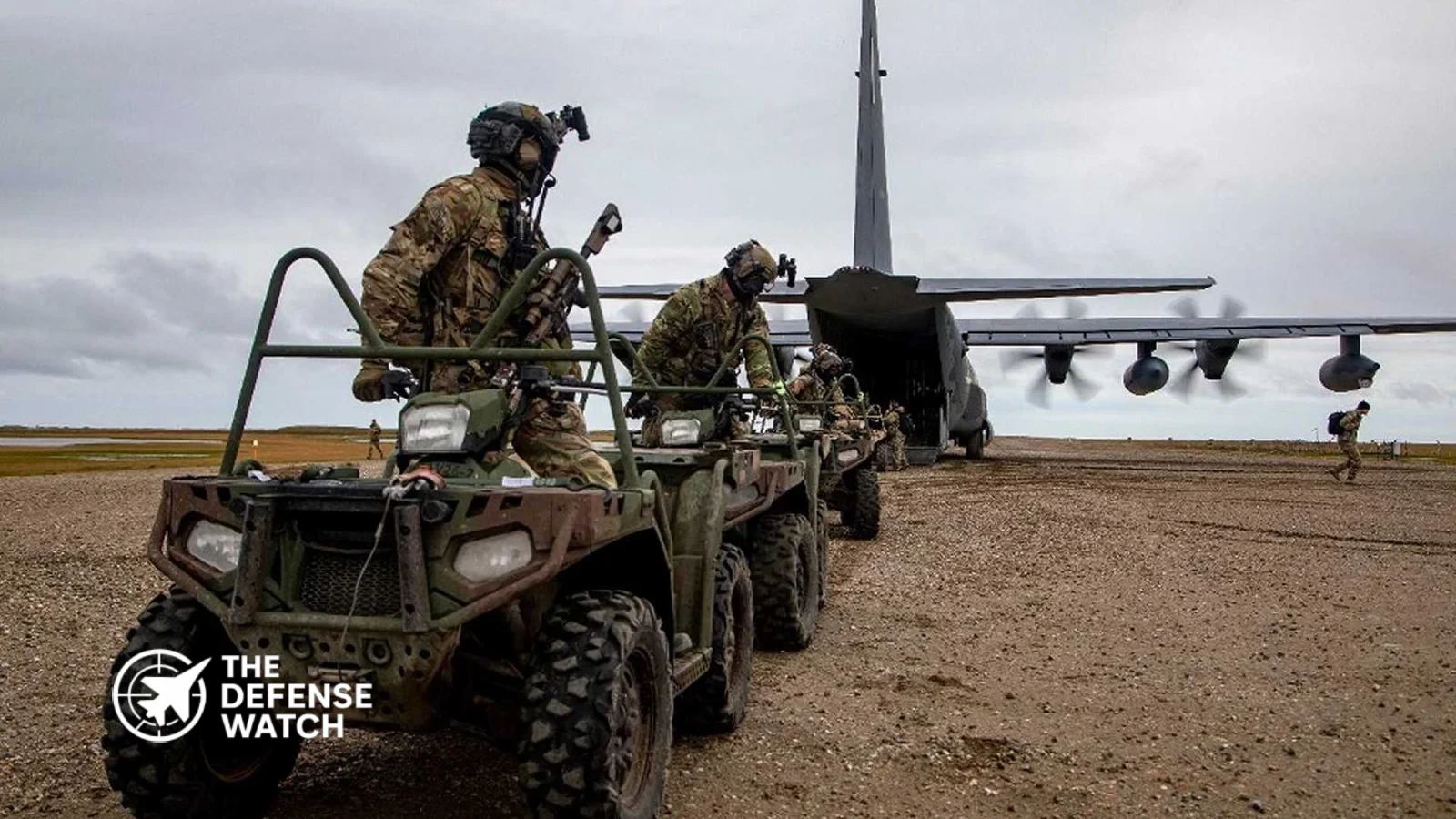
U.S. Special Operations Forces are deploying across western Alaska for Polar Dagger 2026, placing personnel at several remote locations close to the Bering Strait and Russia’s Far East. The annual operation is designed to demonstrate and refine the ability of special operations forces to deploy rapidly, operate in austere Arctic conditions, and integrate with broader U.S. Northern Command capabilities.
According to Army Recognition, the 2026 operation runs from August 15 through August 31 and includes activity at Little Diomede Island, St. Lawrence Island, Wales, Tin City, Nome, and Point Hope. The deployment creates a dispersed operating network stretching from the Bering Sea toward the Chukchi Sea.
The locations are significant because western Alaska has limited infrastructure, long distances between communities, difficult weather, and few conventional transportation routes. These conditions make the region a demanding environment for military forces that must move personnel, equipment, fuel, communications systems, and medical support over large distances.
U.S. Special Operations Command’s 2026 Fact Book confirms that Special Operations Command North executes Polar Dagger annually to demonstrate rapidly deployable special operations forces in the Arctic. The command also identifies Arctic operations as a continuing component of its homeland defense responsibilities.
Little Diomede Highlights the Exercise’s Geographic Importance
Among the locations involved, Little Diomede is particularly important.
The island sits in the Bering Strait, directly across from Russia’s Big Diomede Island. The two islands are separated by only a few miles, placing the U.S. operating area close to Russian territory.
That geography gives Little Diomede value as a training location for small-unit operations in an environment where communications, transportation, resupply, and evacuation can become major operational challenges.
The exercise should not be interpreted simply as a forward deployment against Russia. Polar Dagger is an established training and readiness activity. Its broader purpose is to determine how U.S. special operations forces can contribute to Arctic situational awareness and homeland defense under demanding conditions.
The distinction is important. The presence of U.S. personnel near Russia reflects the geography of the Bering Strait as much as any particular tactical message.
Western Alaska Creates a Difficult Military Environment
Wales and Tin City provide additional positions on the Seward Peninsula, while St. Lawrence Island extends the exercise farther into the Bering Sea. Nome provides a more developed logistical base for moving personnel and equipment into western Alaska.
Point Hope adds another operating location farther north along the Chukchi Sea coast. Together, the sites create a broad area in which U.S. forces can examine how dispersed teams function across the Arctic.
The operational challenge is not simply reaching these locations.
A small team may be able to arrive quickly, but maintaining that team is more difficult. Personnel need dependable communications, transportation, resupply, medical support, weather information, and reliable links to commanders and other military units.
That makes sustainment a central measure of Arctic readiness.
Previous Polar Dagger operations have tested long-range movement, infiltration and extraction, critical infrastructure protection, personnel recovery, resupply, communications, and special operations integration. A 2023 SOCNORTH exercise also involved more than 150 joint special operations personnel conducting activities across Alaska, including reconnaissance, long-range movements, infrastructure assessments, rapid resupply, and personnel recovery.
Polar Dagger Builds on Earlier Arctic Exercises
Polar Dagger 2026 is part of a wider pattern of U.S. military activity in Alaska.
During the 2024 iteration, Special Operations Command North deployed forces aboard the USS John L. Canley for operations around the Bering Sea, Arctic Circle, and St. Lawrence Island. The exercise was intended to refine rapidly deployable special operations capabilities and response options in support of U.S. Northern Command’s homeland defense mission.
Earlier Polar Dagger activity also integrated Navy special warfare personnel with the USS John P. Murtha in the Bering Sea. The operation demonstrated the ability of special operations forces to work from austere Arctic locations while supporting critical infrastructure defense and joint-force interoperability.
Official U.S. military imagery from the 2024 exercise shows Special Operations Command North personnel operating at Little Diomede and Wales, highlighting the importance of local knowledge and cooperation with Alaska Native communities in Arctic operations.
Tundra Merlin Adds a Larger Joint-Force Layer
The importance of Polar Dagger becomes clearer when viewed alongside other U.S. Arctic activities.
The 2026 operation complements Tundra Merlin, another activity in western Alaska that has involved larger conventional capabilities. The publication reported that U.S. forces used Nome as a staging area for personnel, an M142 HIMARS launcher, and an AN/TPQ-53 radar, with Royal Canadian Air Force C-17 aircraft supporting the movement of equipment.
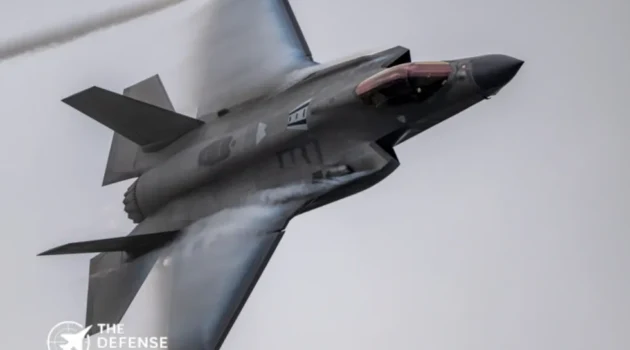
The wider Arctic defense picture also includes fighter aircraft and aerial refueling assets. Recent U.S. training in Alaska has involved F-35A Lightning II and F-16 fighters, KC-135 tankers, HIMARS, and ground-based radar capabilities.
This combination illustrates a key feature of modern Arctic defense: no single unit can cover the region alone.
Small special operations teams can provide local presence and potentially contribute to reconnaissance and infrastructure security. Larger aircraft, radars, missile systems, ships, and command networks provide the reach and firepower needed to respond to information generated across the region.
Communications Could Be the Critical Test
For Polar Dagger 2026, communications may be as important as mobility.
A team positioned on a remote island has limited value if it cannot reliably transmit information to commanders, aircraft, ships, intelligence networks, or other joint forces.
The Arctic creates additional complications. Sparse infrastructure, severe weather, long distances, and limited terrestrial communications can make conventional command-and-control arrangements difficult.
SOCNORTH has not publicly identified all special operations units, aircraft, maritime platforms, unmanned systems, sensors, or communications equipment participating in Polar Dagger 2026. That means specific claims about the exercise’s operational equipment should be treated cautiously until the U.S. military releases additional information.
This lack of detailed disclosure is normal for a special operations exercise and does not indicate that particular systems are or are not being used.
Why Polar Dagger Matters for U.S. Arctic Defense
The strategic value of Polar Dagger extends beyond cold-weather training.
The Bering Strait connects the North Pacific and Arctic regions and represents one of the most important geographic approaches between Alaska and the Russian Far East. As activity in the Arctic increases, the United States needs forces capable of operating across large areas where permanent military infrastructure is relatively limited.
Special operations forces can help address part of that challenge because they are structured to operate in small formations and can deploy into locations that are difficult for larger units to occupy continuously.
The key test is therefore not how many personnel are deployed. It is whether relatively small teams can arrive quickly, establish communications, operate safely, collect and share useful information, and remain supported over time.
That is a more meaningful measure of Arctic readiness than simply maintaining a temporary presence.
The U.S. military has continued to expand Arctic-focused training and integration. In February and March 2026, NORAD and U.S. Northern Command conducted Arctic Edge 2026 across Alaska and Greenland, bringing together U.S. forces, Canadian and Danish partners, the Alaska National Guard, and other organizations for multidomain Arctic training.
Polar Dagger fits within that broader effort by focusing specifically on the special operations component of Arctic and homeland defense.
What to Watch as Polar Dagger 2026 Continues
The most important developments will be the systems and units that become publicly identified as the exercise progresses.
Particular attention should be given to aviation support, unmanned systems, maritime operations, satellite and tactical communications, Arctic mobility equipment, and integration with conventional forces.
The exercise could also provide useful information about how the United States intends to connect dispersed Arctic forces with the wider homeland defense architecture.
For now, the clearest conclusion is that Polar Dagger 2026 is focused on operational readiness rather than a new permanent U.S. military deployment. The exercise demonstrates the value Washington places on being able to move specialized forces rapidly into remote areas of western Alaska and keep them connected to the broader joint force.
As Arctic competition and military activity continue to receive greater attention, the ability to operate from difficult terrain may become an increasingly important part of U.S. homeland defense planning.