










@2026 – All Right Reserved. TheDefenseWatch.com
- Home
- Defense Systems
- Missiles & Precision Weapons
- SM-3 Missile
SM-3 Missile
Defense Systems Full Specifications
1. General Information
| Name / Designation | RIM-161 Standard Missile-3 (SM-3) |
| Type / Role | Ballistic Missile Defense Interceptor |
| Country of Origin | United States |
| Manufacturer | Raytheon, an RTX business |
| Service Entry / Year Introduced | 2005, Block I; Block IA followed in 2006 |
2. Performance & Range
| Range | Approximately 700 km for Block IA/IB; up to 2,500 km for Block IIA, open-source estimates |
| Speed | Approximately 3.0 km/s for Block IA/IB; up to 4.5 km/s for Block IIA |
| Ceiling / Altitude Limit | Exo-atmospheric, with precise engagement altitude classified |
| Accuracy (CEP) | Not publicly specified; relies on direct kinetic interception |
| Warhead Type | Kinetic hit-to-kill interceptor |
3. Guidance & Targeting
| Guidance System | Inertial, command and midcourse guidance |
| Targeting Mode | Midcourse interception |
| Launch Platform Compatibility | Aegis-equipped naval vessels and Aegis Ashore |
| Seeker Type | Infrared seeker on the kinetic warhead |
4. Physical Characteristics
| Length | Approximately 6.55 m |
| Diameter | Approximately 0.34 m for earlier variants; 0.54 m for Block IIA |
| Wingspan | Variant dependent |
| Launch Weight | Approximately 1,500 kg class, variant dependent |
| Propulsion | Multi-stage solid-fuel rocket |
5. Warhead & Payload
| Warhead Weight | Not publicly specified |
| Explosive Type | None, kinetic interception |
| Detonation Mechanism | Direct kinetic impact |
| Payload Options | Exo-atmospheric kinetic kill vehicle |
6. Operational Use & Capabilities
| Operational Range Type | Long |
| Deployment Platform | Sea and ground |
| Target Types | Short to intermediate-range ballistic missiles |
| Combat Proven | Yes, operationally tested and used in missile-defense operations |
| Users / Operators | United States, Japan |
PROS
- Exo-atmospheric ballistic missile interception capability
- Hit-to-kill kinetic interception technology
- Compatible with Aegis-equipped ships and Aegis Ashore
- Advanced infrared seeker technology
- Block IIA provides greater speed and defended area
CONS
- Designed primarily for ballistic missile defense, not general-purpose strike
- High acquisition and sustainment costs
- Performance varies significantly between variants
- Dependent on an integrated radar and command network
- Detailed performance data remain classified
SM-3 Missile: U.S. Ballistic Missile Defense Interceptor
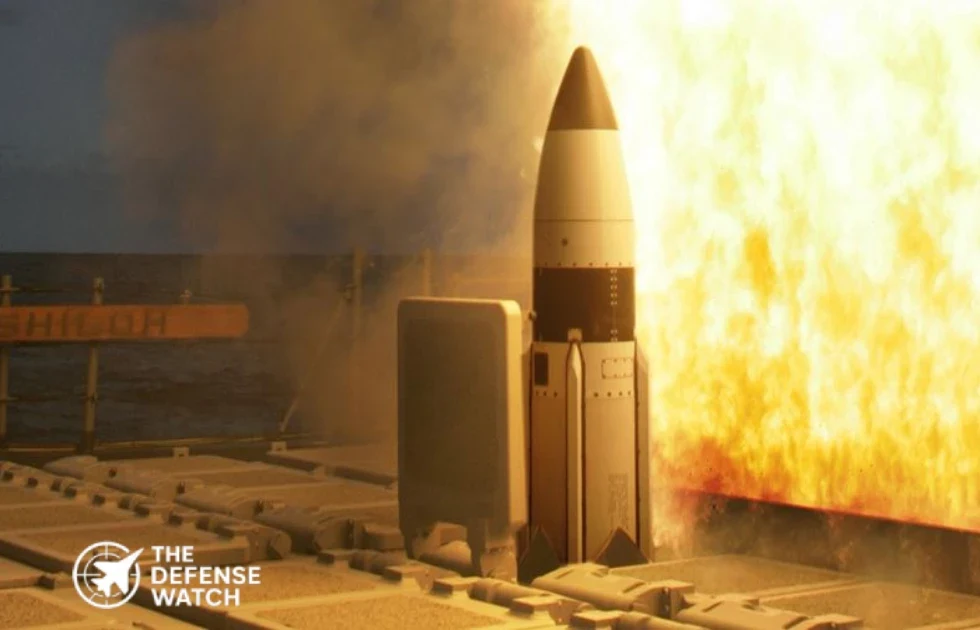
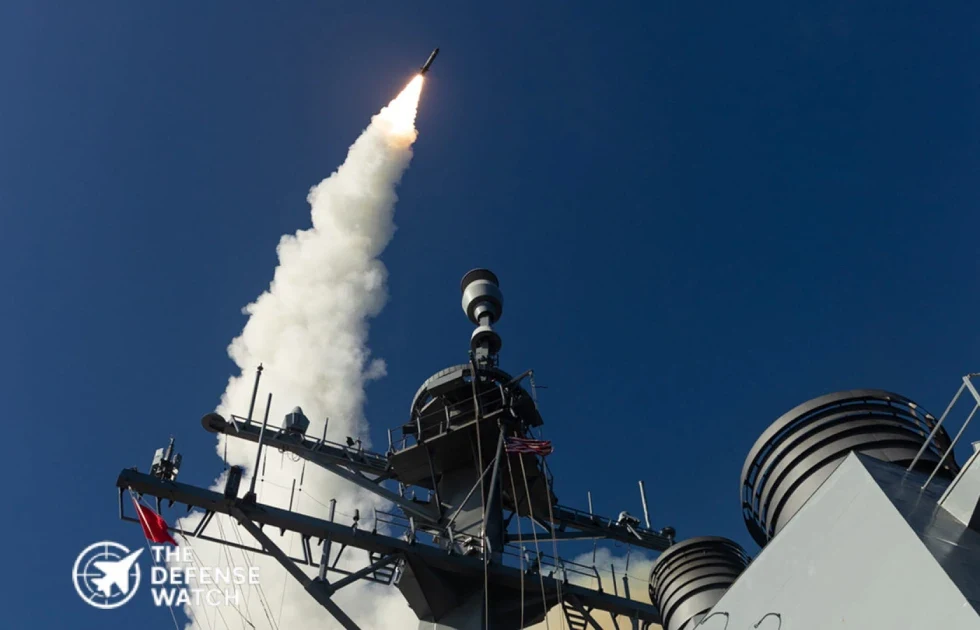
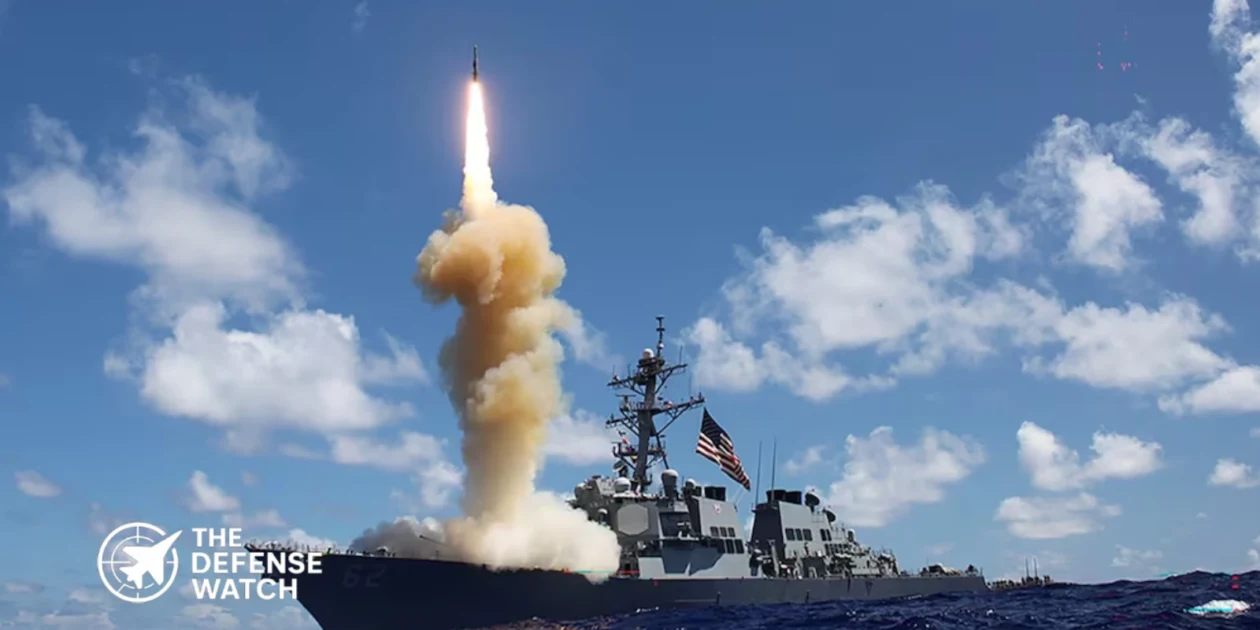
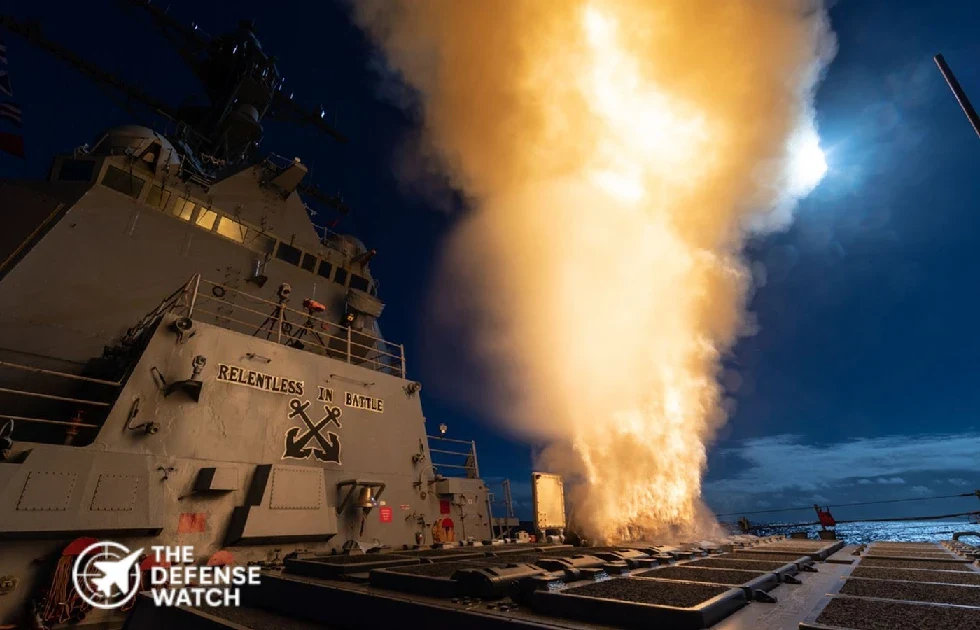
The Standard Missile-3 (SM-3) is a U.S. Navy ballistic missile defense interceptor designed to destroy incoming ballistic missile threats outside the atmosphere. Unlike conventional missiles that rely on explosive warheads, the SM-3 uses a kinetic kill vehicle to collide directly with the target during the midcourse phase of flight. It forms a major part of the Aegis Ballistic Missile Defense system and can be launched from ships or land-based Aegis Ashore installations.
Manufacturer
The SM-3 is produced by Raytheon, an RTX business, with the program developed through cooperation between the U.S. government and allied partners. The Block IIA variant was jointly developed by the United States and Japan and incorporates larger rocket motors and an enhanced kinetic warhead.
Speed and Range
Open-source estimates place SM-3 Block IA and IB speeds at about 3.0 km/s, while Block IIA reaches approximately 4.5 km/s. Published estimates give ranges of about 700 km for earlier variants and up to 2,500 km for Block IIA. Exact performance figures can vary by variant and engagement conditions, and some detailed parameters remain classified.
Cost/Price
SM-3 pricing varies by production lot, configuration, support, and associated equipment. As a historical reference, the Government Accountability Office reported a Block IIA program unit cost of approximately $39 million in fiscal year 2017. More recent contracts are generally reported at the program or production-lot level rather than as a simple public unit price.
Key Capabilities
The SM-3 uses a solid-fuel, multi-stage propulsion system, inertial and command guidance, infrared sensing, and hit-to-kill technology. It is compatible with the Mk 41 Vertical Launching System aboard Aegis-equipped ships and at Aegis Ashore sites.
Disclaimer Note
The information provided on TheDefenseWatch.com is for general informational purposes only. While we strive to ensure the accuracy, completeness, and timeliness of our content regarding defense and aerospace products, technologies, and specifications, we cannot guarantee that all information is 100% accurate or up-to-date due to the evolving nature of military technology and classified data.TheDefenseWatch.com does not warrant the reliability, suitability, or availability of the information for any specific purpose. Users are advised to consult official sources, such as manufacturers, government publications, or defense agencies, for precise and verified data before making decisions based on our content.We are not affiliated with any defense manufacturers, governments, or military organizations mentioned. Opinions, reviews, and ratings reflect expert analysis but are subjective and should not be considered endorsements. TheDefenseWatch.com is not responsible for any errors, omissions, or consequences arising from the use of this website’s content.External links are provided for convenience and do not imply endorsement. TheDefenseWatch.com reserves the right to update or modify content without prior notice. By using this website, you agree to our Privacy & Cookies Policy.
New Arrivals
-
 F-15EX Eagle II Fighter
-
UH-60M Black Hawk Helicopter
-
AN/SPY-6(V)1 Air and Missile Defense Radar
-
SR-71 Blackbird Aircraft
-
Boeing F/A-XX Fighter
-
F-15E Strike Eagle Fighter
-
F/A-18E/F Super Hornet Fighter Jet
-
Saab Gripen F Fighter Jet
-
JAS 39E/F Gripen Fighter Jet
-
JAS 39 Gripen Fighter Jet
-
F-35A Lightning II Fighter Jet
-
F/A-18F Super Hornet
Popular Comparisons
-
 F-35 vs F-16: Stealth, Sensors and Combat Roles
View Comparison →
F-35 vs F-16: Stealth, Sensors and Combat Roles
View Comparison → -
Tejas Fighter Jet vs F-16 Fighting Falcon: Capability Compared
View Comparison →
-
Rafale Fighter Jet vs F-16 Fighting Falcon : Which Fighter Has the Edge?
View Comparison →
-
Su-57 Fighter Jet vs J-20 Fighter Jet: Stealth and Air Combat Compared
View Comparison →
-
Mirage 2000 vs Tejas Mk1A: Legacy Combat Power vs Indigenous Modernization
View Comparison →
-
Rafale Fighter Jet vs F-22 Raptor: Which Air Dominance Fighter Has the Edge?
View Comparison →
-
Tejas Fighter Jet vs. Rafale Fighter Jet: India’s Indigenous Fighter Meets France’s Proven Multirole Combat Aircraft
View Comparison →
-
F-22 Raptor vs. F-35 Joint Strike Fighter: Which Fifth Generation Fighter Has the Edge?
View Comparison →
-
F-35A vs. F-22 Raptor: Which U.S. Stealth Fighter Dominates Modern Air Combat?
View Comparison →
-
AGM-114 Hellfire vs. AGM-179 JAGM: Which U.S. Precision Missile Is Better?
View Comparison →
- U.S. Army Selects Five Companies for PrSM Increment 4 Prototypes

- Boeing Wins $2.38 Billion Contract for 22 F-15EX Eagle II Fighters
- Captain Smit Machchhar, Indian Pilot Stabbed Aboard Flydubai Flight, Helped Prevent Disaster
- Hegseth Orders Creation of Autonomous Warfare Command
- Russia Reportedly Uses KRSN Cutting Warhead on Jet-Powered Drone Against Ukraine
- U.S. Army Expands UH-60 Black Hawk Production Pipeline Beyond 100 Aircraft
- Northrop Grumman Uses Robotics and AI to Accelerate F-35 Avionics Production
- MSI Defence Systems Wins $197 Million U.S. Navy Gun Mount Contract
- Raytheon Wins $20.7 Billion AMRAAM Multi-Year Contract
- Raytheon Gets $511.5M Navy Contract for SPY-6 Radar Production