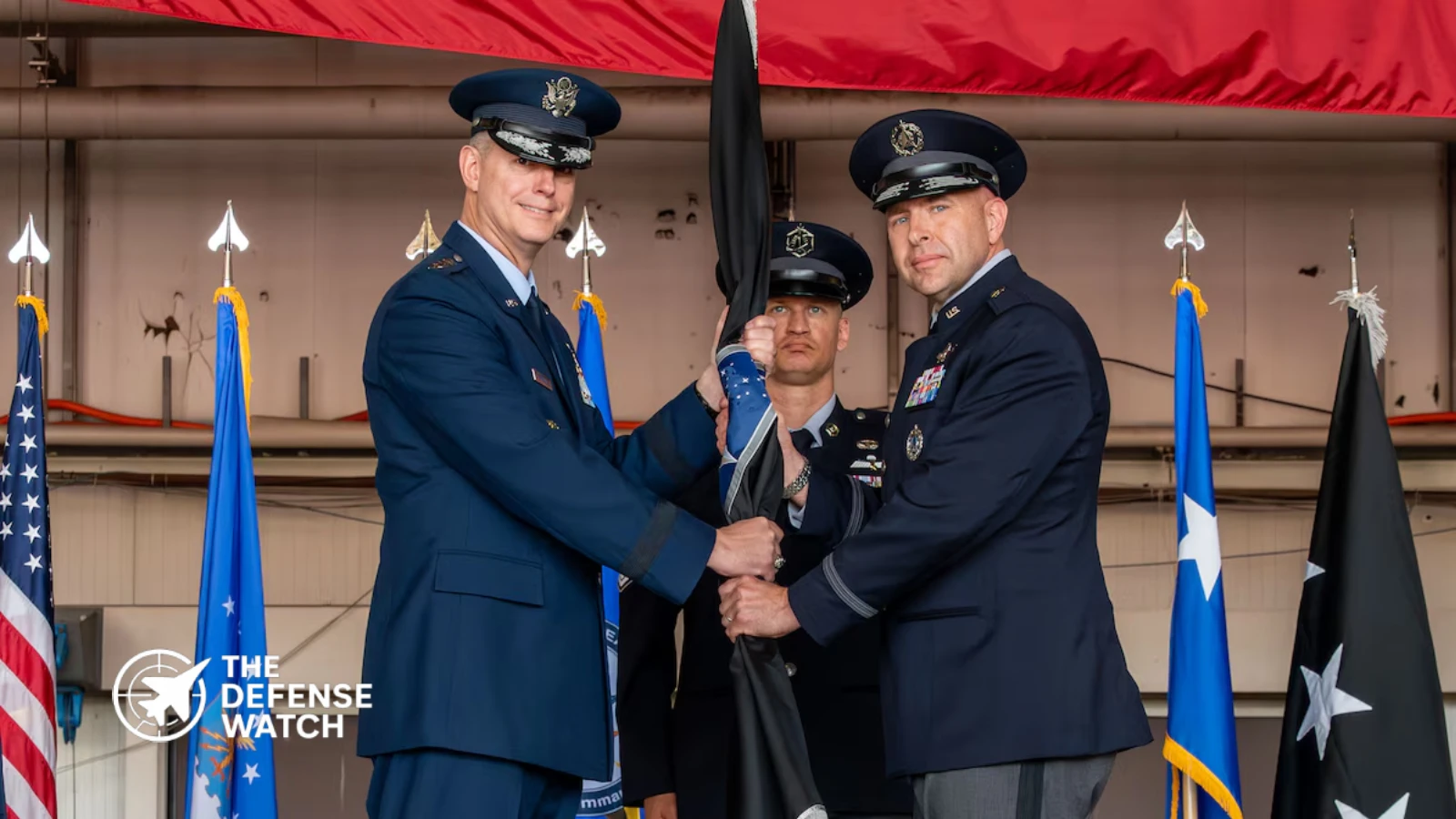
Executive Summary: U.S. Space Force Brig. Gen. Christopher A. Fernengel assumed command of U.S. Space Forces in Europe-Space Forces Africa at Ramstein Air Base, Germany, on Aug. 10, 2026. The leadership change comes as the component continues expanding its role in integrating space capabilities for U.S. European Command and U.S. Africa Command across two continents.
U.S. Space Forces Europe-Africa Changes Command
U.S. Space Forces Europe-Africa, known as SPACEFOREUR-AF, has a new commander following Brig. Gen. Christopher A. Fernengel’s assumption of command at Ramstein Air Base on Aug. 10, 2026.
The change of command marks the next phase for a relatively young Space Force component that has grown significantly since its activation in December 2023. SPACEFOREUR-AF is responsible for integrating space capabilities into operations supporting both U.S. European Command and U.S. Africa Command.
The command’s geographic responsibility is unusually broad. The U.S. Space Force identifies the component as covering 51 countries in Europe and 54 African nations, while its mission includes space operations, space situational awareness and security cooperation.
That dual responsibility makes SPACEFOREUR-AF different from a conventional geographic service component. It must connect space capabilities with two combatant commands while also working with NATO allies and other international partners.
Why SPACEFOREUR-AF Matters
SPACEFOREUR-AF was activated at Ramstein Air Base on Dec. 8, 2023, as the Space Force established a dedicated component supporting EUCOM and AFRICOM.
At activation, the command was designed to provide space expertise directly to combatant commanders and help integrate space activities with joint operations and allied efforts. EUCOM said the component would support requirements including satellite navigation, communications and integration with NATO allies and partners.
The Space Force now describes the command’s mission more broadly. It is responsible for planning, coordinating, supporting and conducting space operations across the full range of military operations in support of both combatant commands.
This structure reflects how dependent modern military operations have become on space-enabled services. Communications, positioning and navigation, intelligence collection, missile warning, environmental monitoring and other space-derived information can affect operations across air, land, sea and cyber domains.
For European and African theaters, the challenge is compounded by geography. A single space architecture must support forces operating from the North Atlantic and Arctic approaches through Europe and into Africa.
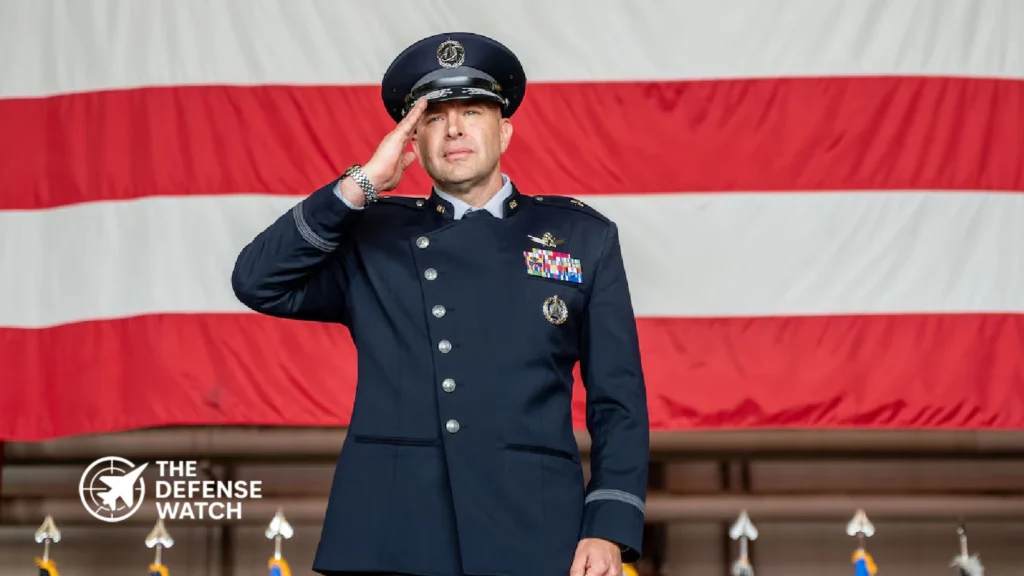
Fernengel Takes Over After Period of Rapid Growth
Fernengel succeeds Brig. Gen. Jacob Middleton, who is scheduled to retire this fall following 34 years of military service, according to the change of command announcement.
Middleton assumed command in August 2024, succeeding Col. Max E. Lantz II, the component’s first commander. At the time, the Space Force described the elevation of SPACEFOREUR-AF to a one-star command as an indication of the component’s growing importance to the joint force and international partners.
During Middleton’s tenure, the command expanded substantially. U.S. European Command officials highlighted the component’s growth to more than three times its original size.
That growth matters because the Space Force component model is intended to put dedicated space expertise closer to combatant command decision-making. Rather than treating space as a supporting function managed separately from theater operations, the structure gives commanders a specialized organization responsible for integrating space effects into operational planning.
SPACEFOREUR-AF At A Glance
| Category | Details |
|---|---|
| Headquarters | Ramstein Air Base, Germany |
| Activated | Dec. 8, 2023 |
| Service | U.S. Space Force |
| Supported commands | U.S. European Command and U.S. Africa Command |
| European scope | 51 countries |
| African scope | 54 countries |
| Core missions | Space operations, space situational awareness, security cooperation |
| New commander | Brig. Gen. Christopher A. Fernengel |
| Previous commander | Brig. Gen. Jacob Middleton |
The U.S. European Command describes SPACEFOREUR-AF as its newest service component and says it is responsible for protecting space assets, developing partnerships and expanding the command’s ability to deliver space-related capabilities in support of shared missions.
Fernengel Brings Space Electronic Warfare Experience
Fernengel arrives with an operational background directly connected to the increasingly contested electromagnetic environment.
He previously commanded the 4th Space Control Squadron and Space Delta 3, organizations associated with space electronic warfare and electromagnetic warfare operations. Most recently, he served as director of Plans and Programs in the Office of the Deputy Chief of Space Operations for Strategy, Plans, Programs and Requirements at Space Force headquarters.
That experience is significant for a component operating in two theaters where space-based systems increasingly face disruption, interference and other forms of competition.
Space electronic warfare can involve actions designed to protect friendly use of the electromagnetic spectrum while disrupting or countering an adversary’s ability to use it. In practical terms, that can affect communications, satellite links, navigation and other space-enabled military functions.
Fernengel’s background therefore aligns with a broader Space Force emphasis on operating in environments where access to space services cannot simply be assumed.
A Two-Continent Mission Creates A Complex Command Challenge
The defining feature of SPACEFOREUR-AF is not simply its space mission. It is the requirement to support two separate geographic combatant commands at the same time.
U.S. European Command is responsible for relations and military activities involving Europe and 51 countries. U.S. Africa Command covers the African continent and has its own operational priorities, partners and security challenges.
The Space Force component must therefore translate space capabilities into different regional requirements without creating separate, disconnected approaches.
This is where integration becomes particularly important.
A satellite communications architecture, for example, can support forces operating in either theater, but the operational requirements, partner relationships and communications infrastructure can differ substantially. Space situational awareness presents a similar challenge because information about objects and activity in orbit has value across geographic boundaries.
The command’s partnership role is also central. SPACEFOREUR-AF was established partly to help U.S. forces work with allies and partners on space activities, investments and operations.
Growing Importance Of Space And Cyber Integration
The leadership transition also comes as U.S. commanders increasingly emphasize multidomain operations.
At the change of command ceremony, Gen. Alexus G. Grynkewich, commander of U.S. European Command and NATO Supreme Allied Commander Europe, highlighted the role of space and cyber in connecting joint forces and enabling operations.
Gen. Dagvin R.M. Anderson, commander of U.S. Africa Command, likewise emphasized the importance of space capabilities to operations across AFRICOM’s area of responsibility.
The operational logic is straightforward. Modern forces depend on networks that cross traditional domain boundaries. Aircraft, ships, ground units, command centers and intelligence systems can all depend on space-enabled connectivity and information.
Disruption in one part of that network can therefore have effects well beyond the space domain itself.
For SPACEFOREUR-AF, this means its mission is not limited to operating satellites or monitoring objects in orbit. Its broader role is to make sure space capabilities are properly integrated into theater operations and remain useful when an adversary attempts to interfere with them.
What Fernengel’s Command Could Mean For The Next Phase
Fernengel said the command will need to continue adapting as geopolitical conditions and technology change.
That emphasis is consistent with the trajectory of SPACEFOREUR-AF since its establishment. The component has moved from a small organization created in 2023 toward a larger command responsible for supporting two combatant commands and developing relationships across Europe and Africa.
The most important measure of its development will not simply be personnel growth. It will be how effectively the command connects space capabilities to operational requirements.
Several areas are likely to remain central to that mission:
- Space situational awareness: Improving understanding of activity in orbit and supporting military decision-making.
- Resilient communications: Helping ensure forces retain access to satellite communications when networks are disrupted or contested.
- Electromagnetic warfare: Protecting U.S. and allied space-enabled systems while responding to attempts to interfere with them.
- Allied integration: Increasing interoperability with NATO and other regional partners.
- Joint-force integration: Connecting space capabilities directly with operational planning by EUCOM and AFRICOM.
- Security cooperation: Developing space-related relationships and capabilities with partners across both regions.
The command’s original purpose was to provide combatant commanders with dedicated space expertise. Its continuing expansion suggests that requirement has become more important as military operations increasingly depend on space-based infrastructure.
Leadership Change Comes As Space Becomes A More Contested Domain
The transition from Middleton to Fernengel represents more than a routine personnel change.
SPACEFOREUR-AF was created less than three years ago, making it one of the newer components in the U.S. military command structure. Its development has occurred alongside a wider effort by the Space Force to place specialized space expertise within geographic combatant commands.
Fernengel inherits a command that has already expanded significantly since its activation. His challenge will be to continue building that organization while ensuring its space capabilities remain connected to the operational needs of commanders, allies and partners across two continents.
The Space Force’s current description of the component emphasizes that its mission extends from Iceland to South Africa and includes strengthening alliances, interoperability and resilience in the space domain.
That geographic span illustrates why the command is strategically important. Space systems do not follow national borders or traditional theater boundaries, and the forces that depend on them increasingly operate across multiple domains.
As SPACEFOREUR-AF enters its next phase under Fernengel, its ability to integrate those space capabilities with U.S. and allied operations will remain a central part of the U.S. military’s approach to European and African security.