







@2026 – All Right Reserved. TheDefenseWatch.com
- Home
- Defense Systems
- Missiles & Precision Weapons
- BGM-71 Missile
BGM-71 Missile
Defense Systems Full Specifications
1. General Information
| Name / Designation | BGM-71 TOW |
| Type / Role | Anti-Tank Guided Missile (ATGM) |
| Country of Origin | United States |
| Manufacturer | Raytheon |
| Service Entry / Year Introduced | 1970 |
| Operational Status | Active |
2. Performance & Range
| Range | Up to 4.5 km (variant dependent) |
| Speed | Approximately Mach 0.7 |
| Ceiling / Altitude Limit | Not Applicable |
| Accuracy (CEP) | High precision, operator-guided |
| Warhead Type | HEAT, Tandem HEAT, Bunker Buster |
3. Guidance & Targeting
| Guidance System | SACLOS Wire-Guided |
| Targeting Mode | Command Guided |
| Launch Platform Compatibility | Ground Vehicles, Tripods, Helicopters |
| Seeker Type | Optical Tracking System |
4. Physical Characteristics
| Length | 1.17 m |
| Diameter | 152 mm |
| Wingspan | 0.46 m |
| Launch Weight | Approximately 22.6 kg |
| Propulsion | Solid-Fuel Rocket Motor |
5. Warhead & Payload
| Warhead Weight | Approximately 5.9 kg |
| Explosive Type | HEAT / Tandem HEAT |
| Detonation Mechanism | Impact Fuse |
| Payload Options | Anti-Armor, Anti-Bunker |
6. Operational Use & Capabilities
| Operational Range Type | Short |
| Deployment Platform | Ground and Air |
| Target Types | Tanks, Armored Vehicles, Fortifications |
| Combat Proven | Yes |
| Users / Operators | United States, Saudi Arabia, Jordan, Turkey, Taiwan, Egypt and others |
PROS
- Combat proven across multiple conflicts
- Effective against modern armored vehicles
- Long engagement range for anti-tank missions
- Multiple warhead options available
- Compatible with ground and airborne platforms
CONS
- Wire-guided system limits maneuverability
- Requires operator target tracking throughout flight
- Slower than modern fire-and-forget missiles
- Vulnerable to battlefield obstacles affecting guidance wire
- Heavier launcher system compared to newer ATGMs
BGM-71 TOW Anti-Tank Guided Missile
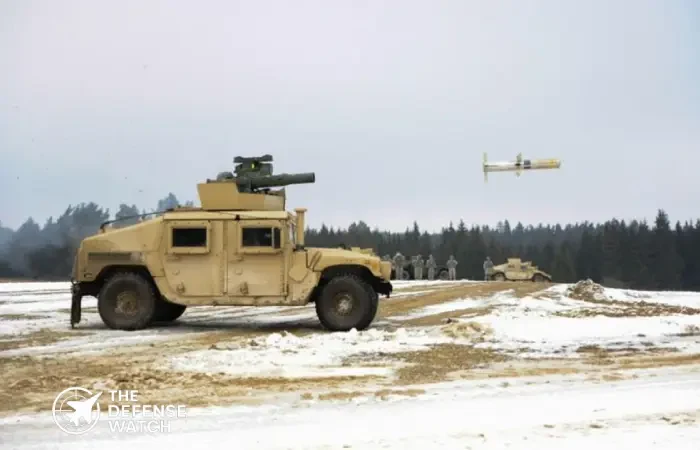
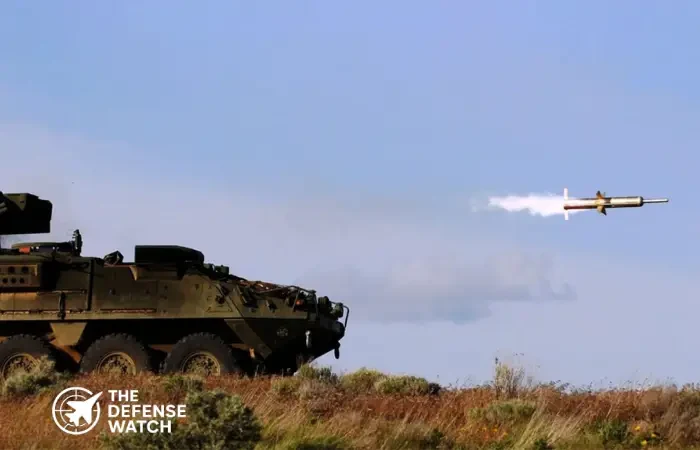
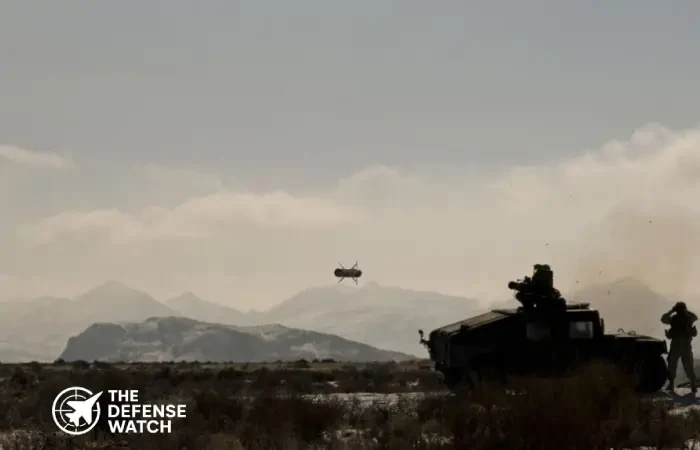
The BGM-71 TOW (Tube-Launched, Optically Tracked, Wire-Guided) missile is one of the world’s most widely used anti-tank guided weapons. Developed during the Cold War, the missile was designed to defeat heavily armored vehicles, fortified positions, and battlefield targets at extended ranges. Over decades of service, the TOW has undergone numerous upgrades, improving its range, guidance, and armor penetration capabilities.
The missile remains in active service with the U.S. military and many allied nations. Its combat-proven record across multiple conflicts has established it as a reliable and effective anti-armor weapon system.
Manufacturer
The BGM-71 TOW was originally developed by the company now known as Raytheon, a division of RTX Corporation. Development began in the 1960s for the U.S. Army as a replacement for earlier anti-tank missile systems.
Manufactured in the United States, the TOW is deployed from ground vehicles, tripod launchers, and helicopters. Major launch platforms include the M2 Bradley Infantry Fighting Vehicle and various armored vehicles used by allied forces.
Speed and Range
The BGM-71 TOW travels at approximately Mach 0.7 (around 278 to 320 m/s depending on variant). Modern versions can engage targets at distances of up to 4.5 kilometers, allowing operators to destroy enemy armor before entering the effective range of many tank weapons.
Advanced variants feature tandem-warhead designs capable of defeating explosive reactive armor (ERA) and heavily protected main battle tanks.
Cost/Price
The exact procurement cost varies by variant and contract. Open-source defense estimates place the unit cost of modern TOW missiles at approximately $50,000 to $90,000 per missile, excluding launcher systems, training, and support equipment.
The TOW remains a cost-effective anti-armor solution due to its proven performance, long service history, and continuous modernization.
Get real time update about this post category directly on your device, subscribe now.
Disclaimer Note
The information provided on TheDefenseWatch.com is for general informational purposes only. While we strive to ensure the accuracy, completeness, and timeliness of our content regarding defense and aerospace products, technologies, and specifications, we cannot guarantee that all information is 100% accurate or up-to-date due to the evolving nature of military technology and classified data.TheDefenseWatch.com does not warrant the reliability, suitability, or availability of the information for any specific purpose. Users are advised to consult official sources, such as manufacturers, government publications, or defense agencies, for precise and verified data before making decisions based on our content.We are not affiliated with any defense manufacturers, governments, or military organizations mentioned. Opinions, reviews, and ratings reflect expert analysis but are subjective and should not be considered endorsements. TheDefenseWatch.com is not responsible for any errors, omissions, or consequences arising from the use of this website’s content.External links are provided for convenience and do not imply endorsement. TheDefenseWatch.com reserves the right to update or modify content without prior notice. By using this website, you agree to our Privacy & Cookies Policy.
New Arrivals
Popular Comparisons
-
 Su-57 Fighter Jet vs J-20 Fighter Jet: Stealth and Air Combat Compared
View Comparison →
Su-57 Fighter Jet vs J-20 Fighter Jet: Stealth and Air Combat Compared
View Comparison → -
Mirage 2000 vs Tejas Mk1A: Legacy Combat Power vs Indigenous Modernization
View Comparison →
-
Rafale Fighter Jet vs F-22 Raptor: Which Air Dominance Fighter Has the Edge?
View Comparison →
-
Tejas Fighter Jet vs. Rafale Fighter Jet: India’s Indigenous Fighter Meets France’s Proven Multirole Combat Aircraft
View Comparison →
-
F-22 Raptor vs. F-35 Joint Strike Fighter: Which Fifth Generation Fighter Has the Edge?
View Comparison →
-
F-35A vs. F-22 Raptor: Which U.S. Stealth Fighter Dominates Modern Air Combat?
View Comparison →
-
AGM-114 Hellfire vs. AGM-179 JAGM: Which U.S. Precision Missile Is Better?
View Comparison →
-
Patriot (PAC-3) vs. THAAD: Complete Missile Defense System Comparison, Capabilities, Range, and Strategic Roles
View Comparison →
-
AIM-120 AMRAAM vs. AIM-9X Sidewinder: Complete Air-to-Air Missile Comparison, Range, Speed, and Combat Roles
View Comparison →
-
BGM-109 Tomahawk vs. AGM-158 JASSM: Which Long Range Precision Strike Missile Offers Greater Strategic Advantage?
View Comparison →
- Australia Declares JASSM-ER and LRASM Operational on F/A-18F Super Hornets

- GCAP Electronics Contract Advances Integrated Sensing And Communications For Sixth Generation Fighter
- Northrop Grumman Expands B-21 Raider Production With New Utah Facility
- Kongsberg Integrates Echodyne Radar With PROTECTOR Stations for Counter-UAS Missio
- Anthropic Says Yemen Weapons Cell Used Claude Code to Develop Missile Guidance Software
- Northrop Grumman Expands Air Defense and Weapons Collaboration Across Central Europe
- Rolls-Royce B-52 Engine Contract Rises To $3.04 Billion
- General Dynamics Secures $184.25 Million NGEAU Contract For Navy Growler Upgrades
- U.S. Space Academy Commission Begins Work As Washington Targets Next-Generation Space Workforce
- U.S. Moves to Close Air-Breathing Hypersonic Missile Gap With China