(adsbygoogle = window.adsbygoogle || []).push({});Executive Summary:
Rafael Advanced Defense Systems is using Eurosatory 2026 in Paris — the world’s largest land defense exhibition, running June 15–19 — to position its combat-tested multilayered air and missile defense architecture as the answer to Europe’s most urgent security gaps. The Israeli firm is presenting Iron Dome, David’s Sling, its Iron Beam directed-energy family, and the Hunter Eagle counter-UAS interceptor, all framed around an integrated, cost-conscious protection model validated by more than 10,000 real-world intercepts. With European defense budgets surging and drone threats proliferating from Ukraine to the English Channel, Rafael’s timing is deliberate and its pitch is credible.
Rafael Targets Europe’s Air Defense Vacuum With Battle-Hardened Systems
Rafael Advanced Defense Systems is presenting air defense and counter-UAS capabilities at Eurosatory 2026, framing its display around an integrated, multilayered approach developed in response to changing operational requirements facing land forces.
The Israeli firm is one of the most heavily watched exhibitors at the Paris show, arriving with a portfolio that has been tested under live-fire conditions no NATO ally’s systems have yet matched in scale or intensity. Following years of high-tempo engagements against rockets, ballistic missiles, cruise missiles, and mass drone swarms over Israeli territory, Rafael is positioning that operational pedigree as the central argument for European procurement.
A Threat Environment That Has Fundamentally Changed
Rafael says the security environment in Europe has shifted because of the spread of unmanned aerial systems, longer-range stand-off threats, and the renewed importance of large-scale land operations. The company says layered air defense and platform survivability have become foundational requirements for protecting maneuvering forces, critical infrastructure, and population centers.
That assessment is not merely a marketing claim. Eurosatory 2026 organizers have noted that missile defense — including against hypersonic threats — is one of the exhibition’s central themes, with European nations confronting the need to field credible broad missile defense architectures for the first time in decades.
The Russia-Ukraine war and the 2025–2026 Israeli-Iranian exchange have both demonstrated that even sophisticated air defense networks can be overwhelmed by saturation tactics. For European planners, the lesson has been pointed: single-layer, single-threat-type defense is no longer adequate.
(adsbygoogle = window.adsbygoogle || []).push({});The Layered Architecture: From Iron Dome to David’s Sling
In air defense, Rafael is presenting a layered architecture that includes Iron Dome and David’s Sling. Iron Dome is described by the company as a multi-mission system that has conducted more than 10,000 combat interceptions over 15 years of operational service, with a success rate well above 90%.
During the peak of Israel’s multi-front confrontations, Iron Dome — alongside David’s Sling, Arrow 3, and Iron Beam — intercepted approximately 86–90% of incoming threats across the entire defense stack.
David’s Sling, jointly developed by the Israeli Missile Defense Organization and the U.S. Missile Defense Agency, with Rafael as prime contractor and Raytheon Missile Systems as subcontractor, is specifically designed to counter rockets, missiles, cruise missiles, aircraft, and UAVs, constituting a central defensive layer within Israel’s multi-layered architecture.
In 2025, David’s Sling underwent a series of successful tests against advanced threats, and several global customers have announced procurement of the system.
(adsbygoogle = window.adsbygoogle || []).push({});For European buyers, the division of labor between these two systems is operationally significant:
System Primary Threat Set Engagement Range Cost Per Intercept Iron Dome Short-range rockets, artillery, mortars, UAVs Up to ~70 km ~$40,000–$50,000 per Tamir missile David’s Sling Medium-to-long-range ballistic missiles, cruise missiles, aircraft 40–300 km Higher; classified Iron Beam Rockets, mortars, small UAVs Up to ~10 km Near-zero (laser) Iron Dome supports longer-reach engagements suited for medium-range rocket and artillery threats, while Iron Beam operates at shorter ranges but at dramatically lower marginal cost and significantly higher engagement volume per unit time.
Iron Beam and Directed Energy: The Cost-Curve Solution
The most strategically consequential addition to Rafael’s Eurosatory lineup may be its directed-energy portfolio, which addresses the economic asymmetry that has bedeviled conventional interceptor-based defense.
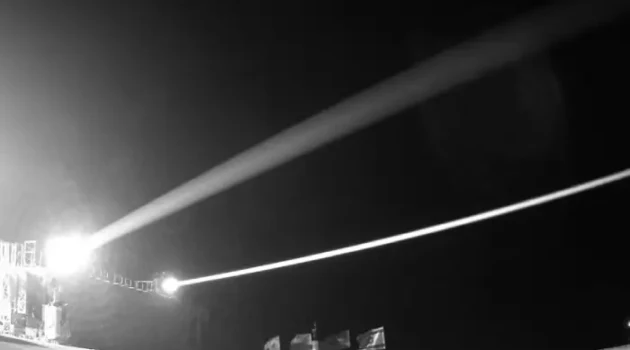
Formally handed over to the Israel Defense Forces on December 28, 2025, Iron Beam is designed to intercept short-range rockets, artillery shells, mortar bombs, and UAVs at distances of up to 10 kilometers, now serving as the fifth pillar of Israel’s multi-layered air defense architecture. –
Iron Beam became operational with the IDF in 2025, and amid the war against the Iranian regime in March 2026, the system was reportedly used operationally for the first time against rockets launched by Iran-backed Hezbollah from Lebanon — a potential milestone in the combat use of laser-based air defense.
Rafael’s directed-energy portfolio includes Iron Beam, Iron Beam-M, and Lite Beam. Iron Beam is designed to engage distant threats at near-zero cost per interception. Iron Beam-M is a mobile version configured to accompany maneuvering forces and protect strategic sites, while Lite Beam is a compact and lightweight system for mobile and forward-deployed units.
(adsbygoogle = window.adsbygoogle || []).push({});The economic logic is impossible to ignore. At a cost of $40,000–$150,000 per conventional interceptor — and with adversaries deploying drones costing under $1,000 — the cost-exchange ratio is strategically unsustainable at volume. Directed energy breaks that equation fundamentally: once the system is fielded, the marginal cost per engagement trends toward zero. For European governments now confronting drone proliferation from state and non-state actors alike, Iron Beam represents not just a capability upgrade but a fiscal imperative.
Hunter Eagle and the Counter-UAS Portfolio
Below the strategic layer, Rafael is specifically targeting European demand for close-in drone defeat.
Rafael has introduced Hunter Eagle, a compact kinetic interceptor designed to counter the rapidly expanding threat of low-altitude unmanned aircraft on the modern battlefield. First shown publicly at DSEI 2025 and now presented in its serial configuration, the system marks an expansion of Rafael’s layered counter-UAS portfolio.
Hunter Eagle integrates into Rafael’s broader Drone Dome suite, extending the company’s detection-classification-neutralization chain into a hardened kinetic layer. Drone Dome includes electronic-warfare and directed-energy effectors, while Hunter Eagle adds a reusable hard-kill option for drones resistant to jamming or requiring physical destruction.
Rafael is also developing Ghost Hunter, a larger and more powerful interceptor equipped with turbojet engines, an RF radar in the nose, and a payload capacity significantly beyond Hunter Eagle — weighing 50–60 kg at 1.4–1.6 meters in length, with initial deliveries targeted for 2027.
The significance of a VTOL hard-kill interceptor is particularly acute for European requirements. Jamming-resistant, fiber-optic-guided FPV drones — a category that emerged prominently in Ukraine — cannot be reliably neutralized by electronic warfare alone. Kinetic interceptors that are themselves autonomous close that gap.
(adsbygoogle = window.adsbygoogle || []).push({});The Platform Survivability Dimension
Rafael’s Eurosatory presentation extends beyond fixed-site and area defense into what the company terms platform survivability — the protection of individual armored vehicles in maneuver.
Rafael says platform survivability now depends on defeating threats including anti-tank guided missiles, loitering munitions, and hostile drones, and the company is showing how multiple complementary layers can protect vehicles and crews against this threat spectrum.rience. In both the Ukraine war and Israeli ground operations in Gaza and Lebanon, armored vehicles without active protection systems proved highly vulnerable to loitering munitions and drone-dropped munitions. Trophy, Rafael’s active protection system already integrated on U.S. M1A2 SEPv3 Abrams tanks, anchors that part of the portfolio — though Rafael did not highlight it separately in the Eurosatory statement.
Why This Matters for European and U.S. Defense Strategy
Rafael’s Eurosatory campaign arrives at an inflection point in European defense spending. NATO members are under sustained pressure to reach and exceed the 2% GDP defense spending target, and air and missile defense has emerged as the most critical near-term gap across the alliance.
The U.S. Army is simultaneously expanding a drone and counter-drone marketplace at Eurosatory, with the goal of reaching 25 allied and partner nations by the end of summer 2026, underpinned by common C-UAS data standards established in a March 2026 U.S.-UK joint declaration.
For U.S. industry and policy interests, Rafael’s European push is a complicating and complementary factor simultaneously. Iron Dome already has deep U.S. co-production: the U.S. Missile Defense Agency maintains a pivotal role in developing and producing Israel’s multi-layered defense systems, including David’s Sling and Arrow, while manufacturing Iron Dome components. A Rafael sale to a European NATO ally carries embedded American industrial content and interoperability with U.S. systems — a feature that smooths procurement politics considerably.
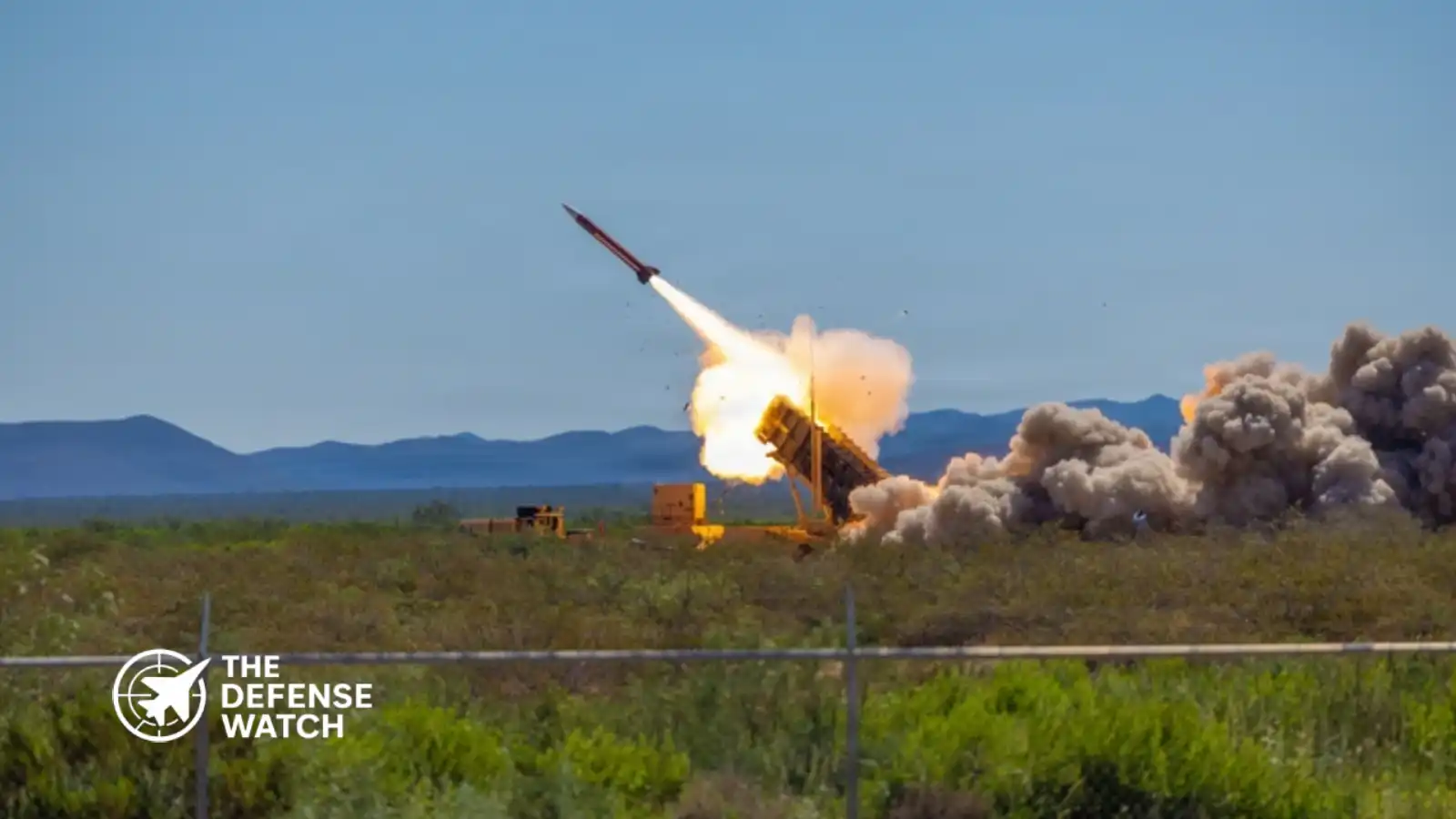
(adsbygoogle = window.adsbygoogle || []).push({});The broader competitive dynamic is notable. European exhibitors at Eurosatory 2026 — including MBDA with its SAMP/T family and Thales with an Iron Dome-like short-range system — are competing for the same budget lines. The Eurosatory organizer noted that both French-Italian SAMP/T and U.S. Patriot batteries are prominent at the show alongside Israeli systems, reflecting a genuinely contested market for European air defense investment.
What Rafael brings that no European competitor can replicate is operational data at scale. More than 10,000 combat intercepts, stress-tested against mass saturation attacks, ballistic threats, and swarm drone tactics, constitute a proof base that no qualification test range can simulate. In a procurement environment where governments are buying for actual war-fighting, not demonstrations, that distinction is Rafael’s most powerful argument.