(adsbygoogle = window.adsbygoogle || []).push({});Executive Summary:
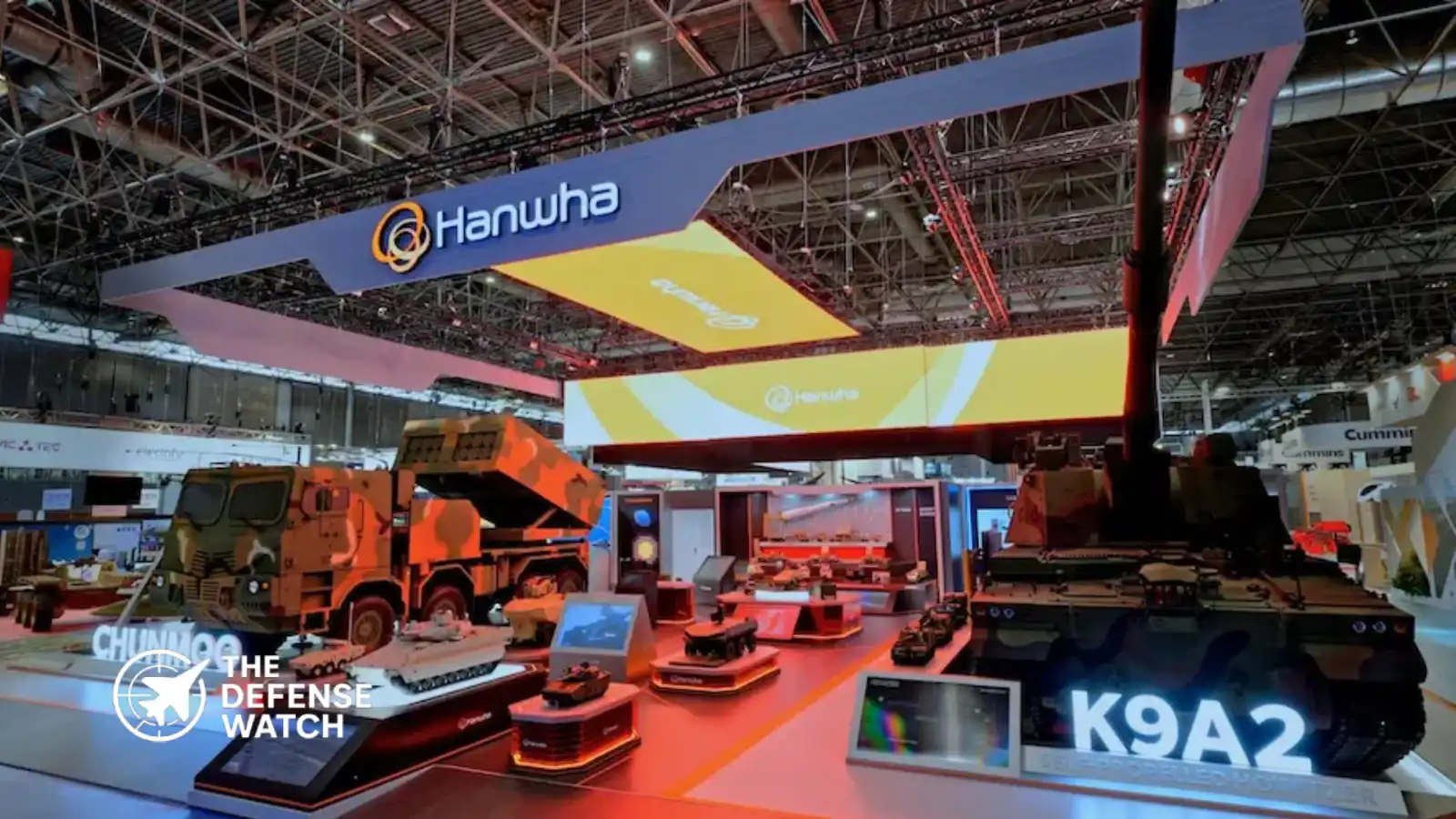
Hanwha Aerospace used Eurosatory 2026 in Paris to showcase its K9A2 self-propelled howitzer, Chunmoo multiple rocket launcher, and advanced air and missile defense systems as part of a broader campaign to expand its presence in Europe.
The exhibition comes as several NATO members accelerate military modernization programs and seek long term industrial partnerships, localized production, and resilient supply chains amid growing security concerns across the continent.
Hanwha Brings K9A2, Chunmoo and Air Defense Portfolio to Eurosatory 2026
Hanwha Aerospace has unveiled a broad portfolio of land warfare and air defense systems at Eurosatory 2026, highlighting the company’s efforts to deepen partnerships with European and NATO customers.
The South Korean defense manufacturer presented the K9A2 self-propelled howitzer, the Chunmoo multiple rocket launcher system, and a range of air and missile defense capabilities during the exhibition in Paris. The display aligns with Hanwha’s wider strategy of expanding industrial cooperation, localized production, and technology partnerships across Europe.
The company’s participation comes at a time when European governments are increasing defense spending, replenishing ammunition stockpiles, and seeking long range precision strike capabilities following lessons drawn from the war in Ukraine and broader NATO deterrence requirements.
K9A2 Represents Hanwha’s Next Step in Artillery Modernization
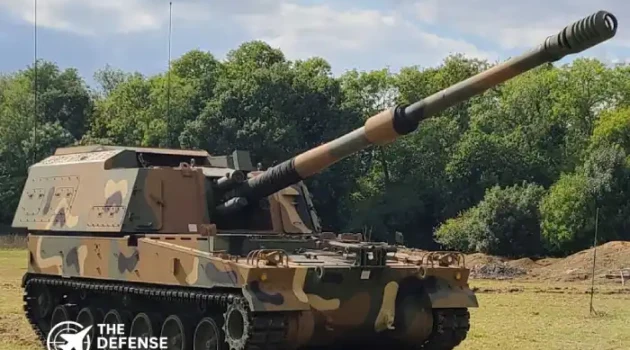
A centerpiece of Hanwha’s Eurosatory display is the K9A2, the latest evolution of the widely exported K9 self-propelled howitzer family.
The K9 platform has already secured significant adoption across Europe, including service with Poland, Norway, Finland, Estonia, Romania, and Türkiye. Hanwha has leveraged this installed user base to position the K9A2 as a next generation artillery solution offering greater automation, improved crew survivability, and higher rates of fire.
The K9A2 reflects a broader trend among NATO militaries toward reducing crew workload while increasing sustained firepower during high intensity operations.
- (adsbygoogle = window.adsbygoogle || []).push({});
Why the K9A2 Matters
Modern artillery systems are increasingly judged not only by range and accuracy but also by their ability to sustain operations under contested conditions.
Key operational drivers include:
Capability Area Operational Benefit Increased automation Reduces crew workload and training burden Faster firing cycles Improves responsiveness against time-sensitive targets Enhanced survivability Limits crew exposure during combat operations Digital integration Supports networked battlefield operations NATO interoperability Simplifies multinational operations For European armies seeking to expand artillery inventories rapidly, the K9A2 offers an evolutionary upgrade built on a combat-proven platform already operating across the alliance.
Chunmoo Gains Momentum Across Europe
The Chunmoo multiple rocket launcher system has emerged as one of Hanwha’s fastest growing export programs.
As of mid-2026, confirmed European orders span Poland, Norway, and Estonia, creating one of the largest emerging long range fires ecosystems in Europe. The system can employ multiple munition types, ranging from guided rockets to tactical ballistic missiles with ranges approaching 300 kilometers.
Poland remains the largest customer through its Homar-K program, while Norway signed a contract valued at approximately $922 million for 16 launchers and associated rockets earlier this year. Estonia has also expanded its fleet through follow-on purchases.
(adsbygoogle = window.adsbygoogle || []).push({});Chunmoo’s Growing Strategic Importance
The growing appeal of Chunmoo stems from several factors:
- Multi-caliber launcher architecture
- Long range precision strike capability
- Compatibility with multiple munition types
- Rapid delivery timelines
- Opportunities for local industrial participation
Unlike many legacy rocket artillery systems, Chunmoo allows operators to tailor launch configurations for different mission sets, ranging from battlefield interdiction to deep strike operations.
For NATO planners, the spread of long range fires capabilities across multiple allied nations enhances deterrence and creates additional options for distributed strike operations.
Air and Missile Defense Expands Hanwha’s European Offering
In addition to artillery and rocket systems, Hanwha showcased several air and missile defense capabilities designed to address growing concerns over ballistic missiles, cruise missiles, drones, and other aerial threats.
A major focus is the L-SAM long range air and missile defense system, developed to intercept ballistic missile threats during the upper terminal phase of flight. The system uses hit-to-kill technology and entered production after completing development in South Korea.
Hanwha has also emphasized a layered defense concept that combines missile interceptors, advanced radar systems, laser weapons, and counter-drone technologies.
(adsbygoogle = window.adsbygoogle || []).push({});Strategic Significance for Europe
European militaries increasingly face a more complex air threat environment that includes:
- Ballistic missiles
- Cruise missiles
- Loitering munitions
- One-way attack drones
- Swarm UAV threats
As a result, demand is shifting toward integrated air and missile defense architectures rather than standalone systems.
Hanwha’s approach mirrors broader NATO efforts to build layered defensive networks capable of engaging threats at multiple ranges and altitudes.
Industrial Partnerships Drive Hanwha’s European Expansion
Beyond hardware, Hanwha has emphasized industrial cooperation as a core element of its European growth strategy.
The company has pursued localization initiatives in multiple countries, including Poland, Romania, Norway, and Estonia. These efforts include production facilities, maintenance infrastructure, workforce development, technology transfer, and long term industrial partnerships.
Romania is expected to host Hanwha’s first European Union production facility, while Poland is set to become a major center for guided rocket production supporting the expanding Chunmoo user community.
This strategy aligns closely with European governments’ growing preference for defense acquisitions that include domestic industrial participation and supply chain resilience.
(adsbygoogle = window.adsbygoogle || []).push({});Analysis: Why Hanwha’s Eurosatory Presence Matters
Hanwha’s display at Eurosatory 2026 highlights a broader shift occurring within the European defense market.
For decades, many NATO armies relied heavily on U.S. and Western European suppliers for major land warfare systems. Today, South Korean defense firms are increasingly competing for major programs by combining rapid delivery schedules, proven equipment, and extensive industrial cooperation packages.
The K9 family has already become one of the most successful artillery export programs in Europe. The growing adoption of Chunmoo suggests a similar trajectory may be emerging in the long range precision fires sector.
Equally important is Hanwha’s emphasis on local production and technology partnerships. As European governments seek to rebuild defense industrial capacity while reducing supply chain vulnerabilities, companies capable of combining modern equipment with domestic industrial benefits are likely to gain a competitive advantage.
Eurosatory 2026 therefore serves not only as a showcase for individual platforms but also as a demonstration of how Hanwha intends to position itself as a long term partner in Europe’s defense modernization effort.