• Home
  • About
  • Defense Systems
  • Manufacturer
  • Comparisons
  • Compare 
  • Tools
TheDefenseWatch.com
  • Aerospace & Aviation
  • Military & Ordnance
  • Naval & Maritime
  • Cyber & Space Defense
  • Policy & Strategy
  • Global News
  • Tools Library
    • Smart Calculator
    • Drone Flight Time Calculator
    • Drone Range Calculator
    • Counter-Drone Jammer Effective Range Calculator
    • Counter-Battery Radar Detection Calculator
    • Artillery Fire Correction Calculator
    • Thermal Camera Detection Range Calculator
    • Missile Range & Time-of-Flight Calculator
    • Radar Detection Range Calculator
    • FPV Strike Drone Payload vs Range Calculator
    • Loitering Munition Endurance Calculator
    • Sniper Ballistic Drop & Windage Calculator
    • Bullet Drop Calculator
    • U.S. Army Combat Fitness Test (ACFT) Calculator
    • Military Pension Calculator
    • Military Retirement Calculator
    • Military Pension Calculator
    • Large Number Calculator
Font ResizerAa

TheDefenseWatch.com

The Defense Watch | U.S. & Global Defense News, Analysis & Military Updates

Search
  • Home
  • About
  • Defense Systems
  • Manufacturer
  • Comparisons
  • Compare 
  • Tools

Stay Updated

Get the latest update

Subscribe

Explore

  • Drone
  • Fighter Jets & Military Aircraft
  • Hypersonic Weapons
  • Aircraft Carriers
  • Strategic History & Missions
  • Tools Library
Home » The U.S. in NATO’s Next Chapter: Post-Ukraine Strategy, Strained Commitments & the Path Ahead
Policy & Strategy

The U.S. in NATO’s Next Chapter: Post-Ukraine Strategy, Strained Commitments & the Path Ahead

TeamDefenseWatch
Last updated: August 26, 2025 11:32 am
TeamDefenseWatch
Share
2 Min Read
U.S. role in NATO post-Ukraine
SHARE

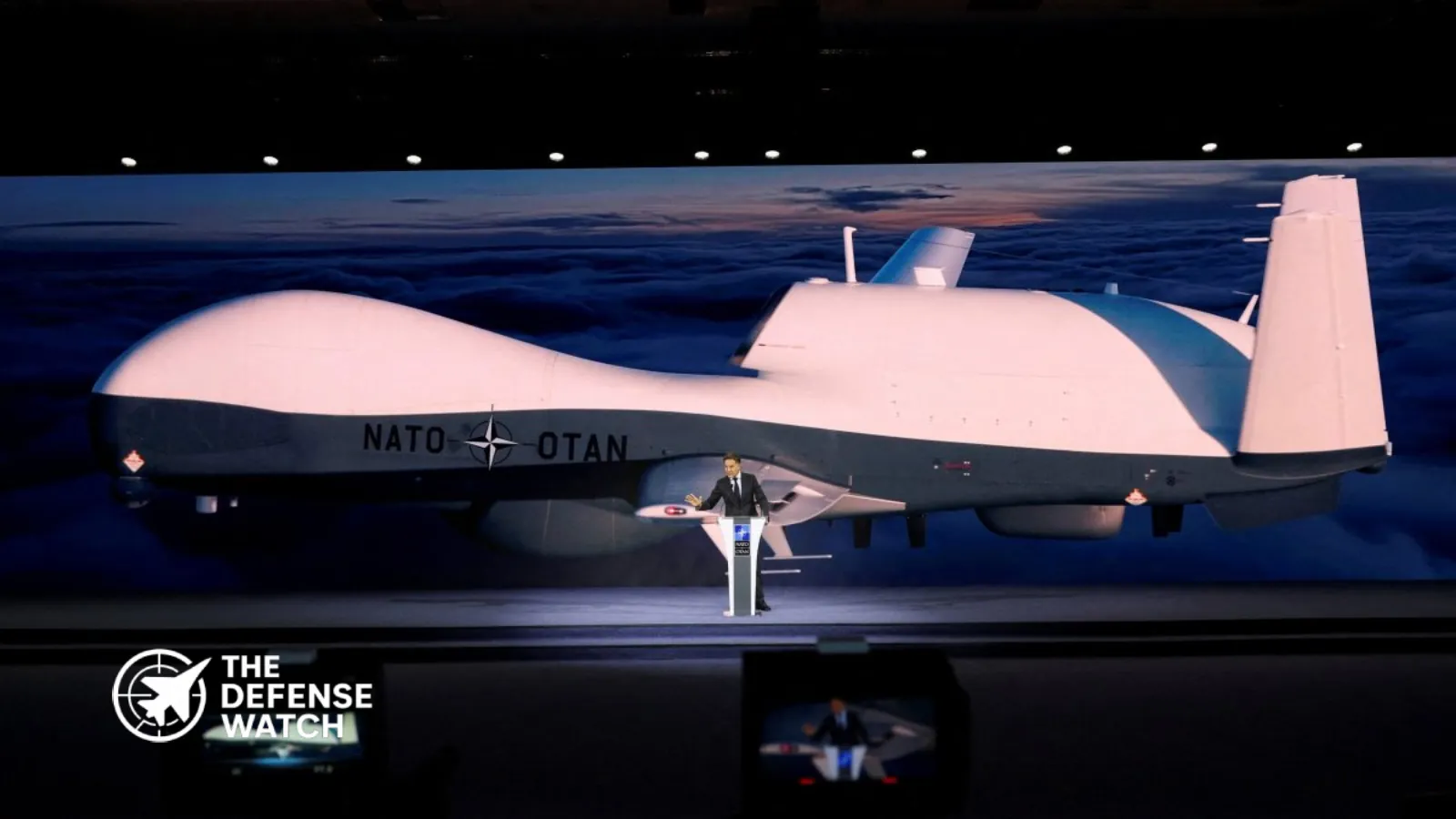
In the wake of Russia’s full-scale invasion of Ukraine, the United States finds itself at a critical crossroads within NATO. Transatlantic dynamics are realigning—U.S. strategic focus increasingly leans toward the Indo-Pacific, while European allies grapple with how to uphold NATO’s credibility and collective defense. This analysis explores the evolving U.S. posture, NATO’s new commitments, and looming strategic challenges.

Contents
The U.S. Pivot and Transatlantic RealignmentA New NATO Spending Era: The Hague SummitU.S. Influence, European Burden-Sharing & Strategic RebalancingChallenges Ahead: Strategic Ambiguities & NATO’s CredibilityStrategic Implications for NATO & UkraineAnalysis & ContextFAQs

The U.S. Pivot and Transatlantic Realignment

U.S. Defense Secretary Pete Hegseth’s statement early in 2025 that America was no longer “primarily focused” on European security marked a pivotal shift. He called on Europe to take the lead in defending Ukraine and invest more in its own security—urging a 5 percent GDP target for defense. He also ruled out NATO membership for Ukraine and U.S. troop deployments there.

A New NATO Spending Era: The Hague Summit

Responding to mounting strategic pressures and U.S. demands, NATO’s June 2025 summit in The Hague saw member states pledge to increase defense spending to 5 percent of GDP by 2035. This commitment is structured as 3.5 percent for core military capabilities and 1.5 percent for security-related investments—including cyber, infrastructure, resilience, and support to Ukraine—which now will count towards members’ contributions.

U.S. Influence, European Burden-Sharing & Strategic Rebalancing

Analysts suggest this spending pledge represents a nascent “transatlantic security bargain”—one in which Europe gradually assumes a greater share of defense burdens, allowing the U.S. to rebalance its global posture, especially toward the Indo-Pacific. The U.S., in turn, continues to provide critical strategic capabilities—such as nuclear deterrence, command-and-control systems, and long-range mobility—that NATO largely relies on.

- Advertisement -

Challenges Ahead: Strategic Ambiguities & NATO’s Credibility

Despite these developments, the U.S. role remains ambiguous. President Trump’s inconsistent messaging—vacillating between support and disengagement—has sown uncertainty among European allies, undermining cohesive planning and forcing hurried contingency efforts. Furthermore, long-term success of the spending pledge hinges on Europe’s ability to convert commitments into tangible capabilities—something that has historically fallen short amid industrial and political coordination gaps.

Strategic Implications for NATO & Ukraine

  • For Ukraine: With NATO membership off the table in the short to medium term, alternatives like tailored security guarantees are being explored—but Russia’s opposition and limited U.S. military involvement complicate prospects.
  • For NATO: The alliance must manage the delicate transition to greater European defense autonomy while preserving deterrence credibility. The summits’ incremental roadmap offers hope, but execution will be key.

Analysis & Context

This transitional era may well redefine NATO’s future: a U.S.-led alliance shifting toward European primacy in defense capabilities—while the U.S. provides the indispensable backbone of strategic assets and nuclear deterrence. Success depends on Europe delivering on its investment pledges and overcoming industrial bottlenecks. NATO’s credibility, especially regarding Article 5 commitments and Ukraine’s defense, will be tested throughout this decade. The next milestone review, scheduled for 2029, will likely signal how effectively this transatlantic rebalancing is unfolding.

FAQs

Is Ukraine joining NATO?

No. While Ukraine aims for future membership, NATO and U.S. leaders have signaled that accession is not currently feasible. Instead, tailored security guarantees and assistance are being considered.

What is the 5 percent NATO defense spending target?

NATO members, excluding Spain (which received an exemption), pledged to reach 5 percent of GDP in defense-related spending by 2035. This includes 3.5 percent earmarked for core defense and 1.5 percent for resilience and Ukraine support.

How much is the U.S. reducing its role in European security?

While not abandoning NATO, the U.S. is scaling back its direct commitments, urging European allies to lead in defense. Still, Washington continues to supply critical strategic capabilities that NATO depends upon.

What happens in 2029 regarding the NATO pledge?

NATO will conduct a collective review of progress toward the spending targets in 2029. This will inform whether adjustments or political reinforcements are necessary ahead of the 2035 deadline.


TAGGED:European defense spendingNATO Summit 2025Transatlantic securityU.S.–NATO relationsUkraine crisis
Share This Article
Facebook Copy Link Print
ByTeamDefenseWatch
TeamDefenseWatch is the official editorial byline of TheDefenseWatch.com. Working under one umbrella, TheDefenseWatch.com, the team delivers verified, factual reporting on global defense, military technology, aerospace systems, and security developments. Articles are sourced from official statements, defense industry releases, and trusted media, with editorial review to ensure accuracy and clarity.Contact: info@TheDefenseWtach.com
11 Comments
  • Pingback: Defense Diplomacy: How Military Partnerships Shape the Global Power Balance
  • Pingback: Israeli Strike Targets Hamas Leaders in U.S.-Allied Qatar, Escalating Regional Tensions
  • Pingback: Trump Signals Belief Ukraine Can Reclaim All Lost Territories | TheDefenseWatch.com
  • Pingback: Saab Gets Ready to Produce More Gripen Fighter Jets if Ukraine Deal Is Finalized
  • Pingback: U.S. Launches Operation Southern Spear to Target Narco-Terrorist Networks in Western Hemisphere
  • Pingback: EU Approves Plan to Deepen Defense Industry Cooperation with Ukraine
  • Pingback: Trump’s 2025 National Security Strategy Sends Shockwaves Through NATO Allies | TheDefenseWatch.com
  • Pingback: UK Chief of Defence Staff Says Greenland Falls Within NATO Area of Responsibility Amid Arctic Security Focus | TheDefenseWatch.com
  • Pingback: UK Defence Jobs at Risk amid Defence Investment Plan Delay, Union Says | TheDefenseWatch.com
  • Pingback: UK Defence Report Calls for Procurement Reform to Unlock SME Role in UK Defence | TheDefenseWatch.com
  • Pingback: Russia and China Expand Joint Arctic Patrols as NATO Raises Alarm | TheDefenseWatch.com

Leave a Reply Cancel reply

Your email address will not be published. Required fields are marked *

Search Defense Systems

Latest Defense Systems

  • TRML-4D Radar TRML-4D Radar
  • F-47A Fighter Jet F-47A Fighter Jet
  • China DF-61 Missile China DF-61 Missile
  • B61 Nuclear Bomb B61 Nuclear Bomb
  • Japan E-767 Airborne Japan E-767 Airborne
  • Remington 870 Shotgun Remington 870 Shotgun
  • RUTA B1 Cruise Missile RUTA B1 Cruise Missile
  • XQ-67A Drone XQ-67A Drone
  • B-25 Mitchell Bomber B-25 Mitchell Bomber

Recent Compares

  • J-10C vs JF-17 Thunder: Which Fighter Is More Capable? J-10C vs JF-17 Thunder: Which Fighter Is More Capable? View Comparison →
  • Tejas vs Gripen: Key Differences and Capabilities Tejas vs Gripen: Key Differences and Capabilities View Comparison →
  • Tejas vs MiG-21 Bison: How India Replaced Its Iconic Supersonic Fighter Tejas vs MiG-21 Bison: How India Replaced Its Iconic Supersonic Fighter View Comparison →
  • F-35 vs F-16: Stealth, Sensors and Combat Roles F-35 vs F-16: Stealth, Sensors and Combat Roles View Comparison →
  • Tejas Fighter Jet vs F-16 Fighting Falcon: Capability Compared Tejas Fighter Jet vs F-16 Fighting Falcon: Capability Compared View Comparison →
  • Rafale Fighter Jet vs F-16 Fighting Falcon : Which Fighter Has the Edge? Rafale Fighter Jet vs F-16 Fighting Falcon : Which Fighter Has the Edge? View Comparison →
  • Su-57 Fighter Jet vs J-20 Fighter Jet: Stealth and Air Combat Compared Su-57 Fighter Jet vs J-20 Fighter Jet: Stealth and Air Combat Compared View Comparison →
  • Mirage 2000 vs Tejas Mk1A: Legacy Combat Power vs Indigenous Modernization Mirage 2000 vs Tejas Mk1A: Legacy Combat Power vs Indigenous Modernization View Comparison →
  • Rafale Fighter Jet vs F-22 Raptor: Which Air Dominance Fighter Has the Edge? Rafale Fighter Jet vs F-22 Raptor: Which Air Dominance Fighter Has the Edge? View Comparison →
  • Tejas Fighter Jet vs. Rafale Fighter Jet: India’s Indigenous Fighter Meets France’s Proven Multirole Combat Aircraft Tejas Fighter Jet vs. Rafale Fighter Jet: India’s Indigenous Fighter Meets France’s Proven Multirole Combat Aircraft View Comparison →

Recent Posts

  • Hensoldt Targets €10 Billion in Annual Revenue by 2035, Doubles TRML-4D Radar Capacity
  • Somalia’s Reported JF-17 Deal Raises Questions Over Airpower and Regional Security
  • Navy Awards General Dynamics Subsidiary $20 Million Undersea Warfare Research Contract
  • U.S. Air Force Awards $26 Million Contract for Flyways AI Air Operations Software
  • Hegseth Orders Major Overhaul of U.S. Military Education System

You Might Also Like

British Security Minister announcing new powers targeting foreign state proxy organizations in the UK Parliament.
Defense Budgets & PolicyPolicy & Strategy

UK Moves To Ban Foreign State Proxies As Security Threats Rise

September 7, 2026
Air Force budget request
Defense Budgets & PolicyPolicy & Strategy

Air Force Budget Request Directs Record $338.8 Billion To Expand U.S. Air And Space Power

September 7, 2026
FBI image showing former University of Michigan researcher allegedly linked to Chinese military drone development
Geopolitical & Strategic DoctrinesPolicy & Strategy

FBI Accuses Former University Of Michigan Researcher Of Hiding Chinese Military Drone Ties

May 18, 2026
NATO defense production
Alliances & DoctrinesPolicy & Strategy

NATO Moves To Expand Defense Production As Türkiye Positions Itself As A Key Industrial Partner

September 17, 2026

Logo

Copyright © 2026 TheDefenseWatch.com

Helpful Links

  • Home
  • About Us
  • Privacy Policy
  • Terms of Use / Disclaimer
  • U.S. Privacy Notice – CCPA Compliance

Defense Systems

  • Defense Systems
  • Comparisons 
  • Manufacturer
  • Tactical Calculators

Popuplar

Which 5 Air Forces Possess the Costliest Fighter Jet Fleets in the World
Evolving Strategic Value: Carrier Strike Groups in the Indo-Pacific’s Future Security Architecture
Autonomous Weapon Systems Spark U.S. Ethics Debate Amid Rapid Military AI Integration

We report on developments involving military forces, governments, defense companies, research organizations, and security institutions around the world. 

Welcome Back!

Sign in to your account

Username or Email Address
Password

Lost your password?