

(adsbygoogle = window.adsbygoogle || []).push({});Executive Summary:
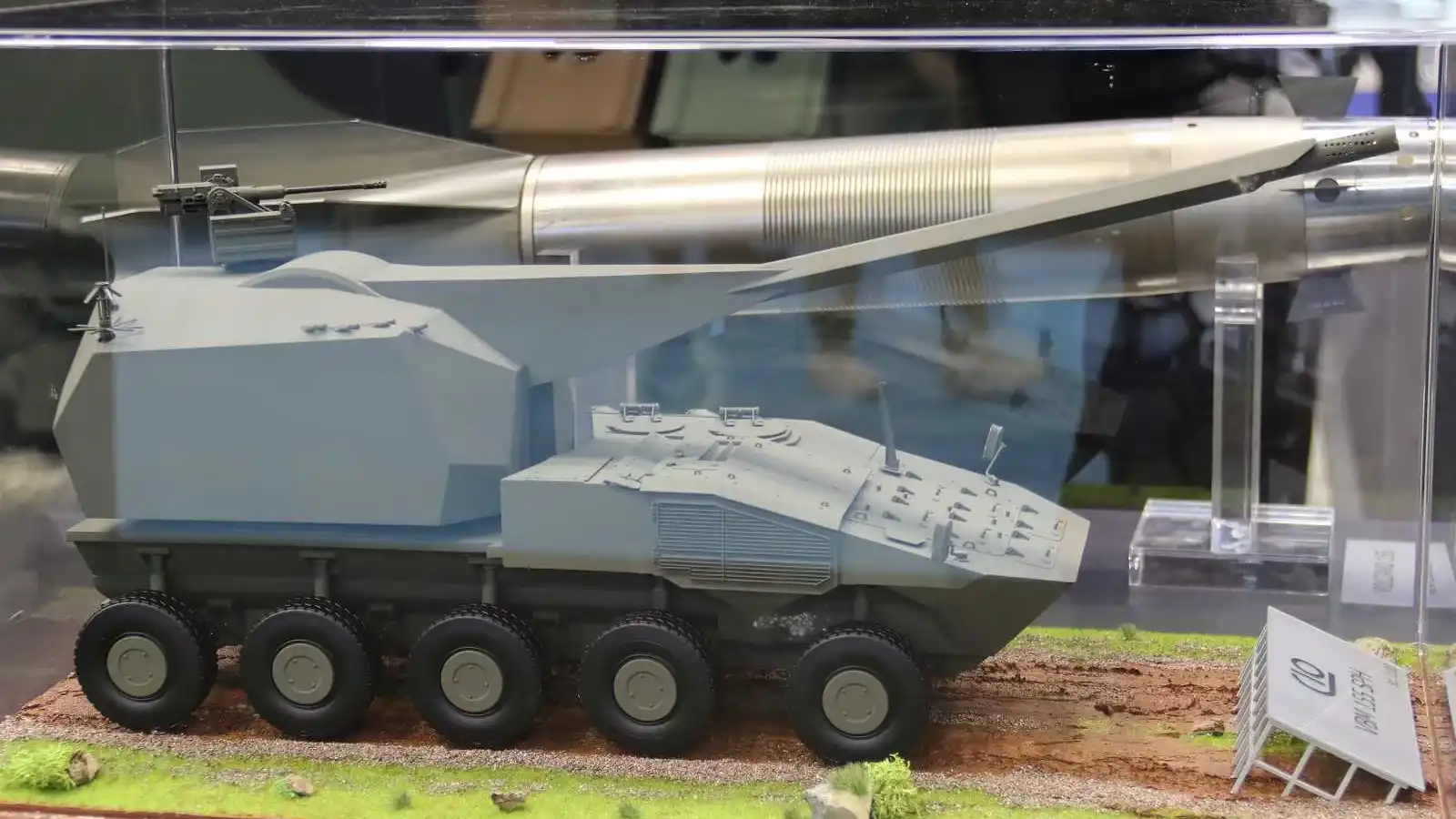
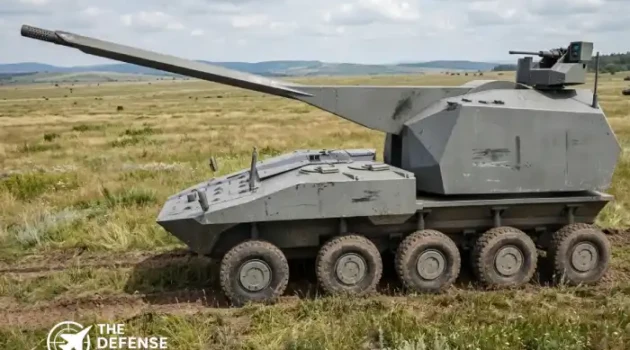
Italy’s defense industry unveiled the new VBM 155 self-propelled howitzer at Eurosatory 2026, marking its entry into the increasingly competitive market for highly automated long-range artillery systems. Developed by the Italian CIO consortium, the platform combines Leonardo’s HITFIRE 155 unmanned turret with a new 10×10 wheeled chassis and is designed to engage targets at ranges up to 70 kilometers while operating with a crew of only two soldiers.
Italy Introduces VBM 155 Self-Propelled Howitzer At Eurosatory 2026
The VBM 155 self-propelled howitzer made its public debut at Eurosatory 2026 in Paris, where the Italian CIO consortium, jointly owned by Leonardo and IDV (Iveco Defence Vehicles), showcased a new long-range artillery platform aimed at both domestic and export markets. The unveiling reflects growing European demand for highly mobile, survivable artillery systems capable of operating in contested environments shaped by drone surveillance and counterbattery threats.
The system combines Leonardo’s fully automated HITFIRE 155 turret with a newly developed 10×10 armored chassis from IDV. The design focuses on reducing crew requirements while maintaining high rates of fire, rapid deployment capability, and compatibility with NATO-standard 155mm ammunition.
- (adsbygoogle = window.adsbygoogle || []).push({});
Fully Automated Turret Reduces Crew To Two Soldiers
One of the VBM 155’s most notable features is its ability to operate with only two personnel.
The crew consists of a driver and a commander/gunner seated within a protected armored capsule integrated into the vehicle’s chassis. According to CIO, the extensive automation provided by the HITFIRE turret and computerized fire-control architecture allows artillery missions to be conducted without the larger crews typically required by conventional self-propelled guns.
The unmanned turret incorporates an automated loading system capable of handling 155mm projectiles and modular propellant charges. The system reportedly supports firing rates of up to 10 rounds per minute while carrying approximately 30 rounds onboard.
The first round can reportedly be fired within 10 seconds of the vehicle halting, while another 10 seconds are required to leave the firing position, enabling rapid shoot-and-scoot operations intended to reduce vulnerability to counterbattery fire.
(adsbygoogle = window.adsbygoogle || []).push({});Key Specifications
Specification VBM 155 Main Armament 155mm/52-caliber gun Turret Leonardo HITFIRE 155 automated unmanned turret Chassis IDV 10×10 wheeled platform Crew 2 Maximum Range Up to 70 km with extended-range ammunition Rate of Fire Up to 10 rounds per minute Combat Weight Approximately 37 tons Engine Power 720 hp Road Speed Over 100 km/h Fire Capability Rapid shoot-and-scoot operations Sources: CIO, Leonardo, Eurosatory 2026 reporting.
(adsbygoogle = window.adsbygoogle || []).push({});Designed For Long-Range Precision Fires
The VBM 155 leverages Leonardo’s existing expertise in artillery systems and precision-guided munitions.
A key element is compatibility with the Vulcano family of extended-range guided projectiles. Leonardo’s previous demonstrations have highlighted the ability of Vulcano ammunition to achieve engagement distances approaching 70 kilometers, significantly extending the reach of traditional 155mm artillery systems.
The platform also incorporates a NATO Generic Vehicle Architecture (NGVA)-compliant digital backbone, enabling integration with modern battlefield management systems, navigation equipment, tactical communications networks, and future sensor packages.
According to exhibition information, the vehicle can accommodate VHF, UHF, and SATCOM communications systems, supporting operations within NATO’s increasingly networked command-and-control environment.
Why The New 10×10 Configuration Matters
Unlike many existing wheeled self-propelled howitzers that utilize 8×8 truck or armored vehicle platforms, the VBM 155 is built on a dedicated 10×10 chassis.
The additional axle improves payload distribution and mobility across soft terrain while supporting the weight of the 13-ton automated turret. CIO states that the platform retains high mobility despite its increased size, benefiting from a 720-horsepower engine and advanced suspension design.
This approach mirrors a broader trend across NATO militaries toward heavier wheeled artillery systems that offer greater protection than truck-mounted guns while retaining much of the strategic mobility associated with wheeled vehicles.
Examples include Germany’s RCH 155, Israel’s Sigma 155, and emerging European 10×10 artillery concepts unveiled during 2026 defense exhibitions.
(adsbygoogle = window.adsbygoogle || []).push({});Strategic Analysis: Italy Enters A Competitive Long-Range Artillery Market
The VBM 155 arrives as Western militaries reassess artillery requirements following lessons learned from the war in Ukraine.
Recent combat operations have reinforced several key trends. Artillery units must fire rapidly, relocate immediately after engagements, operate with reduced manpower, and integrate seamlessly with digital targeting networks. Survivability now depends as much on speed and automation as on armor protection.
The Italian system appears designed specifically around these operational realities.
Its two-person crew reduces personnel exposure and training requirements. Automated ammunition handling minimizes physical workload during sustained operations. The short deployment and displacement times improve survivability against drones, loitering munitions, and counterbattery radar systems.
From a market perspective, the VBM 155 positions Italy alongside a growing group of European manufacturers seeking opportunities in ongoing artillery modernization programs. Nations across Europe are expanding indirect-fire capabilities while replacing legacy Cold War-era systems. Competition is intensifying among platforms such as the RCH 155, CAESAR, Archer, Sigma 155, and new long-range artillery concepts being presented at Eurosatory 2026.
For Italy, the VBM 155 also represents a significant step toward strengthening sovereign artillery manufacturing capabilities by combining domestic expertise in armored vehicles, automated turrets, fire-control systems, and precision-guided ammunition within a single platform.
Outlook
Prototype construction of the HITFIRE turret is already underway, with integration activities continuing through late 2026. While the VBM 155 is initially aimed at export customers, the system could also become a future candidate for Italian Army artillery modernization requirements if development progresses as planned.
Its success will ultimately depend on demonstrated reliability, firing performance, and the ability to compete against increasingly capable European and international artillery platforms entering service during the latter half of the decade.
(adsbygoogle = window.adsbygoogle || []).push({});Executive Summary:
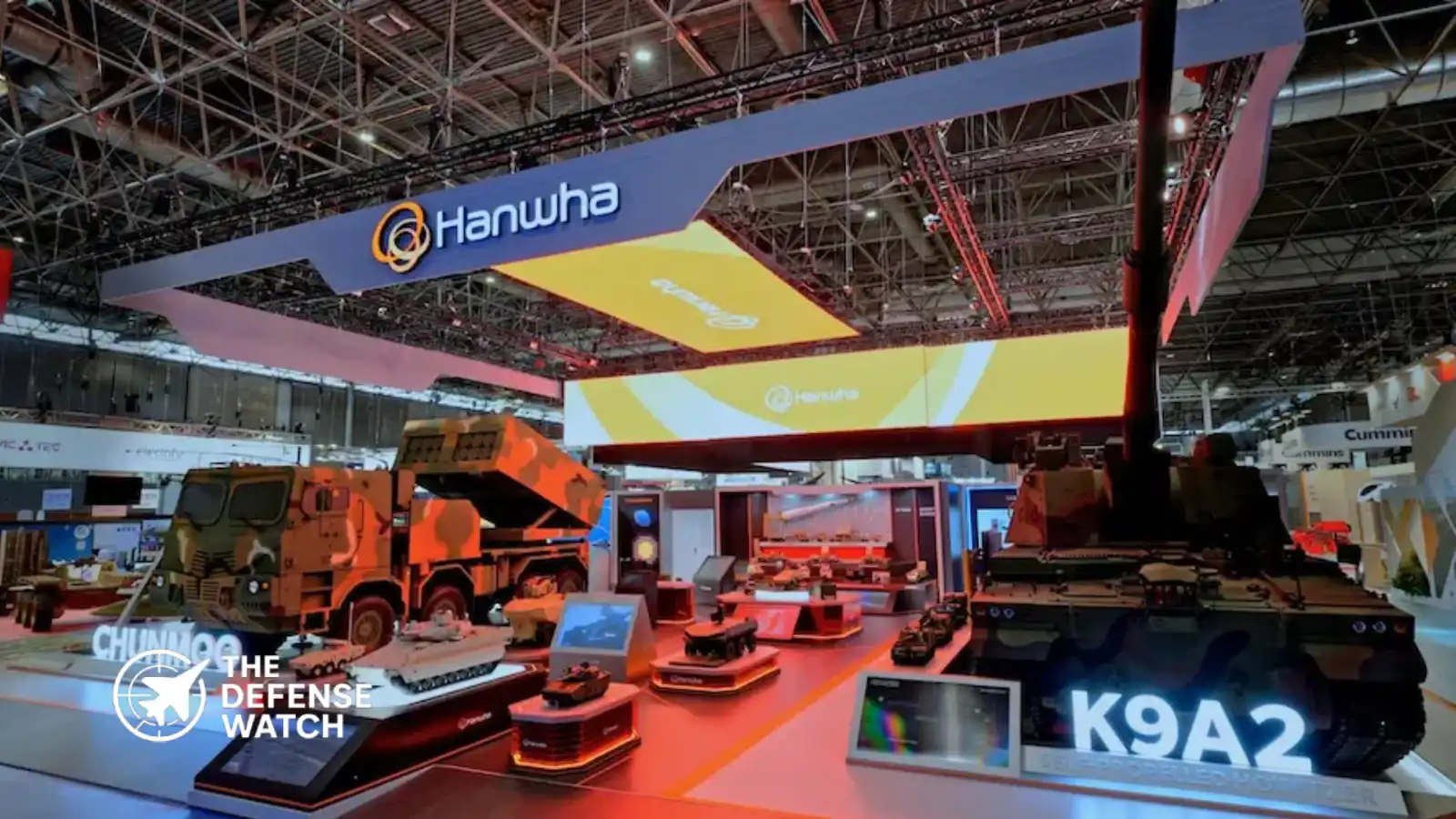
Hanwha Aerospace used Eurosatory 2026 in Paris to showcase its K9A2 self-propelled howitzer, Chunmoo multiple rocket launcher, and advanced air and missile defense systems as part of a broader campaign to expand its presence in Europe.
The exhibition comes as several NATO members accelerate military modernization programs and seek long term industrial partnerships, localized production, and resilient supply chains amid growing security concerns across the continent.
Hanwha Brings K9A2, Chunmoo and Air Defense Portfolio to Eurosatory 2026
Hanwha Aerospace has unveiled a broad portfolio of land warfare and air defense systems at Eurosatory 2026, highlighting the company’s efforts to deepen partnerships with European and NATO customers.
The South Korean defense manufacturer presented the K9A2 self-propelled howitzer, the Chunmoo multiple rocket launcher system, and a range of air and missile defense capabilities during the exhibition in Paris. The display aligns with Hanwha’s wider strategy of expanding industrial cooperation, localized production, and technology partnerships across Europe.
The company’s participation comes at a time when European governments are increasing defense spending, replenishing ammunition stockpiles, and seeking long range precision strike capabilities following lessons drawn from the war in Ukraine and broader NATO deterrence requirements.
(adsbygoogle = window.adsbygoogle || []).push({});K9A2 Represents Hanwha’s Next Step in Artillery Modernization
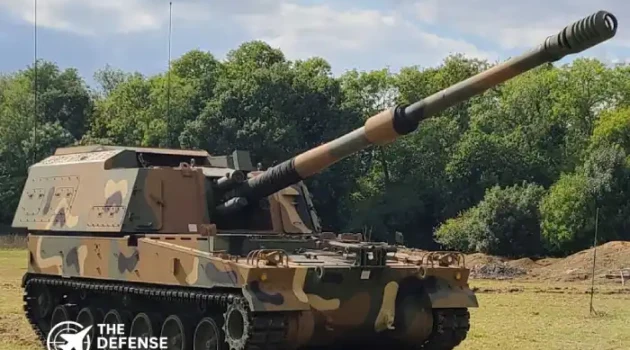
A centerpiece of Hanwha’s Eurosatory display is the K9A2, the latest evolution of the widely exported K9 self-propelled howitzer family.
The K9 platform has already secured significant adoption across Europe, including service with Poland, Norway, Finland, Estonia, Romania, and Türkiye. Hanwha has leveraged this installed user base to position the K9A2 as a next generation artillery solution offering greater automation, improved crew survivability, and higher rates of fire.
The K9A2 reflects a broader trend among NATO militaries toward reducing crew workload while increasing sustained firepower during high intensity operations.
- (adsbygoogle = window.adsbygoogle || []).push({});
Why the K9A2 Matters
Modern artillery systems are increasingly judged not only by range and accuracy but also by their ability to sustain operations under contested conditions.
Key operational drivers include:
Capability Area Operational Benefit Increased automation Reduces crew workload and training burden Faster firing cycles Improves responsiveness against time-sensitive targets Enhanced survivability Limits crew exposure during combat operations Digital integration Supports networked battlefield operations NATO interoperability Simplifies multinational operations For European armies seeking to expand artillery inventories rapidly, the K9A2 offers an evolutionary upgrade built on a combat-proven platform already operating across the alliance.
Chunmoo Gains Momentum Across Europe
The Chunmoo multiple rocket launcher system has emerged as one of Hanwha’s fastest growing export programs.
As of mid-2026, confirmed European orders span Poland, Norway, and Estonia, creating one of the largest emerging long range fires ecosystems in Europe. The system can employ multiple munition types, ranging from guided rockets to tactical ballistic missiles with ranges approaching 300 kilometers.
Poland remains the largest customer through its Homar-K program, while Norway signed a contract valued at approximately $922 million for 16 launchers and associated rockets earlier this year. Estonia has also expanded its fleet through follow-on purchases.
(adsbygoogle = window.adsbygoogle || []).push({});Chunmoo’s Growing Strategic Importance
The growing appeal of Chunmoo stems from several factors:
- Multi-caliber launcher architecture
- Long range precision strike capability
- Compatibility with multiple munition types
- Rapid delivery timelines
- Opportunities for local industrial participation
Unlike many legacy rocket artillery systems, Chunmoo allows operators to tailor launch configurations for different mission sets, ranging from battlefield interdiction to deep strike operations.
For NATO planners, the spread of long range fires capabilities across multiple allied nations enhances deterrence and creates additional options for distributed strike operations.
Air and Missile Defense Expands Hanwha’s European Offering
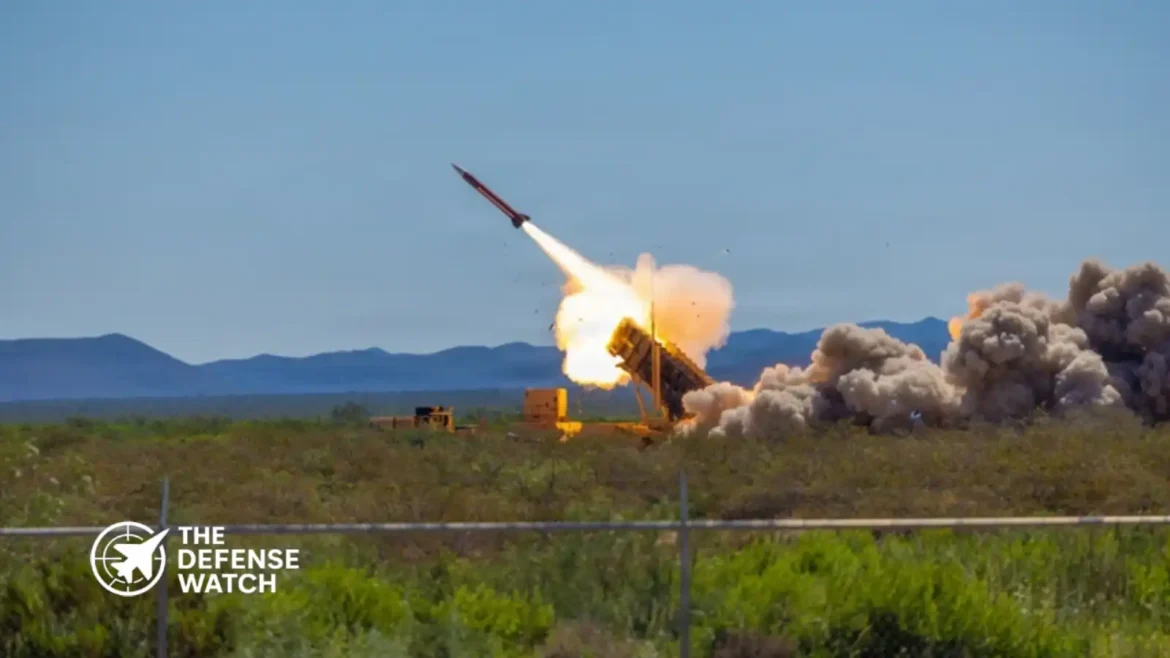
In addition to artillery and rocket systems, Hanwha showcased several air and missile defense capabilities designed to address growing concerns over ballistic missiles, cruise missiles, drones, and other aerial threats.
A major focus is the L-SAM long range air and missile defense system, developed to intercept ballistic missile threats during the upper terminal phase of flight. The system uses hit-to-kill technology and entered production after completing development in South Korea.
Hanwha has also emphasized a layered defense concept that combines missile interceptors, advanced radar systems, laser weapons, and counter-drone technologies.
(adsbygoogle = window.adsbygoogle || []).push({});Strategic Significance for Europe
European militaries increasingly face a more complex air threat environment that includes:
- Ballistic missiles
- Cruise missiles
- Loitering munitions
- One-way attack drones
- Swarm UAV threats
As a result, demand is shifting toward integrated air and missile defense architectures rather than standalone systems.
Hanwha’s approach mirrors broader NATO efforts to build layered defensive networks capable of engaging threats at multiple ranges and altitudes.
Industrial Partnerships Drive Hanwha’s European Expansion
Beyond hardware, Hanwha has emphasized industrial cooperation as a core element of its European growth strategy.
The company has pursued localization initiatives in multiple countries, including Poland, Romania, Norway, and Estonia. These efforts include production facilities, maintenance infrastructure, workforce development, technology transfer, and long term industrial partnerships.
Romania is expected to host Hanwha’s first European Union production facility, while Poland is set to become a major center for guided rocket production supporting the expanding Chunmoo user community.
This strategy aligns closely with European governments’ growing preference for defense acquisitions that include domestic industrial participation and supply chain resilience.
(adsbygoogle = window.adsbygoogle || []).push({});Analysis: Why Hanwha’s Eurosatory Presence Matters
Hanwha’s display at Eurosatory 2026 highlights a broader shift occurring within the European defense market.
For decades, many NATO armies relied heavily on U.S. and Western European suppliers for major land warfare systems. Today, South Korean defense firms are increasingly competing for major programs by combining rapid delivery schedules, proven equipment, and extensive industrial cooperation packages.
The K9 family has already become one of the most successful artillery export programs in Europe. The growing adoption of Chunmoo suggests a similar trajectory may be emerging in the long range precision fires sector.
Equally important is Hanwha’s emphasis on local production and technology partnerships. As European governments seek to rebuild defense industrial capacity while reducing supply chain vulnerabilities, companies capable of combining modern equipment with domestic industrial benefits are likely to gain a competitive advantage.
Eurosatory 2026 therefore serves not only as a showcase for individual platforms but also as a demonstration of how Hanwha intends to position itself as a long term partner in Europe’s defense modernization effort.
(adsbygoogle = window.adsbygoogle || []).push({});Executive Summary:
Rafael Advanced Defense Systems is using Eurosatory 2026 in Paris — the world’s largest land defense exhibition, running June 15–19 — to position its combat-tested multilayered air and missile defense architecture as the answer to Europe’s most urgent security gaps. The Israeli firm is presenting Iron Dome, David’s Sling, its Iron Beam directed-energy family, and the Hunter Eagle counter-UAS interceptor, all framed around an integrated, cost-conscious protection model validated by more than 10,000 real-world intercepts. With European defense budgets surging and drone threats proliferating from Ukraine to the English Channel, Rafael’s timing is deliberate and its pitch is credible.
Rafael Targets Europe’s Air Defense Vacuum With Battle-Hardened Systems
Rafael Advanced Defense Systems is presenting air defense and counter-UAS capabilities at Eurosatory 2026, framing its display around an integrated, multilayered approach developed in response to changing operational requirements facing land forces.
The Israeli firm is one of the most heavily watched exhibitors at the Paris show, arriving with a portfolio that has been tested under live-fire conditions no NATO ally’s systems have yet matched in scale or intensity. Following years of high-tempo engagements against rockets, ballistic missiles, cruise missiles, and mass drone swarms over Israeli territory, Rafael is positioning that operational pedigree as the central argument for European procurement.
(adsbygoogle = window.adsbygoogle || []).push({});A Threat Environment That Has Fundamentally Changed
Rafael says the security environment in Europe has shifted because of the spread of unmanned aerial systems, longer-range stand-off threats, and the renewed importance of large-scale land operations. The company says layered air defense and platform survivability have become foundational requirements for protecting maneuvering forces, critical infrastructure, and population centers.
That assessment is not merely a marketing claim. Eurosatory 2026 organizers have noted that missile defense — including against hypersonic threats — is one of the exhibition’s central themes, with European nations confronting the need to field credible broad missile defense architectures for the first time in decades.
The Russia-Ukraine war and the 2025–2026 Israeli-Iranian exchange have both demonstrated that even sophisticated air defense networks can be overwhelmed by saturation tactics. For European planners, the lesson has been pointed: single-layer, single-threat-type defense is no longer adequate.
(adsbygoogle = window.adsbygoogle || []).push({});The Layered Architecture: From Iron Dome to David’s Sling
In air defense, Rafael is presenting a layered architecture that includes Iron Dome and David’s Sling. Iron Dome is described by the company as a multi-mission system that has conducted more than 10,000 combat interceptions over 15 years of operational service, with a success rate well above 90%.
During the peak of Israel’s multi-front confrontations, Iron Dome — alongside David’s Sling, Arrow 3, and Iron Beam — intercepted approximately 86–90% of incoming threats across the entire defense stack.
David’s Sling, jointly developed by the Israeli Missile Defense Organization and the U.S. Missile Defense Agency, with Rafael as prime contractor and Raytheon Missile Systems as subcontractor, is specifically designed to counter rockets, missiles, cruise missiles, aircraft, and UAVs, constituting a central defensive layer within Israel’s multi-layered architecture.
In 2025, David’s Sling underwent a series of successful tests against advanced threats, and several global customers have announced procurement of the system.
(adsbygoogle = window.adsbygoogle || []).push({});For European buyers, the division of labor between these two systems is operationally significant:
System Primary Threat Set Engagement Range Cost Per Intercept Iron Dome Short-range rockets, artillery, mortars, UAVs Up to ~70 km ~$40,000–$50,000 per Tamir missile David’s Sling Medium-to-long-range ballistic missiles, cruise missiles, aircraft 40–300 km Higher; classified Iron Beam Rockets, mortars, small UAVs Up to ~10 km Near-zero (laser) Iron Dome supports longer-reach engagements suited for medium-range rocket and artillery threats, while Iron Beam operates at shorter ranges but at dramatically lower marginal cost and significantly higher engagement volume per unit time.
Iron Beam and Directed Energy: The Cost-Curve Solution
The most strategically consequential addition to Rafael’s Eurosatory lineup may be its directed-energy portfolio, which addresses the economic asymmetry that has bedeviled conventional interceptor-based defense.
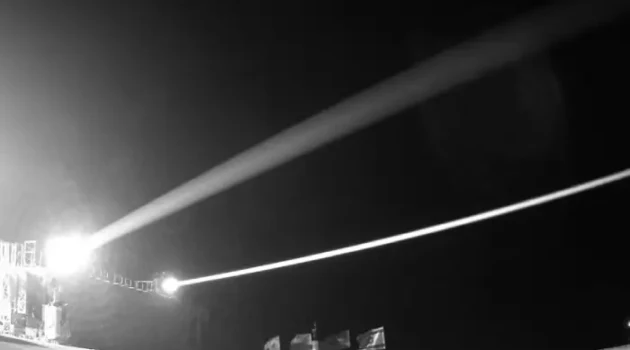
Formally handed over to the Israel Defense Forces on December 28, 2025, Iron Beam is designed to intercept short-range rockets, artillery shells, mortar bombs, and UAVs at distances of up to 10 kilometers, now serving as the fifth pillar of Israel’s multi-layered air defense architecture. –
Iron Beam became operational with the IDF in 2025, and amid the war against the Iranian regime in March 2026, the system was reportedly used operationally for the first time against rockets launched by Iran-backed Hezbollah from Lebanon — a potential milestone in the combat use of laser-based air defense.
Rafael’s directed-energy portfolio includes Iron Beam, Iron Beam-M, and Lite Beam. Iron Beam is designed to engage distant threats at near-zero cost per interception. Iron Beam-M is a mobile version configured to accompany maneuvering forces and protect strategic sites, while Lite Beam is a compact and lightweight system for mobile and forward-deployed units.
(adsbygoogle = window.adsbygoogle || []).push({});The economic logic is impossible to ignore. At a cost of $40,000–$150,000 per conventional interceptor — and with adversaries deploying drones costing under $1,000 — the cost-exchange ratio is strategically unsustainable at volume. Directed energy breaks that equation fundamentally: once the system is fielded, the marginal cost per engagement trends toward zero. For European governments now confronting drone proliferation from state and non-state actors alike, Iron Beam represents not just a capability upgrade but a fiscal imperative.
Hunter Eagle and the Counter-UAS Portfolio
Below the strategic layer, Rafael is specifically targeting European demand for close-in drone defeat.
Rafael has introduced Hunter Eagle, a compact kinetic interceptor designed to counter the rapidly expanding threat of low-altitude unmanned aircraft on the modern battlefield. First shown publicly at DSEI 2025 and now presented in its serial configuration, the system marks an expansion of Rafael’s layered counter-UAS portfolio.
Hunter Eagle integrates into Rafael’s broader Drone Dome suite, extending the company’s detection-classification-neutralization chain into a hardened kinetic layer. Drone Dome includes electronic-warfare and directed-energy effectors, while Hunter Eagle adds a reusable hard-kill option for drones resistant to jamming or requiring physical destruction.
Rafael is also developing Ghost Hunter, a larger and more powerful interceptor equipped with turbojet engines, an RF radar in the nose, and a payload capacity significantly beyond Hunter Eagle — weighing 50–60 kg at 1.4–1.6 meters in length, with initial deliveries targeted for 2027.
The significance of a VTOL hard-kill interceptor is particularly acute for European requirements. Jamming-resistant, fiber-optic-guided FPV drones — a category that emerged prominently in Ukraine — cannot be reliably neutralized by electronic warfare alone. Kinetic interceptors that are themselves autonomous close that gap.
(adsbygoogle = window.adsbygoogle || []).push({});The Platform Survivability Dimension
Rafael’s Eurosatory presentation extends beyond fixed-site and area defense into what the company terms platform survivability — the protection of individual armored vehicles in maneuver.
Rafael says platform survivability now depends on defeating threats including anti-tank guided missiles, loitering munitions, and hostile drones, and the company is showing how multiple complementary layers can protect vehicles and crews against this threat spectrum.rience. In both the Ukraine war and Israeli ground operations in Gaza and Lebanon, armored vehicles without active protection systems proved highly vulnerable to loitering munitions and drone-dropped munitions. Trophy, Rafael’s active protection system already integrated on U.S. M1A2 SEPv3 Abrams tanks, anchors that part of the portfolio — though Rafael did not highlight it separately in the Eurosatory statement.
Why This Matters for European and U.S. Defense Strategy
Rafael’s Eurosatory campaign arrives at an inflection point in European defense spending. NATO members are under sustained pressure to reach and exceed the 2% GDP defense spending target, and air and missile defense has emerged as the most critical near-term gap across the alliance.
The U.S. Army is simultaneously expanding a drone and counter-drone marketplace at Eurosatory, with the goal of reaching 25 allied and partner nations by the end of summer 2026, underpinned by common C-UAS data standards established in a March 2026 U.S.-UK joint declaration.
For U.S. industry and policy interests, Rafael’s European push is a complicating and complementary factor simultaneously. Iron Dome already has deep U.S. co-production: the U.S. Missile Defense Agency maintains a pivotal role in developing and producing Israel’s multi-layered defense systems, including David’s Sling and Arrow, while manufacturing Iron Dome components. A Rafael sale to a European NATO ally carries embedded American industrial content and interoperability with U.S. systems — a feature that smooths procurement politics considerably.
(adsbygoogle = window.adsbygoogle || []).push({});The broader competitive dynamic is notable. European exhibitors at Eurosatory 2026 — including MBDA with its SAMP/T family and Thales with an Iron Dome-like short-range system — are competing for the same budget lines. The Eurosatory organizer noted that both French-Italian SAMP/T and U.S. Patriot batteries are prominent at the show alongside Israeli systems, reflecting a genuinely contested market for European air defense investment.
What Rafael brings that no European competitor can replicate is operational data at scale. More than 10,000 combat intercepts, stress-tested against mass saturation attacks, ballistic threats, and swarm drone tactics, constitute a proof base that no qualification test range can simulate. In a procurement environment where governments are buying for actual war-fighting, not demonstrations, that distinction is Rafael’s most powerful argument.


Executive Summary:
Saab has introduced the Barracuda Poncho, a new lightweight camouflage solution designed to shield soldiers from thermal and UAV-based detection. The system expands Saab’s Barracuda camouflage portfolio as armed forces increasingly adapt to persistent drone surveillance on modern battlefields.
Saab Reveals Barracuda Poncho Camouflage System
Saab has unveiled the Barracuda Poncho, a new multispectral camouflage solution intended to improve soldier survivability against modern battlefield surveillance systems, particularly unmanned aerial vehicles (UAVs) equipped with thermal sensors.
The announcement comes as military forces worldwide continue adapting to rapidly evolving reconnaissance threats driven by drones, thermal imaging systems, and advanced battlefield sensors. Saab said the new poncho is designed to conceal individual soldiers across multiple environments while maintaining mobility and operational flexibility.
The Barracuda Poncho will be displayed at the Eurosatory 2026 defense exhibition in Paris.
Designed For Modern Battlefield Detection Threats
According to Saab, the Barracuda Poncho is intended to provide visual and thermal protection across woodland, rocky desert, and arctic environments. The system is part of Saab’s broader Barracuda family of camouflage and signature management technologies already used by military forces globally.
The lightweight design, weighing slightly above one kilogram, allows soldiers to wear and rapidly deploy the camouflage layer without significantly reducing movement or combat effectiveness.
A key feature of the system is its reversible configuration, enabling separate day and night operational modes. Saab stated that the poncho offers enhanced thermal protection during nighttime operations, when thermal imaging devices and drone-mounted infrared sensors are often most effective.
The company also developed a specialized arctic version designed to reduce visibility against ultraviolet detection systems commonly used in snow-covered environments.
Henning Robach, head of Saab’s Barracuda business unit, said the product responds directly to the growing prevalence of UAV-based surveillance on current battlefields.
He noted that soldiers can become exposed even during brief movement outside protected positions or vehicles, particularly under persistent drone observation.
Growing Importance Of Multispectral Camouflage
The launch reflects a wider shift in military modernization priorities as armed forces place greater emphasis on signature management technologies. Recent conflicts, particularly in Eastern Europe and the Middle East, have demonstrated how commercially available drones and military-grade UAVs can rapidly identify troop positions through thermal and visual signatures.
Traditional camouflage systems designed primarily for visual concealment are increasingly viewed as insufficient against modern sensor networks that combine infrared imaging, thermal optics, radar, and AI-assisted target recognition.
The Barracuda Poncho appears aimed at addressing that operational gap by extending multispectral concealment down to the individual soldier level rather than focusing solely on vehicles or fixed positions.
Saab’s existing Barracuda product line already includes camouflage systems for armored vehicles, shelters, and static military infrastructure. The new wearable solution expands the company’s approach toward dismounted infantry operations, where mobility and rapid concealment are critical.
UAV Surveillance Driving Infantry Adaptation
The increasing role of drones in modern warfare continues reshaping infantry tactics and equipment requirements. Small UAVs capable of live reconnaissance have significantly reduced the ability of troops to move undetected in open terrain.
Thermal imaging systems mounted on drones have further complicated concealment efforts, especially during nighttime operations. This has created growing demand for lightweight signature reduction systems that can be carried and quickly deployed by individual soldiers.
The Barracuda Poncho enters a defense market where several NATO and partner nations are actively evaluating next-generation camouflage technologies for infantry modernization programs.
Its introduction ahead of Eurosatory 2026 also positions Saab within a broader industry trend focused on survivability solutions linked to electronic warfare, counter-UAV operations, and multispectral concealment.
Saab Expands Signature Management Portfolio
Saab has continued investing in battlefield survivability technologies alongside its broader defense portfolio that includes combat aircraft, radar systems, naval platforms, and electronic warfare capabilities.
The company’s Barracuda division specializes in signature management solutions intended to reduce detection across visible, infrared, radar, and other sensor spectrums.
As battlefield transparency increases through drones and persistent surveillance systems, camouflage technologies are becoming more integrated into wider military modernization strategies rather than remaining a niche capability.
The introduction of the Barracuda Poncho highlights how infantry survivability requirements are evolving alongside the rapid expansion of UAV reconnaissance and thermal detection technologies.