

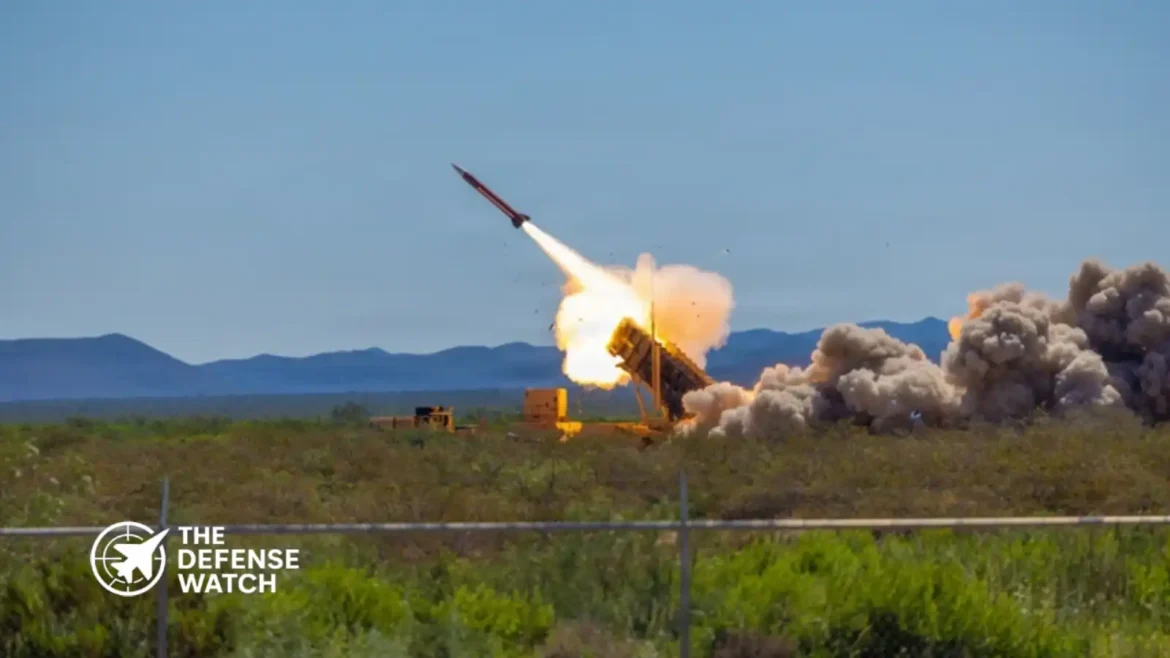
(adsbygoogle = window.adsbygoogle || []).push({});Executive Summary:
Rafael Advanced Defense Systems is using Eurosatory 2026 in Paris — the world’s largest land defense exhibition, running June 15–19 — to position its combat-tested multilayered air and missile defense architecture as the answer to Europe’s most urgent security gaps. The Israeli firm is presenting Iron Dome, David’s Sling, its Iron Beam directed-energy family, and the Hunter Eagle counter-UAS interceptor, all framed around an integrated, cost-conscious protection model validated by more than 10,000 real-world intercepts. With European defense budgets surging and drone threats proliferating from Ukraine to the English Channel, Rafael’s timing is deliberate and its pitch is credible.
Rafael Targets Europe’s Air Defense Vacuum With Battle-Hardened Systems
Rafael Advanced Defense Systems is presenting air defense and counter-UAS capabilities at Eurosatory 2026, framing its display around an integrated, multilayered approach developed in response to changing operational requirements facing land forces.
The Israeli firm is one of the most heavily watched exhibitors at the Paris show, arriving with a portfolio that has been tested under live-fire conditions no NATO ally’s systems have yet matched in scale or intensity. Following years of high-tempo engagements against rockets, ballistic missiles, cruise missiles, and mass drone swarms over Israeli territory, Rafael is positioning that operational pedigree as the central argument for European procurement.
(adsbygoogle = window.adsbygoogle || []).push({});A Threat Environment That Has Fundamentally Changed
Rafael says the security environment in Europe has shifted because of the spread of unmanned aerial systems, longer-range stand-off threats, and the renewed importance of large-scale land operations. The company says layered air defense and platform survivability have become foundational requirements for protecting maneuvering forces, critical infrastructure, and population centers.
That assessment is not merely a marketing claim. Eurosatory 2026 organizers have noted that missile defense — including against hypersonic threats — is one of the exhibition’s central themes, with European nations confronting the need to field credible broad missile defense architectures for the first time in decades.
The Russia-Ukraine war and the 2025–2026 Israeli-Iranian exchange have both demonstrated that even sophisticated air defense networks can be overwhelmed by saturation tactics. For European planners, the lesson has been pointed: single-layer, single-threat-type defense is no longer adequate.
(adsbygoogle = window.adsbygoogle || []).push({});The Layered Architecture: From Iron Dome to David’s Sling
In air defense, Rafael is presenting a layered architecture that includes Iron Dome and David’s Sling. Iron Dome is described by the company as a multi-mission system that has conducted more than 10,000 combat interceptions over 15 years of operational service, with a success rate well above 90%.
During the peak of Israel’s multi-front confrontations, Iron Dome — alongside David’s Sling, Arrow 3, and Iron Beam — intercepted approximately 86–90% of incoming threats across the entire defense stack.
David’s Sling, jointly developed by the Israeli Missile Defense Organization and the U.S. Missile Defense Agency, with Rafael as prime contractor and Raytheon Missile Systems as subcontractor, is specifically designed to counter rockets, missiles, cruise missiles, aircraft, and UAVs, constituting a central defensive layer within Israel’s multi-layered architecture.
In 2025, David’s Sling underwent a series of successful tests against advanced threats, and several global customers have announced procurement of the system.
(adsbygoogle = window.adsbygoogle || []).push({});For European buyers, the division of labor between these two systems is operationally significant:
System Primary Threat Set Engagement Range Cost Per Intercept Iron Dome Short-range rockets, artillery, mortars, UAVs Up to ~70 km ~$40,000–$50,000 per Tamir missile David’s Sling Medium-to-long-range ballistic missiles, cruise missiles, aircraft 40–300 km Higher; classified Iron Beam Rockets, mortars, small UAVs Up to ~10 km Near-zero (laser) Iron Dome supports longer-reach engagements suited for medium-range rocket and artillery threats, while Iron Beam operates at shorter ranges but at dramatically lower marginal cost and significantly higher engagement volume per unit time.
Iron Beam and Directed Energy: The Cost-Curve Solution
The most strategically consequential addition to Rafael’s Eurosatory lineup may be its directed-energy portfolio, which addresses the economic asymmetry that has bedeviled conventional interceptor-based defense.
Formally handed over to the Israel Defense Forces on December 28, 2025, Iron Beam is designed to intercept short-range rockets, artillery shells, mortar bombs, and UAVs at distances of up to 10 kilometers, now serving as the fifth pillar of Israel’s multi-layered air defense architecture. –
Iron Beam became operational with the IDF in 2025, and amid the war against the Iranian regime in March 2026, the system was reportedly used operationally for the first time against rockets launched by Iran-backed Hezbollah from Lebanon — a potential milestone in the combat use of laser-based air defense.
Rafael’s directed-energy portfolio includes Iron Beam, Iron Beam-M, and Lite Beam. Iron Beam is designed to engage distant threats at near-zero cost per interception. Iron Beam-M is a mobile version configured to accompany maneuvering forces and protect strategic sites, while Lite Beam is a compact and lightweight system for mobile and forward-deployed units.
(adsbygoogle = window.adsbygoogle || []).push({});The economic logic is impossible to ignore. At a cost of $40,000–$150,000 per conventional interceptor — and with adversaries deploying drones costing under $1,000 — the cost-exchange ratio is strategically unsustainable at volume. Directed energy breaks that equation fundamentally: once the system is fielded, the marginal cost per engagement trends toward zero. For European governments now confronting drone proliferation from state and non-state actors alike, Iron Beam represents not just a capability upgrade but a fiscal imperative.
Hunter Eagle and the Counter-UAS Portfolio
Below the strategic layer, Rafael is specifically targeting European demand for close-in drone defeat.
Rafael has introduced Hunter Eagle, a compact kinetic interceptor designed to counter the rapidly expanding threat of low-altitude unmanned aircraft on the modern battlefield. First shown publicly at DSEI 2025 and now presented in its serial configuration, the system marks an expansion of Rafael’s layered counter-UAS portfolio.
Hunter Eagle integrates into Rafael’s broader Drone Dome suite, extending the company’s detection-classification-neutralization chain into a hardened kinetic layer. Drone Dome includes electronic-warfare and directed-energy effectors, while Hunter Eagle adds a reusable hard-kill option for drones resistant to jamming or requiring physical destruction.
Rafael is also developing Ghost Hunter, a larger and more powerful interceptor equipped with turbojet engines, an RF radar in the nose, and a payload capacity significantly beyond Hunter Eagle — weighing 50–60 kg at 1.4–1.6 meters in length, with initial deliveries targeted for 2027.
The significance of a VTOL hard-kill interceptor is particularly acute for European requirements. Jamming-resistant, fiber-optic-guided FPV drones — a category that emerged prominently in Ukraine — cannot be reliably neutralized by electronic warfare alone. Kinetic interceptors that are themselves autonomous close that gap.
(adsbygoogle = window.adsbygoogle || []).push({});The Platform Survivability Dimension
Rafael’s Eurosatory presentation extends beyond fixed-site and area defense into what the company terms platform survivability — the protection of individual armored vehicles in maneuver.
Rafael says platform survivability now depends on defeating threats including anti-tank guided missiles, loitering munitions, and hostile drones, and the company is showing how multiple complementary layers can protect vehicles and crews against this threat spectrum.rience. In both the Ukraine war and Israeli ground operations in Gaza and Lebanon, armored vehicles without active protection systems proved highly vulnerable to loitering munitions and drone-dropped munitions. Trophy, Rafael’s active protection system already integrated on U.S. M1A2 SEPv3 Abrams tanks, anchors that part of the portfolio — though Rafael did not highlight it separately in the Eurosatory statement.
Why This Matters for European and U.S. Defense Strategy
Rafael’s Eurosatory campaign arrives at an inflection point in European defense spending. NATO members are under sustained pressure to reach and exceed the 2% GDP defense spending target, and air and missile defense has emerged as the most critical near-term gap across the alliance.
The U.S. Army is simultaneously expanding a drone and counter-drone marketplace at Eurosatory, with the goal of reaching 25 allied and partner nations by the end of summer 2026, underpinned by common C-UAS data standards established in a March 2026 U.S.-UK joint declaration.
For U.S. industry and policy interests, Rafael’s European push is a complicating and complementary factor simultaneously. Iron Dome already has deep U.S. co-production: the U.S. Missile Defense Agency maintains a pivotal role in developing and producing Israel’s multi-layered defense systems, including David’s Sling and Arrow, while manufacturing Iron Dome components. A Rafael sale to a European NATO ally carries embedded American industrial content and interoperability with U.S. systems — a feature that smooths procurement politics considerably.
(adsbygoogle = window.adsbygoogle || []).push({});The broader competitive dynamic is notable. European exhibitors at Eurosatory 2026 — including MBDA with its SAMP/T family and Thales with an Iron Dome-like short-range system — are competing for the same budget lines. The Eurosatory organizer noted that both French-Italian SAMP/T and U.S. Patriot batteries are prominent at the show alongside Israeli systems, reflecting a genuinely contested market for European air defense investment.
What Rafael brings that no European competitor can replicate is operational data at scale. More than 10,000 combat intercepts, stress-tested against mass saturation attacks, ballistic threats, and swarm drone tactics, constitute a proof base that no qualification test range can simulate. In a procurement environment where governments are buying for actual war-fighting, not demonstrations, that distinction is Rafael’s most powerful argument.


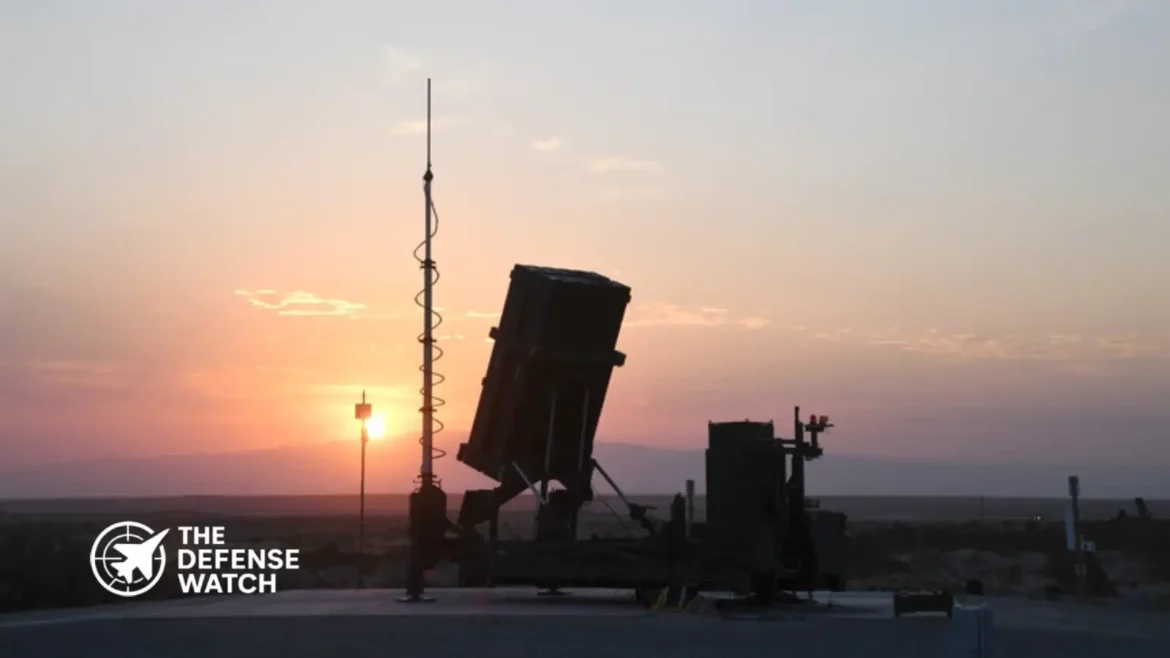
(adsbygoogle = window.adsbygoogle || []).push({});Executive Summary: On May 11, 2026, Rafael Advanced Defense Systems chairman Yuval Steinitz publicly confirmed that Israel’s Iron Dome missile defense system achieved an interception rate of approximately 98–99% against rockets fired by Hamas and Hezbollah since the October 2023 Hamas attack. Speaking at a Jerusalem security conference, Steinitz also disclosed that Iran fired roughly 1,500 ballistic missiles at Israel across two separate escalations since 2024, with only “several dozens” reaching their targets. The disclosure offers the most authoritative public accounting of Iron Dome’s wartime performance to date — and carries direct implications for U.S. defense planning and allied air defense procurement.
Iron Dome’s Near-Perfect Record: Rafael Chairman Puts Numbers on the System’s Wartime Performance
In the fog of an ongoing multi-front conflict, hard performance data from active defense systems is rare. On May 11, 2026, that changed. Yuval Steinitz, chairman of state-owned Israeli defense company Rafael Advanced Defense Systems — the manufacturer of the Iron Dome missile defense system — publicly disclosed a near-complete battlefield accounting of the system’s performance since October 2023.
Speaking at a conference hosted by the Jerusalem Center for Security and Foreign Affairs, Steinitz confirmed that since the Hamas raid of October 7, 2023, Hamas in Gaza and Hezbollah in Lebanon have collectively launched approximately 40,000 rockets toward Israel — and that Iron Dome intercepted the vast majority of them at a success rate of “around 98%, even 99%.
“It’s not perfect, but almost,” Steinitz said, according to Reuters.
That single figure — 99% — is not marketing language. Coming from the chairman of the system’s state-owned manufacturer, it represents the most authoritative public benchmark released on Iron Dome’s sustained combat performance across a multi-year, multi-front war.
What the Numbers Actually Mean
To understand the operational weight of a 99% intercept rate, consider the scale: 40,000 rockets fired by Hamas and Hezbollah since October 2023. A 1% failure rate across that volume still means roughly 400 projectiles were not intercepted. That number, while significant in human terms, represents an extraordinary outcome for any missile defense system operating under sustained, high-tempo saturation conditions.

Iron Dome is optimized for short-range threats — including unguided rockets, artillery shells, mortars, drones, and low-flying aircraft — precisely the categories of weapons used most extensively by Hamas and Hezbollah. The system’s architecture is purpose-built for this threat environment, and the performance data now confirms it is delivering at or near its theoretical maximum.
(adsbygoogle = window.adsbygoogle || []).push({});Rafael also confirmed there is no shortage of Tamir interceptor missiles — the munitions Iron Dome fires — despite a sustained high operational tempo across multiple active fronts. That supply-chain assurance is itself strategically significant, dispelling earlier concerns about interceptor depletion during extended conflict cycles.
Iran’s Ballistic Missile Campaigns: A Different Challenge
The Iran threat picture tells a more complex story. Steinitz disclosed that Iran has fired approximately 1,500 ballistic missiles at Israel across two rounds of direct military confrontation since 2024, with only “several dozens” not intercepted.
This outcome, however, was not Iron Dome’s achievement alone. Arrow — Israel’s highest-tier air defense layer, developed in cooperation with the U.S. Missile Defense Agency over more than four decades — is specifically designed to intercept ballistic threats at exo-atmospheric and upper-atmospheric altitudes, defending Israel against long-range strategic threats. Israel’s Ministry of Defense has separately confirmed that Arrow proved its capabilities by successfully intercepting numerous ballistic missiles launched from both Iran and Yemen.
Iron Dome, alongside David’s Sling, Arrow 3, and the newly operational Iron Beam laser system, forms a tiered national air defense architecture. During Iran’s direct ballistic missile campaigns, longer-range threats were primarily handled by Arrow 3 and David’s Sling, while Iron Dome focused on the short-range rocket threat from Hezbollah and Iranian proxies. AJC
Israel’s Layered Defense: Architecture Built for Volume
The layered structure of Israeli air defense is not incidental — it is the product of decades of iterative development shaped by real combat experience.
Iron Dome was developed by Rafael Advanced Defense Systems and the Israeli Ministry of Defense, with significant U.S. funding, and operates as part of Israel’s layered air defense network alongside Iron Beam (laser air defense), David’s Sling (medium-range threats), and Arrow (long-range ballistic missile defense).
Rafael Advanced Defense Systems produces both Iron Dome and David’s Sling, while Israel Aerospace Industries serves as the main contractor for the Arrow system. Israel’s multi-layered defenses now also include a laser air defense system, also produced by Rafael, which was supplied to the Israel Defense Forces in December 2025.
(adsbygoogle = window.adsbygoogle || []).push({});This integration is the key insight often lost in single-system performance discussions. No single platform accounts for the 99% figure Steinitz cited in isolation — the full architecture, functioning as a coordinated network, is what produces near-total coverage.
The U.S. Stake: Funding, Technology, and Strategic Interest
American policymakers and defense planners have a direct and material stake in these performance figures. Iron Dome was developed by Rafael Advanced Defense Systems and Israel Aerospace Industries with significant funding and technology sharing from the United States. The financial relationship between Washington and the Iron Dome program spans more than a decade of Congressional appropriations.
Systems such as Iron Dome, David’s Sling, and Arrow are jointly developed by Israel and the United States, with American companies working alongside Israeli firms to produce the interceptors. Even though the systems are Israeli, they incorporate substantial U.S. technology.
(adsbygoogle = window.adsbygoogle || []).push({});The FY2026 National Defense Authorization Act authorizes procurement of the Iron Dome short-range rocket defense system, the David’s Sling Weapon System, and the Arrow 3 Upper Tier Interceptor Program, reflecting continued Congressional commitment to the joint defense architecture.
For U.S. defense planners assessing homeland missile defense requirements — particularly as adversaries like China, Russia, North Korea, and Iran expand their long-range strike inventories — the Israeli experience offers the most relevant real-world data available on layered air defense performance under sustained combat conditions.
Analytical Context: What the 99% Figure Doesn’t Capture
Steinitz’s disclosure, while significant, does not exist in an analytical vacuum. Defense analysts have noted that saturation attack tactics — in which adversaries fire large simultaneous salvos to overwhelm defense systems — remain a persistent vulnerability that high intercept rates alone do not address.
Additionally, the 99% figure applies specifically to Iron Dome’s performance against short-range, unguided rockets — the system’s designed threat category. Precision-guided munitions, hypersonic glide vehicles, and multi-warhead ballistic missiles present fundamentally different interception challenges that require higher-tier systems and present greater difficulty even for advanced radar and fire-control architectures.
There is also the issue of physical vulnerability. Hezbollah drones have physically destroyed Iron Dome launchers on the ground, exposing a dimension of the system’s survivability that intercept rate statistics do not capture. Protecting the launchers themselves — not just the interceptors — is an operational requirement that the 99% figure does not address.
Global Implications: The Export Conversation
Iron Dome’s confirmed battlefield record at scale will accelerate existing international interest in the platform. The system has attracted international attention from countries including the United Kingdom, Romania, Turkey, South Korea, Canada, and the United States.
For allied nations facing short-range rocket threats — from state proxies in the Middle East to North Korean artillery systems in East Asia — the real-world performance data now available from Israel’s sustained multi-front conflict provides a procurement-grade evidence base that no test program could replicate.
Bottom Line
The Iron Dome missile defense system has now logged more sustained, high-tempo combat data against real adversaries than any comparable platform in history. Rafael chairman Yuval Steinitz’s May 11 disclosure puts the intercept rate at 98–99% against roughly 40,000 rockets, and confirms that interceptor supply constraints did not materialize despite years of active engagement.
For U.S. defense stakeholders — from Capitol Hill appropriators to Pacific Command planners — these are not merely Israeli numbers. They are the most current, credible benchmark available for what a layered, well-resourced air defense architecture can realistically achieve in sustained combat. The conversation about what that means for American missile defense investment has only begun.

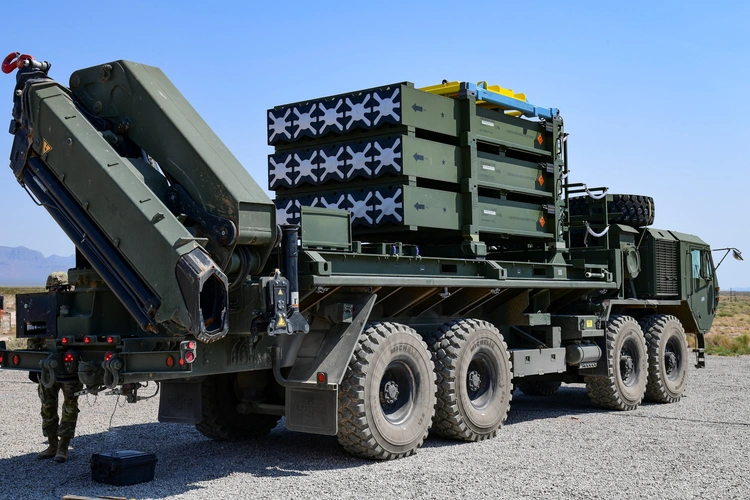
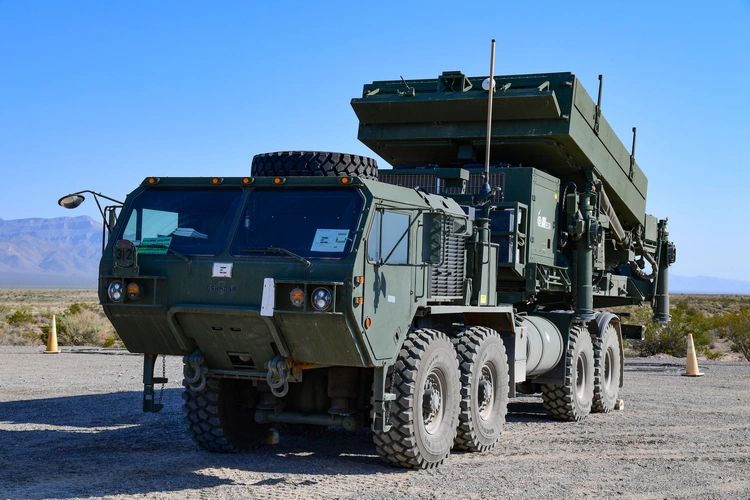
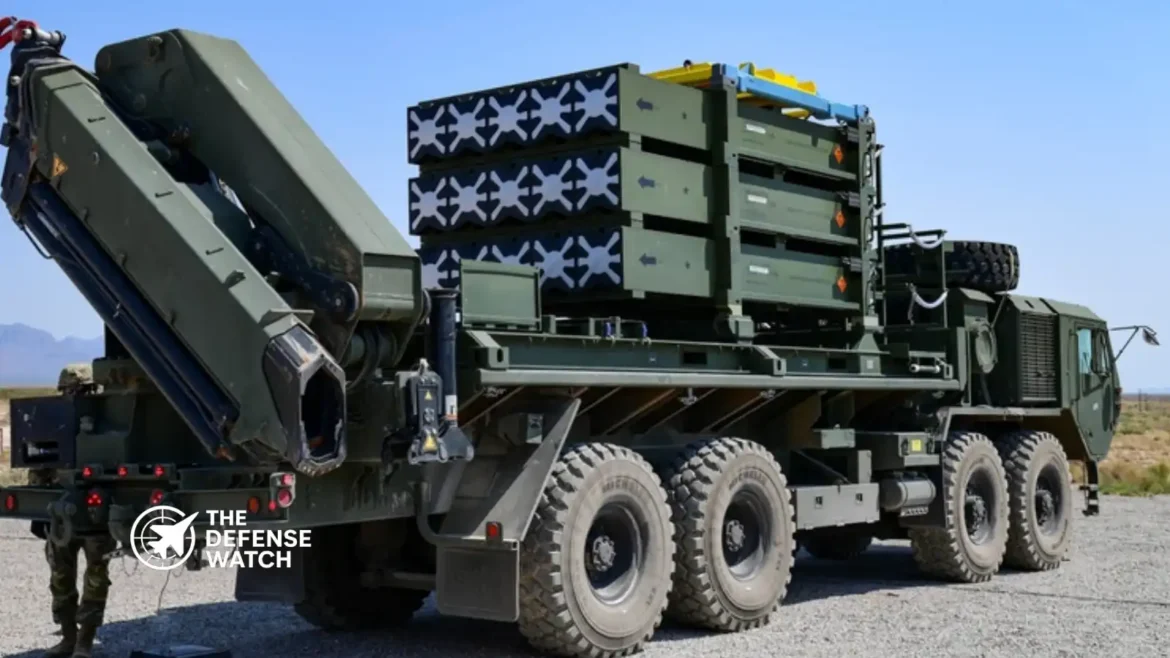
Iron Dome Turns 15: 10,000 Intercepts & Counting
Iron Dome missile defense system has crossed a milestone that few weapons platforms in modern history can claim: fifteen uninterrupted years of combat-proven performance, more than 10,000 confirmed intercepts, and an operational record that has fundamentally altered how militaries worldwide think about short-to-medium-range air defense. On April 9, 2026, Rafael Advanced Defense Systems formally marked the anniversary, underscoring the system’s evolution from a domestic Israeli solution into one of the most replicated and studied air defense concepts on the planet.
- Iron Dome conducted its first successful operational intercept on April 7, 2011, neutralizing a rocket launched from the Gaza Strip.
- The system has surpassed 10,000 combat intercepts over 15 years of active service with a reported success rate exceeding 90 percent.
- Iron Dome was developed in approximately two and a half years and is capable of engaging rockets, cruise missiles, UAVs, and other aerial threats.
- The naval variant, C-Dome, became operational in 2017 and recorded its first at-sea intercept in April 2024 aboard an Israeli Sa’ar 6 corvette.
- The United States Marine Corps has selected Iron Dome to bolster its own ground-based short-range air defense capabilities.
The Shot That Changed Everything: April 7, 2011
The clock started on April 7, 2011, when an Iron Dome battery neutralized a rocket fired from the Gaza Strip — the system’s first confirmed operational intercept. The moment was more than a technical proof of concept. It signaled a deliberate shift in Israeli national security strategy: rather than relying solely on deterrence and ground operations to suppress rocket fire, Israel would field a persistent, high-volume intercept capability designed to protect its civilian population in near-real time.
That first intercept marked a shift in Israel’s defensive approach to countering aerial threats, and the system has since been deployed across multiple large-scale operations including Protective Edge, Guardian of the Walls, Breaking Dawn, Shield and Arrow, the Swords of Iron War, and Operation Roaring Lion.
The speed of development was equally remarkable. Iron Dome was built in approximately two and a half years — an extraordinarily compressed timeline for a platform of this complexity, reflecting both the urgency of the threat environment and the depth of Israeli defense-industrial capacity.
A System Built for the Modern Threat Landscape
Iron Dome is not a single-mission interceptor. It is a short- to medium-range system designed to engage a wide range of targets, including rockets, cruise missiles, unmanned aerial vehicles, and other aerial threats under various operational conditions — capable of functioning independently or as part of an integrated, layered air defense network.

Image : Iron Dome missile defense system That multi-threat adaptability has proven decisive. In today’s conflict environment, where adversaries routinely saturate defenses with mixed salvos of unguided rockets, precision cruise missiles, and low-cost kamikaze drones, a system that can discriminate between threat types and engage selectively represents a significant operational advantage. Iron Dome’s battle management component calculates probable impact points and prioritizes intercepts against threats aimed at populated or strategically critical areas — a feature that directly contributes to its cost efficiency in high-volume engagements.
Over 15 years of service, the system has maintained a reported success rate exceeding 90 percent across more than 10,000 combat intercepts.
Leadership Voices: Confidence Backed by Battlefield Data
Rafael’s leadership did not mince words when assessing the system’s legacy.
Yuval Steinitz, chairman of Rafael, framed Iron Dome’s significance in both strategic and economic terms. He described it as “the only system capable of engaging rockets and missiles across short and medium ranges — and doing so at a cost that makes large-scale deployment feasible,” adding that it reflects the scientific and technological superiority of Israel and of Rafael’s engineers in particular.
Yoav Tourgeman, Rafael’s chief executive, pointed to the system’s continuous performance improvement as its defining characteristic. He stated that ongoing upgrades have significantly enhanced capabilities, noting that what the system can do today across the full spectrum of threats it faces exceeds what it could do at initial delivery by “an order of magnitude.” Tourgeman also credited the system with saving tens of thousands of Israeli lives over the course of its operational service.
Both statements reflect a broader truth about Iron Dome: it is not the same system it was in 2011. Iterative upgrades based on operational feedback — a process conducted in close coordination with the Israel Air Force and the Directorate of Defense Research and Development — have kept the platform ahead of an evolving threat curve that now includes precision-guided rockets, loitering munitions, and salvo tactics designed to overwhelm point defenses.
Expanding to Sea: The C-Dome Naval Variant
One of the clearest indicators of Iron Dome’s strategic staying power is the decision to extend the platform into the maritime domain. The C-Dome naval variant became operational in 2017 and conducted its first combat intercept in April 2024, aboard an Israeli Sa’ar 6 corvette.
The significance of that intercept extends well beyond Israel’s territorial waters. Naval forces globally are grappling with a rapidly deteriorating threat environment driven by cheap, proliferating anti-ship missiles and drone swarms. C-Dome’s integration aboard surface combatants offers a potential model for navies seeking affordable, high-rate intercept capability without the footprint of larger shipborne air defense systems. Its operational debut in a live conflict environment will inevitably draw close scrutiny from allied naval planners.
U.S. Adoption and International Demand
Perhaps the most telling endorsement of Iron Dome’s standing is its adoption by the United States military. The U.S. Marine Corps selected Iron Dome to enhance its own short-range air defense capabilities — a choice that reflects both the system’s combat credibility and Washington’s broader effort to address gaps in ground-based air defense following years of neglect during the counter-insurgency era.
The USMC selection also carries significant implications for allied interoperability. Iron Dome batteries operating alongside U.S. forces in a contested theater would need to integrate with American command-and-control networks, a requirement that accelerates technical cooperation between Rafael and U.S. defense industry partners and potentially opens doors to further foreign military sales.
Analysis: What Iron Dome’s 15-Year Record Reveals About the Future of Air Defense
Iron Dome’s anniversary arrives at a moment when the global air defense market is experiencing its most significant surge in demand since the Cold War. The wars in Ukraine and the Middle East have demonstrated that aerial threats — from crude artillery rockets to sophisticated cruise missiles and drone swarms — are now a fixture of modern combined-arms warfare, not an exception.
Several lessons from Iron Dome’s operational history are already shaping procurement decisions worldwide. First, the value of layered defense architecture is now empirically validated rather than theoretically argued. Iron Dome was never designed to operate alone; it functions as the lower tier of a network that includes David’s Sling and the Arrow systems for medium and long-range threats. That integrated approach, once primarily an Israeli concept, is now being adopted as a template by NATO members accelerating their own air defense investments.
Second, the cost-per-intercept question — long a vulnerability in Iron Dome’s economic case — has become less acute as adversaries increasingly deploy more expensive offensive systems. When the incoming threat is a $50,000 precision rocket rather than a $500 unguided projectile, the calculus of using a multi-thousand-dollar interceptor becomes considerably more defensible. And as Rafael continues to reduce production costs through scale and manufacturing efficiency, the system’s economics improve further.
Third, Iron Dome’s journey from a domestic emergency response to a global export product underscores how battlefield validation accelerates international adoption. No amount of laboratory testing or simulation replicates the persuasive power of a 90-plus percent success rate accumulated over 15 years and across multiple high-intensity conflicts. That record is Rafael’s most effective sales tool — and the reason allied defense ministries continue to study it closely.
What comes next will likely involve deeper integration of artificial intelligence into threat discrimination and intercept sequencing, expanded cooperation with U.S. and European partners on next-generation interceptors, and continued development of the C-Dome naval platform as maritime air defense becomes a priority concern across multiple allied navies.
Iron Dome did not just defend a country. It helped define what effective short-range air defense looks like in the 21st century — and fifteen years on, that definition is still being written.
FAQs
How many intercepts has Iron Dome made in 15 years?Iron Dome has recorded more than 10,000 combat intercepts since its first operational engagement in April 2011, maintaining a reported success rate above 90 percent.
What types of threats can Iron Dome intercept?The system is designed to engage short- to medium-range rockets, cruise missiles, and unmanned aerial vehicles. It can operate across all weather conditions and in dense threat environments.
Has the U.S. military adopted Iron Dome?Yes. The United States Marine Corps selected Iron Dome to strengthen its short-range air defense capabilities, marking a significant international endorsement of the platform.
What is C-Dome?C-Dome is the naval variant of Iron Dome developed by Rafael. It became operational in 2017 and conducted its first live combat intercept in April 2024 aboard an Israeli Sa’ar 6 corvette.
How long did it take to develop Iron Dome?Rafael developed Iron Dome in approximately two and a half years, an unusually compressed timeline for a system of its complexity and capability.
Is Iron Dome still being upgraded?Yes. Rafael conducts continuous capability upgrades based on operational experience, and company leadership has stated that the system’s current performance substantially exceeds its original specifications at the time of delivery.
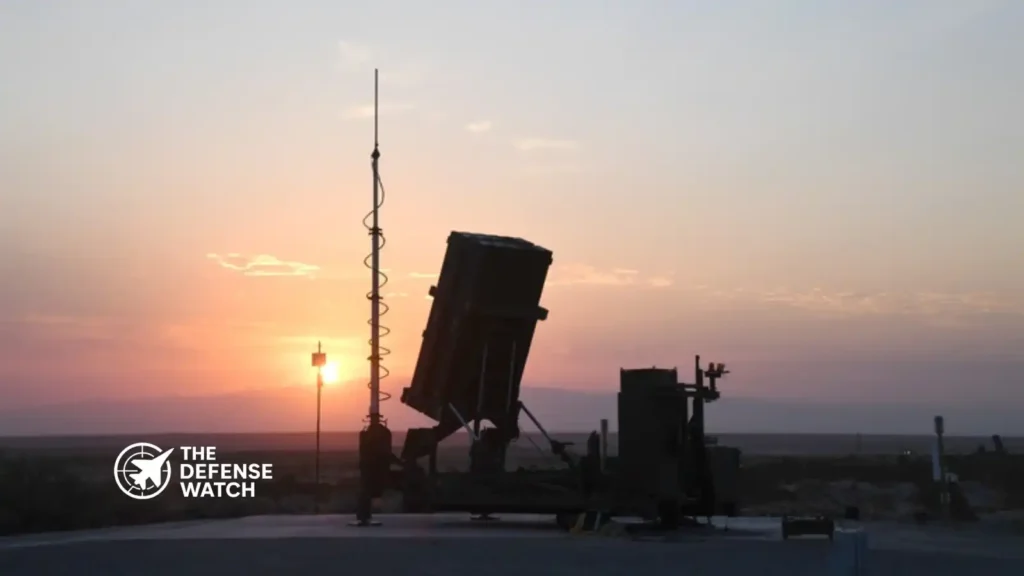
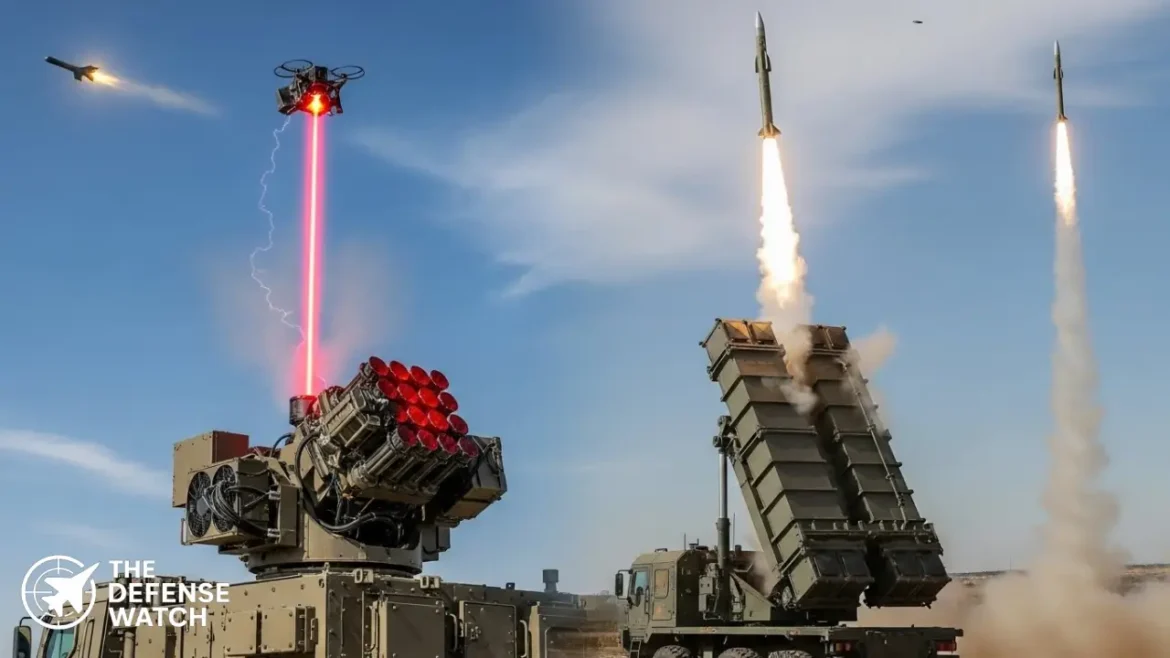
Israel Prepares to Operationalize Revolutionary Laser Defense Technology
Israel is poised to deploy the world’s first operational high-energy laser air defense system by the end of December 2025, marking a significant milestone in directed energy weapons technology. The Iron Beam vs Iron Dome comparison highlights fundamental differences in interception methodology, operational economics, and tactical flexibility that will reshape how the Israel Defense Forces counter aerial threats.
Danny Gold, head of Israel’s Directorate of Defense Research and Development, confirmed at the DefenseTech Summit that the Iron Beam system will achieve initial operational capability on December 30, 2025. The system, developed by Rafael Advanced Defense Systems and first unveiled in 2014, represents over a decade of research and testing in laser-based air defense technology.
The Iron Beam vs Iron Dome analysis reveals complementary capabilities rather than replacement systems. While Iron Dome has intercepted thousands of rockets and mortars since its 2011 deployment, Iron Beam introduces laser-based engagement that fundamentally changes the cost-benefit calculus of air defense operations.
Core Technology: Missiles Versus Directed Energy
The primary distinction in the Iron Beam vs Iron Dome comparison centers on interception methodology. Iron Beam employs high-energy lasers that travel at the speed of light, delivering concentrated thermal energy to incoming projectiles. The system uses multifunction beam directors and adaptive optics to maintain targeting precision, neutralizing threats within seconds of detection.
Iron Dome utilizes Tamir interceptor missiles launched from mobile batteries. Each interceptor must physically traverse the distance to its target, requiring flight times that range from several seconds to over a minute depending on engagement geometry. The system’s fire control radar tracks incoming threats and calculates intercept trajectories, directing missiles to kinetically destroy rockets, mortars, and unmanned aerial vehicles.

The Iron Beam laser system focuses intense heat on critical structural points of incoming projectiles, causing detonation, structural failure, or trajectory deviation. This precision engagement minimizes collateral damage and allows simultaneous targeting of multiple threats from a single emitter platform.
Iron Dome’s kinetic interception generates debris from both the interceptor and target, though the system is designed to engage threats over unpopulated areas when possible. The missile-based approach has demonstrated approximately 90 percent effectiveness across thousands of operational engagements since 2011.
Economic Calculus: Cost Per Engagement Analysis
The Iron Beam vs Iron Dome cost comparison reveals dramatic differences in operational economics. Iron Beam operates on electrical power, with Rafael Advanced Defense Systems reporting near-zero cost per interception. Each engagement consumes electricity to power the laser emitter, making sustained operations economically viable even against high-volume attacks or low-value targets like small drones.
Iron Dome interceptors cost approximately $40,000 per Tamir missile according to defense industry assessments. While highly effective, this cost structure creates economic asymmetries when engaging inexpensive rockets or mass drone swarms. A sustained rocket barrage requiring dozens of interceptors can rapidly deplete defense budgets and stockpiles.
The ‘Iron Beam’ laser-based air defense system is seen intercepting a target over southern Israel, March 2022. (Defense Ministry) The economic advantage of laser-based systems becomes particularly relevant in extended conflicts or against adversaries employing saturation tactics. Iron Beam can engage threats continuously as long as electrical power remains available, while Iron Dome requires regular resupply of interceptor missiles that must be manufactured, transported, and loaded into battery launchers.
Israel has faced criticism over defense expenditures during prolonged periods of rocket fire from Gaza and Lebanon. The Iron Beam system addresses these concerns by offering unlimited magazine depth at marginal operational cost, though initial system acquisition and maintenance expenses remain substantial.
Magazine Capacity and Sustained Operations
The Iron Beam vs Iron Dome comparison highlights fundamental differences in ammunition capacity. Iron Beam’s “magazine” consists of available electrical power, allowing continuous engagement limited only by power generation and thermal management. The system can theoretically fire dozens of shots per minute against multiple targets, with each engagement requiring only seconds of laser dwell time.
Iron Dome batteries carry between 20 and 80 Tamir interceptors depending on launcher configuration. Once depleted, the system requires reloading operations that temporarily reduce defensive capacity. During intense combat periods, Israel has experienced interceptor shortages that necessitated emergency resupply from U.S. stockpiles.
Rafael’s Iron Beam system includes variants with different power outputs optimized for specific threat types. The Lite Beam variant operates at 10 kilowatts for engaging smaller drones and mortars, while Iron Beam-M delivers over 50 kilowatts for harder targets at extended ranges. This scalability allows commanders to match system capabilities to threat environments without wasting capacity.
The sustained engagement capability proves particularly valuable against drone swarms, which have emerged as a primary tactical challenge across modern conflicts. Iron Beam can engage multiple small drones in rapid succession without ammunition concerns, while Iron Dome must carefully manage interceptor inventory when facing coordinated attacks involving dozens of unmanned systems.
Deployment Flexibility and Platform Integration
The Iron Beam vs Iron Dome operational comparison reveals significant differences in deployment flexibility. Iron Beam features modular design enabling installation on ground vehicles, naval vessels, and fixed installations. Rafael has demonstrated truck-mounted systems for mobile defense and discussed naval integration for protecting maritime assets from drone and missile threats.
Iron Dome primarily operates from truck-mounted launchers that can be relocated to meet changing threat priorities. The system includes radar and command units that must be positioned to provide coverage zones, creating logistical requirements for battery deployment. Naval variants like C-DOME and mobile configurations such as I-DOME extend operational flexibility, though the fundamental architecture remains oriented toward fixed or semi-mobile defensive positions.
The compact nature of laser emitters relative to missile launchers enables Iron Beam deployment in space-constrained environments including urban areas and forward operating bases. Future variants under development may achieve further size and weight reductions, enabling integration onto smaller platforms including unmanned ground vehicles.
Iron Dome’s operational track record includes deployments protecting Israeli cities, military installations, and critical infrastructure across varied terrain. The system has demonstrated rapid repositioning capabilities during conflicts, though movement of complete batteries requires significant logistical coordination including radar calibration and communications integration.
Engagement Speed and Precision Capabilities
The Iron Beam vs Iron Dome performance comparison shows distinct advantages in engagement timeline. Laser-based interception occurs at light speed, with beam-on-target achieved milliseconds after fire command. The system employs adaptive optics to compensate for atmospheric distortion, maintaining focus on target aimpoints throughout engagement sequences lasting three to five seconds.
Iron Dome interceptors require flight time to reach incoming threats, with engagement windows determined by target speed, trajectory, and range. The system demonstrates exceptional accuracy through advanced guidance systems and proximity fusing, but cannot overcome the fundamental physics of missile transit time. Against high-speed threats or those detected late in trajectory, available engagement time may be limited.
The precision of laser engagement allows Iron Beam to target specific components of incoming threats. Against larger drones or cruise missiles, the system can focus on control surfaces, propulsion systems, or warhead sections to ensure effective neutralization. This selective targeting capability provides commanders additional options beyond complete destruction.
Iron Dome employs fragmentation warheads that destroy incoming threats through blast effect and shrapnel. The system has demonstrated 90 percent interception success rates during operational use, with occasional failures attributed to target saturation, malfunction, or extreme trajectory parameters that complicate engagement geometry.
Environmental Limitations and Operational Constraints
The Iron Beam vs Iron Dome weather performance analysis identifies critical operational limitations for laser systems. High-energy lasers experience significant degradation in heavy cloud cover, rain, dust, and fog. Atmospheric moisture and particulates scatter and absorb laser energy, reducing effective range and potentially preventing successful engagements during adverse weather conditions.
Iron Dome operates effectively in all weather conditions, maintaining full capability during rainstorms, dust storms, and low visibility environments. The radar-guided missile system functions identically day or night, in clear or overcast conditions, providing assured defensive coverage regardless of meteorological factors.
Israel’s climate features extended dry periods favorable to laser operations, but winter rainfall and occasional dust storms from the Sahara create periods of reduced laser effectiveness. The Iron Beam system incorporates atmospheric sensors that assess engagement viability, but cannot overcome the fundamental physics of laser propagation through dense atmospheric conditions.
Military planners must account for these limitations when integrating Iron Beam into defensive architectures. The system provides exceptional capability during clear conditions but requires backup from missile-based interceptors when weather degrades laser performance. This weather dependency reinforces the complementary rather than replacement nature of the Iron Beam vs Iron Dome relationship.
Multi-Layered Defense Architecture Integration
Israeli defense strategy emphasizes layered air defense combining multiple systems optimized for different threat types and engagement altitudes. The Iron Beam vs Iron Dome comparison exists within this broader context that includes David’s Sling for medium-range threats and Arrow systems for ballistic missiles.
Iron Beam focuses on short-range threats including rockets, mortars, small drones, and anti-tank guided missiles. The system provides point defense for specific assets or areas, engaging threats that penetrate outer defensive layers or originate from close range. Its rapid engagement capability allows protection against time-sensitive targets that might evade longer-range systems.
Iron Dome covers ranges from four to 70 kilometers, intercepting short-range rockets and artillery that threaten populated areas. The system serves as the primary defense against the types of threats most commonly employed by Hezbollah and Hamas, with operational experience spanning thousands of engagements across multiple conflicts.
The integration of Iron Beam adds capability without displacing existing systems. During clear weather against suitable targets, Iron Beam provides cost-effective first-response capability. When atmospheric conditions degrade or threats exceed laser parameters, Iron Dome and other missile systems provide assured protection. This redundancy enhances overall defensive resilience.
Operational Deployment Timeline and Next-Generation Development
Israel’s December 30, 2025 deadline for Iron Beam initial operational capability represents a specific milestone in phased deployment. Defense officials have indicated that first-generation systems will focus on protecting high-value military installations and border areas, with expansion to broader coverage areas following operational validation.
Rafael Advanced Defense Systems continues developing enhanced variants including increased-power emitters and improved atmospheric compensation systems. Next-generation Iron Beam systems under development aim to address current limitations including extended range, improved bad-weather performance, and integration with unmanned platforms.
The Iron Dome system continues modernization through software updates, improved interceptors, and enhanced radar capabilities. Recent upgrades focus on countering emerging threats including advanced drones and maneuvering projectiles that complicate traditional interception approaches.
International interest in both systems remains substantial, with Iron Dome already exported to the United States and other nations evaluating acquisition. Iron Beam may follow similar export pathways pending successful operational validation and relaxation of technology transfer restrictions on sensitive directed energy weapons components.
Strategic Implications for Regional Security
The Iron Beam vs Iron Dome deployment pattern reflects evolving threat environments across the Middle East. Non-state actors increasingly employ mass drone tactics and rocket salvos designed to overwhelm traditional missile defenses through quantity rather than quality. Iron Beam’s unlimited magazine depth directly counters saturation strategies that rely on economic warfare through cheap munitions.
Regional adversaries continue developing more sophisticated threats including GPS-guided rockets, loitering munitions, and coordinated drone swarms. The combination of laser and kinetic interceptors provides Israeli forces flexible response options tailored to specific attack characteristics, potentially complicating enemy planning and reducing attack effectiveness.
The technological demonstration effect of operational laser weapons may accelerate similar programs in other nations. The United States, China, and several European countries maintain active directed energy weapons research, with Israel’s deployment potentially validating concepts that have remained largely experimental across other militaries.
Arms control implications remain unclear as directed energy weapons exist in regulatory ambiguity compared to conventional missile systems. The proliferation of effective laser air defense could reshape offensive tactics across future conflicts, potentially reducing the effectiveness of traditional rocket and mortar attacks that have characterized recent Middle Eastern conflicts.
Iron Beam vs Iron Dome: Technical Comparison Table
Specification Iron Beam Iron Dome Interception Method High-energy laser (directed energy) Tamir kinetic interceptor missiles Engagement Speed Speed of light (instantaneous) Missile flight time (seconds to minutes) Cost Per Interception Near-zero (electricity only) ~$40,000 per Tamir missile Magazine Capacity Unlimited (power-dependent) 20–80 interceptors per battery Effective Range Several kilometers (classified) 4–70 kilometers Target Types Drones, mortars, rockets, ATGMs Rockets, artillery, drones, cruise missiles Weather Limitations Degraded in rain, fog, dust, clouds All-weather capable Operational Status Initial deployment Dec 30, 2025 Operational since 2011 Success Rate Under operational evaluation ~90% (combat-proven) Platform Options Ground vehicles, naval vessels, fixed Truck-mounted, naval (C-DOME), mobile (I-DOME) Power Requirements 10 kW (Lite Beam) to 50+ kW (Iron Beam-M) Conventional launcher systems Resupply Needs Electrical power generation Physical interceptor missiles Collateral Damage Minimal (precision thermal targeting) Debris from interception Engagement Capacity Multiple simultaneous (power-limited) Limited by missile inventory Day/Night Operations 24/7 (weather permitting) 24/7 (all conditions) Developer Rafael Advanced Defense Systems Rafael Advanced Defense Systems Primary Role Point defense, high-volume threats Area defense, assured protection Export Status Not yet available Exported to U.S., others interested Analysis: Complementary Capabilities Reshape Air Defense Economics
The Iron Beam vs Iron Dome comparison ultimately reveals complementary rather than competitive systems designed for integrated operations. Iron Beam’s revolutionary economics enable guilt-free engagement of low-value targets that might be ignored due to interceptor costs, while Iron Dome provides assured all-weather protection against the full threat spectrum.
The December 2025 deployment will provide crucial operational data on laser weapon effectiveness in real combat conditions. Previous tests have occurred in controlled environments against predetermined targets, but actual combat introduces variables including coordinated attacks, electronic warfare, and adversary countermeasures designed specifically to degrade laser effectiveness.
Cost savings from laser engagement could enable Israel to sustain longer defensive operations during future conflicts without facing interceptor shortages that have complicated past military campaigns. The psychological effect on adversaries may also prove significant, as the near-unlimited defensive capacity reduces the tactical value of mass rocket attacks that have been primary weapons for groups like Hamas and Hezbollah.
Technological limitations including weather dependency and current range restrictions prevent Iron Beam from fully replacing traditional interceptors. The system works optimally in Israel’s generally arid climate but faces reduced effectiveness during winter months and dust events. Future technological advances may address these limitations, but current operational doctrine must account for environmental constraints.
The successful deployment of Iron Beam represents a milestone in directed energy weapons transitioning from experimental technology to operational systems. If the system performs as designed during combat operations, it will validate decades of research investment and potentially accelerate global adoption of laser-based air defense across military forces worldwide.
FAQs
Will Iron Beam completely replace Iron Dome in Israeli air defense?No, Iron Beam is designed to complement rather than replace Iron Dome. The laser system excels against smaller threats in clear weather conditions, while Iron Dome provides all-weather capability against the full threat spectrum. Israeli defense strategy emphasizes layered protection using multiple systems optimized for different scenarios.
What is the effective range of the Iron Beam laser defense system?While specific range figures remain classified, defense analysts estimate current Iron Beam variants engage threats at ranges of several kilometers. Range depends on atmospheric conditions, target characteristics, and laser power output. The 50+ kilowatt Iron Beam-M variant likely achieves greater effective range than the 10 kilowatt Lite Beam system.
How much does the Iron Beam system cost compared to Iron Dome?System acquisition costs for Iron Beam have not been publicly disclosed, though they likely exceed individual Iron Dome batteries due to sophisticated laser and optical components. However, Iron Beam’s near-zero cost per engagement dramatically reduces operational expenses compared to Iron Dome’s $40,000 per interceptor cost, creating long-term savings during sustained operations.
Can Iron Beam shoot down ballistic missiles?Current Iron Beam variants focus on short-range threats including drones, rockets, mortars, and anti-tank missiles. Ballistic missiles remain the responsibility of Arrow and David’s Sling systems within Israel’s layered defense architecture. Future high-power laser systems under development may eventually address certain classes of ballistic threats.
Why hasn’t the United States deployed operational laser air defense systems?The U.S. military operates several experimental directed energy weapons programs but has not yet declared any system operationally ready for combat deployment. American programs face similar technical challenges as Iron Beam including atmospheric limitations and power requirements, with ongoing testing aimed at validating performance before committing to full-scale deployment.
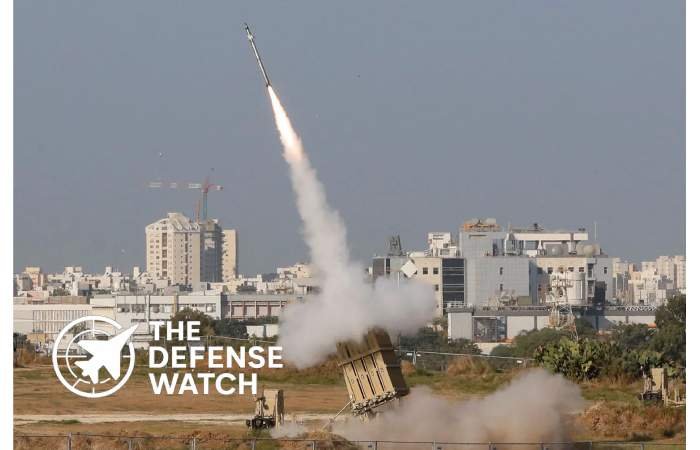

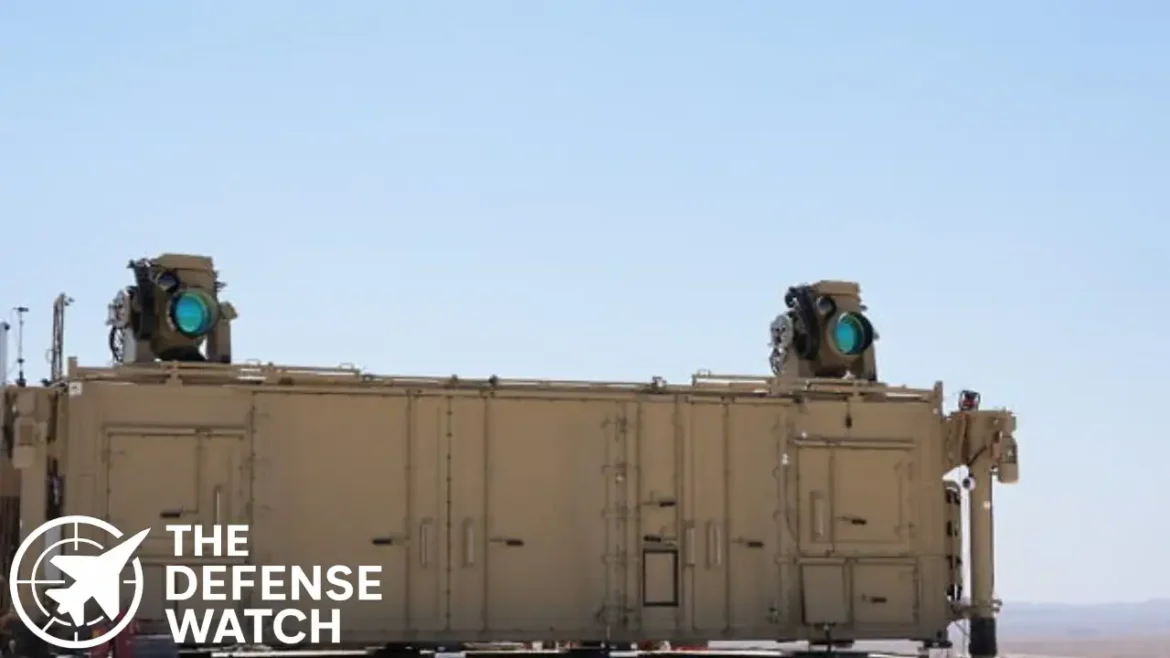
Israel’s Iron Beam 450 Laser Completes Trials, Sparks U.S. Interest in High-Energy Defense
Israel’s Rafael Advanced Defense Systems announced on September 17, 2025, that its Iron Beam 450, a high-energy laser interceptor designed to neutralize rockets and drones, has successfully completed a new round of trials. The achievement is drawing close attention from the United States, which is itself exploring directed-energy weapons as part of its evolving missile defense strategy.
The Iron Beam program has long been touted as a revolutionary addition to Israel’s layered air defense architecture, complementing systems such as the Iron Dome, David’s Sling, and Arrow. Unlike those missile-based solutions, the Iron Beam relies on a solid-state laser to burn through incoming threats at the speed of light, providing a cost-effective response to mass drone or rocket salvos.
A Breakthrough in Directed-Energy Defense
The Iron Beam 450 represents Rafael’s latest iteration of its directed-energy system, reportedly capable of generating around 450 kilowatts of laser power. This energy level is sufficient to engage targets such as rockets, UAVs, and mortar rounds within seconds of detection.
During the recent tests, the system successfully tracked, locked onto, and destroyed multiple aerial threats under varied conditions. Rafael has described the results as “operationally significant,” signaling that the system is approaching readiness for integration with Israel’s national air defense grid.
“The Iron Beam 450 trial results bring us closer to deploying the world’s first high-energy laser system for real battlefield use,” a Rafael official said following the test.
U.S. Defense Interest Rising
The U.S. Department of Defense has long monitored Israel’s progress with Iron Beam. Washington is currently investing in multiple directed-energy projects of its own, including the Army’s Indirect Fire Protection Capability-High Energy Laser (IFPC-HEL) and the Navy’s HELIOS laser weapon system for ships.
American officials view Iron Beam as a potential test case for scaling laser defenses beyond prototypes. Integrating such technology could reduce reliance on expensive interceptors like the Patriot PAC-3 or THAAD missiles, which cost millions of dollars per launch compared with the relatively negligible expense of firing a laser.
Analysts suggest that U.S.–Israeli cooperation could accelerate deployment timelines for both countries, especially in the face of rising drone warfare from state and non-state actors.
Cost and Strategic Implications
Laser weapons like Iron Beam offer two major advantages:
- Cost-efficiency – Each interception costs a few dollars in electricity compared to tens of thousands (Iron Dome) or millions (Patriot/THAAD) per missile interceptor.
- Deep magazine – As long as power supply is available, lasers can engage multiple threats without the logistical limits of missile stockpiles.
However, the technology still faces operational challenges. Adverse weather conditions such as fog, dust, or heavy rain can reduce laser effectiveness. Critics also caution that lasers are best suited for short-range defense and must be part of a wider layered system.

Despite these limitations, Israel’s progress represents a landmark in making directed-energy a practical battlefield reality rather than a perpetual “future weapon.”
Analysis: Why Iron Beam Matters
The September trials are a turning point in global defense trends. With drone swarms and low-cost rockets increasingly threatening both military and civilian infrastructure, nations are seeking affordable, scalable solutions.
For Israel, Iron Beam is set to relieve pressure on Iron Dome by intercepting cheaper and more numerous threats, preserving costly interceptors for higher-end missiles. For the U.S., the system’s success provides a valuable data point as it weighs how to integrate lasers into its homeland missile defense architecture.
As one defense analyst put it, “If Iron Dome showed the world that missile defense works, Iron Beam may prove that laser defense is finally ready for prime time.”
FAQs
A 450-kilowatt high-energy laser system developed by Rafael to intercept rockets, drones, and mortar rounds.
Iron Dome uses missile interceptors, while Iron Beam uses a directed-energy laser, making it far cheaper per shot.
While not confirmed, the U.S. is closely monitoring Iron Beam’s progress and may seek technology sharing or co-development opportunities.
Performance can be reduced by poor weather conditions, and engagement ranges are shorter compared to missile interceptors.