Executive Summary:
NASA’s X-59 experimental aircraft has successfully reached Mach 1.4 and 55,000 feet during a June 12 test flight, achieving the exact operating conditions required for future community overflight campaigns. The milestone advances NASA’s Quesst mission, which seeks to demonstrate that supersonic aircraft can fly over land while generating a quiet sonic thump rather than a disruptive sonic boom, potentially reshaping future civil aviation regulations.
NASA’s X-59 Reaches Critical Mission Conditions Flight Milestone
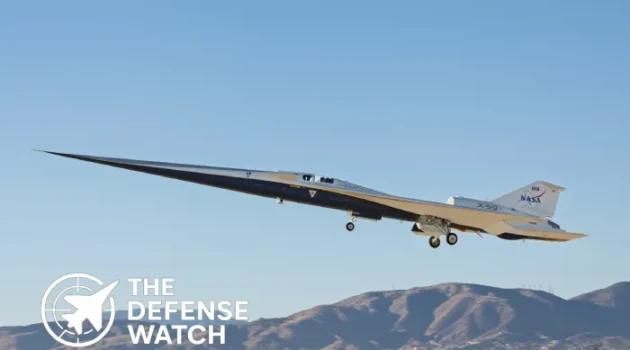
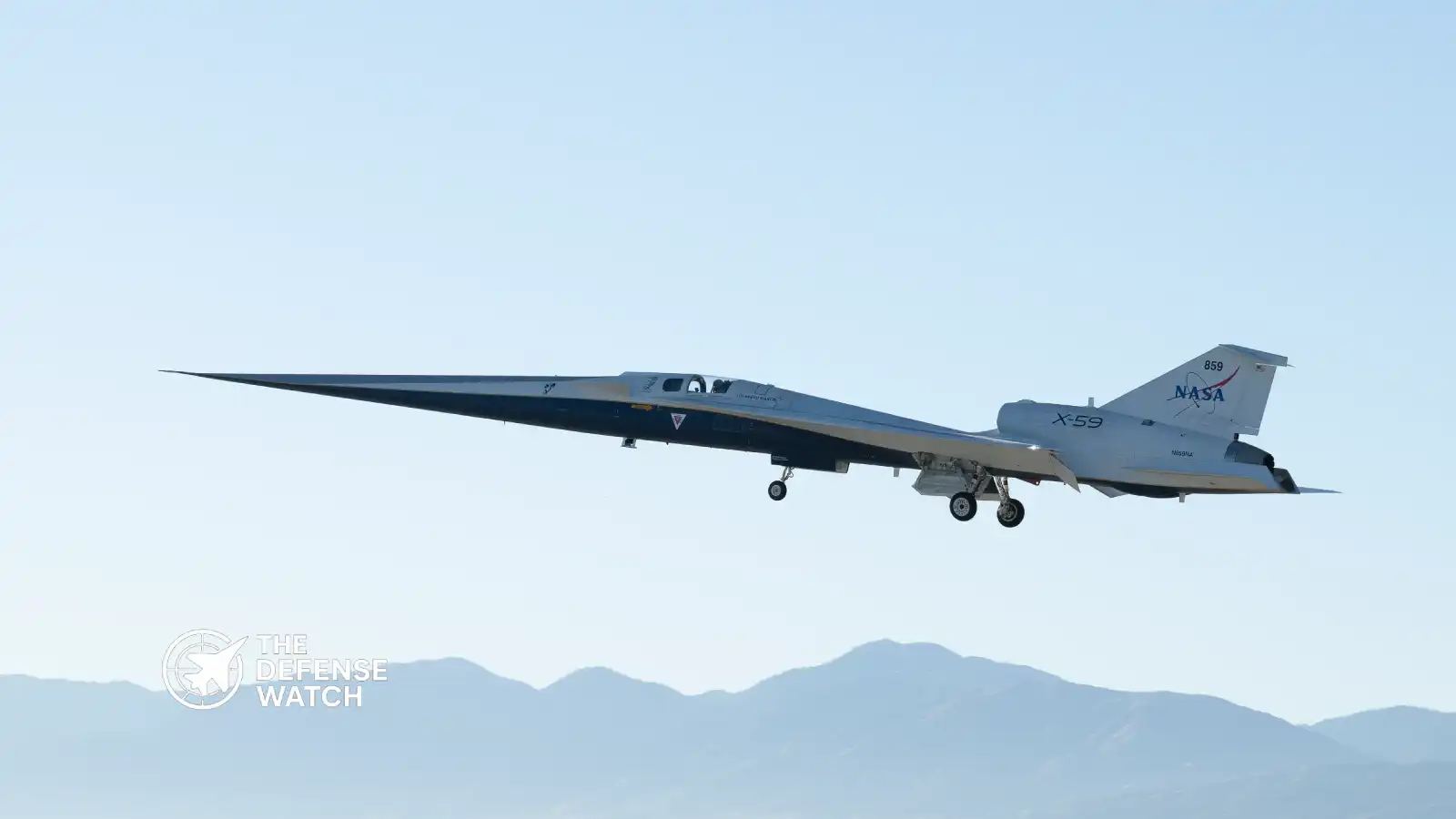
NASA’s X-59 quiet supersonic research aircraft has achieved a major program milestone by flying at Mach 1.4 and an altitude of 55,000 feet, the exact conditions planned for future community response testing under the agency’s Quesst mission. According to NASA, the achievement occurred during a June 12 flight test and represents the first time the aircraft has operated at its intended mission profile.
The milestone comes only days after the X-59 completed its first supersonic flight on June 5, when the aircraft exceeded the speed of sound for the first time by reaching approximately Mach 1.1 at 43,400 feet.
NASA officials describe the latest flight as more significant because it validates the aircraft’s ability to operate at the altitude and speed necessary for future community overflight demonstrations. Those demonstrations form the core objective of the Quesst program.
What Makes the X-59 Different?
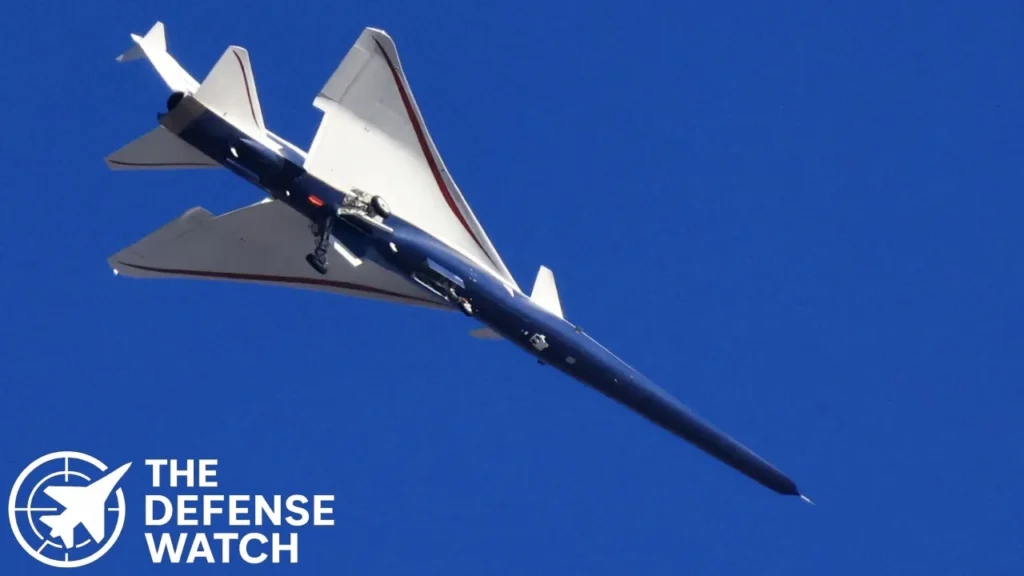
Unlike traditional supersonic aircraft such as the Concorde or military fighters, the X-59 was specifically engineered to minimize the shock waves that create loud sonic booms.
The aircraft features an unusually long and narrow nose, optimized fuselage shaping, and aerodynamic design elements intended to distribute pressure waves more evenly as the aircraft travels faster than sound. NASA’s objective is to transform the traditional sonic boom into a significantly quieter “sonic thump.”
Key X-59 specifications include:
Specification X-59 Maximum Test Speed Mach 1.4 Cruise Altitude 55,000 ft Length Nearly 100 ft Mission Quiet Supersonic Demonstrator Program NASA Quesst Prime Contractor Lockheed Martin Skunk Works The aircraft was developed by NASA in partnership with Lockheed Martin and serves as a flying laboratory rather than a prototype airliner. Its primary purpose is to collect scientific and acoustic data that regulators can use when evaluating future supersonic flight rules.
Community Overflights Are the Next Major Phase
NASA’s testing campaign remains focused on expanding the aircraft’s flight envelope and validating performance before acoustic testing begins.
The agency plans to conduct flights over multiple U.S. communities after the aircraft completes additional performance evaluations. During those flights, researchers will gather data on how people on the ground perceive the sound generated by the aircraft while operating at Mach 1.4 and 55,000 feet.
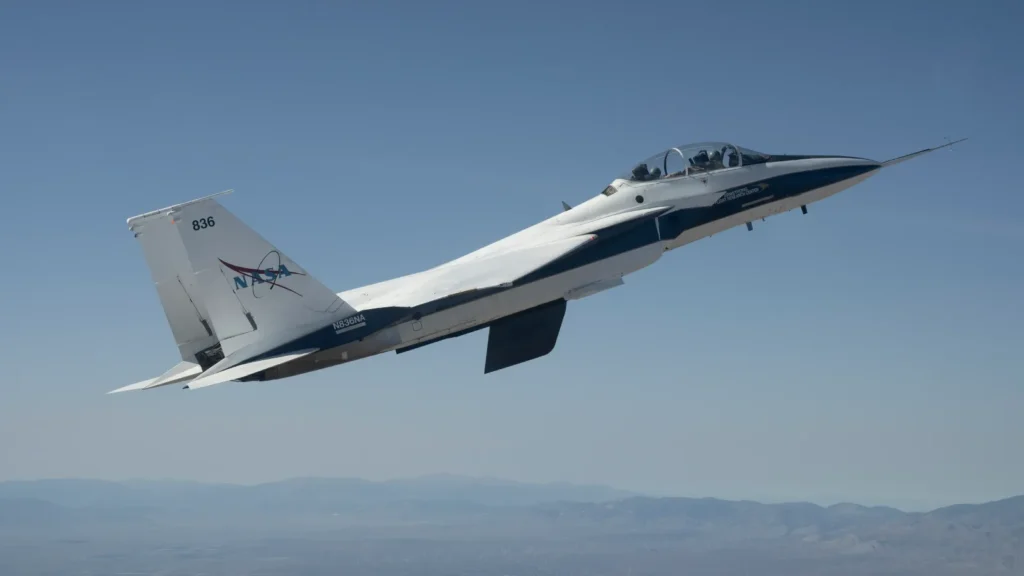
Interestingly, NASA has not yet verified the aircraft’s actual low-boom performance during recent supersonic flights. The X-59 has been accompanied by a NASA F-15 chase aircraft whose conventional sonic booms intentionally mask any sound generated by the experimental jet during early flight testing. Acoustic validation will occur during later testing phases.
Why the Program Matters for Future Aviation
The X-59 is attempting to address a regulatory challenge that has limited commercial supersonic travel for decades.
In 1973, U.S. regulators effectively prohibited routine civilian supersonic flight over land because traditional sonic booms created significant noise disturbances for communities below. That restriction remains a major barrier to the development of next-generation supersonic passenger aircraft.

Image : NASA NASA’s strategy is not to build a commercial airliner itself. Instead, the agency aims to generate scientifically validated acoustic data that could help regulators establish future noise-based standards for overland supersonic operations. The collected information will be shared with U.S. and international aviation authorities.
If successful, the effort could enable a new generation of commercial aircraft capable of dramatically reducing travel times on domestic and international routes while remaining acceptable to communities beneath flight paths.
Defense and Aerospace Implications
While the Quesst mission is fundamentally a civil aviation research effort, the technologies being evaluated have broader aerospace significance.
Low-boom aerodynamic shaping, advanced computational modeling, and high-speed flight control techniques could inform future military aircraft design. Reduced acoustic signatures during supersonic operations may offer operational advantages for reconnaissance, rapid response, and long-range strike platforms where minimizing detectability remains important.
The program also demonstrates continued U.S. leadership in experimental aerospace development through the use of X-plane research aircraft. Historically, X-plane programs have served as technology incubators for capabilities that later transitioned into operational military and civilian aviation systems.
From a strategic perspective, the X-59 represents one of the most ambitious efforts since the retirement of the Concorde to address the fundamental noise challenge that has constrained supersonic transportation for more than half a century.
Technical Challenges Still Ahead
Despite the recent milestone, the program remains in a test and validation phase.
NASA officials note that months of additional performance testing remain before the aircraft begins its community overflight campaign. Engineers must continue validating handling qualities, flight stability, and acoustic performance across a range of operating conditions.
The next critical objective will be confirming that the aircraft’s unique design consistently produces the predicted low-noise signature under real-world atmospheric conditions. Success in that phase will determine whether the collected data can support future regulatory changes governing overland supersonic flight.