

(adsbygoogle = window.adsbygoogle || []).push({});Executive Summary:
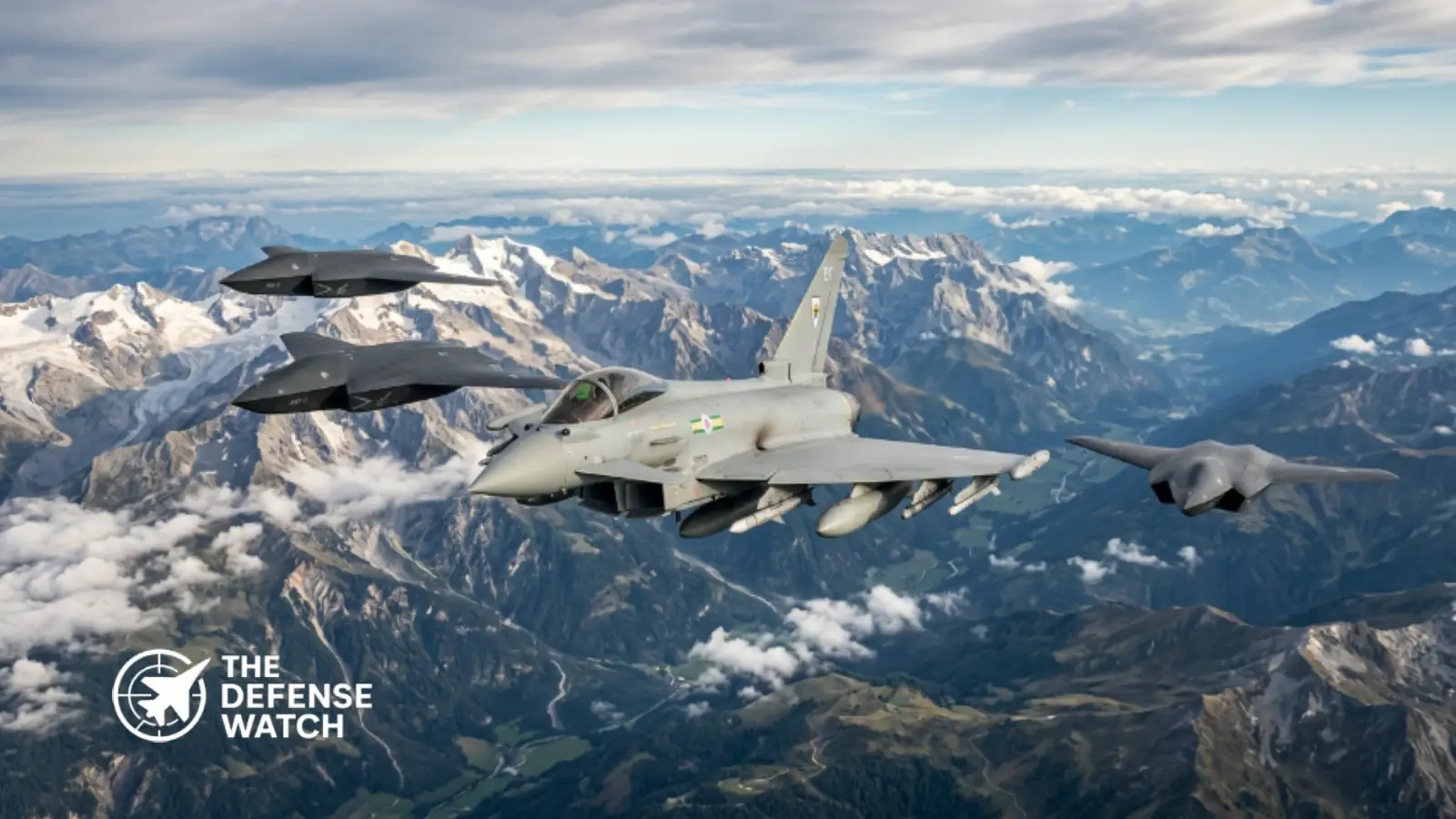
Europe is accelerating development of AI-enabled wingman aircraft, also known as Collaborative Combat Aircraft (CCA), as governments seek to strengthen military capabilities following lessons from the war in Ukraine and growing concerns about long-term security requirements. Major defense companies including Airbus, Boeing, Helsing, and General Atomics showcased competing concepts during the 2026 Berlin Air Show, highlighting a strategic shift toward manned-unmanned teaming in future air combat.
Europe Places Wingman Aircraft At The Center Of Future Airpower Plans
The emergence of wingman aircraft has become one of the most significant themes in European defense modernization efforts. At the 2026 Berlin Air Show, autonomous combat drones designed to operate alongside manned fighter aircraft dominated industry presentations and military discussions, reflecting a broader transformation in how future air campaigns may be conducted.
Known as Collaborative Combat Aircraft, these systems are designed to accompany fighter jets, carrying additional sensors, electronic warfare payloads, communications equipment, and weapons. Rather than replacing crewed aircraft, wingman platforms are intended to expand combat capacity while reducing operational risk to pilots.
The renewed focus comes as European governments continue expanding defense spending in response to the security environment created by Russia’s invasion of Ukraine and broader concerns about long-term military readiness.
What Are Collaborative Combat Aircraft?
Collaborative Combat Aircraft represent a new category of military aviation that combines artificial intelligence, autonomous flight technologies, and networked warfare concepts.
Their primary functions include:
| Capability | Operational Role |
|---|---|
| Intelligence Collection | Extends sensor coverage beyond manned aircraft |
| Electronic Warfare | Jamming and suppression of enemy systems |
| Weapons Carriage | Additional missiles and precision munitions |
| Decoy Operations | Drawing enemy fire away from crewed platforms |
| Communications Relay | Expanding battlefield networking capabilities |
| Air Defense Support | Assisting in interception and target tracking |
Unlike traditional drones operated remotely by ground crews, many future wingman aircraft are expected to perform significant portions of their mission autonomously while remaining under human command authority. This approach aims to reduce pilot workload while increasing combat effectiveness in highly contested environments.
Airbus, Helsing, Boeing, And General Atomics Compete For European Programs
Several major defense companies are positioning themselves for future European procurement programs.
Airbus Wingman
Airbus has emerged as one of Europe’s most visible advocates of the wingman concept. The company previously unveiled its Wingman design as a stealthy unmanned aircraft intended to operate alongside the Eurofighter Typhoon and future combat aircraft. Planned missions include reconnaissance, electronic attack, air-to-air combat support, and strike operations.
Boeing MQ-28 Ghost Bat
Boeing continues promoting the MQ-28 Ghost Bat, originally developed in Australia. The aircraft is among the most mature loyal wingman programs currently flying and is expected to enter operational service later this decade. Reuters reported that Germany is evaluating the platform as part of its future force structure discussions.
- (adsbygoogle = window.adsbygoogle || []).push({});
Helsing’s AI-Centric Approach
German defense technology company Helsing is emphasizing software-defined autonomy and artificial intelligence as key differentiators. Its approach aligns closely with Europe’s desire for sovereign control over critical AI systems and military decision-making architectures.
General Atomics Expansion
General Atomics continues promoting advanced CCA concepts derived from its long experience in unmanned aviation. The company remains one of the leading competitors in both U.S. and allied collaborative combat aircraft programs.
Strategic Drivers Behind Europe’s Wingman Aircraft Push
Several strategic factors are accelerating European investment.
Lessons From Ukraine
The war in Ukraine has demonstrated the growing influence of unmanned systems across the battlefield. Drones now perform intelligence gathering, strike missions, electronic warfare tasks, and air defense support roles at a scale rarely seen in previous conflicts. These developments have reinforced military interest in integrating autonomous systems into future air operations.
Pressure To Expand NATO Capabilities
European NATO members are facing increasing expectations to contribute more airpower and military capabilities. Recent statements from senior alliance officials have highlighted the need for greater European contributions in both manned and unmanned aviation assets.
Defense Industrial Sovereignty
A major political objective behind many European programs is reducing dependence on foreign military technologies. Wingman aircraft offer an opportunity for Europe to develop indigenous autonomy software, mission systems, sensors, and electronic warfare capabilities while strengthening domestic defense industries.
(adsbygoogle = window.adsbygoogle || []).push({});Challenges Facing European Wingman Programs
Despite growing momentum, significant obstacles remain.
Program Fragmentation
Europe continues to struggle with defense industrial fragmentation. The difficulties surrounding the Future Combat Air System (FCAS) and disagreements within other multinational programs highlight the challenges of coordinating large-scale aerospace projects across multiple nations and companies.
Engine And Supply Chain Constraints
Industry studies have identified a shortage of suitable European-made small turbofan engines for future loyal wingman platforms. Dependence on export-controlled technologies remains a concern for governments seeking greater strategic autonomy.
AI Integration And Certification
Building autonomous aircraft capable of operating safely alongside crewed fighters remains a complex technical challenge. Developers must validate artificial intelligence systems, ensure secure communications, and establish rules governing autonomous behavior in combat environments.
These requirements will likely extend development timelines and increase certification costs before operational deployment becomes possible.
Why Wingman Aircraft Matter For Future Air Warfare
The military significance of wingman aircraft extends beyond Europe.
Future fighter fleets are expected to become increasingly expensive and difficult to replace. Collaborative Combat Aircraft offer a potential solution by allowing a single crewed fighter to command multiple autonomous aircraft, effectively multiplying combat mass without proportionally increasing pilot requirements.
For example, a formation consisting of one fighter and several autonomous wingmen could conduct reconnaissance, electronic attack, missile engagements, and decoy operations simultaneously. This distributed approach complicates enemy targeting while expanding operational flexibility.
The concept also aligns with emerging U.S. Air Force doctrine, which views Collaborative Combat Aircraft as a central component of future air superiority operations. European adoption suggests growing convergence among Western air forces regarding the future structure of combat aviation.
Outlook
Operational deployment of European wingman aircraft remains several years away. However, the Berlin Air Show demonstrated that autonomous combat aircraft have moved from conceptual discussions into active procurement and industrial competition.
As defense budgets rise and military planners seek affordable ways to increase combat capacity, Collaborative Combat Aircraft are increasingly viewed as a critical element of future airpower. The race now centers not on whether wingman aircraft will enter service, but on which companies and nations will shape the next generation of manned-unmanned air combat systems.

