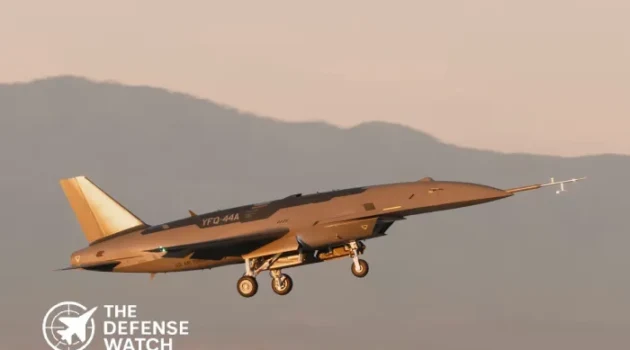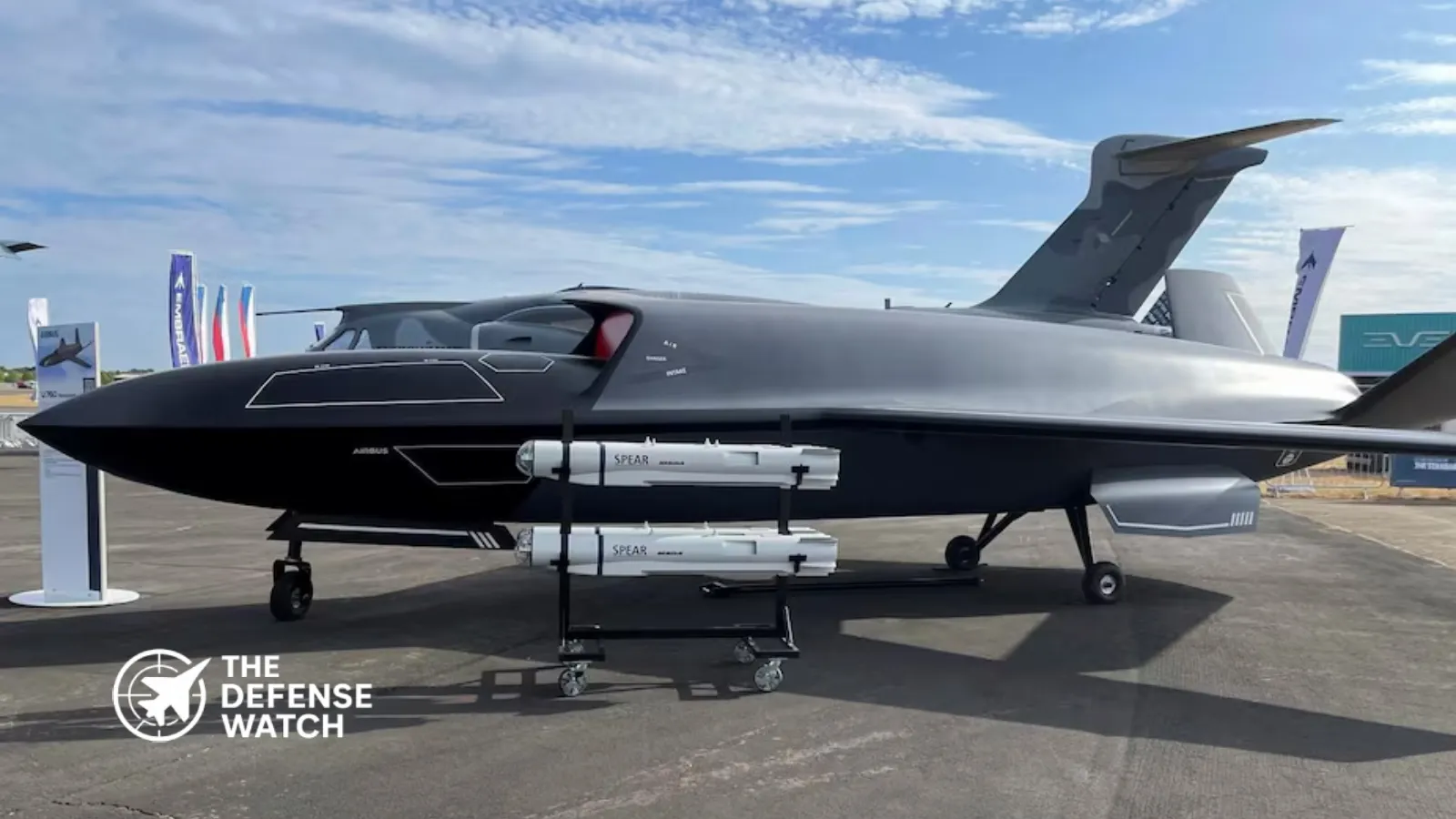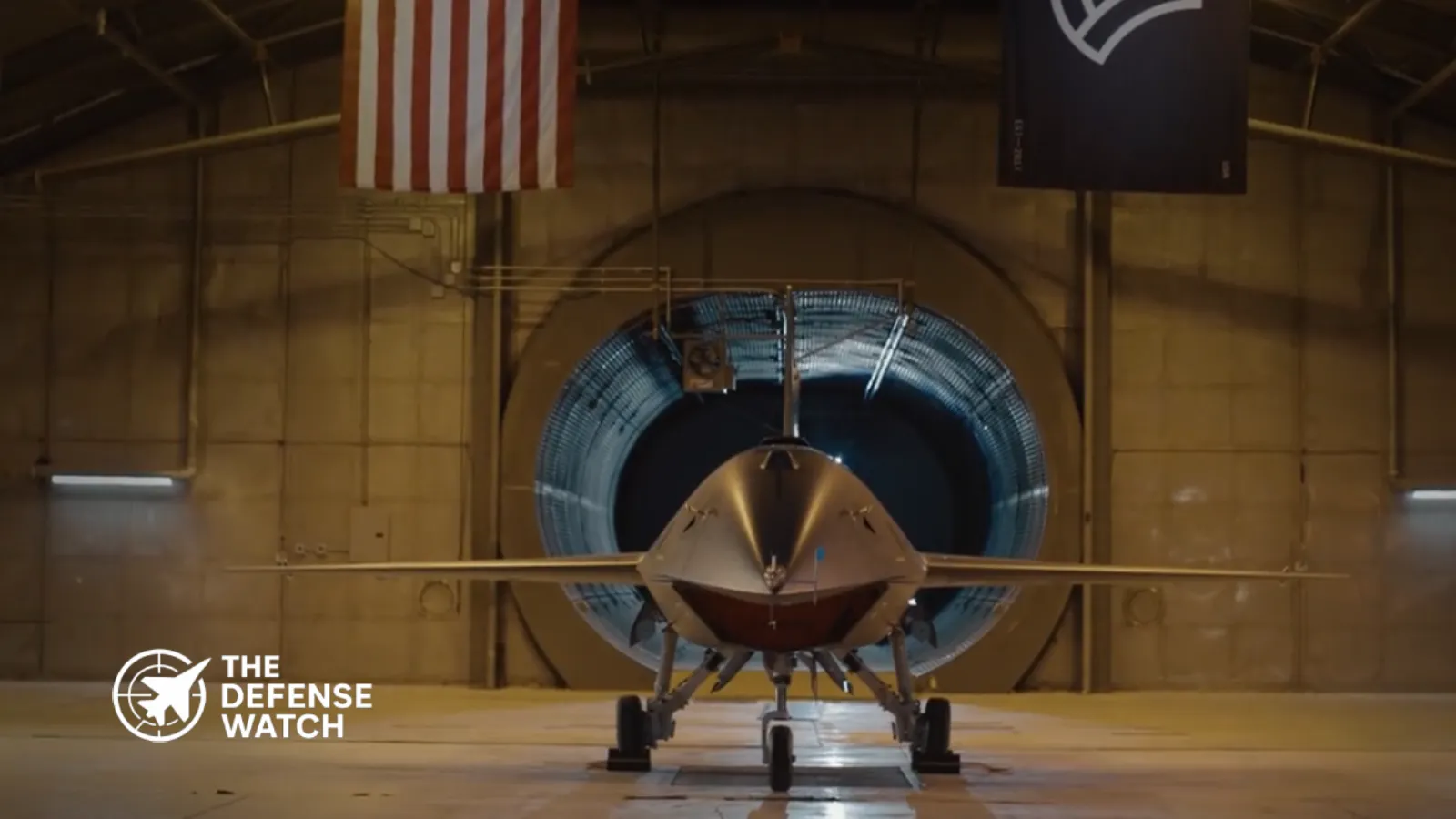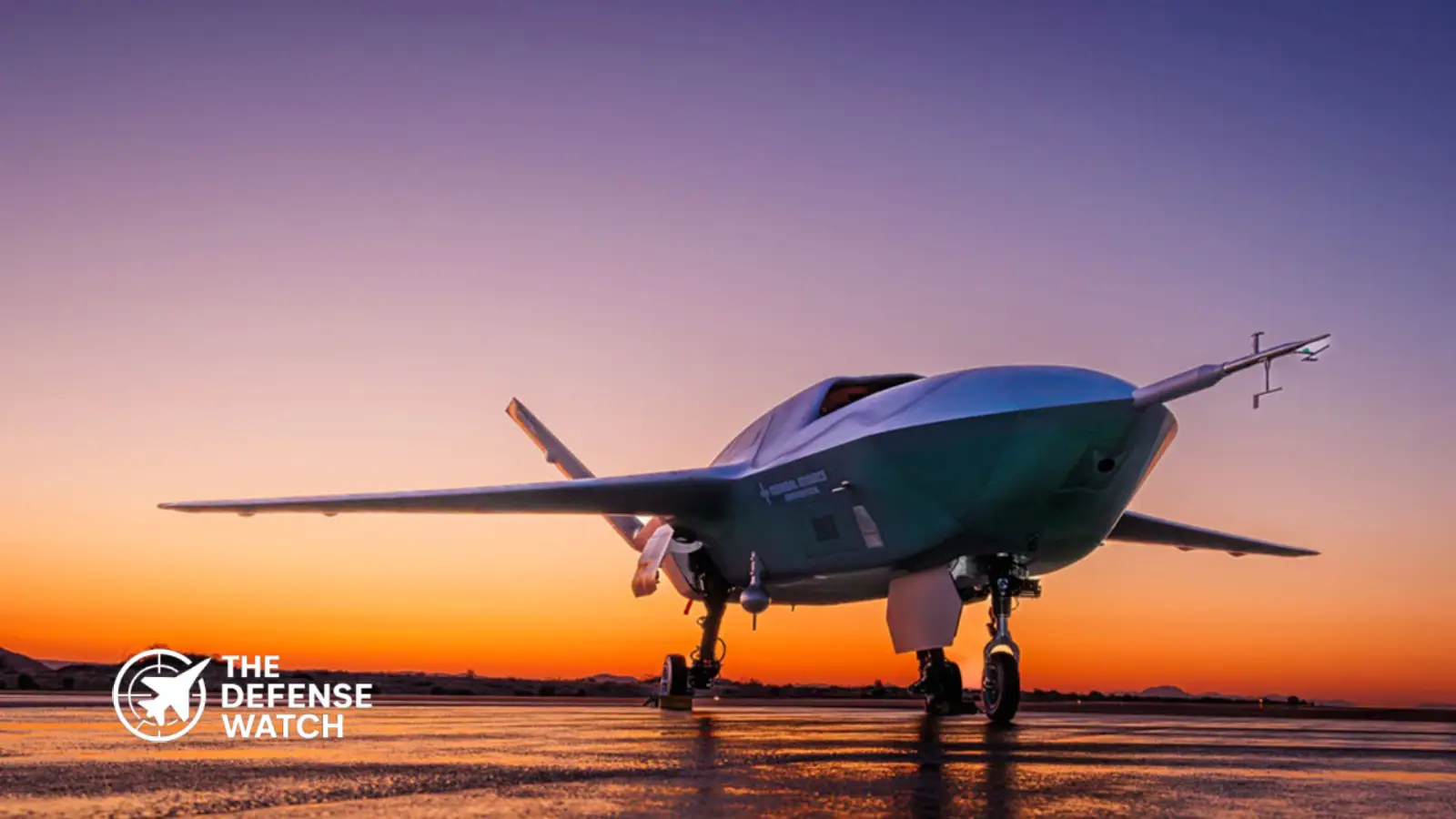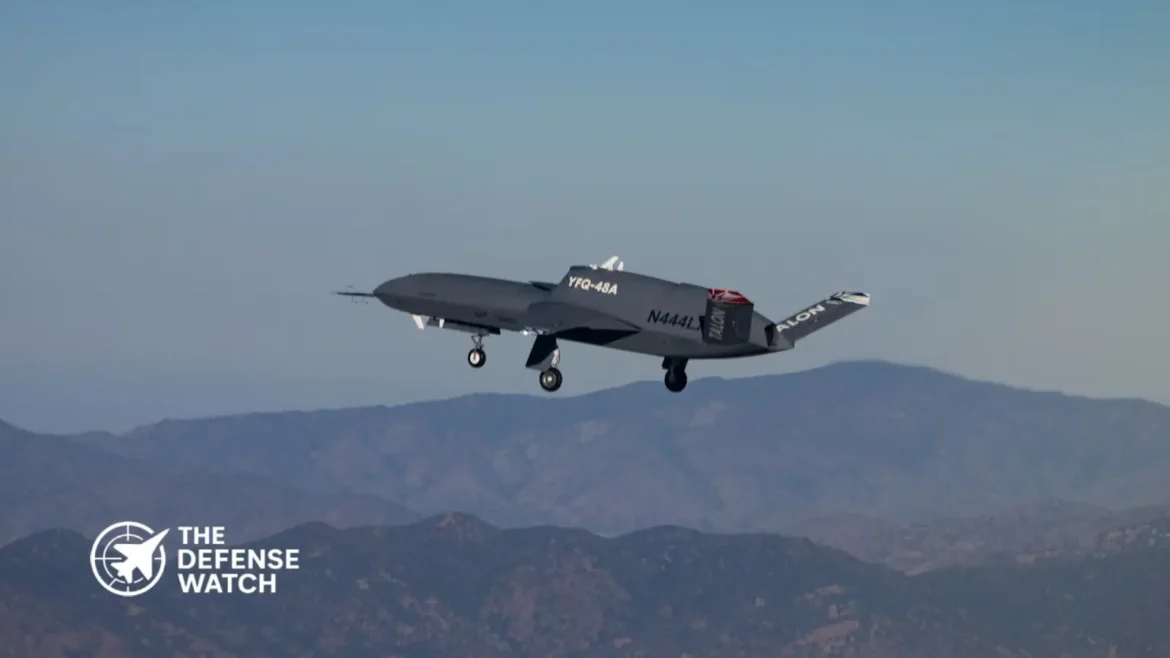
YFQ-48A Talon Blue Completes Autonomous Flight
Northrop Grumman’s YFQ-48A Talon Blue has completed its first reported fully autonomous flight, according to reporting published October 3, 2026. The company-funded aircraft reportedly completed taxi, takeoff, in-flight maneuvering and landing without a pilot directly controlling the aircraft.
The milestone adds a flight-tested aircraft to Northrop Grumman’s Project Talon autonomy portfolio and gives the company another data point as it develops an autonomous aircraft for the U.S. Air Force’s evolving Collaborative Combat Aircraft requirements.
The distinction between the aircraft’s development status and the Air Force’s procurement program remains important. The Air Force designated Northrop Grumman’s Talon prototype as YFQ-48A in December 2025, describing it at the time as a semi-autonomous prototype and a contender within the CCA effort. The aircraft remains a Northrop Grumman-funded development rather than an aircraft selected for Air Force production.
From autonomous taxiing to flight
Talon Blue had already demonstrated autonomous ground operations before reaching the flight milestone. In May 2026, Northrop Grumman reported that the aircraft had completed autonomous taxi testing, a step intended to validate its ability to control basic aircraft functions without conventional pilot input.
The progression is significant from an engineering standpoint because autonomous taxiing and autonomous flight test different parts of the system. Once airborne, the aircraft must manage flight control, navigation, trajectory changes and recovery while maintaining safe operation throughout the flight.
Northrop Grumman has described Talon Blue as an aircraft designed around autonomy rather than as a conventional remotely piloted platform to which autonomous functions were added later. Company material identifies independent mission execution, sense-and-avoid functions and human-autonomy teaming as areas the broader Project Talon effort is intended to develop.
The reported flight therefore matters less because it proves that an aircraft can take off without a pilot, and more because it moves the autonomy architecture into a more demanding flight environment.
A different path into the CCA competition
Northrop Grumman’s approach differs from the first CCA Increment 1 procurement path. In June 2026, the Department of the Air Force awarded Increment 1 engineering, manufacturing and production contracts to General Atomics and Anduril for their CCA aircraft. Northrop Grumman was not among the two companies selected for those production contracts.
Instead, Northrop Grumman has continued investing in Talon Blue while pursuing opportunities in subsequent CCA competitions. The company’s 2026 investor materials said the YFQ-48 designation allowed it to continue testing its offering and progress toward Increment 2 opportunities.
That makes the company-funded nature of Talon Blue central to understanding the program.
Northrop Grumman is effectively using its own investment to mature the aircraft, flight autonomy and manufacturing approach before a future government selection. The strategy can provide additional test data without waiting for a new production contract, although the flight milestone by itself does not establish that the aircraft will enter Air Force service.
The aircraft is part of a wider autonomy portfolio
Talon Blue is not being developed in isolation. Northrop Grumman’s Project Talon portfolio also includes Talon IQ, an autonomous testbed based on the Scaled Composites Model 437, and Prism mission autonomy software.
Talon IQ provides a separate environment for integrating and testing autonomy software. Northrop Grumman says the testbed has accumulated experience across its broader autonomous flight work, which the company puts at more than 500,000 autonomous flight hours.
The company has also used Talon IQ to demonstrate third-party autonomy software. In 2026, Shield AI’s Hivemind software was flown on the Model 437-based testbed, illustrating the broader emphasis on modular autonomy rather than tying every capability to a single software stack.
That approach has particular relevance to the Air Force’s CCA acquisition model. In June, the Department of the Air Force established a six-vendor marketplace for mission autonomy software, including Northrop Grumman, while pursuing an architecture intended to separate software from the physical aircraft.
The practical objective is to make autonomy software easier to update, test and potentially move between compatible aircraft. For CCA development, that could reduce the risk of treating the airframe and autonomy system as one inseparable procurement package.
Manufacturing is part of the Talon proposition
Northrop Grumman is also using Talon Blue to pursue changes in aircraft manufacturing.
The company says feedback from customers led to reductions in part count and aircraft weight, while its design approach emphasizes modular manufacturing and shorter development timelines. Public information does not provide enough verified detail to establish a production cost or manufacturing rate for Talon Blue, so claims about affordability should remain relative rather than expressed as a specific price advantage.
This is important because affordability is a core issue in the CCA concept. The Air Force is pursuing uncrewed aircraft that can expand the number of available combat platforms while remaining sufficiently affordable to procure and sustain at scale. The service has stated an intention to acquire approximately 1,000 combat-capable CCAs as part of its broader force planning.
The YFQ-48A therefore has to demonstrate more than autonomous flight. Any future competition would also have to address manufacturing maturity, sustainment, mission-system integration, communications, weapons integration and the ability to operate safely alongside crewed aircraft.
Autonomy still has operational limits to solve
A fully autonomous test flight should not be interpreted as proof that an aircraft is ready to conduct unrestricted combat missions.
Operational autonomy requires reliable behavior across conditions that are more complicated than a controlled developmental flight. An autonomous CCA would need to maintain safe separation from other aircraft, respond to changing mission conditions, operate with resilient communications and navigation, and provide predictable behavior to human operators.
Electronic warfare creates another layer of difficulty. An aircraft designed to operate in contested airspace cannot assume that communications, navigation or external data links will remain continuously available.
Northrop Grumman has identified secure communications, sense and avoid, AI predictability, verification and human-machine collaboration as major engineering challenges for autonomous aircraft operating alongside crewed platforms.
Those issues are particularly relevant to the Air Force’s CCA architecture, where autonomous aircraft are intended to extend the reach and flexibility of crewed fighters rather than operate as independent replacements for them.
What the flight demonstrates
The YFQ-48A’s reported autonomous flight provides evidence that Northrop Grumman has moved Talon Blue beyond ground testing and into airborne autonomy demonstrations. That is a meaningful development milestone for a company-funded aircraft that received an official Air Force designation less than a year ago.
It does not, however, establish an Air Force procurement decision, an operational deployment date or a production order.
The next technical milestones will be more revealing. Demonstrations involving increasingly complex mission behaviors, human-machine teaming, sense and avoid, mission autonomy and weapons integration would provide a clearer indication of how far Talon Blue can progress from an autonomous flight demonstrator toward a competitive CCA offering.
For now, the significance of the YFQ-48A lies in the development path. Northrop Grumman is using company investment, an autonomous testbed ecosystem and a purpose-built aircraft to mature technologies that could be relevant to future U.S. Air Force CCA competitions. The latest flight shows that approach has reached an airborne testing stage, while the aircraft’s eventual procurement status remains unresolved.
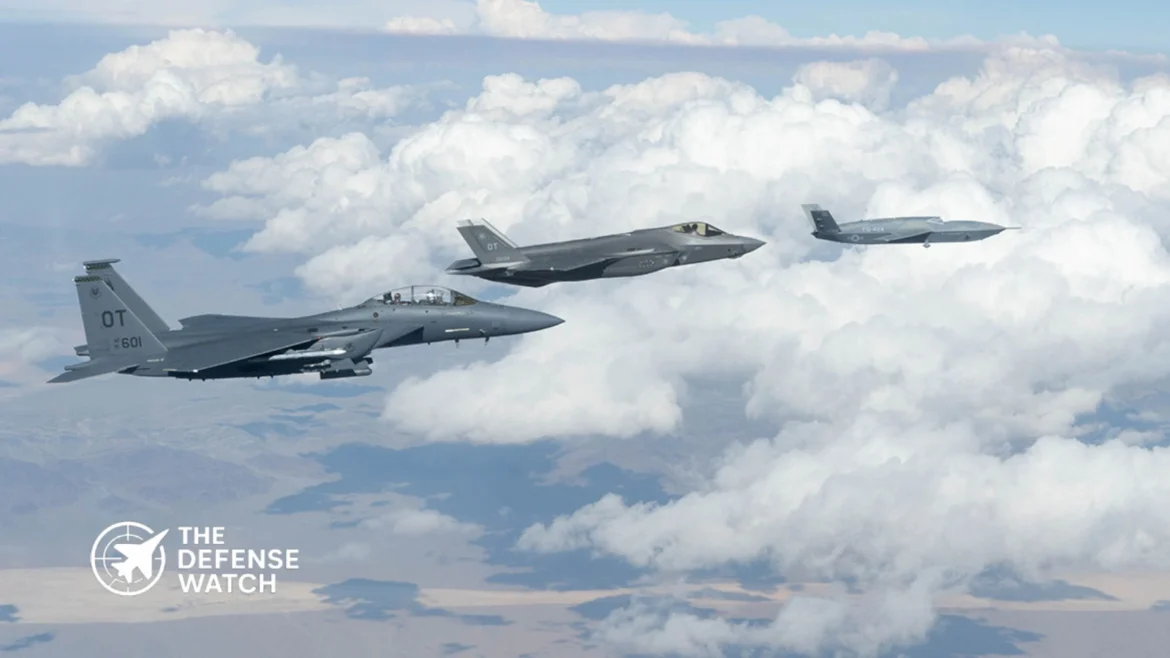
Executive Summary
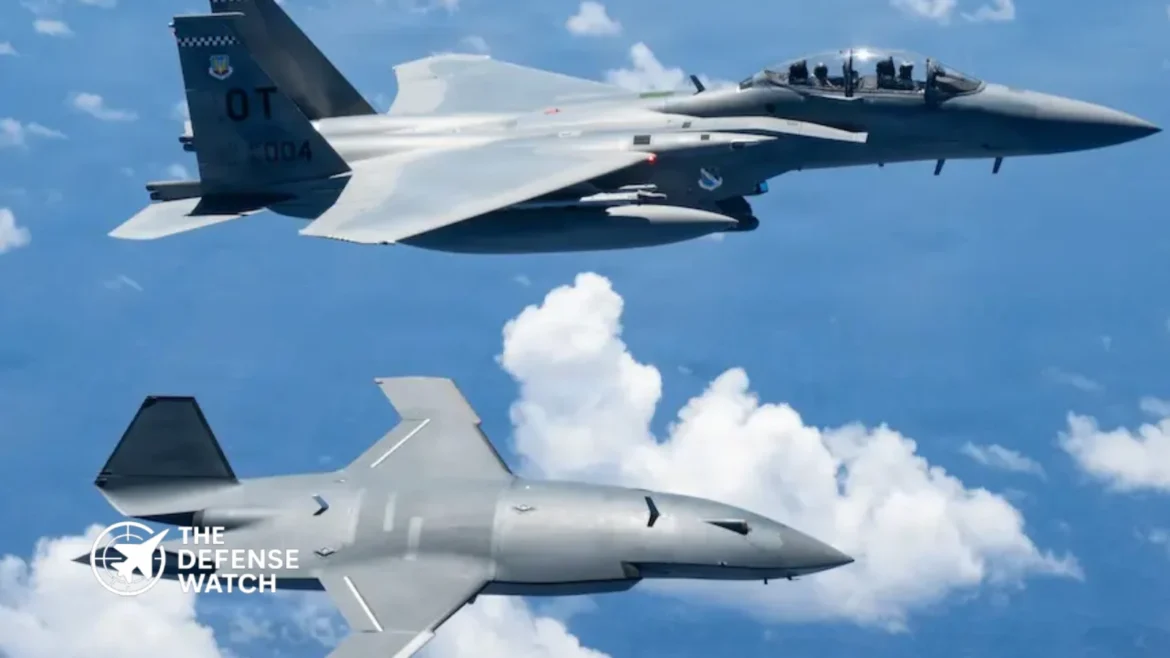
- General Atomics has released an image showing an FQ-42 Vengeance Collaborative Combat Aircraft flying alongside an F-35A Lightning II and F-15E Strike Eagle. The company did not disclose when the formation flight occurred.
- The aircraft is now operating in the U.S. Air Force’s CCA test and evaluation effort at Creech Air Force Base, Nevada. The Air Force has placed the FQ-42 and Anduril FQ-44 into Increment 1 production and plans to have 500 combat-ready, semi-autonomous CCAs by 2032, within a broader planned fleet of about 1,000 aircraft.
- The formation flight should not be interpreted as proof that the F-35 or F-15E already controlled the FQ-42 during the sortie. The more important milestone is the transition from independent CCA flight testing toward the software, communications and command-and-control architecture required for crewed-uncrewed teaming.
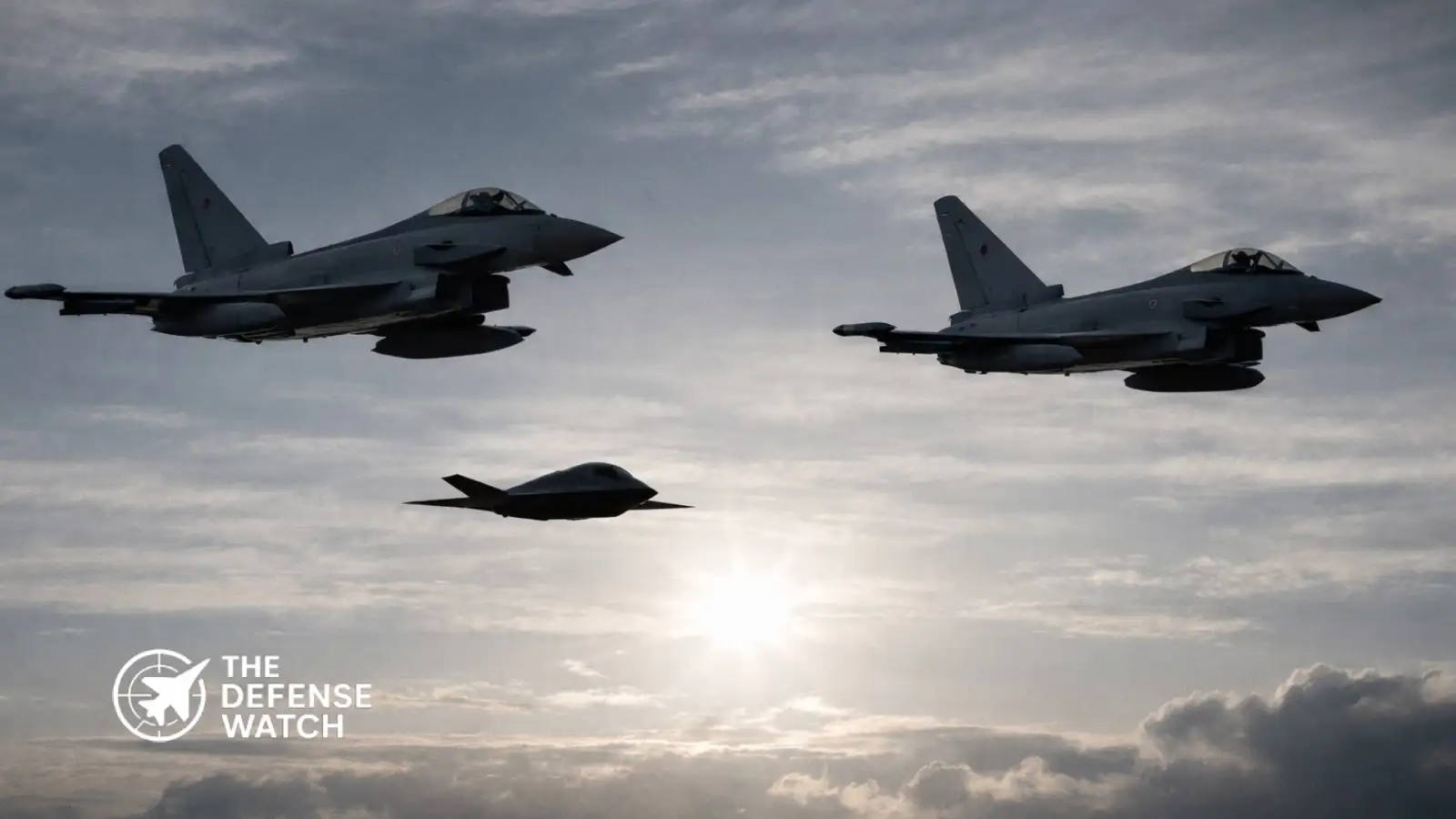
General Atomics Aeronautical Systems has released an image of its FQ-42 Vengeance flying alongside a U.S. Air Force F-35A Lightning II and F-15E Strike Eagle, providing a visible demonstration of how the service’s new Collaborative Combat Aircraft are being integrated into an environment with existing crewed fighters.
The photograph was released on Sept. 21, one day after General Atomics announced that another FQ-42 had arrived at Creech Air Force Base, Nevada, on Sept. 18 for continued test and evaluation. GA-ASI did not identify the date or circumstances of the formation flight shown in the photograph.
The distinction matters. Flying in formation with an F-35 or F-15E demonstrates that the aircraft can operate in the same airspace during testing, but it does not by itself demonstrate that a crewed fighter was controlling or tasking the FQ-42. The Air Force’s larger objective is to establish a system in which semi-autonomous aircraft can receive and execute tasks as part of a wider combat formation.
That transition could become one of the most important parts of the CCA program.
FQ-42 Moves Into a New Phase of Testing
The FQ-42, now officially named Vengeance by the Air Force, is one of two aircraft selected for the first increment of the service’s Collaborative Combat Aircraft program. The other is Anduril’s FQ-44 Fury. The Air Force officially announced both names on Sept. 14.
The service says the CCA program is intended to provide additional combat mass while extending the reach, awareness and survivability of crewed aircraft in contested environments. Secretary of the Air Force Troy Meink said the service plans to have 500 combat-ready, semi-autonomous aircraft by 2032 and an overall fleet of about 1,000.
The June 2026 production decision marked another major step. The Department of the Air Force moved the FQ-42 and FQ-44 into Increment 1 production while also establishing a competitive marketplace for mission-autonomy software.
This is significant because the CCA concept is not simply about building another unmanned aircraft.
It is about connecting aircraft, autonomy software, human operators, sensors and weapons into a larger combat system.
What the FQ-42 Formation Flight Actually Shows
The photograph provides useful evidence, but it should be interpreted carefully.
GA-ASI has confirmed that the FQ-42 at Creech will continue test and evaluation activities with the Air Force. The company says the work will include experimentation intended to advance CCA operations, including demonstrations derived from previous company testing using the MQ-20 Avenger as a CCA surrogate.
The Aviationist reported that the FQ-42 and FQ-44 are operating with the Air Force’s Experimental Operations Unit and that the aircraft currently use their own mission autonomy systems while operating alongside crewed aircraft.
That creates three distinct levels of CCA integration:
| Development stage | What it means |
|---|---|
| Formation flight | CCA operates alongside crewed aircraft |
| Networked experimentation | Aircraft exchange information within a common operational environment |
| Collaborative control | Crew can assign tasks that the CCA executes through its autonomy system |
The first stage is increasingly visible. The third is the operational objective.
The difference is important because autonomy is not simply an autopilot function. A combat CCA must be capable of interpreting authorized tasks, navigating, maintaining appropriate formation or tactical geometry, responding to changing conditions and operating within human-defined constraints.
The Air Force’s command-and-control work is therefore as important as the aircraft itself.
The FQ-42 and FQ-44 Are Taking Different Paths to the Same CCA Objective
The first CCA increment has created a direct competition between two different aircraft designs.
General Atomics’ FQ-42 is based on the company’s work with the XQ-67A Off-Board Sensing Station and is designed around a low-observable, air-combat-oriented configuration. GA-ASI has described the aircraft as a fifth-generation uncrewed fighter with an internal weapons bay and features intended to improve survivability.
Anduril’s FQ-44 Fury represents the other Increment 1 design. The Air Force’s decision to move both aircraft forward is important because the CCA program is intended to create combat capability at scale rather than depend on a single traditional fighter development model.
The comparison is better understood through architecture than through claims about which aircraft is universally superior.
| Area | FQ-42 Vengeance | FQ-44 Fury |
|---|---|---|
| Manufacturer | General Atomics Aeronautical Systems | Anduril |
| CCA increment | Increment 1 | Increment 1 |
| Air Force designation | FQ-42 | FQ-44 |
| Official name | Vengeance | Fury |
| Intended role | Semi-autonomous collaborative combat aircraft | Semi-autonomous collaborative combat aircraft |
| Current status | Test and evaluation, Increment 1 production | Test and evaluation, Increment 1 production |
| Publicly confirmed formation activity | F-35A and F-15E | F-35A |
| Public performance figures | Limited | Limited |
Exact range, speed, payload, radar cross-section and unit-cost figures for the operational FQ-42 should not be treated as confirmed unless released by the Air Force or General Atomics.
That information gap is important. The program’s operational value cannot be established from photographs alone.
Why the F-35 Connection Matters
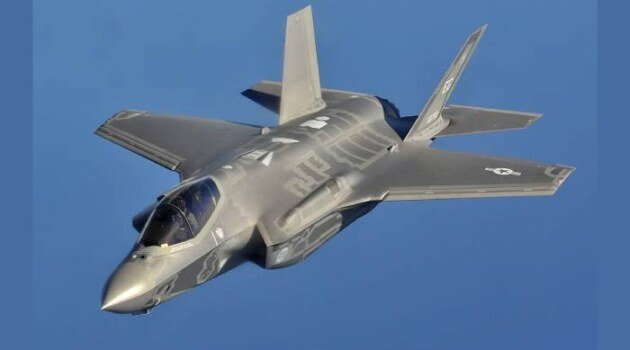
The F-35A is particularly relevant to the CCA concept because its role extends beyond conventional fighter missions.
The aircraft’s sensors, communications systems and ability to operate in highly contested environments make it a logical platform for experimentation with crewed-uncrewed cooperation. The CCA program is designed to complement existing fifth-generation fighters as well as future platforms.
The objective is not necessarily to make the F-35 remotely fly another aircraft.
A more useful model is distributed tasking.
A crewed fighter could retain responsibility for the overall mission while an autonomous aircraft performs a defined task within established rules. Depending on the final operational architecture, those tasks could involve sensing, escort, air combat, electronic warfare, communications support or weapons employment.
The exact operational task set for the FQ-42 remains under development.
That makes the current formation flight a test of integration rather than proof of a mature operational teaming capability.
Command and Control May Be the Harder Problem
The Air Force has already begun testing the infrastructure needed to control and support CCAs outside traditional fixed-base operations.
In August, the Department of the Air Force completed prototype evaluations of its Portable Command and Control Enclave, or C2E. The system is intended to provide a deployable command-and-control capability for semi-autonomous aircraft in austere operating environments.
The service also conducted field demonstrations at Springfield-Beckley Air National Guard Base in Ohio involving five industry vendors. The tests examined rapidly deployable C2E concepts in an expeditionary setting.
This points to a broader lesson from the CCA program.
A large fleet of autonomous aircraft cannot depend exclusively on conventional centralized infrastructure.
If CCAs are expected to operate from dispersed locations, their command networks must remain usable despite degraded communications, changing basing locations and contested electromagnetic conditions.
That makes resilient communications, autonomy behavior and human-machine interfaces central parts of the program.
From Prototype to Combat Mass
The speed of the FQ-42 program is another notable feature.
The first YFQ-42 prototype flew in August 2025, followed by another test aircraft in October 2025. By June 2026, the Air Force had moved the program into Increment 1 production.
The Air Force has also publicly emphasized the effort to shorten conventional acquisition timelines. In September, officials said the program had moved from first flight to live munitions firing in nine months, although that specific milestone involved the broader CCA program rather than establishing an operational capability for every FQ-42 aircraft.
The production target is now much larger than the initial objective announced earlier in 2026.
The service initially described a goal of procuring more than 150 combat-capable CCAs by the end of the decade. By September, the stated objective had expanded to 500 combat-ready, semi-autonomous aircraft by 2032, with about 1,000 planned overall.
That scale changes the acquisition problem.
The challenge is no longer simply proving that an autonomous aircraft can fly.
The Air Force must demonstrate that hundreds of aircraft can be manufactured, maintained, updated, transported, controlled and integrated into combat units without creating a new sustainment burden that offsets their intended affordability.
The FQ-42’s Real Test Is Integration at Scale
The FQ-42’s appearance alongside the F-35A and F-15E is therefore more than a formation photograph, but less than an operational demonstration.
The immediate question is whether the aircraft can progress from operating near crewed fighters to contributing meaningful effects within the same mission architecture.
That requires several pieces to mature together:
- Autonomy: The aircraft must execute authorized tasks without continuous manual control.
- Human-machine interfaces: Pilots and mission commanders need a practical way to supervise and task multiple uncrewed aircraft.
- Communications: The system must function across contested and degraded networks.
- Weapons integration: Any armed mission requires appropriate testing, certification and human oversight.
- Sustainment: The aircraft must be maintainable at the scale envisioned by the Air Force.
- Production: Increment 1 must demonstrate that the design can move from test articles to a repeatable production system.
The Air Force has already begun addressing several of these areas. The C2E work demonstrates attention to distributed control, while the mission-autonomy contracts and Increment 1 production decision address the software and hardware sides of the program.
What Comes Next for the FQ-42
The next meaningful milestone will not necessarily be another formation photograph.
It will be evidence that an FQ-42 can participate in a controlled crewed-uncrewed mission, receive an authorized task, execute it through its autonomy system and return useful information or effects to the human force.
That distinction also provides a better way to measure the FQ-42 against competing CCA approaches.
The key comparison is not simply aircraft shape, apparent stealth features or published specifications. It is how effectively each system combines airframe survivability, autonomy, communications, weapons, command and control, production capacity and sustainment.
For the FQ-42, the move to Creech and the appearance alongside the F-35A and F-15E indicate that testing is progressing toward that broader integration problem.
The program’s success will ultimately depend on whether those aircraft can become a repeatable part of Air Force combat operations rather than remain advanced autonomous test vehicles.
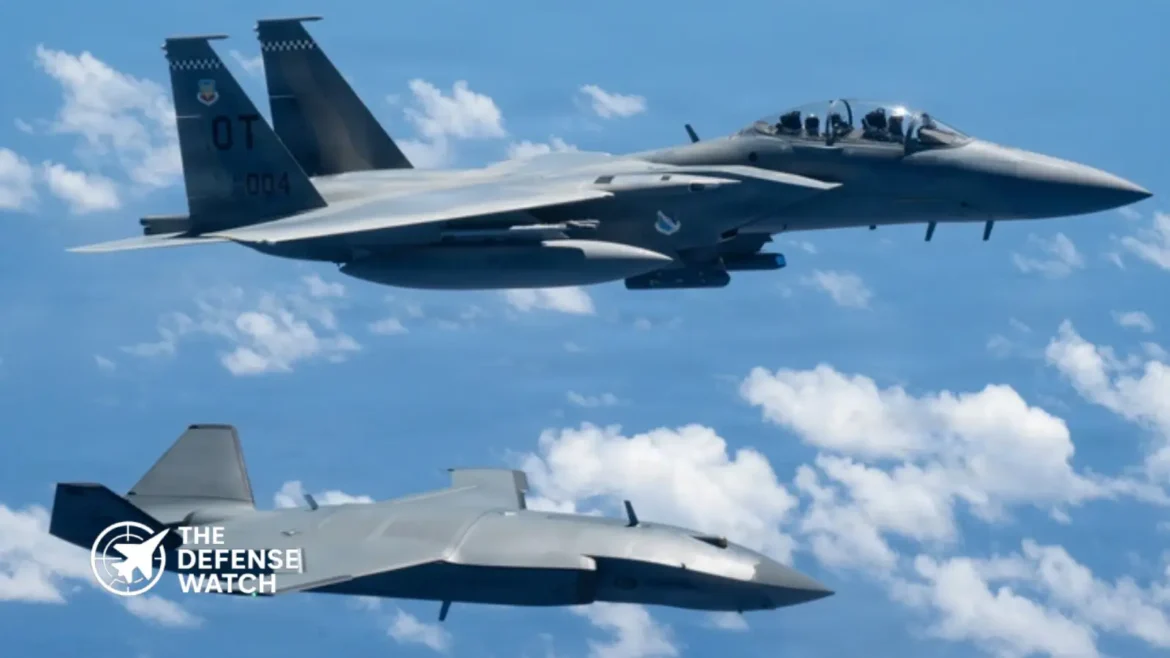
Loyal Wingman Drones Are Becoming a New Layer of Airpower
Loyal wingman drones are uncrewed combat aircraft designed to operate alongside crewed fighters, extending their sensors, weapons, electronic warfare capabilities and reach while reducing the risk to pilots. The concept has moved rapidly from experimental demonstrations toward operationally relevant testing, with the U.S. Collaborative Combat Aircraft program, Australia’s MQ-28 Ghost Bat and European and Chinese efforts all pursuing different versions of the same broad idea.
The most important change is that these aircraft are no longer being designed simply as remotely piloted drones. Instead, they are being developed as semi-autonomous or autonomous members of a larger combat formation.
That distinction matters.
A future fighter formation may include a crewed F-35, F-47 or Eurofighter at the center of the mission, supported by several uncrewed aircraft performing sensing, jamming, communications relay, decoy, air-to-air or strike missions.
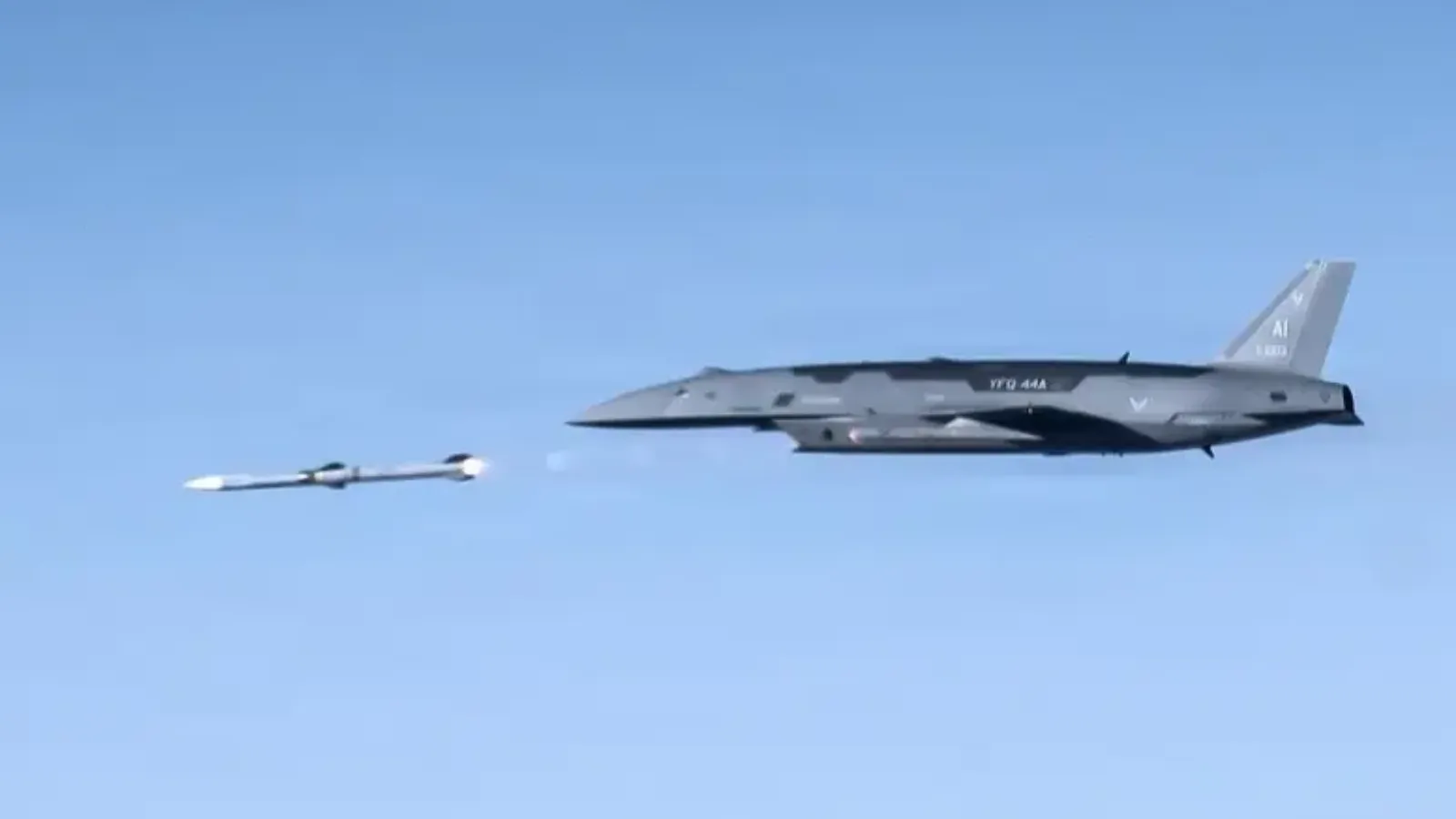
The U.S. Air Force’s CCA program is now one of the most advanced examples. The service designated the General Atomics YFQ-42A and Anduril YFQ-44A in 2025 and moved into increasingly demanding flight, autonomy and weapons testing during 2026. In July 2026, a YFQ-44A conducted a live-fire test involving an AIM-120 weapon against a digital target, marking an important step in weapons integration.
At the same time, Australia’s MQ-28 Ghost Bat has accumulated operationally relevant experience and demonstrated autonomous teaming with crewed aircraft.
The result is a rapidly expanding competition over what could become one of the defining technologies of sixth-generation air warfare.
Key Takeaways
Loyal wingman drones are evolving from experimental unmanned aircraft into networked combat systems intended to operate with crewed fighters in highly contested airspace.
What Is a Loyal Wingman Drone?
A loyal wingman is an uncrewed aircraft designed to cooperate with a crewed aircraft rather than operate as an isolated drone.
The term originally described the idea of an unmanned aircraft accompanying a fighter and following instructions from the human pilot. Modern Collaborative Combat Aircraft, however, go further.
A CCA is intended to receive high-level mission direction while autonomously handling many flight and tactical functions.
That could include:
- Navigation and formation management
- Sensor collection and fusion
- Threat detection
- Electronic warfare
- Target identification
- Communications relay
- Decoy operations
- Intelligence, surveillance and reconnaissance
- Air-to-air weapons employment
- Air-to-ground strike
- Battle damage assessment
The human pilot remains responsible for mission command and critical decisions, while the uncrewed aircraft handles tasks that would otherwise increase the workload of the crewed aircraft.
The U.S. Congressional Research Service has described CCA as semi-autonomous uncrewed aircraft intended to operate alongside crewed fighters, with potential missions including air combat, strike, electronic warfare, targeting and ISR. Earlier Air Force planning used an assumption of roughly 1,000 aircraft, based on two CCAs supporting each of 500 advanced fighters.
Why Militaries Want Loyal Wingman Drones
The underlying problem is straightforward.
Modern fighter aircraft have become extraordinarily capable, but also extraordinarily expensive and complex.
A fifth-generation fighter such as the F-35 can carry sophisticated sensors, electronic warfare equipment, communications systems and precision weapons. But there are limits to how many aircraft a nation can buy, how many pilots it can train and how much risk commanders can accept when placing crewed platforms against advanced air defenses.
Loyal wingman drones offer another option.
Instead of asking one fighter to perform every mission, commanders can distribute functions among several aircraft.
For example, a formation could theoretically include:
Crewed fighter: command, sensor fusion and mission control.
CCA 1: electronic attack.
CCA 2: forward sensing and targeting.
CCA 3: air-to-air weapons.
CCA 4: decoy or communications relay.
The exact allocation would depend on the aircraft and mission, but the broader principle is to create a distributed combat formation.
This makes the formation harder to defeat because an adversary cannot necessarily eliminate the mission by destroying one aircraft.
MQ-28 Ghost Bat: Australia’s Loyal Wingman
The MQ-28 Ghost Bat is one of the most mature loyal wingman programs in the world.
Developed by Boeing Australia for the Royal Australian Air Force, the aircraft began flight testing in 2021 and became the first military aircraft designed and manufactured in Australia in more than five decades.
Boeing describes the MQ-28 as an uncrewed collaborative combat aircraft designed to work with both crewed and uncrewed platforms. The company lists a range of more than 2,000 nautical miles, speeds up to Mach 0.9, a ceiling above 40,000 feet and a maximum takeoff weight of up to 12,000 pounds.
Those figures are important because they place the Ghost Bat in a different category from conventional small tactical drones.
It is intended to operate at fighter-like speeds and ranges rather than simply provide low-cost battlefield surveillance.
MQ-28 and Human-Machine Teaming
The Ghost Bat has also demonstrated increasingly sophisticated teaming.
In 2025, Boeing and the RAAF demonstrated a mission involving MQ-28 aircraft controlled through an E-7A Wedgetail, while the program has also progressed to autonomous weapons engagement testing. Boeing reported an air-to-air autonomous weapon engagement in December 2025 involving an MQ-28 teamed with an E-7A and F/A-18F Super Hornet.
The aircraft also completed international operational flight testing at Point Mugu, California, in 2026, giving the program experience operating from an allied location outside Australia.
That experience gives the MQ-28 an important advantage: it is not simply an airshow concept.
It has accumulated a growing body of flight, autonomy and integration experience.
XQ-58A Valkyrie: The US Experimental Path
The XQ-58A Valkyrie, developed by Kratos with the U.S. Air Force Research Laboratory, represents another major step in the development of attritable combat aircraft.
The Valkyrie was developed through AFRL’s Low Cost Attritable Aircraft Technology effort.
Unlike conventional fighter aircraft, the XQ-58A was designed around affordability and rapid production.
The U.S. National Museum of the U.S. Air Force lists a maximum speed of approximately 652 mph, a range of 3,500 miles, a ceiling approaching 45,000 feet and a maximum weight of 6,000 pounds.
The aircraft also demonstrated an important concept in 2021 when it released an ALTIUS-600 small unmanned aircraft from its internal weapons bay.
This demonstrated that an uncrewed aircraft could itself become a carrier for additional autonomous systems.
That concept is significant because future combat aircraft may not simply carry missiles and bombs. They may deploy smaller drones, decoys or sensors as part of a distributed attack package.
From XQ-58 to the US Collaborative Combat Aircraft
The XQ-58 helped demonstrate the technical feasibility of affordable, high-performance uncrewed aircraft.
The Air Force’s CCA program is taking the concept toward a more formal operational capability.
In March 2025, the Air Force officially designated the two Increment 1 prototypes as:
- YFQ-42A, developed by General Atomics
- YFQ-44A, developed by Anduril
The Y designation identifies a prototype, while F indicates fighter and Q identifies an unmanned aircraft. The Air Force said both aircraft are intended to support crewed-uncrewed teaming in contested environments.
The program has moved quickly.
The YFQ-42A began flight testing in 2025, while the Air Force continued weapons and autonomy testing across both platforms.
In February 2026, the service reported that it was implementing a government-owned Autonomy Government Reference Architecture across multiple CCA vendor platforms. The objective is to reduce dependence on a single proprietary software ecosystem and allow the government to insert new autonomy capabilities more rapidly.
That software architecture may ultimately prove as important as the aircraft itself.
YFQ-44A Live-Fire Test Marks a Major Milestone
The U.S. program crossed another important threshold in July 2026.
The Department of the Air Force conducted a live-fire test involving the YFQ-44A and an AIM-120 weapon over the Mojave Desert.
The test used a digital target and was designed to validate the aircraft’s ability to conduct a safe weapons engagement while retaining human oversight of weapon release.
This distinction is important.
The objective is not simply to create an autonomous aircraft capable of making independent lethal decisions.
The operational model being pursued involves human command authority combined with machine-level autonomy for navigation, sensing, coordination and other tactical functions.
That approach could allow a single pilot to manage several autonomous aircraft without manually flying each one.
How CCA Autonomy Works
A CCA does not need to be intelligent in the same way as a human pilot.
Instead, autonomy can be divided into different layers.
Flight Autonomy
The aircraft must maintain safe flight, avoid collisions and manage fuel and navigation.
Formation Autonomy
Multiple aircraft need to maintain formation geometry without requiring continuous pilot commands.
Mission Autonomy
The system needs to understand assigned objectives and adapt its route or behavior as conditions change.
Tactical Autonomy
The aircraft may detect threats, classify contacts and recommend or execute predefined responses within authorized rules.
Human Command
The human operator remains responsible for mission-level control and applicable weapons decisions.
This division of responsibility is central to the future CCA concept.
The pilot does not need to tell a loyal wingman every time to turn left, climb or adjust its formation position.
Instead, the pilot could issue a higher-level instruction, allowing the autonomous system to determine how best to execute it.
Open Architecture Could Decide the Winners
One of the most important aspects of the U.S. CCA program is not visible in photographs.
It is the software architecture.
Air forces traditionally purchase aircraft as tightly integrated systems. Upgrading them can require major hardware and software modifications.
CCA programs are attempting to break that model.
The Air Force’s government-owned autonomy architecture is intended to support modular software and allow capabilities from different suppliers to operate across multiple aircraft.
That approach could allow the service to improve autonomy much faster than it can redesign an aircraft.
It also creates an important industrial advantage.
If the airframe, sensors and autonomy system use open interfaces, new suppliers may be able to compete for individual components rather than requiring a single company to control the entire platform.
Europe Builds Its Own Loyal Wingman Ecosystem
The loyal wingman concept is not limited to the United States and Australia.
Europe is pursuing similar technologies through next-generation combat-air programs.
Airbus describes collaborative combat aircraft as autonomous armed platforms that can operate alongside crewed fighters such as the Eurofighter. The company highlights missions including sensing, electronic warfare, targeting and strike.
The broader European approach is connected to programs such as Future Combat Air System and associated remote carrier concepts.
The basic philosophy is similar to the U.S. model.
A crewed fighter acts as a command node while uncrewed systems extend its reach and provide additional capabilities.
The United Kingdom is also developing its own CCA technology.
In July 2026, BAE Systems unveiled Brontanax, described by the company as Britain’s first British-designed uncrewed autonomous CCA. BAE said the aircraft is intended to provide additional frontline capability and combat mass alongside crewed aircraft.
These programs show that Europe is not necessarily attempting to reproduce the U.S. CCA model exactly.
Instead, European countries are integrating uncrewed aircraft into their own sixth-generation combat-air architectures.
China’s Loyal Wingman Development
China is also pursuing multiple uncrewed combat aircraft concepts.
The FH-97A is one of the most frequently discussed Chinese loyal wingman designs. It has been associated with manned-unmanned teaming and has been presented as a platform capable of supporting missions such as electronic warfare, reconnaissance and strike.
Independent research has also identified the GJ-11 stealth UCAV as an important component of China’s broader uncrewed combat aircraft development. The International Institute for Strategic Studies and other defense analysts have tracked China’s increasing use of stealth UCAV and CCA-type concepts.
However, publicly available information about Chinese systems is much less complete than information available for U.S. and Australian programs.
This creates an important analytical limitation.
Aircraft displayed at Chinese air shows or military parades do not necessarily represent operational capability.
The distinction between a prototype, technology demonstrator, production aircraft and operational combat system must therefore be maintained.
Loyal Wingman Comparison
System Country Developer Role Approx. Range Approx. Speed Status MQ-28 Ghost Bat Australia Boeing Australia Collaborative combat aircraft 2,000+ nm Up to Mach 0.9 Advanced testing and operational development XQ-58A Valkyrie United States Kratos / AFRL Attritable combat aircraft / CCA technology demonstrator 3,500 miles 652 mph Mature demonstrator and technology platform YFQ-42A United States General Atomics CCA Not publicly disclosed Not publicly disclosed Flight testing YFQ-44A United States Anduril CCA Not publicly disclosed Not publicly disclosed Flight and weapons testing European Remote Carrier / CCA concepts Europe Airbus and industry partners Distributed combat, sensing and EW Program dependent Program dependent Development Brontanax United Kingdom BAE Systems Autonomous CCA Not publicly disclosed Not publicly disclosed Development FH-97A China Chinese aerospace industry Loyal wingman / UCAV concept Not reliably disclosed Not reliably disclosed Development / prototype GJ-11 China Chinese aerospace industry Stealth UCAV Not reliably disclosed Not reliably disclosed Development and testing Publicly available figures are not directly comparable because the aircraft have different design objectives and mission configurations. Chinese specifications in particular should be treated cautiously.
Loyal Wingman vs Traditional Combat Drones
A loyal wingman is different from a conventional remotely piloted drone.
A system such as the MQ-9 Reaper is primarily operated through a human control architecture, although it includes automated flight functions.
A CCA is intended to operate much more independently.
The distinction can be summarized this way:
Conventional Combat Drone Loyal Wingman / CCA Usually remotely operated Designed for high levels of autonomy Human operator manages flight Human provides mission-level direction Often optimized for ISR or strike Designed for fighter support and contested airspace Typically operates as an independent asset Designed to work as part of a formation Ground control is central Airborne crewed aircraft can act as mission commanders Longer endurance often prioritized Speed, survivability and integration are emphasized This does not mean conventional drones are becoming obsolete.
Instead, military aviation is moving toward a broader ecosystem containing multiple types of autonomous aircraft.
What Missions Could Loyal Wingmen Perform?
The flexibility of CCA designs is one of their most important advantages.
Electronic Warfare
An uncrewed aircraft could move closer to hostile radar systems and conduct electronic attack while reducing the risk to a crewed fighter.
Forward Sensing
A CCA could operate ahead of the crewed formation and provide additional sensor coverage.
Air Combat
Some aircraft could carry air-to-air missiles and expand the number of weapons available to a formation.
Decoy Operations
A relatively inexpensive aircraft could force an adversary to reveal radar emissions or expend expensive interceptors.
Strike
CCA platforms could carry precision weapons or provide targeting information to other aircraft.
Communications Relay
A loyal wingman could extend communications between aircraft operating at different locations.
Swarm Support
Larger CCAs could potentially carry or coordinate smaller autonomous aircraft, creating multiple layers of distributed capability.
The Real Advantage: Combat Mass
The strongest argument for loyal wingman drones is not that they can replace fighters.
It is that they can make fighters more effective.
A formation containing one crewed aircraft and several CCAs can potentially generate more sensors, weapons and tactical options than a formation consisting only of crewed aircraft.
The economics are also important.
Boeing describes the MQ-28 as being designed around an affordability objective and says the platform is intended to cost roughly one-tenth of a crewed platform.
The exact acquisition cost of operational variants will depend on production quantities, sensors, engines, weapons, support equipment and software.
Nevertheless, the basic concept is clear.
A military can accept greater risk when the aircraft are cheaper and faster to replace.
That creates the possibility of affordable combat mass.
Survivability Is More Than Stealth
It would be a mistake to judge CCAs only by radar cross-section.
Survivability can come from several factors:
- Low observability
- Electronic warfare
- High speed
- Stand-off weapons
- Distributed formations
- Decoys
- Sensor networking
- Autonomous maneuver
- Communications resilience
- Large numbers
An aircraft does not necessarily have to be invisible if the adversary cannot determine which aircraft is the primary threat.
That is one reason distributed formations are attractive for operations against sophisticated integrated air defense systems.
The Communications Problem
The biggest weakness of a networked combat formation may also be its greatest strength.
If CCAs depend heavily on data links, an adversary will attempt to disrupt those links.
Electronic warfare could interfere with:
- Satellite communications
- Tactical data links
- GPS
- Navigation systems
- Aircraft-to-aircraft communications
- Sensor data
- Ground control networks
A serious CCA architecture therefore needs to continue operating when communications are degraded or denied.
This requires greater onboard autonomy.
An aircraft that cannot receive continuous instructions from its human controller cannot simply stop functioning.
It needs predefined mission logic, navigation resilience and the ability to make bounded tactical decisions without constant external input.
Cost, Maintenance and Attrition
The phrase attritable aircraft is important.
Attritable does not mean disposable.
A military still needs to recover value from each aircraft.
Engines, sensors, electronic warfare equipment, communications systems and software can be expensive even if the airframe is relatively inexpensive.
A fleet of hundreds or thousands of CCAs would also require:
- Engines and spare parts
- Maintenance personnel
- Distributed operating locations
- Secure software infrastructure
- Weapons stocks
- Ground support equipment
- Training systems
- Data management
- Cybersecurity
- Autonomy testing
The economic advantage therefore depends on the entire lifecycle cost, not simply the price of the aircraft.
Why the US CCA Program Matters for the Indo-Pacific
CCA is particularly relevant to the Indo-Pacific because geography places a premium on range, survivability and distributed operations.
Large distances between bases and contested airspace can make traditional assumptions about centralized air operations less practical.
Uncrewed aircraft could provide additional combat power without requiring an equivalent increase in pilot numbers.
They could also operate from dispersed locations, depending on their logistics and runway requirements.
The Air Force has explicitly connected CCA to future air superiority and the broader Next Generation Air Dominance family of systems.
That makes CCA more than a drone procurement program.
It is becoming part of the architecture for future U.S. airpower.
CCA and the F-35
The F-35 could be an important node in future loyal wingman operations.
Its sensors, communications architecture and low-observable design make it well suited to operating inside a distributed combat network.
A future formation could potentially use an F-35 as the human-controlled sensor and command platform while CCAs extend the formation’s weapons and sensing reach.
The exact operational architecture remains under development.
But the concept is straightforward.
The F-35 does not need to carry every sensor and weapon itself if it can coordinate with several autonomous aircraft.
CCA and Future Sixth-Generation Fighters
The long-term vision goes beyond today’s F-35.
The U.S. Air Force is developing CCA alongside the broader NGAD family of systems.
Europe is developing FCAS and GCAP-related technologies.
In these architectures, the crewed fighter becomes one part of a much larger network.
That network may include:
- Crewed fighters
- CCAs
- Tankers
- AEW&C aircraft
- Satellites
- Ground sensors
- Maritime platforms
- Electronic warfare systems
- Long-range missiles
- Smaller autonomous drones
This is why CCA should be viewed as a system-of-systems capability, rather than simply another aircraft.
Major Challenges Ahead
Despite rapid progress, loyal wingman drones remain an emerging capability.
1. Autonomous Decision-Making
The more responsibility given to software, the greater the requirement for testing, verification and reliable human control.
2. Electronic Warfare
CCA networks must function in environments where GPS and communications may be actively attacked.
3. Engine and Maintenance Costs
A supposedly inexpensive aircraft can become expensive if its engine, sensors and support system are difficult to maintain.
4. Weapons Integration
Carrying a missile is relatively straightforward compared with safely integrating targeting, fire control, communications and rules governing weapons release.
5. Production Capacity
The strategic value of affordable mass disappears if industry cannot produce aircraft quickly enough during a major conflict.
6. Training and Doctrine
Pilots and commanders must learn how to manage several autonomous aircraft without becoming overloaded by information.
7. Cybersecurity
A compromised autonomy system could create risks far more serious than the loss of a conventional remotely piloted aircraft.
The Future of Loyal Wingman Drones
The next stage of development will probably focus less on proving that an aircraft can fly autonomously and more on proving that it can operate reliably inside a contested combat network.
That means testing increasingly difficult combinations of:
Autonomy + sensors + electronic warfare + weapons + communications + human command.
The U.S. Air Force’s rapid progress from prototype development to flight and weapons testing demonstrates how quickly the CCA concept is advancing.
Australia’s MQ-28 provides another model, emphasizing operational experimentation and allied interoperability.
Europe is embedding similar capabilities into sixth-generation combat-air programs, while China is developing multiple UCAV and loyal wingman concepts.
The competition is therefore no longer about whether autonomous combat aircraft will exist.
It is increasingly about who can integrate them at scale, connect them securely and produce them quickly enough to matter in a major conflict.
Analytical Conclusion
Loyal wingman drones represent one of the most significant changes in fighter aviation since the introduction of stealth and networked warfare.
The MQ-28 Ghost Bat demonstrates how an uncrewed aircraft can progress from technology demonstrator toward operationally relevant teaming. The XQ-58A Valkyrie demonstrated the potential of affordable, high-performance attritable aircraft. The U.S. YFQ-42A and YFQ-44A now push the concept toward an operational Collaborative Combat Aircraft fleet.
The central objective is not to eliminate the fighter pilot.
It is to give the pilot more options.
A single crewed fighter supported by several autonomous aircraft could potentially see farther, carry more weapons, conduct electronic attack from multiple directions and force an adversary to divide its defensive resources.
That changes the economics of air combat.
The future air force may therefore not be measured simply by how many fighters it owns.
It may be measured by how effectively it can combine crewed aircraft, autonomous combat aircraft, sensors, weapons and software into one distributed combat system.
For the United States and its allies, the race to develop that architecture is already underway.
The decisive advantage will likely belong to the force that can combine autonomy with reliable human command, resilient communications, affordable production and large-scale operational deployment.
In that sense, the loyal wingman is not replacing the fighter.
It is becoming the fighter’s next layer.

Executive Summary: Boeing and Rheinmetall are positioning the MQ-28 Ghost Bat as a mature option for Germany’s planned Collaborative Combat Aircraft capability targeted for 2029. The German industry team has expanded to include Diehl Defence and Rohde & Schwarz, creating a framework for integrating German weapons, communications and mission systems into the Australian-developed aircraft.
MQ-28 Ghost Bat Emerges As A German CCA Contender
The MQ-28 Ghost Bat Germany proposal is gaining industrial depth as Boeing and Rheinmetall seek to provide the German Air Force with a Collaborative Combat Aircraft capability by 2029. The companies presented the Australian-developed uncrewed aircraft at ILA Berlin 2026 and are offering to adapt it to German operational and sovereignty requirements.
The partnership is important because Germany is seeking a CCA capability on a relatively compressed timeline. Rather than waiting for a completely new aircraft to mature, Boeing and Rheinmetall are emphasizing a platform that has already accumulated more than 150 test flights and has undergone development with the Royal Australian Air Force.
Rheinmetall would serve as the national system manager if the proposal is selected. Its responsibilities would include German-specific modifications, integration with Bundeswehr systems, and operational, maintenance and logistics support inside Germany.
German Industry Team Expands Around Ghost Bat
The proposal became more substantial in June when Boeing announced that Diehl Defence and Rohde & Schwarz had joined Rheinmetall on its German MQ-28 industry team.
Diehl Defence is focused on weapons integration. The company has identified the IRIS-T air-to-air missile as one possible German weapon for integration, although any operational weapon selection remains a matter for the German customer.
Rohde & Schwarz is expected to contribute communications and mission-system integration expertise. Its role is intended to help connect the aircraft with German command, control and weapons networks while meeting national requirements.
This approach changes the proposition from simply purchasing an Australian aircraft into a broader German systems-integration program.
That distinction matters for Berlin because control over software, communications, weapons integration, maintenance and future upgrades can be as important as ownership of the airframe itself.
What The MQ-28 Brings To The Competition
The MQ-28 was developed by Boeing Defence Australia for manned-unmanned teaming. Its intended role is to operate alongside crewed combat aircraft, extending sensing, electronic warfare, weapons or other mission capabilities without placing another pilot at risk.
Rheinmetall describes the aircraft’s architecture as modular, allowing it to be adapted for missions including reconnaissance, electronic warfare and use as an effector or weapons carrier.
At ILA Berlin, Boeing also presented the Block 3 configuration that is being offered to Germany. According to Janes, the version includes a larger wing, increased thrust, beyond-line-of-sight communications and internal weapons bays. The configuration has been described as capable of carrying two AIM-120 AMRAAMs or combinations of small precision weapons in its internal bays.
MQ-28 Ghost Bat At A Glance
Feature Reported Capability Platform Uncrewed Collaborative Combat Aircraft Developer Boeing Defence Australia Development customer Royal Australian Air Force German target CCA capability by 2029 Flight testing More than 150 test flights Block 3 wing About 25% larger Thrust Up to 12,000 pounds Communications Beyond-line-of-sight capability Weapons Internal bays for air-to-air and precision weapons German system manager proposal Rheinmetall German weapons integration Diehl Defence Communications integration Rohde & Schwarz The specifications above refer to the configuration presented for the German market and should not be interpreted as confirmation of a final German production standard.
Why Sovereign Integration Is Central To Germany’s Proposal
The strongest part of the Boeing-Rheinmetall offer is not simply the aircraft. It is the proposed division of responsibility around the aircraft.
Germany wants greater control over the systems that determine how autonomous aircraft communicate, receive mission instructions, share sensor information and interact with crewed platforms. Local integration could also reduce dependence on an external supplier for every software or configuration change.
Rheinmetall says engineers in Germany and Australia can use a digital engineering environment to develop and test software and hardware changes. This could provide a framework for adapting the aircraft to German requirements without creating an entirely separate aircraft design.
That model also addresses one of the major challenges of CCA procurement: the aircraft must function as part of a larger combat network rather than as an isolated drone.
A CCA connected to a Eurofighter, ground command center or other aircraft must exchange information reliably in a contested electromagnetic environment. Communications resilience, cybersecurity, autonomy behavior and rules for human control therefore become central engineering requirements.
Germany’s CCA Competition Is Not Settled
The MQ-28 is not the only option being developed for Germany.
Airbus is preparing two Kratos XQ-58A Valkyries in Germany and plans to equip them with its European MARS mission system. Airbus says the objective is to offer the German Air Force an operational uncrewed collaborative combat aircraft system by 2029.
Other concepts are also entering the broader European competition, including systems being developed by German and international companies.
This creates a key procurement tradeoff for Berlin.
A mature aircraft such as the Ghost Bat offers the advantage of an established flight-test program and an existing operational pathway in Australia. A newer European design could offer greater control over the aircraft’s technology and industrial base but would carry more development risk.
Germany therefore has to balance speed, technical maturity, industrial sovereignty and long-term upgrade control.
The Operational Question Goes Beyond The Airframe
The significance of the MQ-28 proposal extends beyond Germany’s drone inventory.
CCA programs are changing the traditional fighter force model by allowing one crewed aircraft to operate with additional uncrewed platforms. The concept can potentially increase the number of sensors, weapons and electronic warfare systems available to a formation without requiring an equivalent increase in pilots.
For Germany, this could become particularly relevant as the Luftwaffe modernizes its combat fleet around Eurofighter and F-35A aircraft while Europe works toward future sixth-generation combat-air capabilities.
The MQ-28’s value would therefore depend heavily on how effectively it can operate inside those existing and future networks.
The difficult part is not simply autonomous flight. It is making autonomy, communications, sensor fusion, electronic warfare and weapons employment work together under realistic operational conditions.
2029 Target Creates A Tight Development Window
Boeing and Rheinmetall are targeting 2029, but the proposal remains a bid rather than a confirmed German procurement contract.
That distinction is important.
The aircraft has demonstrated substantial development progress, but adapting an existing CCA for another nation’s weapons, communications architecture, cybersecurity standards and command-and-control systems still requires engineering, testing and qualification.
The addition of Diehl Defence and Rohde & Schwarz is intended to address exactly those areas. Their involvement gives the proposal a stronger German industrial component and potentially reduces the amount of national integration work that would otherwise have to be developed later.
For Germany, the central question will be whether the 2029 requirement is best served by a mature foreign-developed platform with extensive German integration or by a European system that offers greater technological sovereignty but requires more development.
Why The MQ-28 Matters To U.S. And Allied Airpower
The German competition also has implications beyond Europe.
The United States and its allies are increasingly examining CCA concepts as a way to expand combat-air capacity while managing the cost and risk associated with crewed aircraft. Australia’s MQ-28 program provides an allied example of how a CCA can progress from technology development toward operational service.
For the United States, Germany’s decision will also provide another indicator of how allied air forces approach autonomy, weapons integration and control of mission software.
A German MQ-28 fleet would not automatically create a common NATO CCA standard, but shared communications and weapons integration could improve interoperability if designed around alliance requirements.
The broader trend is clear: future air forces are increasingly treating uncrewed aircraft as part of the combat-air architecture rather than as separate drone fleets.
What Happens Next
Boeing and Rheinmetall have established a credible industrial proposal, but the final German decision remains the key milestone.
The next stages will likely focus on technical evaluation, German requirements, weapons and communications integration, industrial participation and the ability to meet the 2029 timeline.
For the MQ-28, the central advantage is maturity. For Germany, the central issue is whether that maturity can be combined with enough national control over the systems that make a CCA operationally useful.
The outcome will help determine not only which aircraft Germany operates, but also how Europe’s largest defense economies approach autonomous combat aircraft as a component of future airpower.
Executive Summary:
The U.S. Air Force has expanded operational testing of its Collaborative Combat Aircraft (CCA) program at Creech Air Force Base, Nevada, marking another step toward fielding autonomous combat aircraft alongside crewed fighters. The exercise focused on developing operational tactics, maintenance procedures, and command and control concepts needed before the aircraft enters frontline service.
U.S. Air Force Expands Collaborative Combat Aircraft Operational Testing
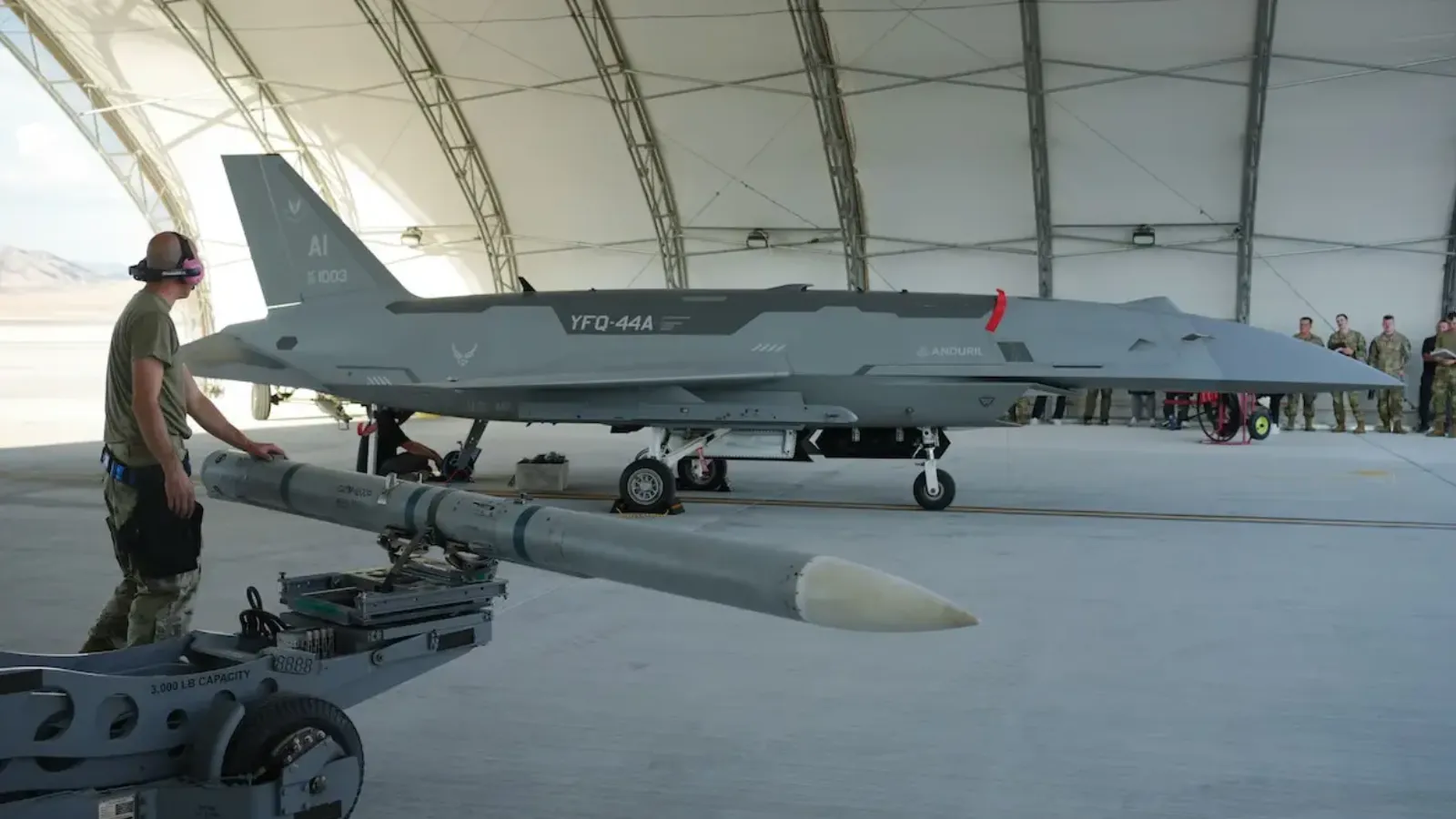
The U.S. Air Force Collaborative Combat Aircraft (CCA) program has entered another important phase as the service conducts operational flight testing at Creech Air Force Base, Nevada, moving the autonomous aircraft closer to routine military use.
According to the U.S. Air Force Warfare Center, the recent exercise was designed to evaluate how semi-autonomous aircraft can operate within realistic expeditionary conditions while refining the tactics, techniques, and procedures that will eventually support operational deployment.
Unlike earlier developmental flights that primarily evaluated airworthiness and autonomous flight performance, the Creech activities emphasize how CCAs will integrate into day-to-day Air Force operations.
Building The Foundations For Human Machine Teaming
The testing is being conducted by the Collaborative Combat Aircraft Experimental Operations Unit, which is responsible for translating technical capabilities into operational doctrine.
During the exercise, Air Force personnel evaluated how autonomous aircraft can be supported, armed, maintained, and commanded alongside conventional fighter forces.
Officials said the objective is not simply to prove the aircraft can fly autonomously but to determine how pilots, maintainers, intelligence specialists, and command centers will employ the aircraft during future combat operations.
Air Force Chief of Staff Gen. Ken Wilsbach has repeatedly described affordable autonomous aircraft as a critical component of future air superiority, particularly in highly contested environments where additional combat mass and survivability are essential.
Operational Testing Follows Rapid Program Progress
The Creech testing follows an unusually fast development timeline.
During the past year, the Department of the Air Force has steadily advanced the CCA program through several major milestones:
The latest operational testing comes only weeks after the Air Force successfully conducted its first live AIM-120 missile launch from a YFQ-44A aircraft over the Mojave Desert. That demonstration verified the aircraft’s ability to safely employ weapons while maintaining human authorization for weapons release.
Why Creech Air Force Base Matters
Creech Air Force Base has become one of the Air Force’s principal centers for remotely piloted aircraft operations.
Its existing infrastructure, experienced operators, and expertise in remotely operated missions make it a logical location to develop concepts for Collaborative Combat Aircraft.
Rather than focusing solely on aircraft performance, the recent exercise examined broader operational questions, including:
- Aircraft generation and turnaround procedures
- Weapons loading operations
- Mission planning workflows
- Command and control integration
- Agile Combat Employment support
- Logistics and maintenance under expeditionary conditions
These factors ultimately determine whether an advanced platform can be deployed effectively during combat operations.
Open Architecture Remains A Core Design Principle
One distinguishing feature of the CCA program is the Air Force’s decision to separate autonomy software from aircraft manufacturing.
Instead of locking operators into proprietary software tied to a single manufacturer, the Department of the Air Force is implementing the government-owned Autonomy Government Reference Architecture (A-GRA).
This modular approach allows different autonomy software developers to compete while enabling future upgrades without redesigning the aircraft itself. Officials believe the strategy will shorten upgrade cycles, reduce costs, and encourage greater innovation across the defense industrial base.
Strategic Importance For Future Air Combat
The Collaborative Combat Aircraft program represents one of the most significant changes in U.S. tactical aviation since the introduction of fifth-generation fighters.
Instead of replacing aircraft such as the F-35A or future Next Generation Air Dominance platforms, CCAs are intended to expand combat capacity by operating as force multipliers.
Potential missions include:
- Air-to-air missile carriage
- Electronic warfare
- Intelligence, surveillance and reconnaissance
- Decoy operations
- Long-range strike support
- Escort missions for crewed fighters
By assigning higher-risk missions to autonomous aircraft, commanders can preserve expensive crewed platforms while increasing the number of combat assets available during large-scale operations.
This concept is particularly relevant in the Indo-Pacific, where long engagement distances and sophisticated integrated air defense systems demand larger, more distributed air forces.
Challenges Still Ahead
Although recent progress has been rapid, several hurdles remain before the aircraft enter operational service.
Among the remaining priorities are:
- Expanding autonomous mission complexity
- Verifying secure communications in contested environments
- Integrating CCAs with multiple fighter platforms
- Refining operator training requirements
- Establishing long-term sustainment concepts
- Scaling production for operational units
The Air Force has consistently emphasized that human operators will remain responsible for weapon release decisions, ensuring compliance with existing command authorities and rules of engagement.
Industry Competition Continues
The CCA program also remains one of the Pentagon’s largest autonomous aviation initiatives.
General Atomics and Anduril have emerged as the initial production partners following competitive prototype development, while several companies continue developing autonomy software under separate contracts. The broader objective is to field more than 150 Collaborative Combat Aircraft by the end of the decade, with significantly larger procurement planned thereafter.
Outlook
The operational testing underway at Creech Air Force Base marks an important transition from technology demonstration to practical military employment.
While flight testing, weapons integration, and software development remain ongoing, the Air Force is increasingly focused on how autonomous aircraft will function within operational squadrons rather than whether the technology itself is viable.
As testing expands through 2026, the lessons learned at Creech will help shape future doctrine for crewed-uncrewed teaming, influencing how the Air Force integrates autonomous combat aircraft into its next generation of air operations.
Executive Summary:
Defense companies across the United States, Europe, and Asia are accelerating development of autonomous uncrewed fighter jets as military demand for AI enabled combat aircraft grows. The push reflects a broader shift toward collaborative air combat, where autonomous aircraft operate alongside crewed fighters to increase combat capacity, reduce operational risk, and lower procurement costs.
Autonomous Uncrewed Fighter Jets Become A Strategic Priority For Global Air Forces
The race to develop autonomous uncrewed fighter jets has entered a new phase as defense manufacturers compete to deliver operational systems capable of flying alongside traditional fighter aircraft. According to Reuters, major aerospace companies are expanding investment in autonomous combat aviation as governments prioritize artificial intelligence, advanced autonomy, and affordable force expansion for future conflicts.
Military planners increasingly view autonomous aircraft as force multipliers rather than replacements for human pilots. Programs under development in the United States, Europe, Australia, and Asia are designed to perform missions ranging from electronic warfare and intelligence gathering to strike operations and air superiority support.
The growing interest comes as defense budgets increasingly emphasize AI enabled systems that can improve operational effectiveness while reducing exposure of pilots in highly contested environments.
Why Militaries Are Investing In Autonomous Combat Aircraft
Several strategic factors are driving the rapid expansion of autonomous combat aviation.
Modern air warfare requires greater aircraft availability, faster decision making, and the ability to overwhelm sophisticated air defense networks. Autonomous systems offer a way to increase combat mass without matching the cost of traditional fighter fleets.
Defense officials also see autonomous aircraft as valuable for missions considered too dangerous for crewed platforms, including:
- Suppression of enemy air defenses
- Electronic attack operations
- Long range intelligence, surveillance, and reconnaissance
- Decoy and deception missions
- Precision strike support
Unlike conventional unmanned aerial vehicles used primarily for surveillance, these new autonomous aircraft are expected to operate with significantly greater independence while maintaining coordination with human commanders.
Collaborative Combat Aircraft Are Reshaping Air Power
The United States remains one of the leading nations pursuing autonomous combat aviation through the U.S. Air Force’s Collaborative Combat Aircraft (CCA) initiative.
Rather than replacing advanced fighters such as the F 35 Lightning II or future Next Generation Air Dominance (NGAD) aircraft, CCA platforms are intended to fly as intelligent teammates.
Potential mission sets include:
Capability Operational Benefit Air to air support Expands combat mass during engagements Electronic warfare Disrupts enemy radar and communications Intelligence collection Extends battlefield awareness Precision strike Delivers additional weapons capacity Decoy operations Forces adversaries to expend defensive missiles This distributed approach allows commanders greater tactical flexibility while preserving high value crewed aircraft for critical missions.
Industry Competition Intensifies
Reuters reports that multiple aerospace manufacturers are racing to demonstrate increasingly capable autonomous aircraft as governments seek affordable combat aviation solutions.
The competitive environment extends well beyond the United States.
Defense companies across Europe are integrating artificial intelligence into future combat aircraft programs, while Australia continues developing loyal wingman concepts originally pioneered through Boeing Australia’s MQ 28 Ghost Bat program.
These efforts reflect a broader transformation in military aviation, where software, autonomy, secure communications, and mission networking are becoming as important as traditional aerodynamic performance.
Technical Challenges Remain Significant
Although progress has accelerated, fully autonomous combat aviation still faces several technical and operational hurdles.
Key development priorities include:
- Reliable AI decision support under combat conditions
- Secure communications in electronically contested environments
- Human oversight of autonomous weapons employment
- Cybersecurity against electronic intrusion
- Interoperability with existing command and control systems
Military organizations continue to emphasize that autonomous aircraft will operate within established command structures and under human authorization for the use of lethal force, consistent with national policies.
Strategic Implications For Future Air Warfare
The emergence of autonomous fighter aircraft represents one of the most significant changes in military aviation since the introduction of stealth technology.
For the United States and its allies, autonomous aircraft provide an opportunity to expand combat capacity without relying exclusively on increasingly expensive crewed fighters. Modern fifth generation aircraft require substantial investment in procurement, maintenance, and pilot training. Autonomous systems can complement these fleets by assuming higher risk missions while preserving crewed assets for complex operations.
Another important advantage is scalability. Air forces facing growing regional security challenges can potentially field larger operational formations by combining crewed fighters with multiple autonomous aircraft. This distributed force structure complicates adversary targeting and improves operational resilience.
From a technological perspective, the competitive advantage may increasingly depend less on aircraft performance alone and more on the effectiveness of artificial intelligence, secure networking, sensor fusion, and mission autonomy. Future procurement decisions are therefore likely to evaluate software capability alongside traditional aerospace engineering.
The accelerating pace of development also reflects broader geopolitical competition, with leading defense manufacturers seeking to establish technological leadership before autonomous combat aircraft become a standard element of modern air forces.
Outlook
Autonomous uncrewed fighter jets are transitioning from experimental concepts to operational defense programs. While significant testing, certification, and policy work remain, governments are clearly investing in collaborative combat aircraft as a core element of future air power.
As AI technologies mature and autonomous systems demonstrate greater reliability, these aircraft are expected to complement existing fighter fleets rather than replace them, providing additional flexibility across contested operational environments.
For defense manufacturers, success will depend not only on aircraft performance but also on delivering secure autonomy, resilient communications, and seamless integration with next generation command networks.
Executive Summary:
The U.S. Air Force has completed the first live fire missile test of Anduril’s YFQ-44A Collaborative Combat Aircraft, successfully launching an AIM 120 AMRAAM during flight testing. The event represents a significant milestone in validating the semi autonomous fighter drone’s combat capability as the Air Force accelerates development of its next generation human machine teaming concept.
U.S. Air Force Advances YFQ-44A Collaborative Combat Aircraft Through First Live Fire Missile Test
The U.S. Air Force YFQ-44A Collaborative Combat Aircraft (CCA) has achieved another major development milestone after successfully conducting its first live fire launch of an AIM 120 Advanced Medium Range Air to Air Missile (AMRAAM). The test, announced by the U.S. Air Force and Anduril Industries, demonstrates continued progress toward integrating semi autonomous combat drones alongside crewed fighter aircraft under the Collaborative Combat Aircraft initiative.
The live fire event follows the YFQ-44A’s first flight earlier in 2026 and marks the program’s transition from basic flight validation toward operational weapons integration. According to official statements, the missile launch verified the aircraft’s ability to safely employ advanced air to air weapons while collecting extensive flight and telemetry data for further evaluation.
First Weapons Test Demonstrates Growing Maturity
The live fire exercise centered on validating the aircraft’s weapons integration architecture rather than evaluating missile performance itself.
Engineers monitored multiple mission systems throughout the event, including:
- Aircraft flight stability
- Fire control software
- Missile release sequencing
- Weapons bay operation
- Command and control links
- Telemetry and safety systems
Successfully completing these objectives indicates that the aircraft is progressing beyond experimental flight demonstrations toward becoming a viable operational combat platform.
Unlike traditional fighter development programs, the CCA effort emphasizes rapid testing and iterative software improvements, allowing new capabilities to be introduced significantly faster than legacy acquisition timelines.
What Is the YFQ-44A?
The YFQ-44A developed by Anduril Industries, is one of two aircraft selected under Increment 1 of the U.S. Air Force’s Collaborative Combat Aircraft program.
Designed as an affordable, highly survivable unmanned combat aircraft, the platform is intended to operate alongside fighters such as the:
- F 35A Lightning II
- F 22 Raptor
- Future Next Generation Air Dominance (NGAD) platform
Rather than replacing crewed aircraft, the drone functions as an intelligent force multiplier capable of carrying weapons, sensors, electronic warfare payloads, or reconnaissance equipment while remaining under varying levels of human supervision.
Its open architecture software enables rapid upgrades, allowing mission systems to evolve as new threats emerge.
Collaborative Combat Aircraft Strategy
The Collaborative Combat Aircraft program represents one of the Air Force’s most ambitious modernization initiatives.
Instead of relying exclusively on expensive fifth and sixth generation fighters, future combat formations are expected to include multiple autonomous or semi autonomous aircraft supporting each crewed fighter.
Potential missions include:
Mission Operational Benefit Air to air combat Expands missile capacity for fighter formations Electronic warfare Jams enemy radar and communications Intelligence collection Extends sensor coverage Decoy operations Forces adversaries to reveal air defenses Strike missions Delivers precision weapons while reducing pilot risk Escort operations Protects high value airborne assets The Air Force has stated that deploying multiple lower cost CCAs alongside advanced fighters could significantly increase combat mass while reducing operational risk during high intensity conflicts.
Why the AIM-120 Launch Matters
The AIM 120 AMRAAM remains the U.S. military’s primary beyond visual range air to air missile.
Integrating the missile onto the YFQ-44A demonstrates that autonomous aircraft can employ the same frontline weapons used by manned fighters, potentially allowing commanders to distribute offensive capability across a larger number of platforms.
Although the missile itself has long been operational, integrating it with a new autonomous aircraft requires validation across several complex systems, including:
- Fire control software
- Flight management computers
- Secure communications
- Weapons separation characteristics
- Safety certification
- Mission planning integration
Successfully completing these steps substantially reduces technical risk for future operational testing.
Technical Significance Beyond a Missile Launch
The missile release represents more than simply proving that the aircraft can fire a weapon.
Modern autonomous combat aircraft must coordinate numerous software driven functions simultaneously, including sensor fusion, navigation, weapons authorization, threat recognition, and secure communication with nearby aircraft.
Every successful weapons test generates valuable engineering data that improves:
- Artificial intelligence decision support
- Mission autonomy
- Network resilience
- Aircraft survivability
- Human machine interface
- Multi aircraft coordination
These capabilities are central to the Air Force’s long term vision of distributed combat operations across contested environments.
Implications for Future Air Combat
The YFQ-44A is part of a broader transformation in how the U.S. Air Force intends to conduct air warfare over the coming decades.
Potential adversaries continue expanding integrated air defense systems, long range missiles, and advanced fighter fleets. Operating only small numbers of expensive crewed aircraft in such environments presents growing operational challenges.
Collaborative Combat Aircraft seek to address this by increasing force size without proportionally increasing acquisition or personnel costs.
If fielded successfully, formations could include one crewed fighter directing several unmanned aircraft carrying additional missiles, sensors, or electronic warfare payloads. This approach increases operational flexibility while complicating an adversary’s targeting decisions.
The successful live fire event therefore serves as an important demonstration that autonomous combat aircraft are moving beyond technology demonstrations toward practical combat capability. Although further developmental testing, software refinement, and operational evaluation remain ahead, the program continues advancing on an accelerated timeline compared with many previous tactical aircraft developments.
Looking Ahead
The U.S. Air Force is expected to continue expanding flight testing of both Collaborative Combat Aircraft designs throughout 2026 and beyond. Future evaluations will likely examine increasingly complex operational scenarios involving manned and unmanned teaming, autonomous mission execution, sensor integration, and networked combat operations.
As additional weapons, sensors, and mission software are integrated, the YFQ-44A will play an important role in shaping how the Air Force fields affordable autonomous aircraft capable of supporting next generation air superiority missions.
Its first successful AIM 120 live fire test represents an important step toward translating the Collaborative Combat Aircraft concept into an operational capability for future U.S. air combat.
Executive Summary:
Anduril Industries has announced that its Fury FQ-44 autonomous drone fighter has entered production, marking an important milestone in the U.S. Air Force’s Collaborative Combat Aircraft (CCA) initiative. The move demonstrates growing momentum behind autonomous air combat systems designed to operate alongside crewed fighters while increasing combat capacity and reducing operational risk.
Anduril Fury FQ-44 Drone Fighter Enters Production
Anduril’s Fury FQ-44 drone fighter has officially moved into production, representing one of the most significant developments in the U.S. Air Force’s Collaborative Combat Aircraft (CCA) program. The announcement, made by the company and reported by multiple defense publications, signals that autonomous combat aircraft are transitioning from prototype demonstrations toward operational manufacturing.
The production milestone comes as the U.S. Department of the Air Force accelerates efforts to field autonomous aircraft capable of flying alongside fifth and sixth generation fighters. Rather than replacing human pilots, these aircraft are intended to expand combat mass, improve survivability, and perform high risk missions without exposing aircrews to unnecessary danger.
Fury Is Designed For The Collaborative Combat Aircraft Mission
The Fury FQ-44 was developed specifically to meet the operational requirements of the Air Force’s Collaborative Combat Aircraft concept.
Unlike traditional unmanned aerial vehicles focused on surveillance or precision strikes, Fury is designed as an autonomous tactical aircraft capable of operating as a loyal wingman alongside crewed fighters including the F-35A Lightning II and the future Next Generation Air Dominance (NGAD) platform.
The aircraft combines high performance flight characteristics with advanced onboard autonomy, allowing it to execute assigned missions while remaining under human command and supervision.
According to Anduril, the aircraft has been engineered for rapid manufacturing, lower operating costs, and scalable production, enabling the Air Force to acquire larger autonomous fleets than would be economically feasible with traditional fighter aircraft.
Production Marks A Shift From Demonstration To Manufacturing
Moving into production represents more than a manufacturing milestone.
It demonstrates that Anduril has progressed beyond design validation and prototype testing toward establishing an industrial production capability capable of supporting future government procurement.
The company has emphasized digital engineering, software defined architecture, and advanced manufacturing techniques to reduce development timelines while enabling continuous software upgrades throughout the aircraft’s operational life.
This approach mirrors broader Department of Defense efforts to modernize defense acquisition through rapid development cycles rather than traditional decade long procurement programs.
Key Characteristics Of The Fury FQ-44
Capability Details Manufacturer Anduril Industries Aircraft Type Autonomous Collaborative Combat Aircraft Primary Role Loyal wingman and autonomous combat aircraft Mission Set Air to air support, strike support, electronic warfare, ISR Program U.S. Air Force Collaborative Combat Aircraft Design Philosophy Software defined, modular, scalable production Why Collaborative Combat Aircraft Matter
The Collaborative Combat Aircraft initiative represents one of the Air Force’s highest modernization priorities.
Future air operations are expected to involve highly contested environments protected by integrated air defense systems, advanced electronic warfare, and long range missile threats.
Instead of relying solely on expensive crewed fighters, commanders envision formations where multiple autonomous aircraft accompany each pilot.
These drones can perform missions including:
- Forward reconnaissance
- Electronic attack
- Decoy operations
- Missile carrying
- Air defense suppression
- Precision strike support
Because autonomous aircraft are expected to cost significantly less than advanced fighters, larger fleets can be deployed to increase combat mass while preserving high value crewed aircraft.
Analysis: Production Is The Real Strategic Milestone
While prototype flights often attract headlines, manufacturing readiness may ultimately prove more important.
Numerous autonomous aircraft programs have demonstrated promising technology, but relatively few have progressed into production capable of supporting sustained military procurement.
The Fury’s transition toward manufacturing indicates confidence in both its technical maturity and Anduril’s industrial capacity.
For the Department of the Air Force, this reduces one of the largest risks facing emerging autonomous programs: the gap between successful demonstrations and large scale fielding.
Equally important is the company’s emphasis on software defined development. Unlike conventional aircraft that receive major capability upgrades every several years, software centric autonomous platforms can potentially receive more frequent updates, allowing them to adapt more rapidly to evolving threats.
Expanding The U.S. Defense Industrial Base
The production announcement also reflects broader Pentagon efforts to diversify the American defense industrial base.
Traditional military aircraft manufacturing has long been dominated by a small number of major aerospace contractors.
The emergence of companies such as Anduril introduces additional manufacturing capacity, digital engineering approaches, and faster acquisition models that defense officials increasingly view as necessary to maintain technological competitiveness.
The Collaborative Combat Aircraft program itself has encouraged participation from both established defense companies and newer technology firms capable of delivering innovative autonomous systems.
Operational Implications
Once fielded, autonomous combat aircraft like Fury could significantly alter how future air campaigns are conducted.
Rather than deploying only limited numbers of expensive fighters, commanders could employ mixed formations consisting of crewed aircraft controlling multiple autonomous teammates.
Potential operational benefits include:
- Increased aircraft available during combat operations
- Greater survivability for human pilots
- Expanded missile capacity
- Distributed sensing across larger areas
- Faster response to evolving battlefield conditions
- Lower operating costs compared with additional crewed fighters
Although autonomous aircraft remain under human oversight, advances in onboard artificial intelligence enable them to execute many routine tactical tasks while reducing pilot workload.
Outlook
The Fury FQ-44’s transition into production represents an important step for both Anduril Industries and the U.S. Air Force’s broader autonomous aviation strategy.
As the Collaborative Combat Aircraft program progresses through testing, integration, and eventual operational deployment, production readiness will become an increasingly important measure of program maturity.
The United States continues investing heavily in autonomous combat aviation as part of its long term effort to maintain air superiority against increasingly capable peer competitors. The ability to manufacture these systems at scale may ultimately prove just as critical as the aircraft’s autonomous capabilities themselves.
(adsbygoogle = window.adsbygoogle || []).push({});Executive Summary:
The United Kingdom has confirmed that an autonomous fighter jet demonstrator is expected to fly by at least 2030 as part of a new national Collaborative Combat Air program. The initiative forms part of the UK’s latest Defense Investment Plan and aims to field AI-enabled aircraft capable of operating alongside crewed Royal Air Force fighters in future high-threat environments.
UK Confirms Autonomous Fighter Jet Demonstrator Will Fly By 2030
The UK autonomous fighter jet program has reached an important milestone after the British government confirmed that a demonstrator aircraft is scheduled to fly by at least 2030.
The announcement was included in the UK’s newly released Defense Investment Plan, which outlines long-term investments in autonomous systems, artificial intelligence, electronic warfare, and next-generation air combat capabilities. According to the Ministry of Defence, the aircraft will be developed under a new national Collaborative Combat Air (CCA) program designed to complement, rather than replace, crewed combat aircraft.
The effort represents one of the UK’s largest investments in autonomous military aviation and supports the Royal Air Force’s transition toward mixed fleets of manned and unmanned combat aircraft.
Collaborative Combat Air Program Expands RAF Capabilities
The Collaborative Combat Air initiative envisions autonomous aircraft operating as force multipliers alongside crewed fighters.
According to the Ministry of Defence, these aircraft could perform missions including:
Planned Capability Operational Role Intelligence, surveillance and reconnaissance Extend sensor coverage ahead of crewed aircraft Electronic warfare Jam or disrupt hostile radar and communications Precision strike support Carry additional weapons or attack designated targets Decoy operations Draw enemy fire and complicate adversary targeting Air combat support Increase combat mass without placing additional pilots at risk Government documents indicate the demonstrator will become part of the RAF’s broader Future Combat Air System, which integrates crewed fighters, autonomous aircraft, advanced weapons, AI-enabled command networks, and secure data sharing.
Part Of Britain’s Broader Defense Investment Strategy
The autonomous fighter demonstrator is one element of a wider modernization package announced in the UK’s Defense Investment Plan.
(adsbygoogle = window.adsbygoogle || []).push({});The plan commits more than £5 billion toward autonomous military systems across all three services while also investing heavily in artificial intelligence and digital command systems. Key initiatives include:
- A national Collaborative Combat Air program for the Royal Air Force
- Project NYX autonomous armed aircraft supporting Apache helicopters
- Project Corvus surveillance drones replacing Watchkeeper
- Storm Shroud electronic warfare drones entering RAF service
- New autonomous naval and ground systems across the British Armed Forces
The government says these programs will strengthen sovereign industrial capability while accelerating adoption of autonomous technologies across the military.
Building On Earlier UK Autonomous Flight Demonstrations
The latest announcement follows several years of experimentation with crewed and uncrewed teaming.
In 2024, QinetiQ successfully demonstrated a crewed aircraft controlling an autonomous jet drone during a Ministry of Defence trial involving the Defence Science and Technology Laboratory (Dstl), the Royal Navy, and the Air and Space Warfare Centre.
During that demonstration, a modified Banshee Jet 80 received mission commands directly from a crewed aircraft before autonomously completing assigned tasks, validating key technologies required for future collaborative combat aircraft.
Those experiments provided an important technological foundation for today’s national Collaborative Combat Air program.
Strategic Significance For Future Air Warfare
The UK’s investment reflects a broader shift occurring across NATO and allied air forces.
Rather than relying solely on increasingly expensive crewed fighters, militaries are developing autonomous aircraft capable of carrying sensors, electronic warfare payloads, additional weapons, or decoy systems.
These platforms are expected to provide several operational advantages:
- Increase available combat aircraft without expanding pilot training pipelines.
- Reduce operational risk during high-threat missions.
- Allow crewed fighters to remain farther from advanced air defense systems.
- Improve mission flexibility through distributed operations.
- Increase sortie generation during sustained conflict.
This approach closely mirrors evolving concepts being pursued by several allied nations, where autonomous aircraft act as “loyal wingmen” supporting manned fighters during contested operations.
atOptions = { ‘key’ : ‘e7d18db8b7513fb2a224cf4c3f18bbf0’, ‘format’ : ‘iframe’, ‘height’ : 90, ‘width’ : 728, ‘params’ : {} };Relationship With The Global Combat Air Programme
Although the autonomous demonstrator is a separate development effort, it complements Britain’s participation in the Global Combat Air Programme (GCAP) with Japan and Italy.
GCAP aims to field a sixth-generation crewed fighter around 2035. Government planning documents indicate future autonomous collaborative aircraft will operate as part of the same broader combat ecosystem rather than as independent weapons platforms.
Integrating autonomous aircraft with next-generation fighters could significantly expand combat capacity while allowing expensive crewed platforms to focus on command, sensing, and decision-making.
Technical Challenges Remain
While the timeline establishes a clear objective, substantial technical work remains before operational service.
Major engineering challenges include:
- Secure AI-assisted mission autonomy.
- Resilient communications in contested electromagnetic environments.
- Trusted human oversight for weapons employment.
- Cybersecurity against sophisticated electronic attack.
- Integration with existing RAF command-and-control networks.
Successfully addressing these issues will determine whether autonomous collaborative aircraft can reliably operate alongside crewed fighters during complex combat missions.
Why It Matters
For the United Kingdom, the autonomous fighter demonstrator represents more than a technology project.
It signals a long-term transition toward AI-enabled air operations where autonomous aircraft expand combat mass, improve survivability, and reduce operational risk.
For the United States and other NATO allies, the program also reinforces a broader trend. Modern air forces are increasingly investing in collaborative autonomous aircraft that complement advanced fighters instead of replacing them outright. If successful, Britain’s demonstrator could become an important component of future coalition air operations and strengthen interoperability across allied air forces as autonomous combat systems become a standard feature of next-generation warfare.
(adsbygoogle = window.adsbygoogle || []).push({});Executive Summary:
The U.S. Air Force has awarded General Atomics Aeronautical Systems Inc. (GA-ASI) a production contract for the FQ-42A Dark Merlin, marking a major milestone for the service’s Collaborative Combat Aircraft (CCA) initiative. The award moves the autonomous combat aircraft from prototype testing into operational production and signals the Air Force’s commitment to fielding large numbers of uncrewed fighter wingmen alongside manned aircraft.
The production award follows more than two years of rapid development and testing under the Air Force’s CCA program, which seeks to pair autonomous aircraft with advanced fighters such as the F-35 Lightning II and F-22 Raptor. General Atomics announced that the initial production order will begin deliveries of operational FQ-42A aircraft to the Air Force, transitioning the platform from its earlier YFQ-42A developmental designation into a production configuration.
The award comes after the Air Force selected both General Atomics and Anduril Industries for the first production phase of Increment 1 of the CCA program. The service intends to field at least 150 autonomous combat aircraft under the initial procurement effort, with both the FQ-42A and Anduril’s FQ-44 expected to support operational testing and eventual deployment.
Deep Technical & Strategic Context Analysis
The FQ-42A Dark Merlin represents one of the most significant shifts in U.S. tactical airpower since the introduction of fifth-generation fighters. Rather than replacing crewed aircraft, the platform is designed to operate as an autonomous force multiplier capable of conducting sensing, electronic warfare, strike, decoy, and air-to-air support missions under the supervision of a human pilot.
The aircraft traces its lineage to General Atomics‘ XQ-67A and broader Gambit family of autonomous aircraft. Open-source imagery and company disclosures indicate the platform incorporates a low-observable configuration featuring a dorsal air intake, internal weapons carriage, and modular mission systems architecture. The design has been optimized for affordability and production scalability while retaining sufficient survivability to operate inside contested environments. Planned armament is believed to include internal carriage of AIM-120 AMRAAM missiles and other mission-specific payloads.
Strategically, the program addresses one of the Air Force’s most pressing challenges: generating combat mass against near-peer adversaries without relying solely on increasingly expensive crewed aircraft. Air Force officials have repeatedly described CCA as the next phase of human-machine teaming, allowing fighters to extend sensor coverage, increase survivability, and distribute risk across multiple autonomous platforms during high-intensity operations.
The production decision is particularly notable because it comes after a compressed development timeline. General Atomics was selected to build production-representative test aircraft in 2024, conducted the first CCA flight in 2025, and subsequently demonstrated autonomous mission software integration, push-button takeoffs and landings, and manned-unmanned teaming scenarios before securing production approval.
Contract Breakdown & Details
Program Overview
- Contract Recipient: General Atomics Aeronautical Systems Inc.
- Customer: United States Air Force
- Platform: FQ-42A Dark Merlin
- Program: Collaborative Combat Aircraft (CCA) Increment 1
- Contract Purpose: Production and delivery of operational autonomous combat aircraft
- Program Status: Transition from developmental YFQ-42A configuration to production FQ-42A aircraft
Key Capabilities
- Semi-autonomous and autonomous mission execution
- Human-machine teaming with crewed fighters
- Modular open-systems architecture
- Rapid mission payload integration
- Advanced autonomy software compatibility
- Potential air-to-air and strike mission capability
- Distributed sensing and electronic warfare support
Development Milestones
- April 2024: General Atomics selected to build CCA test aircraft.
- August 2025: First successful Air Force CCA flight completed.
- February 2026: First mission autonomy software flight demonstrated.
- June 2026: Production contract awarded for FQ-42A aircraft.
Industry Significance
The award validates the Air Force’s acquisition strategy of rapidly developing autonomous combat aircraft through competitive prototyping rather than traditional fighter procurement timelines. Moving from prototype selection in 2024 to production authorization in 2026 represents one of the fastest transitions from concept to production seen in a modern U.S. combat aircraft program.
Competitive Landscape
The Air Force selected two separate autonomous fighter designs for Increment 1:
- FQ-42A Dark Merlin (General Atomics)
- FQ-44 (Anduril Industries)
The dual-vendor approach is intended to preserve competition, reduce program risk, and accelerate fielding of operational autonomous combat aircraft across the force.
Newer Posts