

atOptions = { ‘key’ : ‘e7d18db8b7513fb2a224cf4c3f18bbf0’, ‘format’ : ‘iframe’, ‘height’ : 90, ‘width’ : 728, ‘params’ : {} };Executive Summary:
HENSOLDT has received its first order for the CAIRAS missile warning system to equip Helsing’s CA-1 Europa autonomous combat aircraft. The initial contract covers three systems and forms the first concrete self-protection delivery under the companies’ February 2026 strategic partnership. The move extends airborne missile protection technology, previously associated with manned platforms, into the unmanned combat aircraft domain.
HENSOLDT Secures First CAIRAS Contract for Helsing CA-1 Europa
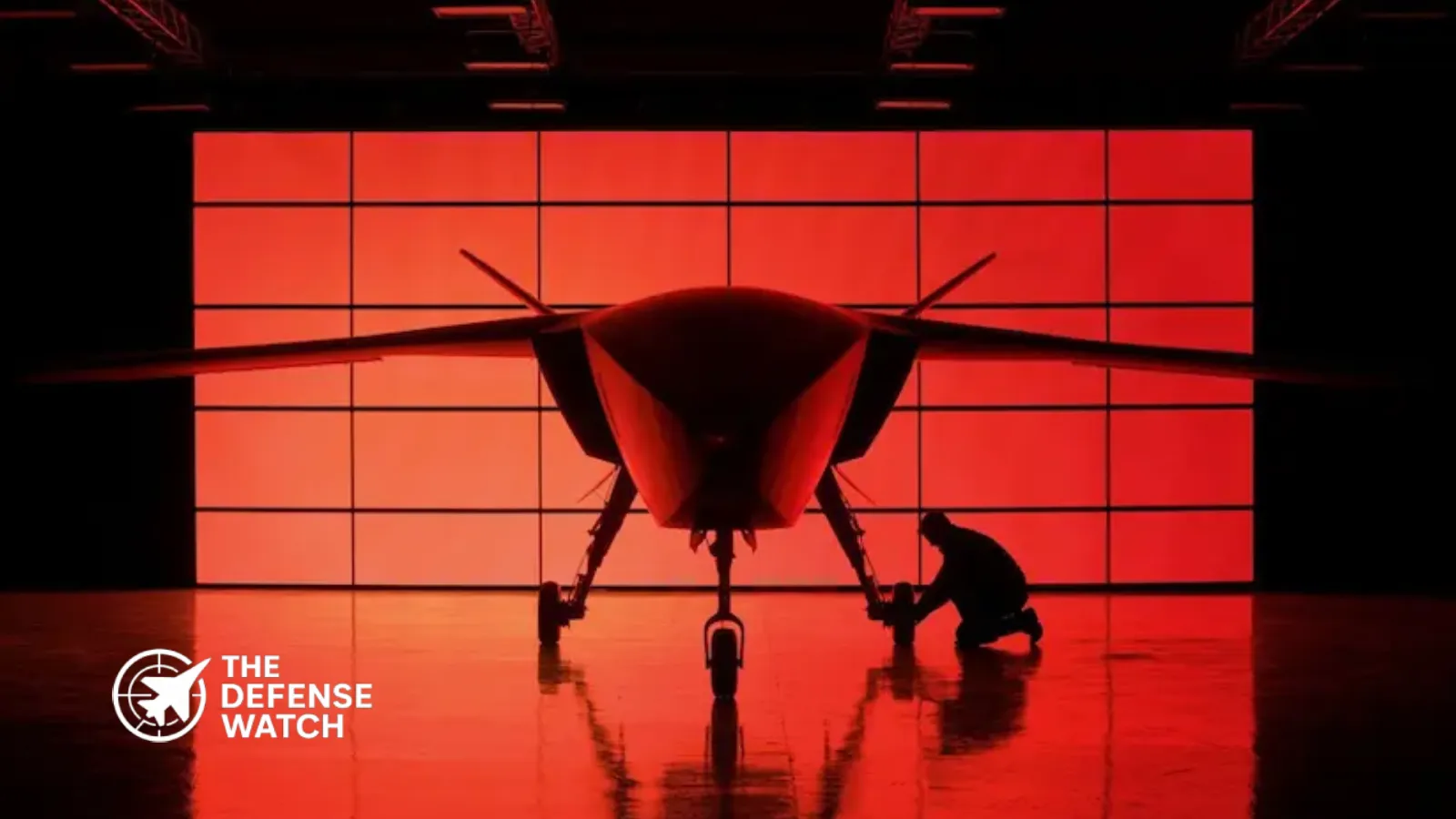
HENSOLDT has won its first order for the CAIRAS missile warning system destined for Helsing’s CA-1 Europa autonomous combat aircraft. The German defence electronics company will supply three CAIRAS units as part of the AMPS-MR (Airborne Missile Protection System – Modular Reconfigurable) configuration.
The award marks the initial concrete self-protection and passive optronic reconnaissance contract under the strategic partnership announced by HENSOLDT and Helsing in February 2026. Under that agreement, HENSOLDT is providing a suite of sensor technologies—radar, optronics, self-protection and electromagnetic warfare—for the AI-powered unmanned combat platform.
Christina Canitz, Head of the Optronics Division at HENSOLDT, stated: “The integration of CAIRAS into an unmanned system marks a turning point: self-protection was long a matter for manned platforms. Now it is becoming a fundamental requirement for autonomous systems that must survive and make decisions independently.”
Technical Configuration of the AMPS-MR Suite
CAIRAS forms the core of the AMPS-MR package selected for the CA-1 Europa. The configuration pairs the dual-colour infrared missile warning system with HENSOLDT’s Kalætron radar warning receiver and a decoy dispenser.
CAIRAS employs passive dual-colour infrared sensors to detect approaching missiles at an early stage without emitting signals that could reveal the aircraft’s position. The system consists of a central processing unit and up to seven latest-generation infrared sensors. HENSOLDT states that this arrangement delivers a high probability of detection while keeping false-alarm rates low. It provides full spherical 360-degree coverage and can detect and localise incoming fire.
In addition to threat warning, the infrared imagery generated by CAIRAS can be processed into a real-time panoramic view of the aircraft’s surroundings. This data can be fused through HENSOLDT’s MDOcore software suite, supporting broader situational awareness and autonomous decision-making.
Operational Implications for Autonomous Combat Aircraft
The absence of an onboard pilot changes the self-protection equation. Manned aircraft can rely on aircrew judgement to assess ambiguous threats; unmanned systems require sensor data that machines can interpret reliably and act upon without human intervention. Passive detection is therefore particularly relevant: it preserves the aircraft’s low-observable signature while still providing the cueing needed for autonomous countermeasures.
This first AMPS deployment on an unmanned aerial vehicle also signals a broader shift in European unmanned combat aircraft design. Self-protection is no longer treated as a later retrofit but is being engineered into the platform from the outset. The CA-1 Europa programme, developed by Helsing, aims to field an AI-enabled autonomous combat aircraft capable of operating in contested electromagnetic environments. Reliable, low-emission threat warning is a prerequisite for such missions.
From a U.S. and allied perspective, the development underscores the growing maturity of European sensor suites for collaborative combat aircraft concepts. While the CA-1 Europa is a European programme, the underlying technologies—passive infrared missile warning, radar warning, and multi-source data fusion—align with requirements seen in U.S. Collaborative Combat Aircraft and related unmanned initiatives.
Partnership Context and Industrial Significance
The February 2026 partnership between HENSOLDT and Helsing positions the German sensor house as a primary provider of onboard sensing for the CA-1 Europa. The CAIRAS order is the first tangible outcome of that relationship in the self-protection domain.
HENSOLDT has long supplied missile warning and electronic warfare systems for manned platforms across NATO air forces. Extending that portfolio to autonomous combat aircraft expands the addressable market and demonstrates the adaptability of existing sensor architectures to unmanned airframes.
The three-system initial order is modest in scale but strategically significant: it validates the technical interface between CAIRAS and the CA-1 Europa’s avionics and autonomy stack, clearing the path for potential follow-on production if the programme advances.
Conclusion
HENSOLDT’s first CAIRAS order for the Helsing CA-1 Europa establishes passive missile warning as a baseline capability for a new generation of European autonomous combat aircraft. By integrating dual-colour infrared detection, radar warning and decoy dispensing into a single AMPS-MR suite, the companies are addressing a core operational requirement of unmanned systems—survival and independent decision-making in contested airspace—without relying on active emissions that would compromise the platform’s signature.
The contract represents both a technical milestone for HENSOLDT’s airborne self-protection portfolio and an early industrial marker for Helsing’s CA-1 Europa programme.
