Executive Summary:
The UK-led HMS Prince of Wales Carrier Strike Group has arrived in Norway as part of NATO operations focused on Arctic and High North maritime security. The deployment reinforces allied naval presence near strategically important northern sea lanes amid increasing regional military activity.
HMS Prince Of Wales Carrier Strike Group Arrives In Norway
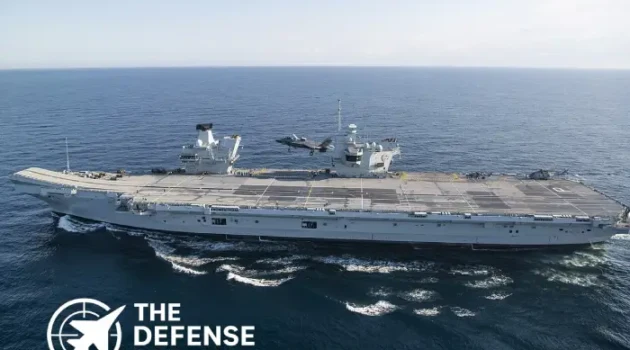
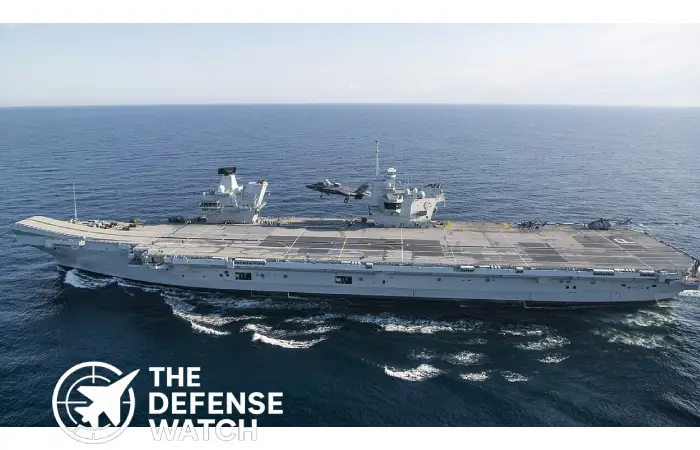
The UK HMS Prince of Wales Carrier Strike Group has entered Norwegian waters to support NATO maritime security operations in the High North, underscoring the alliance’s increasing focus on Arctic deterrence and regional naval readiness.
Report, the deployment forms part of a broader NATO effort to maintain freedom of navigation, improve interoperability among allied naval forces, and reinforce collective defense capabilities in northern Europe.
The arrival of the British carrier strike group comes at a time when Arctic and North Atlantic security dynamics continue to evolve. NATO members have expanded military coordination in the region following heightened strategic competition and increased military activity across the High North maritime domain.
Strategic Importance Of Norway And The High North
Norway remains one of NATO’s most strategically important northern flank states due to its proximity to the Arctic Ocean, Barents Sea, and North Atlantic maritime routes. The country regularly hosts allied naval and air operations designed to improve cold-weather warfare readiness and maritime domain awareness.
The deployment of HMS Prince of Wales demonstrates the Royal Navy’s ability to project power into northern waters while operating alongside NATO partners under challenging environmental conditions. Carrier strike operations in the Arctic require extensive coordination involving naval aviation, anti-submarine warfare assets, logistics vessels, and escort warships.
Military analysts increasingly view the High North as a critical operational theater because of expanding shipping routes, undersea infrastructure concerns, and the strategic importance of Arctic access points. NATO has steadily increased surveillance and joint exercises in response to these developments.
Composition Of The Carrier Strike Group
The HMS Prince of Wales Carrier Strike Group includes escort destroyers, frigates, support vessels, and embarked air assets designed to conduct multi-domain operations. The carrier serves as the centerpiece of the deployment and provides NATO with a mobile sea-based airpower platform capable of supporting intelligence, surveillance, reconnaissance, and strike operations.
The British aircraft carrier can operate the Lockheed Martin F-35B Lightning II, which gives the strike group advanced fifth-generation combat aviation capability. The integration of carrier aviation with NATO maritime forces improves the alliance’s ability to conduct coordinated operations across the North Atlantic and Arctic regions.
The deployment also highlights continued UK investment in carrier-enabled expeditionary operations. Since returning to carrier strike capability, the Royal Navy has used HMS Prince of Wales and its sister ship, HMS Queen Elizabeth, to support NATO missions, multinational exercises, and Indo-Pacific deployments.
NATO Maritime Security And Deterrence
NATO’s maritime posture in northern Europe has become increasingly important as allied nations seek to secure critical sea lanes and protect regional infrastructure. The alliance has prioritized anti-submarine warfare, integrated air and missile defense, and maritime surveillance across the North Atlantic.
The presence of the HMS Prince of Wales Carrier Strike Group in Norway contributes to NATO’s layered deterrence strategy by demonstrating rapid deployment capability and sustained multinational naval coordination.
Beyond military signaling, the deployment also supports operational integration among allied navies. Joint operations in the High North allow NATO forces to refine command structures, communications interoperability, and Arctic logistics support under real-world conditions.
The Royal Navy’s participation aligns with broader NATO modernization initiatives focused on readiness, mobility, and forward presence. These missions are increasingly viewed as essential for maintaining stability in strategically contested maritime regions.
Growing Focus On Arctic Security
The Arctic region has gained strategic importance due to climate-driven access changes, expanding economic interests, and evolving geopolitical competition. NATO members have responded by strengthening military cooperation and increasing exercises in northern waters.
Carrier operations in the Arctic environment also provide valuable operational experience for naval aviation units and maritime commanders. Extreme weather, limited daylight periods, and complex sea conditions present unique challenges that directly influence mission planning and force sustainment.
The UK’s deployment to Norway reflects a wider allied effort to maintain credible maritime power projection capabilities across Europe’s northern approaches. It also reinforces NATO’s commitment to collective defense and regional stability in the High North.