Executive Summary:
BAE Systems has signed a new industrial cooperation agreement with Poland aimed at supporting future local armored vehicle production. The agreement strengthens defense manufacturing ties as Poland continues one of Europe’s largest military modernization programs and seeks greater domestic industrial participation in major procurement projects.
BAE Systems Signs Agreement To Support Polish Armored Vehicle Production
BAE Systems has signed a new cooperation agreement with Polish defense industry partners that could pave the way for localized armored vehicle production in Poland, marking another step in Warsaw’s effort to expand its domestic defense manufacturing base.
- BAE Systems Signs Agreement To Support Polish Armored Vehicle Production
- Agreement Focuses On Industrial Cooperation
- Poland Continues Major Defense Modernization
- Potential Link To Poland’s Future Infantry Fighting Vehicle Plans
- Why Local Production Matters
- Strategic Significance For NATO
- Analysis: Industrial Partnerships Are Becoming As Important As The Vehicles Themselves
The agreement, announced during a signing ceremony in Poland, reflects growing industrial collaboration between BAE Systems’ Swedish subsidiary, BAE Systems Hägglunds, and Polish defense companies. While the agreement does not represent a final procurement contract, it establishes a framework for future cooperation involving manufacturing, technology transfer, maintenance, and long-term industrial support.
The initiative comes as Poland continues an ambitious military modernization program driven by heightened security concerns in Eastern Europe and increased NATO defense spending.
Agreement Focuses On Industrial Cooperation
According to BAE Systems, the agreement is designed to develop local industrial capabilities that could support production of advanced armored vehicles in Poland if future acquisition decisions move forward.
The framework emphasizes several areas of cooperation, including:
| Cooperation Area | Purpose |
|---|---|
| Local manufacturing | Expand armored vehicle production capacity in Poland |
| Technology cooperation | Share industrial expertise and manufacturing knowledge |
| Maintenance and sustainment | Support long-term fleet readiness inside Poland |
| Supply chain development | Increase participation by Polish defense companies |
| Workforce development | Build domestic engineering and production capabilities |
Although financial details and production quantities were not disclosed, the agreement signals BAE Systems’ intention to strengthen its industrial footprint within one of NATO’s fastest-growing defense markets.
Poland Continues Major Defense Modernization
Poland has rapidly expanded defense investment over the past several years, becoming one of NATO’s highest defense spenders relative to GDP.
The country has launched multiple procurement programs that include:
- M1A2 Abrams main battle tanks from the United States
- K2 Black Panther tanks from South Korea
- K9 self-propelled howitzers
- HIMARS and Chunmoo rocket artillery systems
- AH-64E Apache attack helicopters
- Patriot air defense systems
- F-35A Lightning II fighter aircraft
At the same time, Warsaw has consistently emphasized increasing domestic industrial participation rather than relying solely on imported equipment.
Industrial cooperation agreements such as this one allow foreign manufacturers to establish local production, create skilled jobs, improve logistics support, and strengthen long-term maintenance capability.
Potential Link To Poland’s Future Infantry Fighting Vehicle Plans
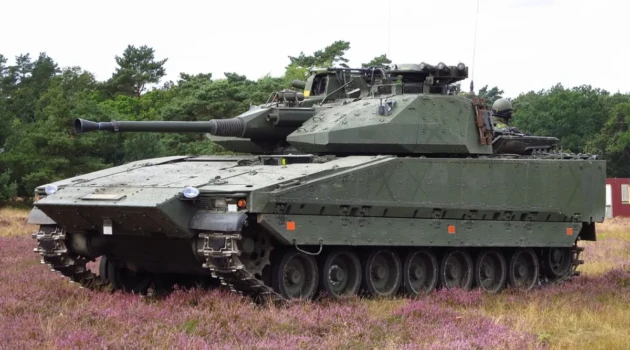
Although the latest agreement does not formally announce a vehicle selection, industry observers have long viewed the CV90 infantry fighting vehicle as a leading candidate for future Polish armored vehicle requirements.
The CV90 family, produced by BAE Systems Hägglunds, has been adopted by multiple European operators and continues to receive modernization upgrades including improved protection, digital architecture, enhanced mobility, and integration with advanced battlefield management systems.
Its growing user base across NATO has increased opportunities for multinational logistics, training, and interoperability.
Any future decision involving localized CV90 production would likely involve significant participation from Poland’s domestic defense industry.
Why Local Production Matters
Local manufacturing has become an increasingly important factor in European defense procurement.
Beyond delivering military equipment, governments increasingly seek industrial benefits that include:
- National manufacturing resilience
- Technology transfer
- Supply chain security
- Faster maintenance and repair
- Reduced dependence on overseas production
- Export opportunities through regional partnerships
For Poland, these objectives align with broader efforts to strengthen its defense industrial base while supporting NATO’s eastern flank.
For manufacturers such as BAE Systems, localized production can improve competitiveness when bidding for large European procurement programs that increasingly require substantial domestic industrial participation.
Strategic Significance For NATO
The agreement reflects a broader trend across Europe in which defense companies are expanding production closer to customer nations.
Russia’s continued military activity in Eastern Europe has accelerated investment in armored vehicles, artillery, ammunition production, and defense manufacturing capacity across NATO.
Rather than purchasing complete platforms built entirely overseas, many European governments now prioritize partnerships that establish sovereign industrial capability inside their own borders.
This approach offers several operational advantages:
- Improved wartime production resilience
- Shorter logistics chains
- Greater availability of spare parts
- Enhanced repair capacity during sustained operations
- Increased interoperability among allied forces
For NATO, expanding armored vehicle production across multiple member states reduces dependence on a limited number of manufacturing facilities while improving collective defense readiness.
Analysis: Industrial Partnerships Are Becoming As Important As The Vehicles Themselves
One of the most significant aspects of modern defense procurement is that industrial participation has become nearly as important as platform performance.
European governments increasingly evaluate bids based on their ability to generate domestic employment, strengthen national supply chains, and transfer advanced manufacturing expertise.
For Poland, whose defense spending has grown rapidly since 2022, building indigenous production capability supports long-term military readiness while reducing reliance on external suppliers for maintenance and sustainment.
For BAE Systems, establishing deeper industrial relationships in Central Europe positions the company to compete more effectively for future armored vehicle programs throughout the region. As European land forces continue recapitalizing Cold War-era equipment, manufacturers offering comprehensive industrial partnerships may gain an advantage over competitors focused solely on equipment sales.
The agreement therefore represents more than an industrial memorandum. It reflects the evolving structure of European defense procurement, where manufacturing capacity, technology sharing, and long-term support have become central elements of national security planning.