Table of Contents
China Deploys World’s Largest Hypersonic Anti-Ship Missile Arsenal
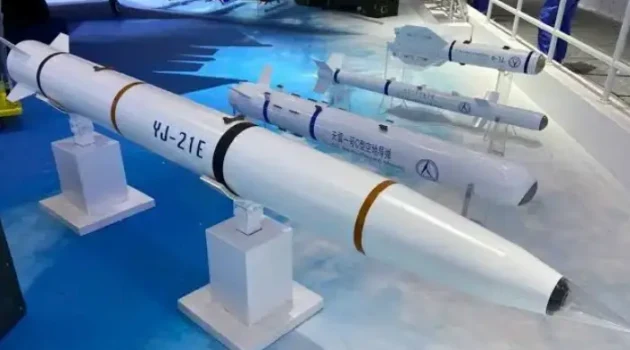
China has developed the world’s leading hypersonic missile arsenal, fundamentally altering naval warfare dynamics in the Indo-Pacific region. As of April 2025, the Chinese Air Force officially confirmed the YJ-21 hypersonic anti-ship missile is operational with the PLAAF, marking a significant expansion of Beijing’s anti-access/area denial capabilities.
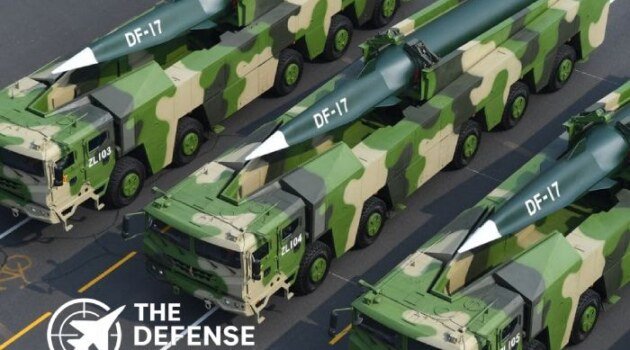
The People’s Liberation Army now fields multiple hypersonic anti-ship systems across air, naval, and land-based platforms. China now operates five types of anti-ship ballistic missiles: DF-21D, DF-26, DF-17, DF-27, and YJ-21, each designed to target U.S. carrier strike groups and allied naval forces operating in contested waters.
The expansion represents a quantum leap in precision strike capability. While exact inventory numbers remain classified, open-source intelligence and Pentagon assessments provide insight into the scale of deployment.
Operational Hypersonic Anti-Ship Systems
YJ-21 Hypersonic Missile
The YJ-21 operates at a cruise speed of Mach 6 with terminal speeds reaching Mach 10, according to People’s Liberation Army Strategic Support Force documentation. The missile can be launched from China’s Type 055 destroyer and H-6 bomber platforms, providing multi-domain strike options.
The H-6K bomber can carry up to four KD-21 air-launched ballistic missiles, the air-launched variant of the YJ-21 system. This capability extends China’s strike radius dramatically, enabling engagement of targets well beyond traditional defensive envelopes.
The Type 055 cruiser integration is particularly significant. China operates eight Type 055 Renhai cruisers equipped with advanced sensors, communications, and 112 vertical launch tubes capable of accommodating the YJ-21 alongside land-attack cruise missiles and air defense weapons.
DF-27 Long-Range Hypersonic System
The DF-27 intermediate-range ballistic missile features a range of 5,000 to 8,000 kilometers, placing Guam, Alaska, and Hawaii within striking distance. According to leaked classified briefings from February 2023, the DF-27 successfully tested on February 25, flying for 12 minutes and traveling 2,100 kilometers.
The system mounts a hypersonic glide vehicle and possesses high probability of penetrating U.S. ballistic missile defenses. The DF-27’s combination of range, speed, and maneuverability makes it a formidable carrier-killer weapon.
U.S. intelligence assessed that land attack and anti-ship variants of the DF-27 were fielded in limited numbers in 2022, suggesting the system achieved initial operational capability relatively recently.
DF-26 “Guam Killer”
The DF-26 has a range exceeding 5,000 kilometers and can conduct precision nuclear or conventional strikes against ground and naval targets. The U.S. Department of Defense estimated in 2023 that China’s People’s Liberation Army Rocket Force had reached 250 intermediate-range ballistic missile launchers, with the vast majority being DF-26 systems.
In June 2022, Pentagon reporting indicated China possesses 400 DF-26 missiles, representing substantial production capacity. Satellite imagery from September 2024 identified 59 DF-26 transporter-erector-launchers at the Beijing Xinghang Electromechanical Equipment Factory, with evidence suggesting at least 72 TELs were assembled since 2020.
The DF-26B anti-ship variant demonstrated operational capability in August 2020 when it struck a moving target ship in the South China Sea after launch from Qinghai province.
DF-21D Anti-Ship Ballistic Missile
The DF-21D has a range exceeding 1,450 kilometers and is fitted with a maneuverable reentry vehicle, making it the world’s first operational anti-ship ballistic missile. The U.S. Department of Defense estimated in 2008 that China had 60-80 DF-21 missiles and 60 launchers, with approximately 10-11 missiles built annually.
The DF-21D reached initial operating capability in 2010, giving China a decade-plus of operational experience with anti-ship ballistic missile technology. The system targets aircraft carriers at medium range, complementing the longer-range DF-26.
September 2025 Parade Revelations
China unveiled three additional hypersonic anti-ship missiles during the Victory Day military parade on September 3, 2025, dramatically expanding the known inventory.
The YJ-17 hypersonic anti-ship missile features a flat warhead and adopts a boost-glide waverider configuration with hypersonic characteristics. The system uses a large booster suggesting surface-launched deployment from warships and land platforms.
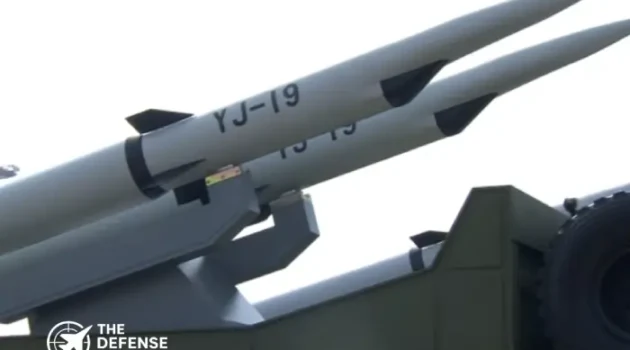
The YJ-19 uses a waverider configuration with an air inlet under the missile body, marking characteristics of an air-breathing hypersonic weapon. This scramjet-powered design enables sustained hypersonic flight throughout the engagement envelope.
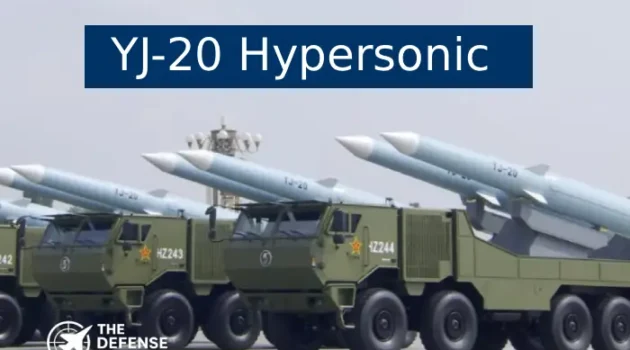
The YJ-20 adopts a bi-conic configuration and is identified as a boost-glide anti-ship missile. The YJ-20 was previously observed launching from a Chinese Type 055 destroyer’s vertical launch system, confirming integration with frontline naval platforms.
The YJ-15, also displayed, appears to be a supersonic rather than hypersonic system, utilizing an axisymmetric four-inlet layout similar to the earlier YJ-12.
Platform Integration and Delivery Methods
Naval Platforms
China’s surface fleet provides extensive launch capacity for hypersonic weapons. The Type 055 cruiser serves as the primary naval platform, with eight vessels operational or nearing completion. Each carries 112 vertical launch cells capable of accommodating various missile types.
Type 052D destroyers, of which China operates over 25 units, provide additional launch capacity with 64 vertical launch cells per vessel. While primarily equipped with land-attack cruise missiles and air defense systems, these platforms can be adapted for anti-ship ballistic missiles.
The PLAN operates approximately 50 attack submarines, though most diesel-electric boats lack vertical launch cells and must fire anti-ship missiles from torpedo tubes, limiting volume of fire compared to surface vessels.
Air-Launched Systems
The H-6K bomber features a combat radius of approximately 3,500 kilometers, enabling it to threaten targets deep in the Western Pacific when armed with standoff weapons. In July 2024, photographs showed H-6K bombers carrying four KD-21 missiles simultaneously.
China operates approximately 120 H-6 variants across bomber units. The fact that China maintains dedicated maritime strike bombers within its naval aviation service suggests sustained commitment to anti-ship weapons inventory.
Land-Based Systems
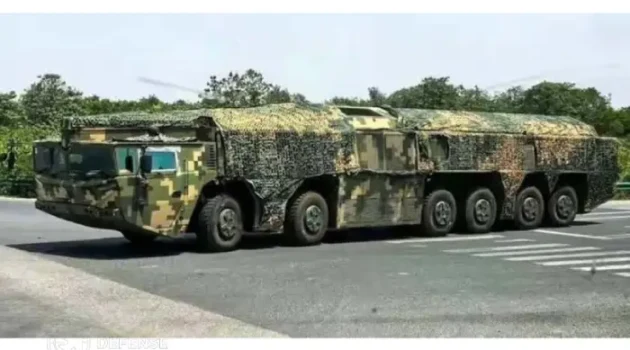
The People’s Liberation Army Rocket Force deploys road-mobile launchers for the DF-21D, DF-26, and DF-27 systems. Recent footage suggests a DF-26 missile brigade possesses at least 25 launch vehicles, with each supported by two transport vehicles carrying three missiles in reserve, enabling 75-missile salvos per brigade.
Analysis indicates at least seven brigades operate the DF-26, providing substantial geographical dispersal and survivability against first strikes.
Technological Capabilities and Threat Assessment
Speed and Maneuverability
Hypersonic weapons operate at speeds exceeding Mach 5, with China’s systems reaching between Mach 6 and Mach 10 during various flight phases. The DF-ZF hypersonic glide vehicle travels between Mach 5 and Mach 10, serving as the payload for the DF-17 system.
Hypersonic cruise missiles fly at altitudes too high for atmospheric interceptors but outside exo-atmospheric coverage, coupled with immense speed and maneuvering capability providing minimized interception risk.
A hypersonic glide vehicle can pull-up after reentering the atmosphere and approach targets in a relatively flat glide, lessening detection time and complicating engagement. This trajectory profile defeats traditional ballistic missile defenses optimized for predictable parabolic paths.
Guidance and Targeting
China’s expanding satellite networks, including GEO ISR with SAR and optical capabilities, provide all-weather imaging over the Pacific and Indian Oceans. Proliferated LEO broadband constellations like Guowang and Qianfan enable resilient command and control for distributed forces.
The BeiDou-3 navigation system provides precision guidance independent of GPS, ensuring Chinese missiles can operate even in contested electromagnetic environments. Hypersonic-space integration enables rapid target changes and accelerated decision cycles.
Defense Penetration
The United States would depend on Patriot air defenders and THAAD to blunt Chinese hypersonic missile attacks, but these systems were primarily designed for ballistic threats following predictable trajectories.
Existing anti-ship missile defense systems in the world face difficulty effectively intercepting missiles adopting different technological paths and configurations. The diversity of Chinese hypersonic designs—boost-glide, waverider, and air-breathing—complicates defensive planning.
Strategic Implications
Anti-Access/Area Denial Architecture
With DF-26 bombers starting at approximately 1,800 miles from the Chinese mainland, U.S. naval forces encounter overlapping threat layers as they approach Taiwan . The DF-21D comes into range at around 900 miles from the coastline, creating a layered defense-in-depth.
The DF-27’s extended range places second island chain targets at risk, including major U.S. military installations on Guam. This forces American forces to operate from greater distances, complicating logistics and reducing sortie rates.
Nuclear-Conventional Ambiguity
The DF-26 can rapidly swap conventional and nuclear warheads, with capability for nuclear precision strikes potentially including low-yield options. This dual-capability creates escalation management challenges during crisis situations.
The DF-26 could field a lower-yield warhead in the near term, according to Chinese defense industry publications. Such systems blur the line between conventional and nuclear conflict, complicating deterrence calculations.
Industrial Production Capacity
China is capable of producing a wide range of naval combatants, gas turbine and diesel engines, and shipboard weapons and electronic systems, making it nearly self-sufficient for all shipbuilding needs. This industrial base supports sustained missile production.
China’s hypersonic missile technologies have greatly advanced during the past 20 years, with many programs comparable to other international top-tier producers. The technological maturation enables serial production rather than limited developmental runs.
Analysis: Changing Naval Balance
China’s hypersonic anti-ship missile inventory represents the most comprehensive attempt to deny sea control to a peer competitor since the Cold War. The combination of quantity, quality, and platform diversity creates operational dilemmas for U.S. and allied naval forces.
The multi-domain integration—with air, surface, subsurface, and land-based launch options—complicates defensive planning. Adversaries must simultaneously defend against ballistic, cruise, and hypersonic threats arriving from multiple axes.
The sheer numbers matter strategically. With an estimated 250-400 DF-26 launchers, multiple DF-21D brigades, growing DF-27 deployments, and increasing numbers of YJ-21 systems aboard destroyers and bombers, China can generate overwhelming salvos against high-value targets.
Current U.S. naval air defenses, centered on the Aegis combat system with SM-6 and SM-3 interceptors, face saturation risks against massed attacks. The Navy’s shift toward distributed maritime operations reflects recognition that concentrated carrier strike groups present lucrative targets for Chinese missile forces.
The technological sophistication continues advancing. The September 2025 parade revealed systems using multiple propulsion methods—solid rocket boosters, scramjets, and waveriders—suggesting ongoing experimentation and refinement. China is not resting on initial operational capability but rather iterating toward improved performance.
Intelligence assessments indicate China views these weapons as central to Taiwan contingency planning. The ability to threaten U.S. carrier groups operating in defense of Taiwan potentially alters the military balance, raising questions about American willingness to accept casualties in a regional conflict.
Looking forward, the pace of Chinese hypersonic development shows no signs of slowing. With the world’s largest shipbuilding capacity, extensive satellite infrastructure, and commitment to military modernization, China possesses the resources to further expand and refine these capabilities through 2035 and beyond.
FAQs
How many hypersonic anti-ship missiles does China have?China operates an estimated 250-400 DF-26 launchers, multiple DF-21D brigades, limited numbers of DF-27 systems, and growing inventories of YJ-21, YJ-17, YJ-19, and YJ-20 missiles. Exact numbers remain classified, but estimates suggest several thousand missiles across all variants when including reload rounds.
What is the fastest Chinese hypersonic anti-ship missile?The YJ-21 achieves terminal speeds of Mach 10 according to Chinese military publications, while maintaining Mach 6 cruise speeds. The DF-ZF glide vehicle used on the DF-17 also reaches speeds between Mach 5 and Mach 10.
Can U.S. defenses intercept Chinese hypersonic missiles?Current U.S. ballistic missile defenses face significant challenges intercepting hypersonic weapons due to their maneuverability, unpredictable trajectories, and high speeds. Systems like THAAD, Patriot, and SM-6 provide some capability but are optimized for traditional ballistic threats.
What platforms launch Chinese hypersonic anti-ship missiles?China employs air, naval, and land-based platforms including H-6K bombers, Type 055 destroyers, Type 052D destroyers, and mobile ground launchers. This multi-domain integration complicates defensive planning.
How does China target moving ships with hypersonic missiles?China uses space-based ISR satellites providing synthetic aperture radar and optical imaging, combined with the BeiDou navigation system for precision guidance. Advanced seekers enable terminal phase target acquisition and tracking.

https://www.effectivecpmnetwork.com/s00uqrtd55?key=0eb6b1d808afb61db521795b88762ea2