

(adsbygoogle = window.adsbygoogle || []).push({});Executive Summary:
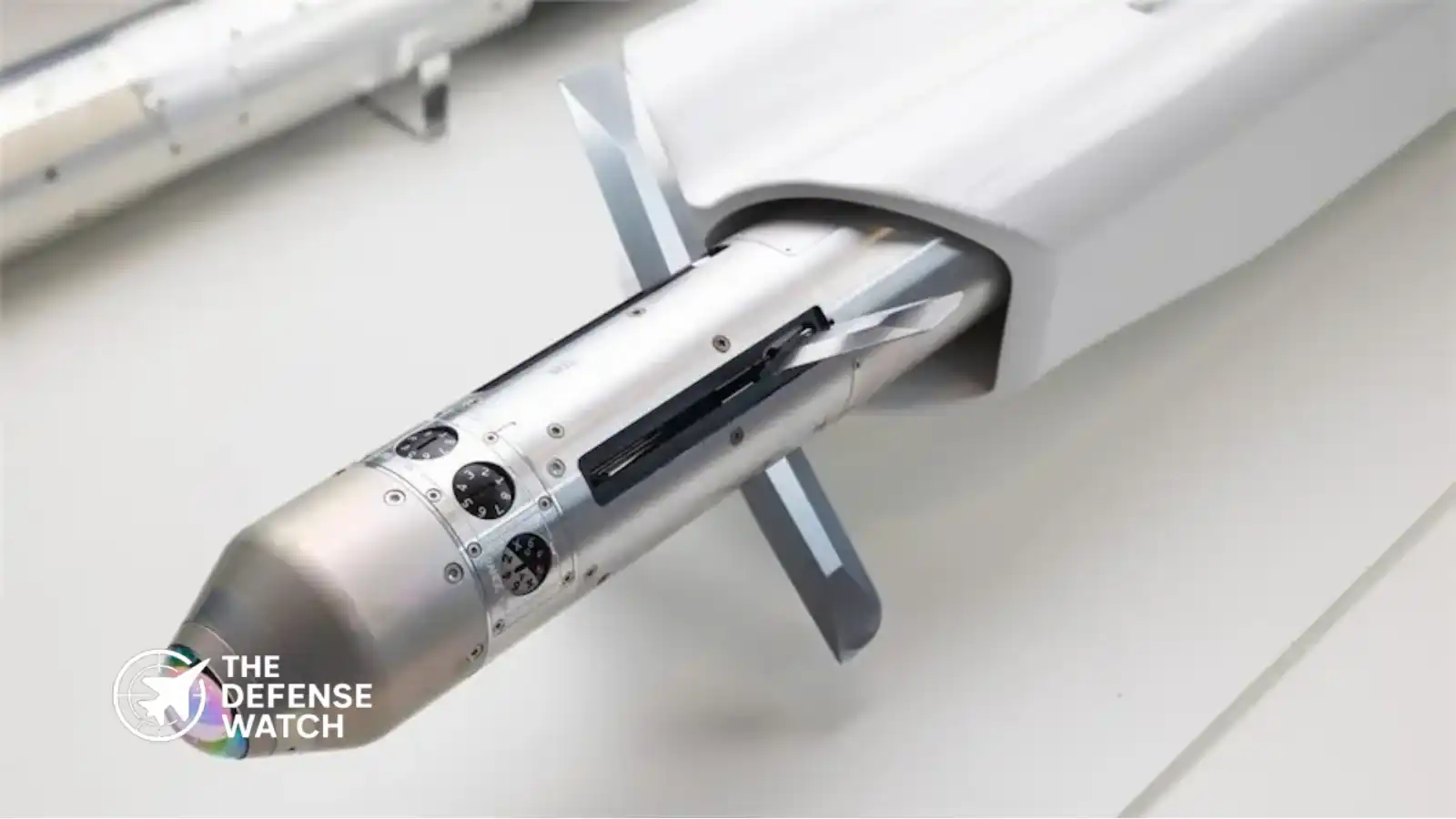
Thales has unveiled the LGR275 PROXY, a new 70mm laser guided rocket designed specifically for counter drone operations. Introduced at Eurosatory 2026, the system adds a proximity sensing capability to the company’s existing laser guided rocket family, aiming to provide a lower cost option for defeating increasingly common unmanned aerial threats.
Thales Launches LGR275 PROXY Counter Drone Rocket At Eurosatory 2026
Thales has introduced the LGR275 PROXY, a new 70mm laser guided rocket optimized for counter unmanned aerial system (C-UAS) missions. The system was officially unveiled during Eurosatory 2026 and represents the latest evolution of the company’s laser guided rocket portfolio.
According to Thales, the LGR275 PROXY is designed to address one of the most pressing challenges facing modern air defense forces: defeating low cost drones without relying on significantly more expensive interceptor missiles. The rocket combines semi active laser guidance with a new proximity sensing capability and a warhead tailored for aerial targets.
The development reflects lessons learned from recent conflicts in Europe and the Middle East, where inexpensive drones have repeatedly challenged conventional air defense systems.
New Proximity Sensor Designed For Drone Engagements
A key feature of the LGR275 PROXY is the integration of a proximity sensor positioned behind the rocket’s guidance section.
Unlike traditional laser guided rockets that typically require a direct hit, the new sensor allows the warhead to detonate when the rocket passes within a defined distance of an aerial target. This significantly increases the probability of successfully engaging small and maneuvering drones.
Thales officials stated that the sensor was specifically developed to improve performance against unmanned aircraft, particularly smaller drone classes that can be difficult to destroy through direct impact alone.
Key Reported Characteristics
| Feature | LGR275 PROXY |
|---|---|
| Caliber | 70 mm (2.75 inch) |
| Guidance | Semi active laser guidance |
| Target Type | Unmanned aerial systems |
| Sensor | Integrated proximity sensor |
| Mission Types | Air-to-air and surface-to-air |
| Manufacturer | Thales Belgium |
Specifications based on information released by Thales and industry reporting as of June 2026.
(adsbygoogle = window.adsbygoogle || []).push({});Addressing The Cost Exchange Problem
The emergence of mass produced drones has created a growing economic challenge for military planners.
Many air defense systems rely on interceptors costing tens or hundreds of thousands of dollars to defeat targets that may cost only a fraction of that amount. This unfavorable cost exchange ratio has become increasingly visible in conflicts involving one way attack drones and loitering munitions.
The LGR275 PROXY is intended to help close that gap. By leveraging an existing 70mm rocket architecture and adding specialized counter drone capabilities, Thales aims to provide armed forces with a more affordable interception option that can be fielded in larger quantities.
This approach mirrors broader international efforts to expand the use of guided rockets for air defense missions. In the United States, systems such as the Advanced Precision Kill Weapon System (APKWS) and L3Harris’ VAMPIRE have demonstrated growing interest in lower cost precision rockets as drone interceptors.
(adsbygoogle = window.adsbygoogle || []).push({});Integration With SkyDefender Air Defense Architecture
Thales confirmed that the LGR275 PROXY will be integrated into its SkyDefender air defense ecosystem.
SkyDefender is designed as a layered counter UAS architecture that combines sensors, command and control systems, electronic warfare tools, and kinetic effectors. The addition of the new rocket provides another engagement option within that broader defensive framework.
The ability to conduct both air-to-air and surface-to-air engagements also expands operational flexibility. The rocket can potentially be employed from multiple launch platforms depending on customer requirements and integration choices.
Strategic Implications For NATO And Allied Forces
The introduction of the LGR275 PROXY highlights a wider shift in Western defense procurement priorities.
Over the past several years, NATO militaries have increasingly focused on building layered defenses against drones ranging from small commercial quadcopters to larger one way attack systems. Traditional missile based air defense remains essential against aircraft and cruise missiles, but many defense organizations now recognize the need for lower cost interceptors optimized for drone threats.
For European forces, the LGR275 PROXY could offer a domestically produced alternative within a growing market for counter drone weapons. Its compatibility with existing laser guidance technologies may also simplify integration across a variety of launch platforms.
From a U.S. perspective, the development underscores a broader trend toward precision guided rockets as air defense weapons. The increasing use of 70mm guided rockets by NATO allies suggests that future counter drone operations may rely on a mix of missiles, guns, electronic warfare systems, and guided rockets rather than any single solution.
Production Expansion Planned Through 2028
Thales Belgium has announced plans to increase production capacity for its guided rocket family to meet growing international demand.
The company stated that output will rise substantially between 2026 and 2028 as armed forces seek additional counter drone capabilities and precision munitions. The production increase is intended to support both domestic and export customers while strengthening supply chain resilience.
The move reflects continued growth in the global market for affordable precision weapons capable of countering unmanned threats across multiple operational environments.
