(adsbygoogle = window.adsbygoogle || []).push({});Executive Summary:
Israel Aerospace Industries (IAI) has unveiled OPAL Next Generation (OPAL-NG), an AI-enabled, decentralized airborne battle management system targeting sixth-generation platforms and multi-domain operations. Publicly debuted at ILA Berlin 2026, OPAL-NG builds on over a decade of operational deployment and introduces edge computing, real-time decentralized networking, and enhanced manned-unmanned teaming capabilities. The system is positioned to address the growing demand for interoperable, sensor-fused, and faster sensor-to-shooter cycles in modern contested environments.
IAI Debuts OPAL-NG: A Next-Generation Battle Management System Built For Tomorrow’s Battlespace
Israel Aerospace Industries has officially unveiled the OPAL-NG battle management system, the most advanced iteration of its airborne decentralized command and control platform, designed explicitly for sixth-generation aircraft and multi-domain force integration. The announcement was made on June 3, 2026, ahead of the system’s first public demonstration at ILA Berlin Air Show.
- IAI Debuts OPAL-NG: A Next-Generation Battle Management System Built For Tomorrow’s Battlespace
- What Is OPAL-NG?
- Edge AI: The Core Differentiator
- Manned-Unmanned Teaming and Collaborative Combat Aircraft
- Architecture Designed for Multi-Domain Warfare
- IAI Leadership On The Strategic Vision
- Operational Pedigree: More Than A Concept
- Why This Matters For U.S. Defense Observers
- Conclusion
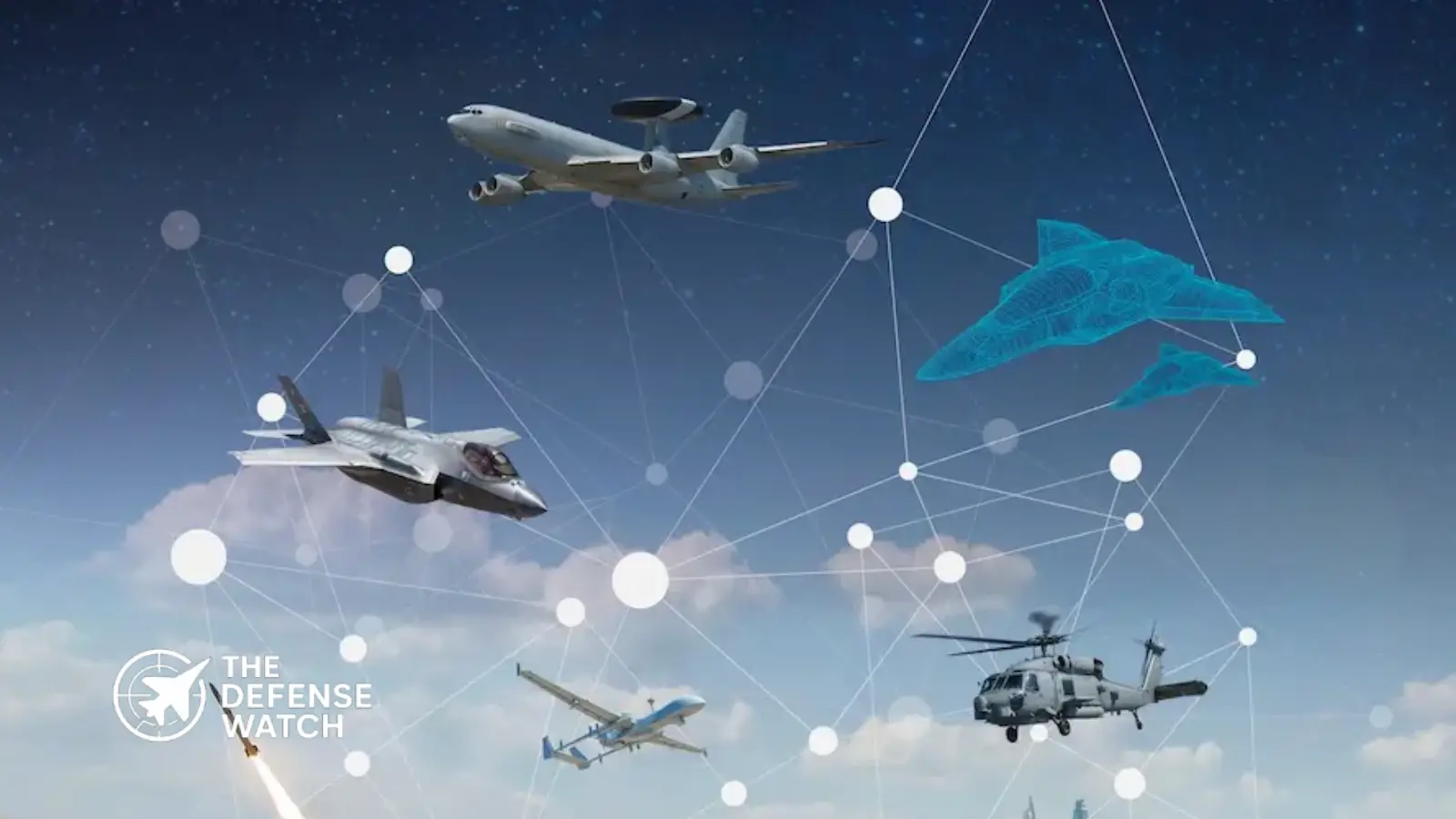
OPAL-NG represents a significant leap from its predecessor — the legacy OPAL system, which has already been deployed across fighter aircraft, helicopters, UAVs, mission aircraft, airborne early warning platforms, naval vessels, and command centers. The next-generation platform does not merely iterate on that foundation — it redefines it.
What Is OPAL-NG?
At its core, OPAL-NG creates a shared operational picture between platforms, enabling them to exchange not only data, but also high-quality voice, imagery, video, and mission-level insights in real time.
(adsbygoogle = window.adsbygoogle || []).push({});This goes beyond conventional data-link functionality. The system is architected as a software-defined, open-architecture avionics framework, giving operators and customers the flexibility to integrate existing systems, datalinks, and software-defined radios — while also developing mission applications tailored to their own national requirements.
OPAL-NG supports interoperability with NATO standards, including Link-16, making it directly relevant to alliance operations and export markets across Europe and the Indo-Pacific.
Edge AI: The Core Differentiator
The most consequential upgrade in OPAL-NG is the integration of edge-based artificial intelligence. OPAL-NG introduces edge-based AI to improve real-time data processing, prioritization, and decision support at platform level.
This is operationally significant. Traditionally, data-intensive battle management functions have relied on back-end processing nodes or ground-based infrastructure. By pushing AI inference to the platform edge, OPAL-NG allows individual aircraft, drones, or naval assets to process and act on targeting data without waiting for centralized authorization — a critical advantage in GPS-denied, communications-degraded, or electronic warfare-heavy environments.
The system is intended to shorten the sensor-to-shooter cycle by turning large volumes of multi-source data into actionable insights within milliseconds. In fast-moving air combat or time-critical strike scenarios, that millisecond advantage is the margin between mission success and failure.
Manned-Unmanned Teaming and Collaborative Combat Aircraft
OPAL-NG is explicitly designed for the emerging Collaborative Combat Aircraft (CCA) paradigm — a doctrinal model in which manned fighters operate alongside autonomous or semi-autonomous unmanned wingmen. The system allows unmanned platforms to operate as an extension of manned assets, enabling sensing, electronic warfare, interception, and strike functions to be shared dynamically through continuous real-time collaboration during missions.
(adsbygoogle = window.adsbygoogle || []).push({});This positions IAI’s offering in direct competition with developmental CCA programs underway in the United States — including USAF’s Collaborative Combat Aircraft initiative and DARPA’s LongShot program — as well as European FCAS and British Tempest efforts. OPAL-NG offers a mature, fieldable solution with documented operational history at a time when Western programs are still in advanced development.
For U.S. allies lacking indigenous sixth-generation programs but fielding advanced F-35s, F-15EXs, or next-generation rotorcraft, OPAL-NG presents a credible interoperability and capability upgrade path.
Architecture Designed for Multi-Domain Warfare
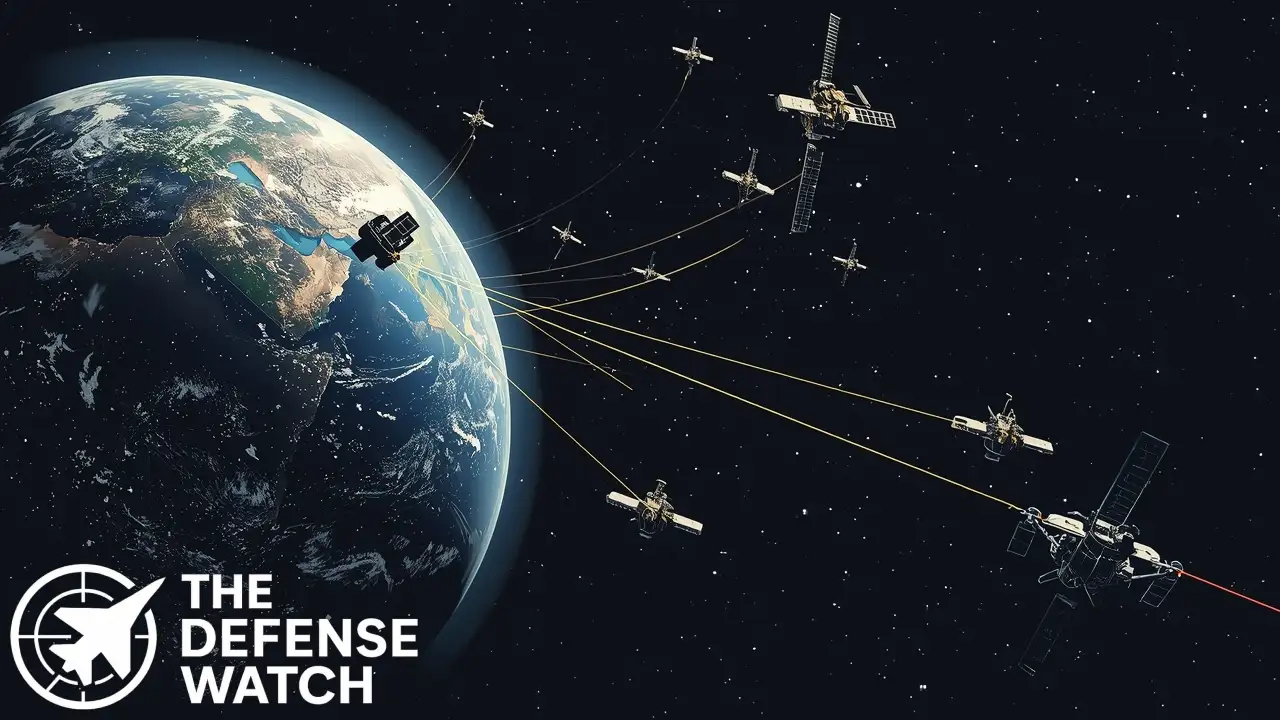
OPAL-NG is designed to enable seamless interoperability, real-time data sharing, and unified multi-domain situational awareness, supporting operations across air, land, and naval forces.
The new version also includes a real-time decentralized network that supports faster and more resilient multi-domain operations in complex and challenging environments.
The decentralized architecture is a deliberate design choice against modern threats. Centralized command nodes are high-value targets in peer-to-peer conflict — whether through kinetic strikes, cyber intrusion, or electronic jamming. A decentralized mesh, where every node holds actionable situational awareness independently, is far more survivable in contested battlespace.
(adsbygoogle = window.adsbygoogle || []).push({});IAI Leadership On The Strategic Vision
IAI’s senior leadership was direct in framing OPAL-NG as a long-term strategic investment.
“Future combat will be defined by interoperability, speed, and the ability to operate as a cohesive, multi-domain force. OPAL-NG reflects our long-term investment in advanced battle management solutions that connect platforms, systems, and operators into a single operational framework,” said Boaz Levy, IAI’s Chairman of the Board.
“OPAL-NG fundamentally changes how forces operate by creating a shared operational picture across platforms and domains. The added capabilities further strengthen real-time operations, enabling faster sensor-to-shooter cycles and more effective coordination between distributed assets,” said Yaacov Berkovitz, EVP and General Manager of IAI Aviation.
The language is deliberate. Sensor-to-shooter cycle” reduction, “distributed assets,” and “open architecture” are precisely the phrases that resonate with U.S. Air Force, Navy, and allied procurement officials currently defining next-generation requirements documents.
Operational Pedigree: More Than A Concept
Unlike many systems unveiled at air shows, OPAL-NG carries real operational credibility. The system builds on more than a decade of continuous development and operational experience from the legacy OPAL solution, which has been fielded across a diverse range of platform types.
(adsbygoogle = window.adsbygoogle || []).push({});That breadth of deployment — spanning fixed-wing fighters, rotary-wing platforms, early warning aircraft, UAVs, ships, and ground command centers — means the system has already been stress-tested in complex, multi-domain environments. OPAL-NG is not a clean-sheet design being offered on the promise of future capability. It is an evolution of proven architecture.
Why This Matters For U.S. Defense Observers
The U.S. Department of Defense has placed Joint All-Domain Command and Control (JADC2) at the center of its force modernization strategy. JADC2’s foundational requirement — connecting sensors and shooters across all domains in real time — is precisely what OPAL-NG is engineered to deliver at the platform level.
For U.S. allies operating American-built platforms, a NATO-compatible, AI-enabled battle management layer like OPAL-NG could serve as a practical bridge between current capabilities and full JADC2 integration. Moreover, as the Pentagon accelerates CCA acquisition, allied air forces will need compatible manned-unmanned teaming infrastructure. OPAL-NG offers one.
IAI’s nearly $33 billion order backlog — reported in Q1 2026 — signals that global demand for Israeli defense systems remains robust despite geopolitical headwinds. OPAL-NG is the kind of high-margin, software-driven product that positions IAI well in markets where hardware parity is becoming table stakes, and software superiority is the real differentiator.
Conclusion
OPAL-NG arrives at a defining moment for airpower modernization. As sixth-generation fighter programs advance across the U.S., Europe, and Asia, the demand for platform-agnostic, AI-enabled, multi-domain command systems will only accelerate. IAI has, by all available evidence, a mature, combat-validated foundation from which to compete in that market.
The first public demonstration at ILA Berlin 2026 will be closely watched by NATO procurement officials, allied air forces, and industry competitors alike.