NATO Training Hub Sets Strategic Direction Through 2030
The NATO Joint Warfare Centre has launched a new five-year campaign plan intended to guide its work on training, exercises and warfare development through to 2030. The initiative, unveiled January 26 in Stavanger, Norway, establishes a comprehensive framework for synchronizing activities, managing transformation, and institutionalizing innovation as the Alliance adapts to an increasingly complex security environment.
- NATO Training Hub Sets Strategic Direction Through 2030
- Five Strategic Objectives Drive Modernization Effort
- Digital Integration and AI-Enabled Capabilities
- Shift Toward Theater-Wide Training Models
- Warfare Development Beyond Exercise Delivery
- Strategic Context and Future Direction
- Implementation and Organizational Transformation
- Implications for Alliance Readiness
Major General Ruprecht von Butler, Commander of the JWC, said the document sets a unified direction for the command’s future role within the Alliance. The campaign plan represents a significant shift in NATO’s approach to operational readiness, moving beyond traditional headquarters-based training toward theater-wide, strategically integrated models that test real-world operational plans using emerging technologies and increased realism.
Five Strategic Objectives Drive Modernization Effort
The JWC Campaign Plan 2026-2030 outlines five core strategic objectives designed to position the organization as the Alliance’s central enabler for warfare development and training of operational and strategic headquarters. These objectives prioritize delivering high-quality multi-domain exercises, driving warfare development from Allied Command Transformation concepts into Allied Command Operations execution, and informing future Alliance direction through rigorous testing of NATO defense plans.
Additional priorities include developing a modern digitally enabled workforce and enhancing organizational agility to meet accelerating demands. The framework is designed to improve alignment with the NATO Warfighting Capstone Concept, NATO’s Warfare Development Agenda, a new Campaign Approach to Exercises, and the Audacious Training Initiative.
The Joint Warfare Centre serves as a critical link between Allied Command Transformation and Allied Command Operations, bridging the gap between conceptual warfare development and practical warfighting readiness. Established in Stavanger in October 2003, the JWC has evolved into NATO’s primary training focal point for full-spectrum joint operational and strategic-level warfare.
Digital Integration and AI-Enabled Capabilities
The campaign plan emphasizes significant technological advancement, with planned priorities including development of a combined opposing forces capability, deeper utilization of modeling and simulation, and improved digital infrastructure. Integration of AI-enabled tools represents a cornerstone of the modernization effort, reflecting NATO’s recognition that future warfare requires advanced computational capabilities and data-driven decision-making processes.
Von Butler emphasized the necessity of organizational evolution to meet contemporary challenges. The campaign plan positions the JWC to expand its exercise spectrum, shorten planning timelines, integrate military and multi-domain effects, evolve organizational structure, and fully adopt digital ways of working. These changes respond to the accelerating complexity of modern warfare and ensure the organization maintains readiness for evolving operational demands.
Shift Toward Theater-Wide Training Models
The campaign plan reflects a fundamental transformation in Alliance training methodology. Rather than focusing solely on headquarters-based process drills, the new approach emphasizes theater-wide and strategically integrated models that test real-world operational plans and emerging concepts. This evolution incorporates increased realism, enhanced agility, and integration of new technologies across multiple domains.
The JWC began implementing amended exercise planning processes in March 2025 under a “new ways of working” initiative aimed at improving resource management, increasing ownership in exercises, and supporting digital transformation. This preparatory work laid the groundwork for the comprehensive campaign plan now guiding operations through 2030.
Over the past two decades, the JWC has planned and delivered more than 100 exercises and training events, ensuring NATO commanders and staffs maintain preparedness for any mission. The organization delivers three of NATO’s four core multi-domain exercises: STEADFAST DETERRENCE, STEADFAST DUEL, and STEADFAST DAGGER, which replaced earlier exercise series following NATO’s 2022 Madrid Summit.
Warfare Development Beyond Exercise Delivery
While exercises represent the most visible aspect of the JWC’s mission, the organization’s role in joint and combined warfare development at operational and strategic levels offers enduring benefits to the Alliance. The JWC functions as NATO’s transformational hub in Europe, executing the Alliance’s largest-scale, multi-domain computer-assisted command post exercises while simultaneously harvesting dividends in warfare development and innovation.
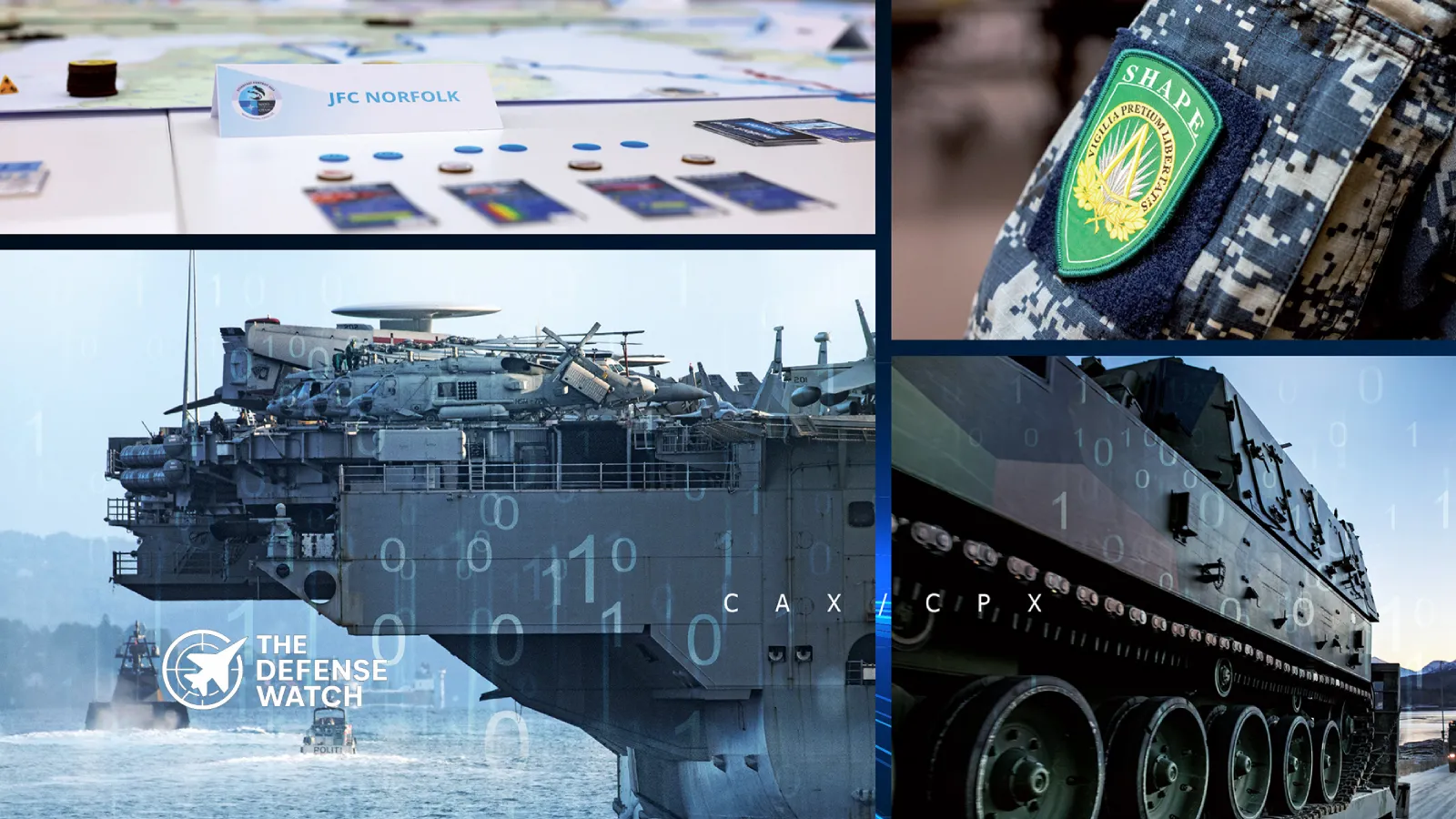
The center incorporates warfare development activities into collective training and exercises, including wargame design and the testing, validation, and integration of new concepts and doctrine development. It applies lessons learned processes to continuously improve NATO capabilities, contributing to overall warfighting readiness for both NATO Command and Force Structure Headquarters.
The JWC’s workforce comprises NATO international civilians and military personnel from 18 member nations, including Canada, Czech Republic, Denmark, Finland, France, Germany, Greece, Hungary, Italy, the Netherlands, Norway, Poland, Portugal, Romania, Spain, Türkiye, the United Kingdom, and the United States. This multinational composition ensures diverse perspectives and expertise inform warfare development efforts.
Strategic Context and Future Direction
The campaign plan’s launch comes as NATO faces an evolving security landscape characterized by great power competition, technological disruption, and multi-domain threats. The Alliance has increased its collective defense posture significantly since Russia’s full-scale invasion of Ukraine in February 2022, with enhanced readiness requirements driving demand for more sophisticated training and exercise capabilities.
Von Butler noted that the campaign plan ensures the organization remains fully prepared for accelerating complexity. By positioning the JWC to provide the critical link between emerging concepts, real-world observations, and operational readiness, the plan establishes a foundation for sustained Alliance adaptation through the remainder of the decade.
The JWC supports both collective defense operations and crisis response missions, ensuring high standards of preparedness across the peace, crisis response, and conflict continuum. Its contribution to NATO’s deterrence threshold remains essential as the Alliance maintains its 360-degree approach to security across the Euro-Atlantic area and beyond.
Implementation and Organizational Transformation
Implementation of the campaign plan requires significant organizational evolution. The JWC must expand its capacity to deliver complex, multi-domain exercises while simultaneously shortening planning timelines to respond to dynamic security requirements. Integration of military effects across all domains—land, sea, air, space, and cyber—demands enhanced coordination mechanisms and advanced technical infrastructure.
The center’s adoption of digital ways of working extends beyond simple technology integration. It encompasses fundamental changes to organizational culture, processes, and capabilities designed to maximize efficiency and effectiveness in delivering training outcomes. Development of a modern digitally enabled workforce ensures personnel possess the skills and knowledge necessary to operate in increasingly complex technical environments.
The campaign plan also emphasizes strengthening relationships and integration with national training and command organizations, governmental and non-governmental organizations, and regional security organizations and partners. These collaborative efforts enhance interoperability and ensure NATO exercises reflect realistic operational conditions incorporating diverse actors and stakeholders.
Implications for Alliance Readiness
The JWC Campaign Plan 2026-2030 represents more than an internal organizational roadmap. It establishes the foundation for NATO’s collective training architecture through the remainder of the decade, directly impacting the Alliance’s ability to deter aggression and respond effectively to crises. By transforming how NATO trains and prepares its forces, the plan contributes to overall Alliance readiness and resilience.
As NATO continues adapting to contemporary security challenges, the JWC’s role as the transformational hub connecting warfare development with operational readiness becomes increasingly critical. The campaign plan’s emphasis on innovation, digital transformation, and multi-domain integration positions the Alliance to maintain technological and operational superiority in an era of rapid change and intensifying competition.