Executive Summary:
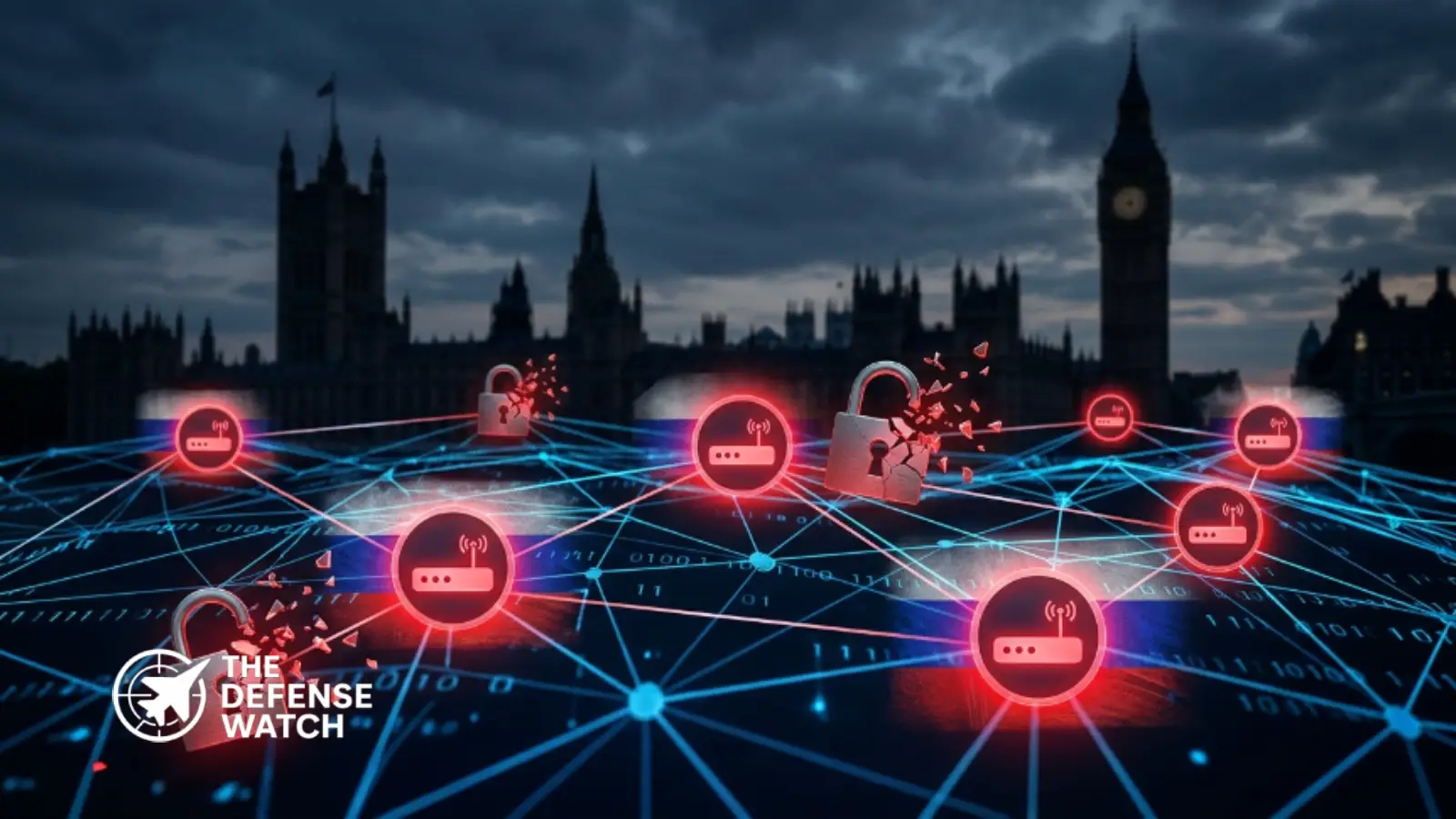
Russian hackers linked to GRU military intelligence have stolen British government login credentials as part of a long-running operation exploiting vulnerable Wi-Fi routers worldwide, according to reports citing Western intelligence. The campaign, publicly detailed by the UK’s National Cyber Security Centre (NCSC) in April 2026 and attributed to APT28 (Fancy Bear), involves DNS hijacking to intercept traffic and harvest credentials. This incident underscores Russia’s ongoing hybrid campaign against the UK, spanning cyber, physical, and influence domains.
Russian Cyber Operation Compromises UK Government Accounts
Russian state-linked actors have once again targeted the United Kingdom through cyber means, stealing government login credentials in an operation that exploits poorly secured routers.
The UK Defence Journal reported on July 5, 2026, that the theft stems from a campaign by APT28, also known as Fancy Bear, which Western agencies attribute to Unit 26165 of Russia’s GRU. Hackers compromised thousands of home and small office routers, primarily MikroTik and TP-Link models, altering settings to redirect victims’ internet traffic through Moscow-controlled servers.
Technical Details of the DNS Hijacking Campaign
The operation relies on DNS hijacking. Once routers are compromised—often via known vulnerabilities—connected devices inherit malicious DNS configurations. Attackers then perform adversary-in-the-middle (AitM) attacks, redirecting users to spoofed login pages to capture passwords and authentication tokens, bypassing two-factor authentication in some cases.
Research by Lumen’s Black Lotus Labs identified at least 18,000 victims across approximately 120 countries. Targets included government departments, law enforcement, and email providers. The NCSC described the activity as largely opportunistic, with attackers filtering for high-value intelligence targets.
The FBI’s Operation Masquerade disrupted compromised routers on U.S. soil, while international partners from the UK, Ukraine, Poland, Germany, and others collaborated on the investigation.
Key Technical Elements (Markdown Table):
| Aspect | Details |
|---|---|
| Primary Group | APT28 (Fancy Bear / Forest Blizzard), GRU-linked |
| Technique | Router compromise + DNS hijacking + AitM |
| Affected Devices | MikroTik, TP-Link, other SOHO routers |
| Scale | Thousands compromised; 18,000+ victims globally |
| Attribution | High confidence by NCSC, FBI, allies |
| Timeline | Active since at least 2024 |
Broader Context of Russian Hybrid Activity Against the UK
This latest revelation adds to a pattern of Russian operations against the UK. The NCSC has attributed other campaigns, including Star Blizzard (linked to FSB), to interference efforts targeting UK parliamentarians. A separate Jaguar Land Rover cyber incident, attributed to Russian actors, caused significant economic damage.
UK officials have repeatedly warned of hybrid threats “from seabed to cyberspace.” GCHQ and NCSC leaders have highlighted daily Russian activity targeting critical infrastructure and democratic processes.
Labour MP Graeme Downie noted the attacks now span multiple domains, including poisonings, arson, drone incursions, and threats to subsea cables. He called for increased preparedness and public awareness.
Implications for U.S. and Allied Defense Strategy
For the United States and its NATO allies, this campaign illustrates the persistent challenge of state-sponsored cyber espionage against the defense and government sectors. APT28 has a long history of targeting Western military and political entities, with tactics refined in the Ukraine conflict now applied more broadly.
Analysis: The reliance on edge devices like consumer routers exposes a systemic vulnerability in hybrid work environments common across the U.S. and UK defense industrial bases. While major enterprises invest heavily in cybersecurity, remote workers and small offices often use default configurations that APT28 exploits at scale. This creates an asymmetric advantage for adversaries: low-cost, deniable operations yielding high-value intelligence.
Operationally, stolen credentials can enable further lateral movement into sensitive networks, potentially compromising planning data, supplier information, or policy deliberations. The U.S. must accelerate efforts like CISA’s edge device security initiatives and promote firmware updates and network segmentation. International cooperation, as seen in the joint advisories, remains critical but requires sustained resourcing amid competing priorities.
Technically, certificate warnings and unexpected redirects remain key user indicators, yet human factors and legacy infrastructure limit rapid mitigation. Closing this gap demands both technical controls and policy emphasis on supply chain and home-office security.
Mitigation and Recommendations
The NCSC and partners advise:
- Updating router firmware promptly.
- Changing default passwords and disabling remote management.
- Monitoring for certificate errors.
- Implementing network monitoring and zero-trust principles.
U.S. defense contractors and government agencies should review remote access policies in light of these disclosures.