
Executive Summary:
The Farnborough Airshow 2026 has opened with defense technology sharing the spotlight with commercial aviation as wars in Ukraine and the Middle East continue to reshape global aerospace priorities. While Boeing and Airbus pursue new aircraft orders, military modernization, drones, missile defense, and artificial intelligence are expected to dominate discussions throughout the week.
Farnborough Airshow 2026 Reflects Changing Aerospace Priorities
The Farnborough Airshow 2026 opened Monday with commercial aircraft manufacturers pursuing new sales while defense companies seek to capitalize on rapidly expanding military budgets driven by ongoing conflicts in Europe and the Middle East. According to Reuters, the biennial event illustrates how global security concerns are reshaping one of the aerospace industry’s most influential gatherings.
Traditionally known for headline grabbing aircraft orders between Boeing and Airbus, this year’s exhibition is expected to feature a stronger emphasis on defense technologies, including autonomous systems, drones, artificial intelligence, electronic warfare, and missile defense capabilities.
Industry analysts expect aircraft manufacturers to announce several commercial deals during the week, although total orders are projected to exceed 300 aircraft rather than reaching earlier forecasts of around 800, largely because persistent supply chain constraints continue to limit production capacity.
Defense Companies Expand Their Presence
One of the clearest indicators of the industry’s changing priorities is the growing presence of defense firms across the exhibition.
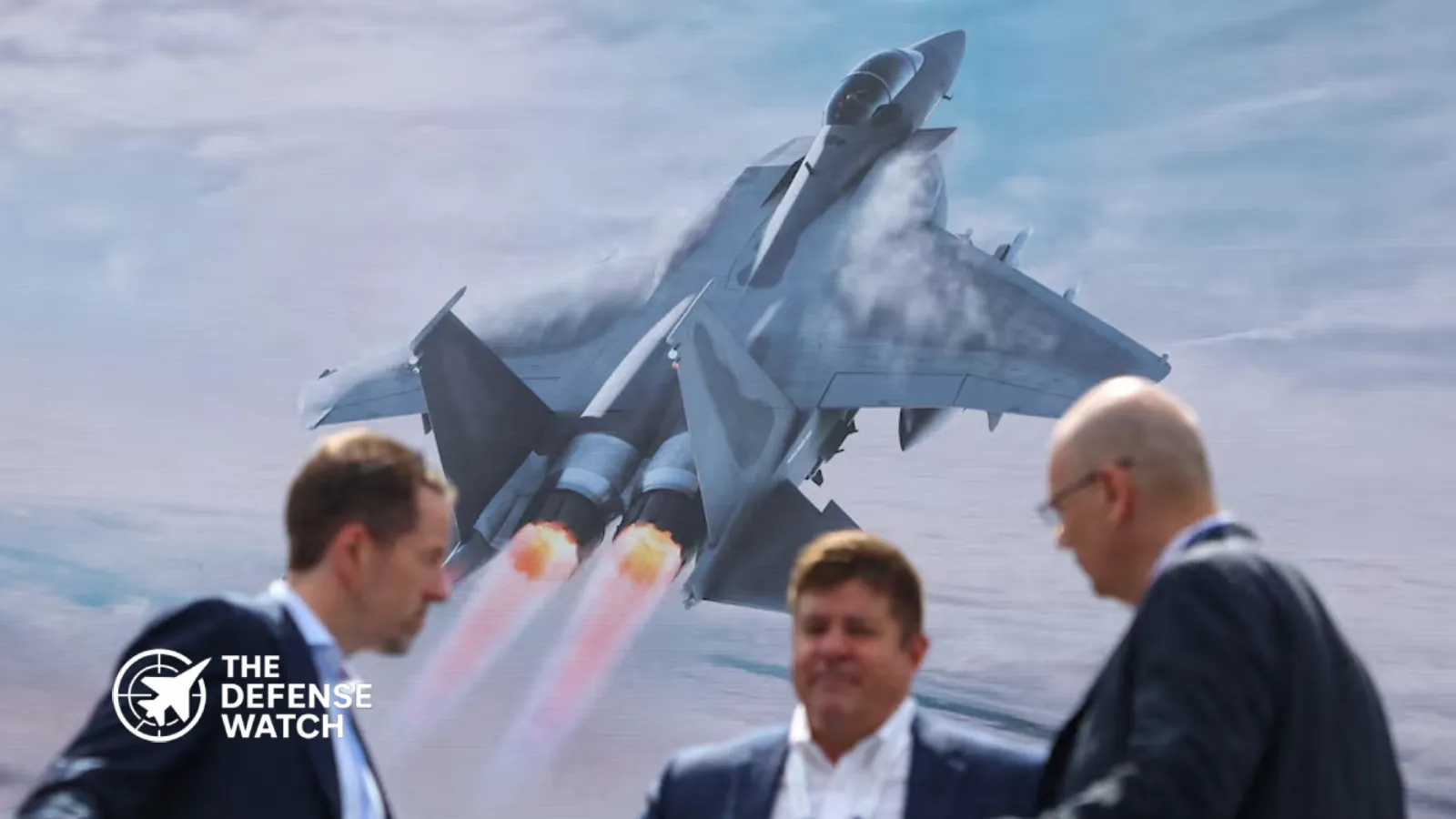
Reuters reported that defense companies now account for roughly half of the air show’s record 1,600 exhibitors, reflecting sustained increases in military procurement across Europe, North America, and parts of Asia. Governments continue investing heavily in advanced weapons, air defense systems, unmanned platforms, and next generation combat capabilities following lessons learned from recent conflicts.
The war in Ukraine has highlighted the operational importance of precision strike weapons, electronic warfare, integrated air defenses, and unmanned aircraft, while tensions in the Middle East have reinforced demand for missile interception systems and resilient command and control networks.
As a result, defense manufacturers are expected to use Farnborough to showcase technologies designed for increasingly contested air, land, maritime, cyber, and space environments.
Commercial Aviation Remains Important
Despite defense taking a larger role, commercial aerospace remains a major focus of the exhibition.
Airbus and Boeing continue competing for airline and leasing company orders, although supply chain bottlenecks, engine shortages, and production limitations have tempered expectations.
Among the anticipated announcements is a potential order involving Irish aircraft lessor SMBC Aviation Capital for approximately 100 narrowbody aircraft from each manufacturer, according to Reuters. Airlines including Riyadh Air and Philippine Airlines are also reported to be in active negotiations, while Turkish Airlines continues discussions regarding a previously anticipated Boeing 737 MAX agreement.
Boeing executives have emphasized that restoring production stability remains the company’s primary objective rather than pursuing headline order announcements. The manufacturer is focused on increasing output of the 737 MAX and 787 while advancing certification of delayed aircraft programs.
Analysis: Why Defense Is Becoming The Air Show’s Main Attraction
The evolution of Farnborough mirrors broader changes across the global aerospace sector.
For decades, major international air shows were largely measured by the number of commercial aircraft orders announced. Today, strategic competition between major powers, prolonged regional conflicts, and rapidly expanding defense budgets are shifting attention toward military capability rather than purely commercial aviation.
This transformation reflects several long term trends:
- Governments are accelerating procurement of advanced defense technologies.
- Demand for autonomous systems and artificial intelligence continues to grow.
- Air and missile defense capabilities have become national security priorities.
- Military readiness is increasingly influencing industrial investment decisions.
For defense manufacturers, Farnborough has become more than a venue for displaying aircraft. It is now an international platform for demonstrating integrated defense ecosystems, forming industrial partnerships, and securing future procurement opportunities.
The growing overlap between commercial aerospace innovation and military modernization also means technologies developed for civil aviation, including digital engineering, advanced manufacturing, and sustainable propulsion, may increasingly influence future defense programs.
Strategic Outlook
The Farnborough Airshow 2026 demonstrates that aerospace and defense are becoming more closely connected than ever before.
Commercial aviation continues its recovery, but geopolitical instability is driving sustained investment in defense technologies that improve operational readiness and deterrence.
While aircraft orders will remain closely watched throughout the week, the event’s broader significance lies in how governments and industry are responding to an increasingly complex global security environment through innovation, production expansion, and international cooperation.