Executive Summary:
The U.S. Space Force has successfully demonstrated a new level of tactically responsive space operations through the VICTUS HAZE mission. Rocket Lab launched and deployed a spacecraft within 16 hours and 42 minutes of receiving a launch order, while on orbit operations involving Rocket Lab and True Anomaly vehicles are now underway to test rapid response and space domain awareness capabilities.
U.S. Space Force Demonstrates VICTUS HAZE Responsive Launch Capability
The VICTUS HAZE mission has entered a new phase as the U.S. Space Force transitions from rapid launch execution to active on orbit operations, marking a significant milestone in the service’s Tactically Responsive Space (TacRS) initiative. According to Space Systems Command and mission partners, the operation demonstrated the ability to rapidly deploy and activate space assets in response to emerging operational requirements.
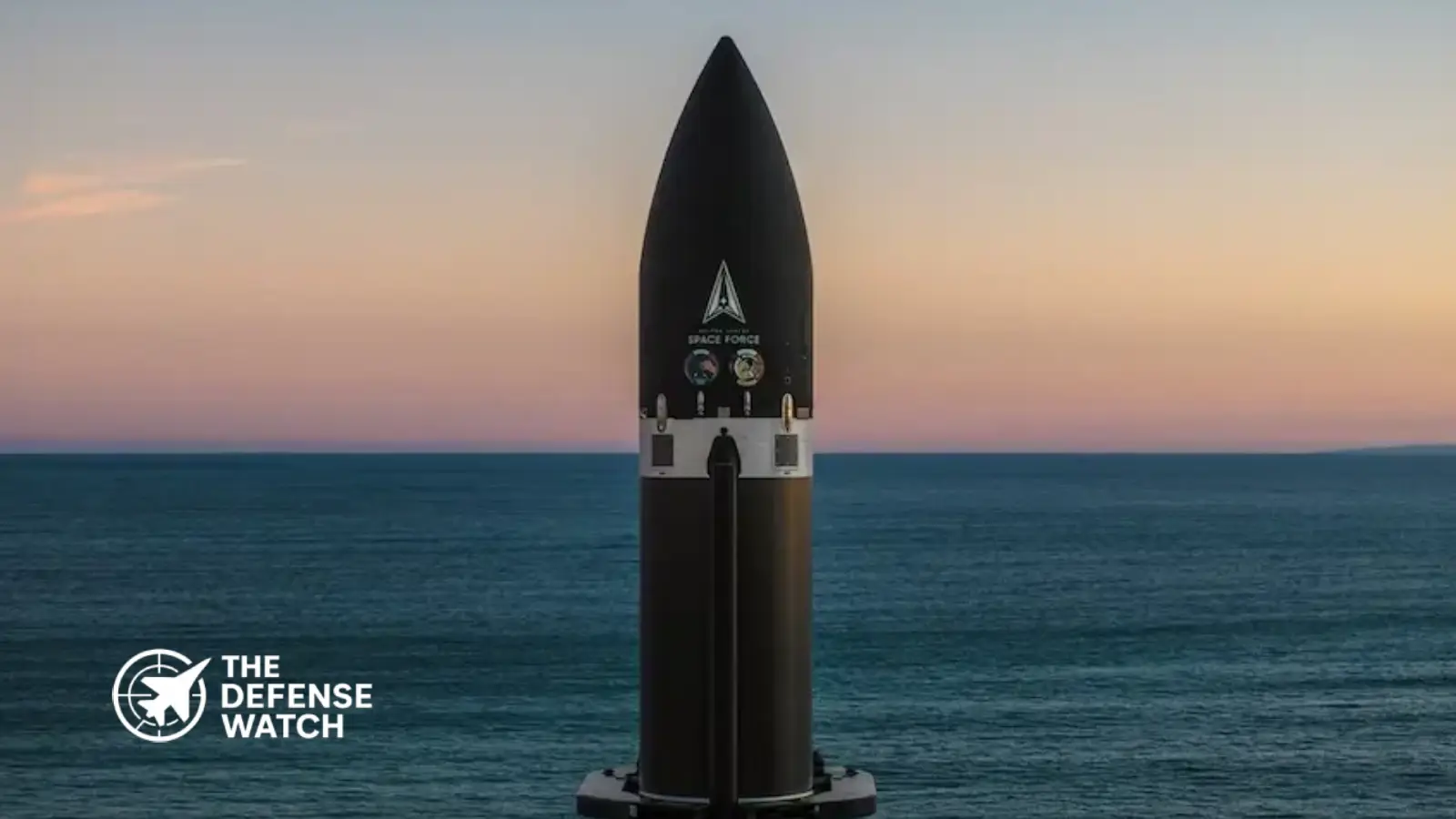
Rocket Lab successfully launched its Electron rocket carrying a Pioneer-class spacecraft for the mission after receiving a Notice to Launch from the U.S. Space Force. The company completed the launch just 16 hours and 42 minutes after receiving the order, establishing a new benchmark for responsive launch operations and surpassing the previous TacRS record by more than ten hours.
The launch took place from Rocket Lab’s Launch Complex 1 in New Zealand on June 19, deploying the spacecraft into low Earth orbit for the next stage of the exercise.
Mission Moves From Launch To Orbital Operations
With the launch phase complete, the focus has shifted to orbital activities designed to test advanced space domain awareness and rendezvous capabilities.
The Rocket Lab-built Pioneer spacecraft has completed commissioning and begun conducting Rendezvous and Proximity Operations (RPO), a highly specialized mission set involving the approach, observation, and characterization of another spacecraft in orbit. The operation is intended to simulate real-world responses to potential threats or unusual activity in space.
According to mission information released by Rocket Lab and Space Systems Command, Pioneer will maneuver near a second spacecraft and gather imagery and operational data in near real time. These activities are intended to evaluate how quickly military and commercial operators can identify and characterize objects in orbit during a crisis scenario.
The counterpart spacecraft involved in the exercise is True Anomaly’s Jackal Autonomous Orbital Vehicle, which serves as the target vehicle during portions of the mission’s proximity operations.
Why VICTUS HAZE Matters
The VICTUS HAZE mission represents more than a launch speed record. It is part of a broader effort by the U.S. Space Force to establish operationally relevant procedures for responding to threats in orbit on timelines measured in hours rather than months or years.
Space Systems Command has spent several years refining the TacRS concept through exercises and demonstrations designed to shorten launch preparation timelines and improve coordination between government and commercial providers. The objective is to ensure that critical space capabilities can be fielded rapidly when national security requirements demand it.
An important aspect of VICTUS HAZE is that Rocket Lab provided an end to end capability, including spacecraft design, manufacturing, launch services, and mission operations. This integrated approach reduces coordination complexity and may offer a model for future responsive space missions.
From an operational perspective, the ability to rapidly launch a satellite, place it into a specific orbit, and immediately begin proximity operations enhances U.S. capabilities in space domain awareness. Such capabilities can support the monitoring of potentially hostile or unidentified spacecraft and improve understanding of activity in increasingly congested orbital environments.
Growing Importance Of Responsive Space Operations
The mission arrives as military planners place greater emphasis on resilience and agility in space. Potential adversaries continue to expand their space capabilities, increasing demand for systems that can be deployed quickly and operate flexibly in contested environments.
VICTUS HAZE demonstrates that commercial launch providers and spacecraft manufacturers can support military timelines that were previously considered extremely difficult to achieve. The mission also validates processes for rapidly activating spacecraft and conducting complex orbital maneuvers shortly after launch.
The successful transition from responsive launch to active orbital operations suggests that future TacRS missions could play an increasingly important role in maintaining U.S. space readiness and operational flexibility. While the current exercise remains a demonstration, it provides valuable data that could shape future Space Force acquisition strategies and operational concepts.