Executive Summary:
Turkish Aerospace is positioning its Hürjet advanced jet trainer as a potential contender for the United Kingdom’s future pilot training requirement as the Royal Air Force prepares for the eventual retirement of its Hawk fleet. The proposal reflects growing international competition in the military trainer aircraft market and highlights Turkey’s ambition to expand its aerospace exports into Europe.
Turkish Aerospace Hürjet Targets Future UK Advanced Trainer Requirement
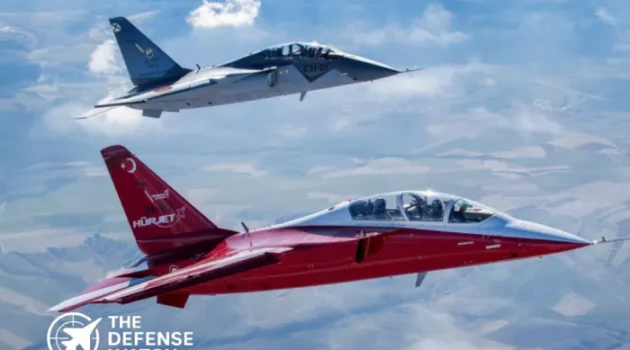
Turkish Aerospace’s Hürjet advanced jet trainer is being promoted as a potential solution for the United Kingdom’s future military pilot training needs, as Britain begins considering long term options to replace the Royal Air Force’s aging BAE Systems Hawk T2 fleet.
Speaking during the Royal International Air Tattoo (RIAT) 2026, Turkish Aerospace executives said the company sees the UK as one of several international opportunities for Hürjet as countries modernize pilot training systems and seek aircraft capable of preparing crews for fifth and future sixth generation fighters. The comments were first reported by FlightGlobal.
While the UK Ministry of Defence has not launched a formal competition, industry officials believe discussions surrounding the RAF’s future training capability are becoming increasingly important as Hawk aircraft approach retirement later in the decade.
Hürjet Designed For Modern Fighter Training
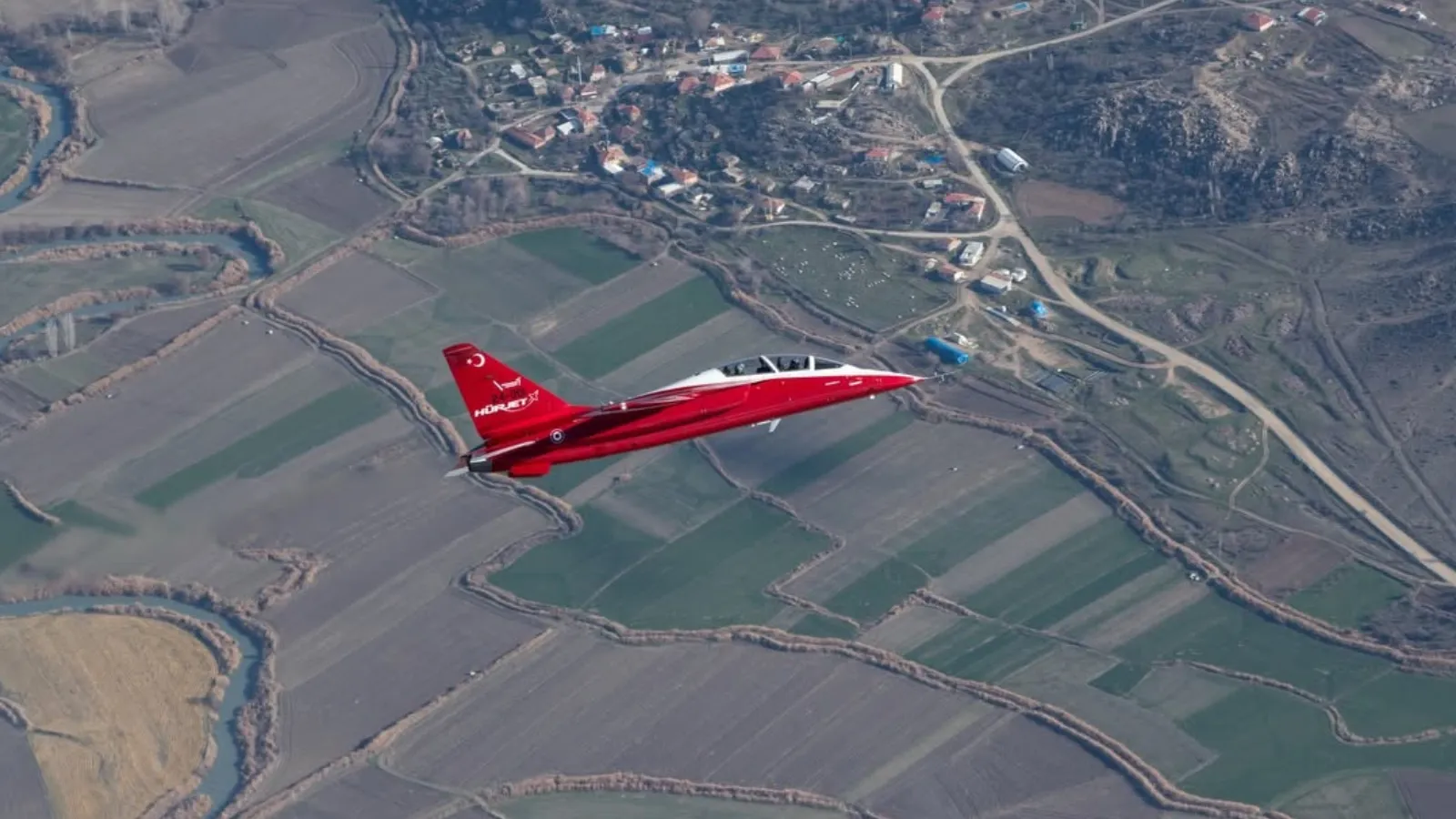
The Hürjet is Turkey’s first domestically developed supersonic advanced jet trainer. Developed by Turkish Aerospace, the aircraft is intended to replace the Turkish Air Force’s aging T-38 fleet while also serving as a light combat aircraft for export customers.
The aircraft completed its maiden flight in April 2023 and continues an expanding flight test campaign. Turkish Aerospace expects the platform to become a cornerstone of Turkey’s military aviation modernization efforts.
Key capabilities include:
Specification Hürjet Role Advanced Jet Trainer / Light Attack Aircraft Maximum Speed Around Mach 1.4 Crew Two Engine One F404-class turbofan Training Focus Lead-In Fighter Training (LIFT) Weapons Capability Precision-guided munitions, air-to-air missiles, training stores Manufacturer Turkish Aerospace The aircraft has been designed to prepare pilots transitioning to advanced combat aircraft by replicating modern avionics, digital cockpit systems, and high performance flight characteristics.
UK Faces Long Term Hawk Replacement Challenge
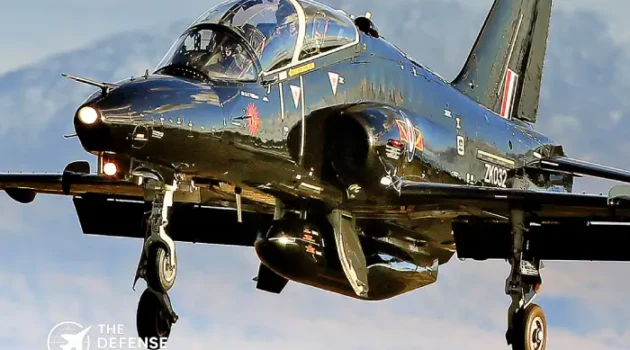
The Royal Air Force currently operates the Hawk T2 as its Advanced Fast Jet Trainer, providing the final stage of pilot instruction before transition to operational fighters such as the F-35B Lightning II and Eurofighter Typhoon.
However, the Hawk design dates back decades, and the RAF is expected to require a replacement during the 2030s.
Although the Ministry of Defence has not publicly identified a preferred successor, defense manufacturers increasingly view Britain as an important future competition. Turkish Aerospace believes Hürjet could satisfy the UK’s evolving requirements while also supporting broader industrial cooperation.
Executives have suggested any British program would likely require significant local industrial participation, reflecting London’s emphasis on domestic aerospace capability and sovereign manufacturing.
Competition Would Be Intense
Should the UK launch a formal acquisition program, Hürjet would likely compete against several established Western trainer aircraft.
Potential competitors include:
- BAE Systems Hawk successor concepts
- Leonardo M-346 Master
- Korea Aerospace Industries FA-50 and trainer variants
- Boeing and Saab training solutions
- Other emerging advanced trainer platforms
Each aircraft offers different advantages in pilot training, lifecycle cost, industrial participation, and compatibility with NATO air forces.
Because Britain maintains one of Europe’s most sophisticated pilot training systems, any future competition is expected to place heavy emphasis on digital simulation, synthetic training environments, open mission systems, and integration with future combat aircraft programs.
Turkish Aerospace Expands Global Export Campaign
The UK interest forms part of Turkish Aerospace’s wider export strategy.
The company has actively promoted Hürjet across Europe, the Middle East, Asia, and Latin America as demand grows for affordable advanced trainers capable of supporting pilots destined for fifth generation fighters.
Turkey’s domestic defense industry has expanded significantly over the past decade, producing indigenous aircraft, helicopters, unmanned aerial systems, and precision weapons. Hürjet represents one of Ankara’s most ambitious aerospace export programs alongside the KAAN next generation fighter and the ANKA family of unmanned aircraft.
Success in a market such as the United Kingdom would represent a significant milestone for Turkey’s aerospace sector because it would demonstrate confidence from one of NATO’s most experienced air forces.
Strategic Analysis: Why The UK Trainer Competition Matters
The UK’s eventual trainer replacement program extends beyond simply replacing an aging aircraft.
Modern pilot training increasingly combines live flying with high fidelity simulation, artificial intelligence assisted instruction, and networked mission rehearsal. Aircraft are expected to replicate the sensor management, electronic warfare environments, and cockpit workload associated with frontline combat platforms.
This shift means future trainers must function as part of an integrated training ecosystem rather than operate solely as standalone aircraft.
For Turkish Aerospace, Hürjet’s appeal will depend not only on flight performance but also on its ability to integrate with NATO training standards, British military certification requirements, logistics systems, and synthetic training networks.
Industrial policy is likely to play an equally important role. The UK has consistently favored programs that sustain domestic aerospace jobs and support long term sovereign capability. Any successful bidder would probably need to demonstrate meaningful collaboration with British industry, technology transfer where appropriate, and long term maintenance support inside the United Kingdom.
From a broader NATO perspective, increased competition in the advanced trainer market could benefit allied air forces by driving innovation, reducing operating costs, and expanding choices for nations replacing legacy training fleets. As sixth generation combat aircraft and collaborative combat aircraft become more sophisticated, advanced trainers will also need to evolve to prepare pilots for increasingly complex operational environments.
Outlook
Turkish Aerospace’s proposal remains at an early stage, and no UK procurement decision has been announced. Nevertheless, the company’s public interest underscores the growing international competition surrounding future military pilot training systems.
As Britain evaluates long term requirements beyond the Hawk, manufacturers from Europe, Asia, and North America are expected to position their platforms for what could become one of the most closely watched trainer aircraft competitions of the next decade.