
(adsbygoogle = window.adsbygoogle || []).push({});Executive Summary:
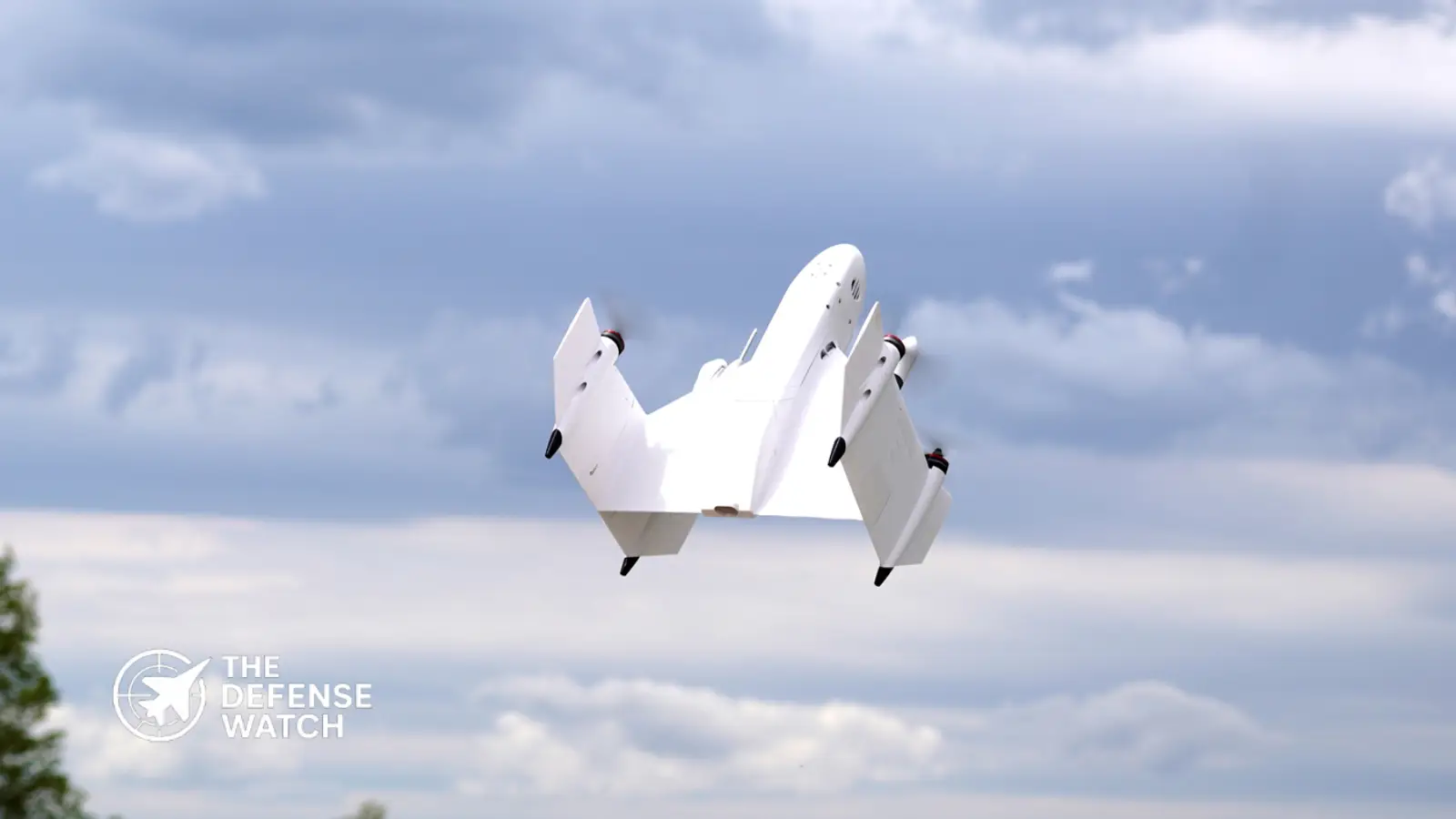
Tycho.AI, an MIT spin-off based in Cambridge, Massachusetts, is pitching the Pentagon on the Halley, a compact tail-sitting VTOL drone interceptor designed to replicate the low-cost, high-effectiveness model of Ukrainian counter-UAS systems. The electrically powered platform reaches speeds of 174 knots and uses AI-enabled Voyager autonomy for GPS-denied operations. This development addresses growing US military demand for economical solutions to counter proliferating one-way attack drones like the Iranian Shahed.
Tycho.AI is positioning its Halley interceptor to bring battle-proven, Ukraine-style drone defense capabilities to the US market. As drone warfare dominates modern conflicts, the startup aims to deliver a more affordable alternative to existing high-cost counter-UAS platforms.
The system targets a key vulnerability exposed in both Ukraine and recent Middle East operations: the unsustainable expense of using advanced missiles against cheap loitering munitions and one-way attack drones.
Ukraine’s Counter-Drone Innovation Drives Global Interest
Ukraine’s four-year conflict with Russia has reshaped air defense priorities. According to the Ukrainian Ministry of Defense, drones account for as many as 80% of military strikes and a similar share of battlefield casualties.
To conserve expensive Western-supplied missiles, Ukrainian forces and industry developed low-cost interceptors such as the Wild Hornets Sting and SkyFall P1-Sun. These systems, often costing under $5,000, achieve speeds in the hundreds of kilometers per hour and effectively engage threats like the Shahed-136/Geran-2, which cost around $35,000.
This approach contrasts sharply with traditional US systems like Raytheon’s Coyote or Anduril’s Roadrunner, which, while effective, carry price tags in the hundreds of thousands of dollars due to larger platforms and more complex propulsion.
(adsbygoogle = window.adsbygoogle || []).push({});Halley: Design and Performance Specifications
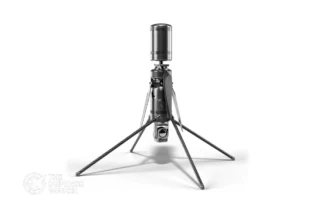
Tycho.AI’s Halley is a tail-sitting, electrically powered VTOL interceptor featuring a fixed-wing delta configuration with two large winglets and four rotors. The design combines vertical takeoff and landing convenience with efficient forward flight.
Key performance parameters include:
- Maximum speed: 174 knots (322 km/h)
- Range: Approximately 50 km (27 nm) in current configuration
- Endurance: 20 minutes on battery, with improvements targeting extended performance
- Service ceiling: 10,000 feet
Phillip Pitsky, senior vice-president of growth at Tycho.AI, described the system as “an FPV drone that can go extremely fast and be extremely agile, but also with a very stable flight system.”
The company is currently in low-rate initial production and accepting orders, with options for customization in cameras, motors, and payloads. Neither the Halley platform nor its Voyager guidance software is export-restricted.
Voyager AI: Enabling Autonomous Operations
Central to Halley’s effectiveness is Tycho.AI’s Voyager system — an AI-enabled visual navigation solution that supports operations without GPS. The tablet-based interface integrates threat data from existing counter-UAS sensors to autonomously guide the interceptor.
Early testing employed remote FPV-style control, but future trials will demonstrate fully autonomous target engagement. Operators will simply designate threats for interception, with Halley handling launch and terminal guidance independently.
(adsbygoogle = window.adsbygoogle || []).push({});This autonomy addresses contested electromagnetic environments where jamming and spoofing degrade traditional navigation.
Strategic Context and Pentagon Demand
US interest in low-cost interceptors has intensified amid threats from Iranian Shahed-style drones targeting bases and assets in the Middle East. High-cost missile engagements against low-value targets strain budgets and inventories, mirroring challenges faced by Ukrainian forces.
Tycho.AI reports the “main demand signal” from the Pentagon centers on ground-launched counter-UAS applications against such threats. Discussions also explore air-launched variants, potentially deployable from aircraft dispensers for forward positioning against incoming drone waves.
US Special Operations Command is anticipated as the launch customer, with Tycho expecting its first full-scale contract award in the coming months.
Analysis: Closing the Cost-Effectiveness Gap
The emergence of platforms like Halley represents a necessary evolution in US counter-UAS strategy. Traditional kinetic interceptors excel in high-end threats but prove economically inefficient against massed, low-cost drone swarms. Ukraine’s experience demonstrates that sustainable defense requires matching the attacker’s production economics.
Tycho.AI’s approach leverages commercial-off-the-shelf elements and academic roots at MIT to accelerate development while maintaining military-grade performance. The fixed-wing VTOL design offers operational flexibility over pure multi-rotor FPV systems, potentially improving range and speed without sacrificing agility.
(adsbygoogle = window.adsbygoogle || []).push({});However, challenges remain. Battery technology limits endurance, though the company is addressing this. Integration with broader US air defense networks, including command-and-control systems, will determine real-world effectiveness. Scalability to high-rate production will be critical if the system is to counter potential peer-level drone campaigns.
Compared to competitors, Halley’s emphasis on affordability and autonomy positions it well for both domestic adoption and allied export markets facing similar asymmetric threats. Success could influence broader DoD procurement toward attritable, mass-producible systems.
This aligns with ongoing US military modernization efforts emphasizing resilience in contested environments and cost-per-kill metrics.
Broader Implications for US Defense Modernization
The Tycho.AI initiative fits into a larger pattern of incorporating lessons from Ukraine into American capabilities. From electronic warfare to attritable munitions, the conflict serves as a real-world laboratory for next-generation systems.
For the US, adopting lower-cost interceptors could preserve high-value missile stocks for strategic threats while providing layered defense options against tactical drone incursions.