









@2026 – All Right Reserved. TheDefenseWatch.com
- Home
- Defense Systems
- Compare
- Tejas vs Gripen: Key Differences and Capabilities
Tejas vs Gripen: Key Differences and Capabilities
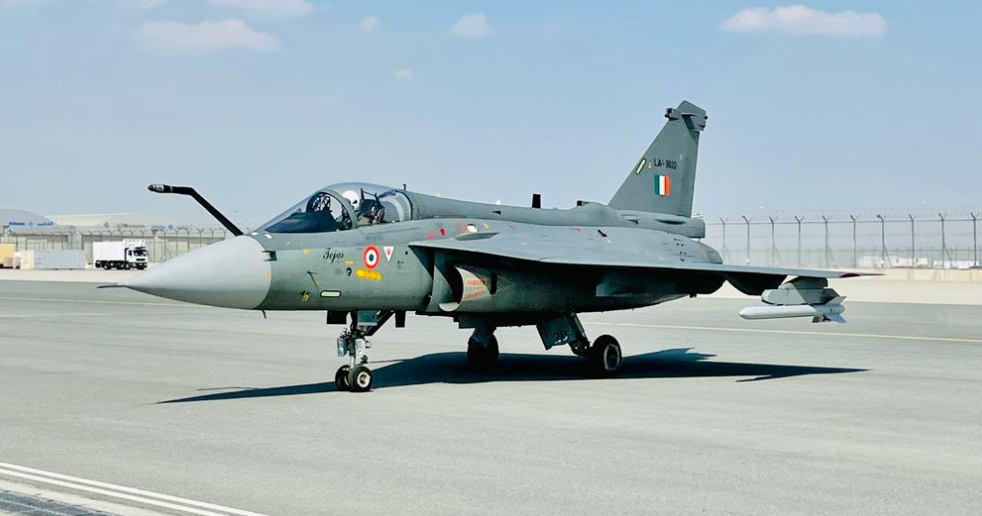
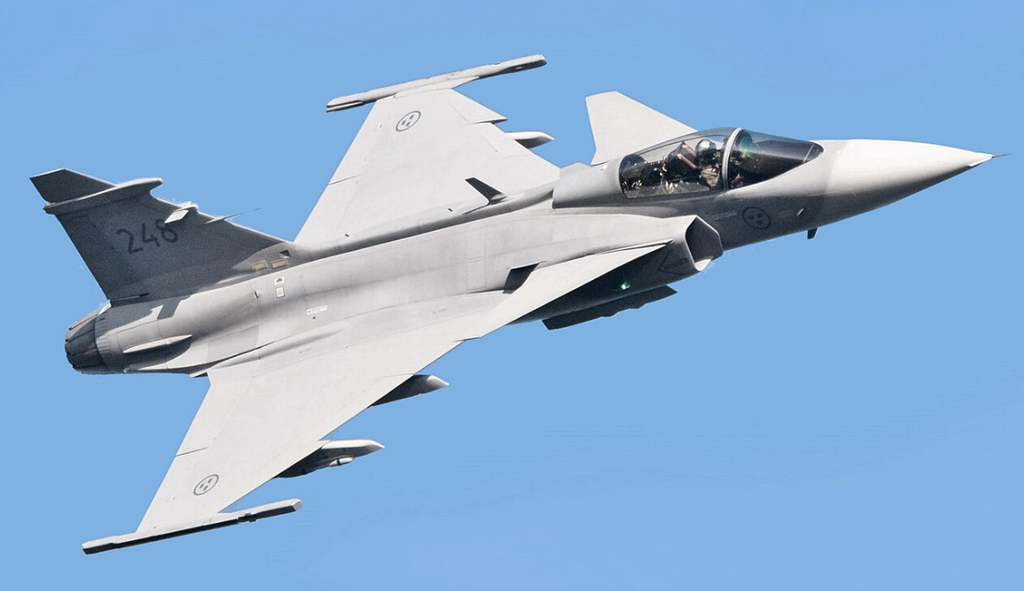
The HAL Tejas and Saab JAS 39 Gripen are lightweight, single engine multirole fighters designed for air defense and precision strike missions. The Tejas vs Gripen comparison is particularly relevant because both emphasize relatively compact designs, modern avionics and multirole flexibility. However, they come from different development programs and serve different operational and industrial requirements. Tejas is India’s indigenous lightweight fighter program, while Gripen was developed around Sweden’s requirements for dispersed operations, rapid turnaround and multirole combat.
Key Differences
Mission and Operational Philosophy
Tejas was developed primarily to strengthen India’s indigenous fighter manufacturing and replace older light fighter fleets while providing a modern multirole capability.
Gripen was designed around Sweden’s need for a flexible fighter capable of operating from dispersed locations and supporting air defense, strike and reconnaissance missions. Its operating concept places significant emphasis on rapid servicing and efficient use of limited infrastructure.
Sensors, Networking and Combat Systems
Both fighters use modern radar, electronic warfare, mission computers and datalinks, but their exact configurations vary considerably by variant and customer.
Gripen has benefited from a longer operational history and multiple modernization programs. Tejas continues to evolve through successive variants, with newer versions adding more advanced avionics and weapons integration.
Tejas: Strengths and Limitations
Strengths
- Indigenous Indian design and production ecosystem.
- Compact multirole fighter suitable for air defense and strike missions.
- Continued development provides a path toward improved avionics, weapons and mission systems.
Limitations
- The Tejas family has a shorter operational history than Gripen.
- Capability depends significantly on the specific Tejas variant and its integrated systems.
Gripen: Strengths and Limitations
Strengths
- Mature multirole fighter with operational experience.
- Designed for dispersed operations and relatively efficient ground support.
- Strong emphasis on networking, electronic warfare and multirole flexibility.
Limitations
- Different Gripen variants have substantially different capabilities.
- Its smaller size and payload capacity reflect the design’s lightweight fighter philosophy rather than a heavy fighter role.
Which Is Better?
Tejas may be better for: India-focused fleet modernization, indigenous defense production and operators seeking a lightweight fighter aligned with India’s expanding domestic aerospace industry.
Gripen may be better for: Countries prioritizing a mature lightweight multirole fighter, dispersed operations, rapid turnaround and an established international user base.
Quick Verdict
The Tejas vs Gripen comparison does not produce a universal winner. Tejas offers India an indigenous fighter program with substantial development potential, while Gripen benefits from a longer operational history and a distinctive dispersed-operations concept. The most meaningful comparison therefore depends on the variant, weapons and mission systems selected. For a mature multirole capability, Gripen has an advantage in experience; for India’s indigenous aerospace objectives, Tejas has a distinct strategic value.

| |
| Price | |
| Our Rating | |
| Manufacturer | Hindustan Aeronautics Limited (HAL) Saab |
| Category | Fighter Jets Fighter Jets |
General Information
| Name | Tejas Mk‑2 / Medium Weight Fighter (MWF) JAS 39 Gripen |
| Manufacturer | Hindustan Aeronautics Limited (HAL), ADA/DRDO Saab AB |
| Country of Origin | India Sweden |
| Type / Role | Multirole fighter / Medium-weight combat aircraft Multirole Fighter |
| Generation | 4.5th Generation 4.5th |
| Status | Prototype development In Service |
| First Flight | Projected 2025–2026 December 9, 1988 |
| Introduction / In Service Since | Expected post-2028 1997 |
| Number Built | Prototype stage 300+ |
| Operators | Intended: Indian Air Force Sweden, Czech Republic, Hungary, South Africa, Thailand, Brazil |
Dimensions & Structure
| Length | ~14.65 m 14.1 m (46.3 ft) |
| Wingspan | ~8.5 m 8.4 m (27.6 ft) |
| Height | ~4.86 m 4.5 m (14.8 ft) |
| Wing Area | ~38.4 m² 30 m² |
| Empty Weight | ~7,000 kg 6,800 kg |
| Maximum Takeoff Weight (MTOW) | ~17,500 kg 14,000 kg |
| Internal Weapons Bay | None None |
| External Hardpoints | 11 8–10 |
Performance
| Maximum Speed | Mach 1.8 Mach 2.0 |
| Range | ~1,500 km+ 2,000 km (1,240 mi) with drop tanks |
| Combat Radius | ~1,000 km 800 km (497 mi) |
| Service Ceiling | ~50,000 ft 50,000 ft (15,240 m) |
| Rate of Climb | Not publicly disclosed 50,000 ft/min |
| Thrust-to-Weight Ratio | ~0.56 (based on F414 thrust & MTOW) 0.97 |
| G Limits | +9 / –3.2 +9 / -3 |
Powerplant
| Engine Type | GE F414-INS6 turbofan Volvo RM12 (GE F404 derivative) |
| No. of Engines | 1 1 |
| Thrust (each) | ~98 kN 18,100 lbf |
| Thrust Vectoring | No No |
| Fuel Capacity | Increased over Mk‑1 (exact liters undisclosed) 2,800 kg internal |
Armament
| Gun | Internal cannon (specific model undisclosed) 1× 27 mm Mauser BK-27 cannon |
| Missiles (Air-to-Air) | Astra BVR, short-range IR missiles AIM-9, AIM-120, IRIS-T, Meteor |
| Missiles (Air-to-Ground) | Spice, SCALP-style standoff, Rudram anti-radiation AGM-65, RBS-15, Brimstone |
| Bombs | Conventional and precision-guided bombs Paveway, Mk 82/83, JDAM |
| Hardpoints | 11 external stations 8–10 |
| Payload Capacity | ~6,500 kg 5,300 kg |
Avionics & Systems
| Radar | Uttam AESA radar (indigenous) PS-05/A or Raven ES-05 AESA |
| Radar Range | Not publicly disclosed 100+ miles |
| Electronic Warfare (EW) System | Integrated EW suite Integrated Self-Protection Suite |
| Targeting System | Multi-role precision targeting Litening / Reccelite pods |
| Helmet Display | Large-area HUD & touchscreen cockpit displays Cobra HMDS |
| Navigation | INS / digital navigation systems GPS/INS |
| Autopilot / AI Assistance | Digital flight control computer Digital Flight Control System |
| Communication | Secure multi-band comms (likely) Secure Datalink & SATCOM |
Stealth & Technology
| Radar Cross Section (RCS) | Reduced via airframe design ~1 m² |
| Stealth Features | Canards, twisted intakes, composites Reduced signature design |
| Infrared Signature Reduction | Standard reduction measures Partial |
| Sensor Fusion | Radar, IRST, EW integrated Yes |
| Networking Capabilities | Network-centric enabled; future upgrades possible NATO Link 16 compatible |
Variants
| Special Export Versions | Potential export-customized version Gripen NG (Brazil) |
Operational History
| Major Conflicts / Deployments | None (prototype stage) NATO Baltic Air Policing, UN operations |
| Notable Operators | Intended: Indian Air Force Sweden, Brazil, Czech Republic |
| Combat Proven? | No Limited combat use |
| Mission Types | Air dominance, ground strike, precision attack Air defense, strike, reconnaissance |
Cost & Program
| Unit Cost | Not publicly disclosed; cost-effective vs imported jets $30–60 million (variant-dependent) |
| Development Cost | Approx. ₹6,500 crore additional funding approved ~$10 billion (total program) |
| Program Name | LCA Tejas Mk‑2 / Medium Weight Fighter Gripen Program |
| Funding Countries | India (domestic) Sweden, Brazil |
Additional Information
| Upgrades Planned | Advanced avionics, weapons, networking AESA radar, AI-based systems |
| Future Replacement | May lead to Advanced Medium Combat Aircraft (AMCA) TBD by Swedish Air Force |
| Export Restrictions | Subject to Indian export controls Minimal |
| Notable Achievements | ~70–80% indigenous content, modular architecture Cost-effective multirole fighter |
| Competitors | Saab Gripen E, Dassault Mirage 2000, F‑16, other medium fighters F-16V, Rafale, Tejas Mk1A |


|
Disclaimer Note
The information provided on TheDefenseWatch.com is for general informational purposes only. While we strive to ensure the accuracy, completeness, and timeliness of our content regarding defense and aerospace products, technologies, and specifications, we cannot guarantee that all information is 100% accurate or up-to-date due to the evolving nature of military technology and classified data.TheDefenseWatch.com does not warrant the reliability, suitability, or availability of the information for any specific purpose. Users are advised to consult official sources, such as manufacturers, government publications, or defense agencies, for precise and verified data before making decisions based on our content.We are not affiliated with any defense manufacturers, governments, or military organizations mentioned. Opinions, reviews, and ratings reflect expert analysis but are subjective and should not be considered endorsements. TheDefenseWatch.com is not responsible for any errors, omissions, or consequences arising from the use of this website’s content.External links are provided for convenience and do not imply endorsement. TheDefenseWatch.com reserves the right to update or modify content without prior notice. By using this website, you agree to our Privacy & Cookies Policy.
New Arrivals
Popular Comparisons
-
 Tejas vs MiG-21 Bison: How India Replaced Its Iconic Supersonic Fighter
View Comparison →
Tejas vs MiG-21 Bison: How India Replaced Its Iconic Supersonic Fighter
View Comparison → -
F-35 vs F-16: Stealth, Sensors and Combat Roles
View Comparison →
-
Tejas Fighter Jet vs F-16 Fighting Falcon: Capability Compared
View Comparison →
-
Rafale Fighter Jet vs F-16 Fighting Falcon : Which Fighter Has the Edge?
View Comparison →
-
Su-57 Fighter Jet vs J-20 Fighter Jet: Stealth and Air Combat Compared
View Comparison →
-
Mirage 2000 vs Tejas Mk1A: Legacy Combat Power vs Indigenous Modernization
View Comparison →
-
Rafale Fighter Jet vs F-22 Raptor: Which Air Dominance Fighter Has the Edge?
View Comparison →
-
Tejas Fighter Jet vs. Rafale Fighter Jet: India’s Indigenous Fighter Meets France’s Proven Multirole Combat Aircraft
View Comparison →
-
F-22 Raptor vs. F-35 Joint Strike Fighter: Which Fifth Generation Fighter Has the Edge?
View Comparison →
-
F-35A vs. F-22 Raptor: Which U.S. Stealth Fighter Dominates Modern Air Combat?
View Comparison →
- F-15E Shot Down Over Iran: How the Dude 44 Crew Was Brought Home

- Operation Mount Hope III: How Two Night Stalker Chinooks Carried a Libyan Hind Out of Chad
- North Korea Fires Ballistic Missile From Wonsan Toward East Sea
- BAE Systems Wins $70.5 Million Trident II D5 Support Contract
- Saudi Arabia Weighs Yemen Offensive to Retake Bab el-Mandeb
- L3Harris Expands WESCAM Manufacturing Focus for Mission-Ready EO/IR Systems
- Northrop Grumman Unveils FORTITUDE RF Chip for Faster Defense Systems
- Northrop Grumman YFQ-48A Talon Blue Completes Autonomous Flight Test
- U.S. Warns Defense Industry Lacks Capacity for Rapid Weapons Surge
- NATO Uses B-1B Bomber in Baltic Air Defense Training