• Home
  • About
  • Defense Systems
  • Manufacturer
  • Comparisons
  • Compare 
  • Tools
TheDefenseWatch.com
  • Aerospace & Aviation
  • Military & Ordnance
  • Naval & Maritime
  • Cyber & Space Defense
  • Policy & Strategy
  • Global News
  • Tools Library
    • Smart Calculator
    • Drone Flight Time Calculator
    • Drone Range Calculator
    • Counter-Drone Jammer Effective Range Calculator
    • Counter-Battery Radar Detection Calculator
    • Artillery Fire Correction Calculator
    • Thermal Camera Detection Range Calculator
    • Missile Range & Time-of-Flight Calculator
    • Radar Detection Range Calculator
    • FPV Strike Drone Payload vs Range Calculator
    • Loitering Munition Endurance Calculator
    • Sniper Ballistic Drop & Windage Calculator
    • Bullet Drop Calculator
    • U.S. Army Combat Fitness Test (ACFT) Calculator
    • Military Pension Calculator
    • Military Retirement Calculator
    • Military Pension Calculator
    • Large Number Calculator
Font ResizerAa

TheDefenseWatch.com

The Defense Watch | U.S. & Global Defense News, Analysis & Military Updates

Search
  • Home
  • About
  • Defense Systems
  • Manufacturer
  • Comparisons
  • Compare 
  • Tools

Stay Updated

Get the latest update

Subscribe

Explore

  • Drone
  • Fighter Jets & Military Aircraft
  • Hypersonic Weapons
  • Aircraft Carriers
  • Strategic History & Missions
  • Tools Library
Home » Lockheed Martin Links F-35 Simulators With Six Airborne F/A-18s in Training First
Aerospace & AviationFighter Jets & Military Aircraft

Lockheed Martin Links F-35 Simulators With Six Airborne F/A-18s in Training First

Daniel Mercer / Defense & Aerospace Analyst
Last updated: November 18, 2026 2:17 am
Daniel Mercer / Defense & Aerospace Analyst
Share
3 Min Read
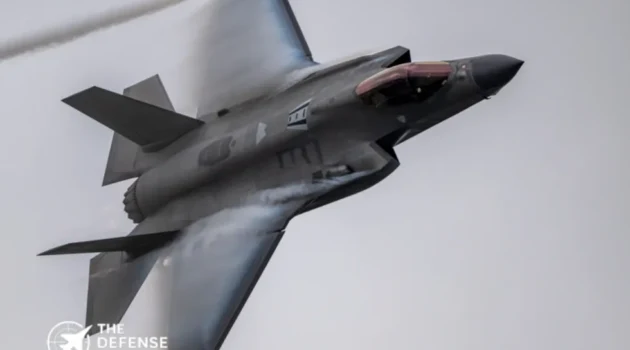
F-35 simulator training
Image : Lockheed Martin
SHARE
Follow The Defense Watch on Google:

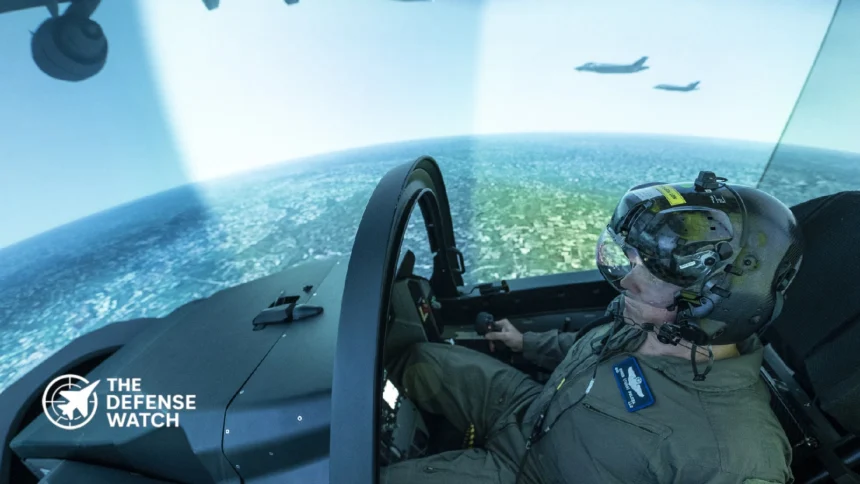
Four F-35 full-mission simulators at Naval Air Station (NAS) Lemoore, California, have demonstrated real-time connectivity with six airborne F/A-18 aircraft, allowing ground-based simulated forces and operational fighter aircraft to participate in a shared training environment.

Contents
Connecting Ground-Based Simulators With Operational AircraftWhy Live and Simulated Training MatterNAS Lemoore’s Role in F-35 and Super Hornet OperationsA Wider Shift Toward Distributed Military TrainingWhat Remains Undisclosed

Announced by Lockheed Martin on November 17, 2026, the demonstration used the U.S. Navy Continuous Training Environment and Link-Inject-to-Live ground station systems.

The exercise brought together 10 training participants across two different environments: four F-35 simulators on the ground and six F/A-18 aircraft in flight. Lockheed Martin described the event as a first for this type of joint training integration.

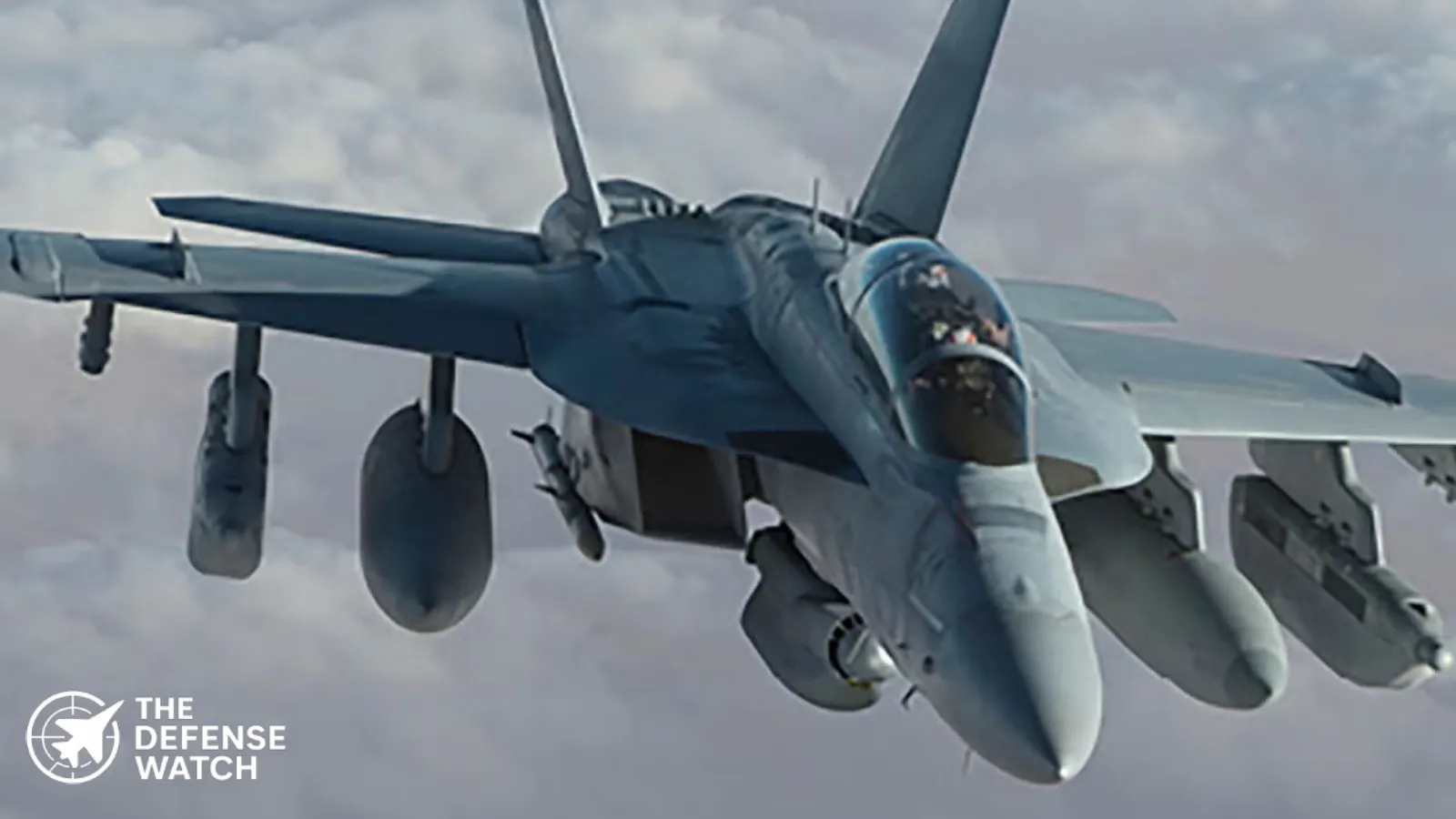
  • F/A-18 Hornet Fighter Jet

    F/A-18 Hornet Fighter Jet

    • Generation: 4th
    • Maximum Speed: Mach 1.8
    • No. of Engines: 2
    • Radar Range: 124 miles
    • View Details →
    8.0

    The demonstration points to an approach that combines conventional flight training with high-fidelity simulation, allowing pilots to rehearse complex mission scenarios without requiring every participating aircraft to fly.

    Connecting Ground-Based Simulators With Operational Aircraft

    The central achievement was establishing real-time connectivity between F-35 full-mission simulators and aircraft operating in actual flight.

    Traditional simulator training allows pilots to practice mission procedures, tactical decisions and emergency responses in a controlled environment. However, the training experience can be limited when simulated participants cannot interact directly with aircraft operating in the air.

    The Lemoore demonstration addressed that separation by connecting simulated F-35 participants with airborne F/A-18s.

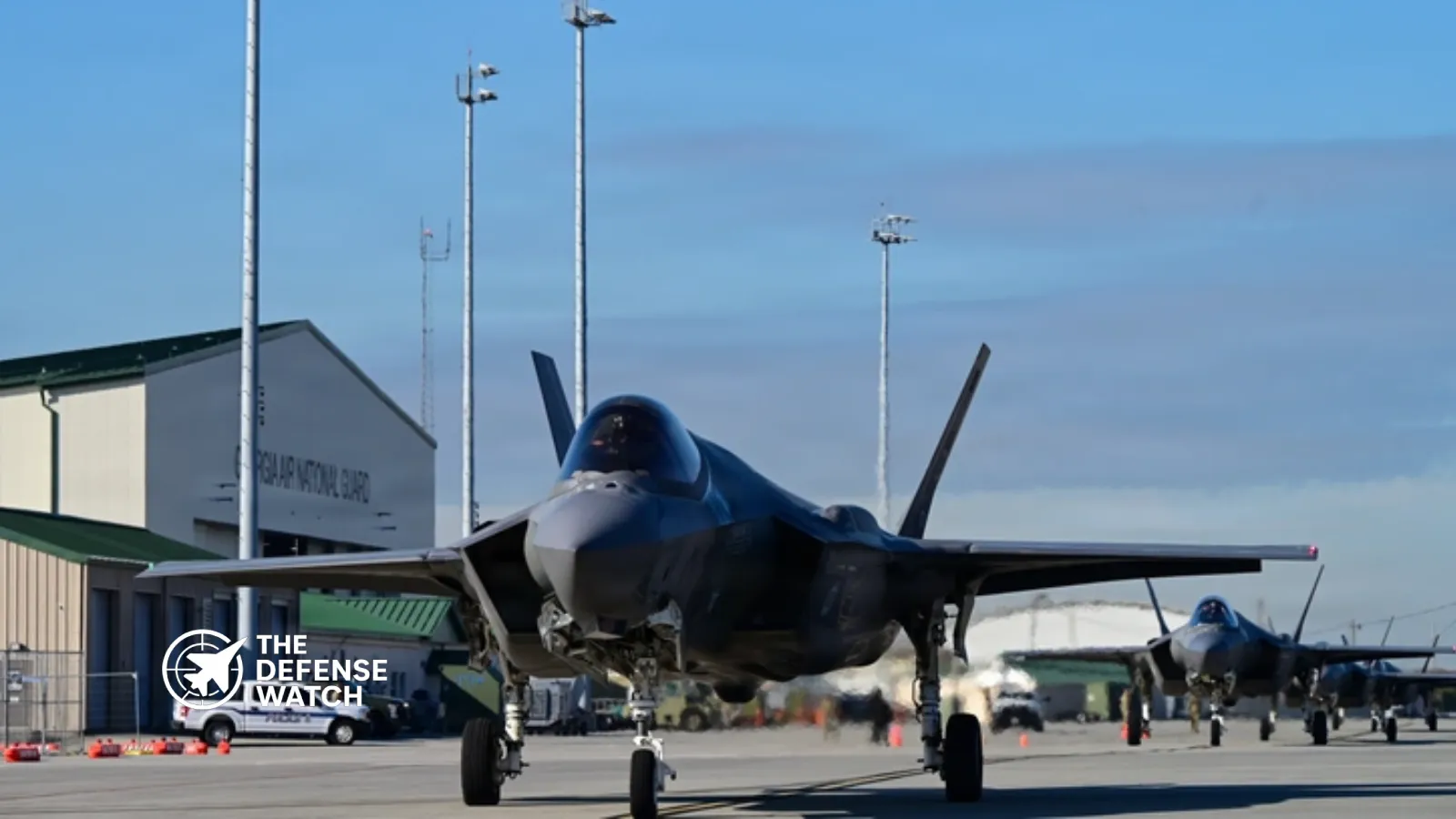
    • F-35 Lightning II Fighter Jet

      F-35 Lightning II Fighter Jet

      • Generation: 5th
      • Maximum Speed: Mach 1.6 (1,200 mph / 1,930 km/h)
      • No. of Engines: 1
      • Radar Range: ~150+ km (AN/APG-81 AESA)
      • View Details →
      8.8

      According to Lockheed Martin, the system also allows pilots to train alongside virtual adversaries, creating scenarios that combine live aircraft, simulated platforms and computer-generated opposing forces.

      This arrangement provides additional flexibility for mission rehearsal. Training planners can introduce different scenarios and simulated threats without requiring every participating aircraft to be physically present.

      However, Lockheed Martin has not publicly disclosed the technical architecture, communication protocols, latency measurements or specific tactical scenarios used during the demonstration.

      Why Live and Simulated Training Matter

      Modern fighter operations increasingly involve coordination between different aircraft types, sensors, command networks and supporting forces.

      Preparing pilots for these environments requires more than individual aircraft handling skills. Aircrews must also make tactical decisions, coordinate with other platforms and respond to changing battlefield conditions.

      Combining live aircraft with simulators can help address these training requirements.

      The approach offers several practical advantages:

      • More complex scenarios: Virtual adversaries can introduce additional threats without requiring corresponding real-world aircraft.
      • Repeatable training: Simulators allow instructors to recreate mission scenarios for repeated practice.
      • Live operational experience: Pilots flying actual aircraft experience the physical demands of flight, including high-G maneuvering.
      • Joint coordination: Different aircraft and simulated participants can operate within a shared training scenario.
      • Training flexibility: Some mission elements can be rehearsed without organizing a full-scale live exercise.

      Lockheed Martin’s F-35 Training and Logistics vice president, Ken Garrett, said connecting live aircraft, high-fidelity simulators and virtual adversaries allows instructors to create more realistic scenarios and evaluate pilot decision-making under pressure.

      The combination is particularly relevant for advanced fighter training, where mission success can depend on coordination and tactical judgment rather than individual aircraft performance alone.

      NAS Lemoore’s Role in F-35 and Super Hornet Operations

      Naval Air Station Lemoore is an important U.S. Navy strike-fighter installation in California’s Central Valley.

      The base supports the Navy’s carrier-based fighter community, including F/A-18 Super Hornet and F-35C Lightning II operations.

      The F-35C is the carrier-capable variant of the Lightning II family. It combines low-observable design, advanced sensors and integrated mission systems for operations from aircraft carriers.

      The F/A-18E/F Super Hornet, meanwhile, remains a major component of the Navy’s carrier air wings. It performs fighter, strike and other multirole missions.

      Training these aircraft communities together has practical value because carrier air operations depend on coordination among different aircraft types and mission roles.

      The Lemoore demonstration provides a way to incorporate both platforms into connected training scenarios without requiring the F-35 simulator participants to operate actual aircraft during every exercise.

      It also illustrates how existing fighter training infrastructure could support more integrated exercises.

      A Wider Shift Toward Distributed Military Training

      The demonstration fits into a broader effort to make military training more distributed and less dependent on large numbers of aircraft flying simultaneously.

      The U.S. Navy and other military services have invested in live, virtual and constructive training environments. These systems combine real personnel and platforms with simulated aircraft, threats and battlefield conditions.

      The Navy’s Joint Simulation Environment is another example of this approach. It provides a high-fidelity simulated environment for advanced aircraft testing, tactics development and training.

      However, the Joint Simulation Environment and the Lemoore demonstration should not be treated as the same system. They represent different applications of simulation technology.

      Lockheed Martin has also previously demonstrated distributed F-35 mission rehearsal involving 16 full-mission simulators across multiple locations. That September 2026 event showed the potential for connecting geographically separated training facilities.

      The November demonstration adds another dimension by incorporating actual aircraft flying outside the simulator environment.

      For the Navy, the ability to connect simulated participants with live aircraft could help make training scenarios more representative of complex operational missions.

      What Remains Undisclosed

      Despite the successful demonstration reported by Lockheed Martin, several important technical details remain unavailable.

      The company has not identified:

      • The specific F/A-18 variants involved.
      • The exact mission scenario or tactical objectives.
      • The communication architecture used between aircraft and simulators.
      • The number or type of virtual adversaries.
      • The performance and latency characteristics of the connection.
      • Whether the capability is scheduled for routine operational training.
      • Any planned expansion to additional Navy installations or aircraft types.

      These details matter because demonstrating connectivity is different from establishing a fully operational training capability across multiple units and locations.

      The available announcement confirms the demonstration, but does not establish whether the system has entered regular Navy training operations.

      For now, the Lemoore event provides evidence of progress in connecting live naval aviation assets with ground-based F-35 simulation systems. Its longer-term value will depend on how reliably the technology can support recurring training, larger exercises and more demanding mission scenarios.

Enjoying our coverage?

Make The Defense Watch a preferred source on Google to see more of our geopolitical and defense insights when relevant to you.


TAGGED:F-35 Lightning IIF/A-18 Super HornetLockheed MartinMilitary Training
Share This Article
Facebook Copy Link Print
ByDaniel Mercer / Defense & Aerospace Analyst
Follow:
Daniel Mercer is a defense and aerospace analyst at TheDefenseWatch.com covering military aviation, aerospace technology, unmanned systems, air warfare, and defense procurement. His reporting uses official documents, government and military statements, company announcements, and other public sources.

Search Defense Systems

Latest Defense Systems

  • F-15J Eagle Fighter Jet F-15J Eagle Fighter Jet
  • China’s GJ-21 Stealth Drone China’s GJ-21 Stealth Drone
  • China’s GJ-11 Stealth Drone China’s GJ-11 Stealth Drone
  • F-15EX Eagle Fighter Jet F-15EX Eagle Fighter Jet
  • TRML-4D Radar TRML-4D Radar
  • F-47A Fighter Jet F-47A Fighter Jet
  • China DF-61 Missile China DF-61 Missile
  • B61 Nuclear Bomb B61 Nuclear Bomb
  • Japan E-767 Airborne Japan E-767 Airborne

Recent Compares

  • J-10C vs JF-17 Thunder: Which Fighter Is More Capable? J-10C vs JF-17 Thunder: Which Fighter Is More Capable? View Comparison →
  • Tejas vs Gripen: Key Differences and Capabilities Tejas vs Gripen: Key Differences and Capabilities View Comparison →
  • Tejas vs MiG-21 Bison: How India Replaced Its Iconic Supersonic Fighter Tejas vs MiG-21 Bison: How India Replaced Its Iconic Supersonic Fighter View Comparison →
  • F-35 vs F-16: Stealth, Sensors and Combat Roles F-35 vs F-16: Stealth, Sensors and Combat Roles View Comparison →
  • Tejas Fighter Jet vs F-16 Fighting Falcon: Capability Compared Tejas Fighter Jet vs F-16 Fighting Falcon: Capability Compared View Comparison →
  • Rafale Fighter Jet vs F-16 Fighting Falcon : Which Fighter Has the Edge? Rafale Fighter Jet vs F-16 Fighting Falcon : Which Fighter Has the Edge? View Comparison →
  • Su-57 Fighter Jet vs J-20 Fighter Jet: Stealth and Air Combat Compared Su-57 Fighter Jet vs J-20 Fighter Jet: Stealth and Air Combat Compared View Comparison →
  • Mirage 2000 vs Tejas Mk1A: Legacy Combat Power vs Indigenous Modernization Mirage 2000 vs Tejas Mk1A: Legacy Combat Power vs Indigenous Modernization View Comparison →
  • Rafale Fighter Jet vs F-22 Raptor: Which Air Dominance Fighter Has the Edge? Rafale Fighter Jet vs F-22 Raptor: Which Air Dominance Fighter Has the Edge? View Comparison →
  • Tejas Fighter Jet vs. Rafale Fighter Jet: India’s Indigenous Fighter Meets France’s Proven Multirole Combat Aircraft Tejas Fighter Jet vs. Rafale Fighter Jet: India’s Indigenous Fighter Meets France’s Proven Multirole Combat Aircraft View Comparison →

Recent Posts

  • Lockheed Martin Scales GMLRS Production as U.S. Army Expands Rocket Demand
  • Lockheed Martin Links F-35 Simulators With Six Airborne F/A-18s in Training First
  • NATO Launches Space Data Marketplace to Expand Allied Intelligence Access
  • Raytheon Wins $12.3 Million Contract Modification to Sustain U.S. Navy Rolling Airframe Missile System
  • General Dynamics Wins $20.5 Million Navy Contract for AN/BYG-1 Submarine Combat System Software

You Might Also Like

MV-75 Cheyenne helicopter
Aerospace & AviationFighter Jets & Military Aircraft

U.S. Army MV-75 Cheyenne Expands Long Range Assault Capability With Advanced RTX Mission Systems

September 12, 2026
L3Harris FMS contract modification
Aerospace & AviationFighter Jets & Military Aircraft

L3Harris Awarded $13.1M FMS Contract Modification for Aircraft and Ground Station Support

September 7, 2026
China hybrid heavy-lift UAV
Aerospace & AviationDrones & UAVs

China’s Hybrid Heavy-Lift UAV Completes First Flight, Sets New Cargo Drone Benchmark

February 4, 2026
Lockheed Martin 2026 revenue forecast
Defense Budgets & PolicyPolicy & Strategy

Lockheed Martin Projects Record $80B Revenue for 2026 Amid Global Defense Demand Surge

September 8, 2026

Logo

Copyright © 2026 TheDefenseWatch.com

Helpful Links

  • Home
  • About Us
  • Privacy Policy
  • Terms of Use / Disclaimer
  • U.S. Privacy Notice – CCPA Compliance

Defense Systems

  • Defense Systems
  • Comparisons 
  • Manufacturer
  • Tactical Calculators

Popuplar

Which 5 Air Forces Possess the Costliest Fighter Jet Fleets in the World
Evolving Strategic Value: Carrier Strike Groups in the Indo-Pacific’s Future Security Architecture
Autonomous Weapon Systems Spark U.S. Ethics Debate Amid Rapid Military AI Integration

We report on developments involving military forces, governments, defense companies, research organizations, and security institutions around the world. 

Welcome Back!

Sign in to your account

Username or Email Address
Password

Lost your password?

Enjoying our coverage?

Make The Defense Watch a preferred source on Google to see more insights.