
- Home
- Defense Systems
- Bombs & Aerial Munitions
- B61 Nuclear Bomb
B61 Nuclear Bomb
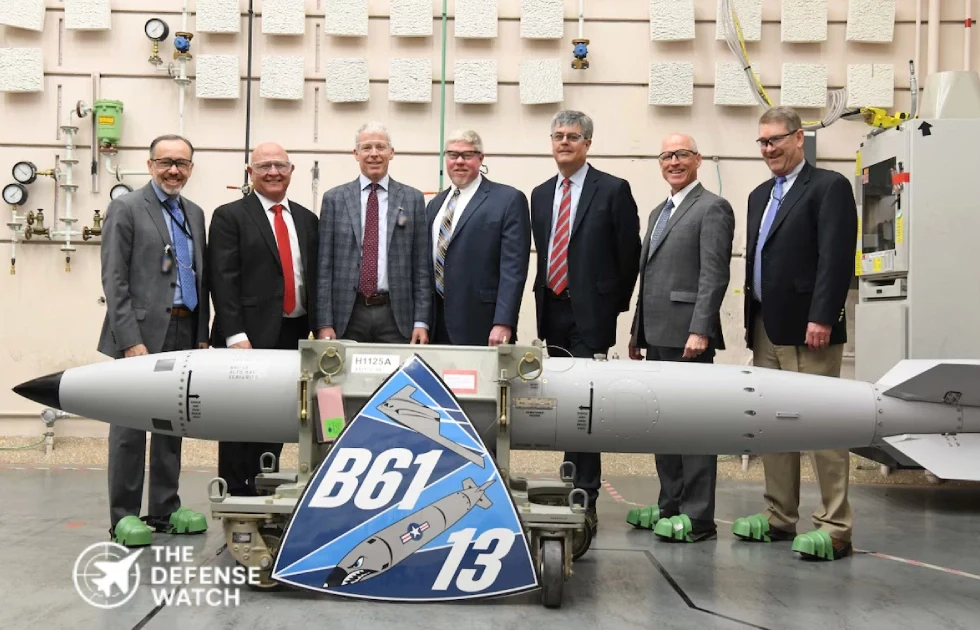
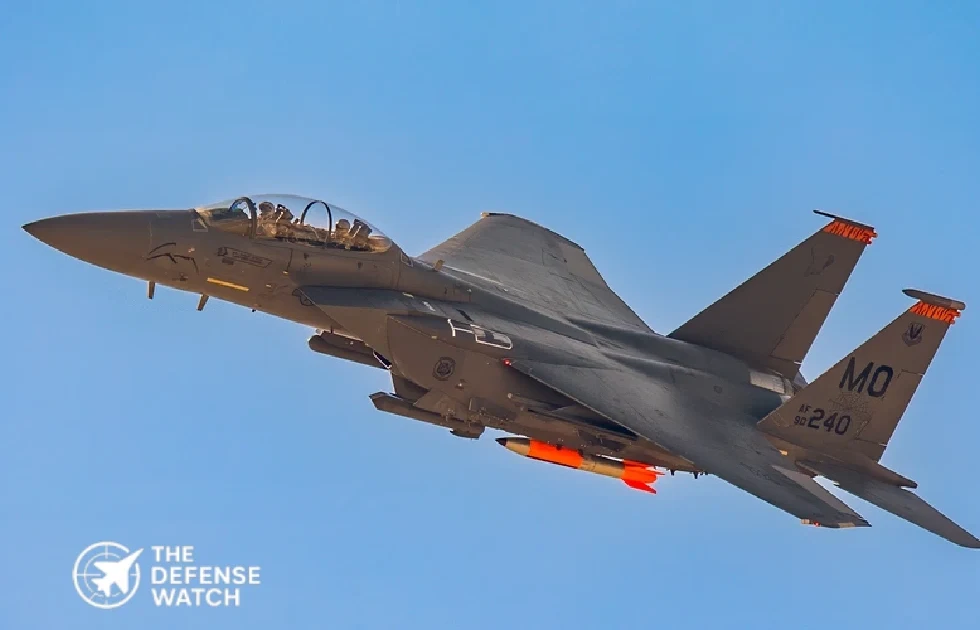
Defense Systems Full Specifications
1. General Information
| Name / Designation | B61 Nuclear Bomb |
| Type | Nuclear Gravity Bomb |
| Manufacturer | U.S. nuclear weapons enterprise, led by NNSA |
| Country of Origin | United States |
| Year Introduced | 1968 (operational service) |
| Operational Status | Active, modernized variants |
2. Physical Characteristics
| Weight | Approximately 700 lb (legacy versions) |
| Length | Approximately 12 feet |
| Diameter | Approximately 13 inches |
| Casing Type | Aerodynamic metal weapon casing |
3. Performance
| Yield | Varies by variant and configuration |
| Guidance | Free-fall on legacy versions, guided tail assembly on B61-12 |
| Accuracy (CEP) | Exact public figure unavailable |
| Delivery Platforms | Certified aircraft include F-15E, B-2A and F-35A |
| Penetration Capability | Ground-penetrating capability associated with B61-11 |
4. Warhead / Explosive Details
| Warhead Type | Thermonuclear |
| Fuzing Options | Configuration-dependent, detailed settings not publicly disclosed |
| Explosive Composition | Classified nuclear weapon design |
5. Operational Use
| Primary Mission | Nuclear deterrence |
| Operators | United States and NATO nuclear-sharing framework |
| Notable Deployments / History | Introduced during the Cold War in 1968 |
6. Variants
| Variants | B61-3, B61-4, B61-7, B61-10, B61-11, B61-12, B61-13 |
PROS
- Variable Yield: Different configurations provide varying nuclear yield options.
- Modernized Design: Life extension programs improve safety, security and reliability.
- Aircraft Compatibility: Supports integration with several U.S. and allied aircraft.
- Improved Accuracy: The B61-12 introduces a guided tail assembly.
- Strategic Deterrence: Supports U.S. extended deterrence and NATO defense commitments.
CONS
- Nuclear Risk: Its use would have catastrophic humanitarian and environmental consequences.
- Limited Delivery Method: Requires compatible aircraft for deployment.
- High Maintenance Costs: Nuclear certification, security and maintenance require substantial resources.
- Complex Integration: Aircraft require specialized nuclear certification.
- Classified Specifications: Several technical performance details are not publicly available.
B61 Nuclear Bomb: U.S. Nuclear Gravity Weapon
The B61 nuclear bomb is one of the longest-serving weapons in the U.S. nuclear arsenal. Developed during the Cold War, it is an air-delivered nuclear gravity bomb designed for strategic deterrence and NATO nuclear-sharing missions. Its variable-yield capability allows different explosive effects depending on the weapon configuration.
Unlike ballistic missiles and hypersonic weapons, the B61 does not have an independent propulsion system. It is released from a compatible aircraft and follows a gravity-based delivery trajectory. Its modern B61-12 version incorporates a guided tail assembly designed to improve delivery accuracy and provide greater flexibility in employment.
The B61 has undergone several modernization programs to maintain its reliability, safety and compatibility with newer aircraft. Its latest major modernization is the B61-12 Life Extension Program.
Manufacturer
The B61 originated from the U.S. nuclear weapons development program. Its design and nuclear components are managed by the National Nuclear Security Administration (NNSA), while Sandia National Laboratories supports non-nuclear engineering and weapon integration. The United States developed the weapon, with production and maintenance involving the U.S. nuclear security enterprise.
Speed and Range
The B61 has no published missile-style speed or independent operational range. Its delivery distance depends on the aircraft carrying it, its flight profile and mission conditions. The B61-12 uses a guided tail assembly rather than a self-propelled flight system.
Cost/Price
The B61 is not commercially available, and individual weapon prices are not publicly listed. Modernization costs are managed through U.S. government nuclear weapons programs. The B61-12 life extension program represents a multibillion-dollar investment in maintaining the U.S. nuclear deterrent.
Features
The B61 is a nuclear gravity bomb, not a hypersonic missile. Therefore, Mach 20–27 speed figures, missile-style range and composite heat-resistant vehicle descriptions do not apply.
Frequently Asked Questions
What is the B61 nuclear bomb?
The B61 is an American air-delivered thermonuclear gravity bomb developed for the U.S. nuclear deterrent. It has served in different configurations since the 1960s.
Who manufactures the B61 nuclear bomb?
The National Nuclear Security Administration manages the nuclear weapon program. Production and maintenance involve several U.S. national laboratories and nuclear security facilities.
Which aircraft can carry the B61 nuclear bomb?
Certified delivery aircraft include the F-15E Strike Eagle, B-2A Spirit and F-35A Lightning II. Compatibility depends on the weapon variant and aircraft certification.
What is the difference between the B61-12 and B61-13?
The B61-12 introduces a guided tail assembly and modernized safety features. The B61-13 retains the newer design features but provides a higher-yield option for certain hardened and large-area targets.
Is the B61 nuclear bomb still operational?
Yes. The B61 family remains part of the U.S. nuclear deterrent. The B61-12 and B61-13 are the currently fielded variants identified by the U.S. Air Force Nuclear Weapons Center.
B61 Nuclear Bomb Variants
| Variant | Description |
|---|---|
| B61-3 | Tactical nuclear gravity bomb |
| B61-4 | Lower-yield tactical variant |
| B61-7 | Strategic nuclear variant |
| B61-10 | Converted nuclear weapon variant |
| B61-11 | Earth-penetrating nuclear variant |
| B61-12 | Modernized variant with guided tail assembly |
| B61-13 | Higher-yield modernized variant for hardened and large-area targets |
Disclaimer Note
The information provided on TheDefenseWatch.com is for general informational purposes only. While we strive to ensure the accuracy, completeness, and timeliness of our content regarding defense and aerospace products, technologies, and specifications, we cannot guarantee that all information is 100% accurate or up-to-date due to the evolving nature of military technology and classified data.TheDefenseWatch.com does not warrant the reliability, suitability, or availability of the information for any specific purpose. Users are advised to consult official sources, such as manufacturers, government publications, or defense agencies, for precise and verified data before making decisions based on our content.We are not affiliated with any defense manufacturers, governments, or military organizations mentioned. Opinions, reviews, and ratings reflect expert analysis but are subjective and should not be considered endorsements. TheDefenseWatch.com is not responsible for any errors, omissions, or consequences arising from the use of this website’s content.External links are provided for convenience and do not imply endorsement. TheDefenseWatch.com reserves the right to update or modify content without prior notice. By using this website, you agree to our Privacy & Cookies Policy.
More Defense Systems from US Defense Prime Contractor

New Arrivals












Popular Comparisons
-
 J-10C vs JF-17 Thunder: Which Fighter Is More Capable?
View Comparison →
-
Tejas vs Gripen: Key Differences and Capabilities
View Comparison →
-
Tejas vs MiG-21 Bison: How India Replaced Its Iconic Supersonic Fighter
View Comparison →
-
F-35 vs F-16: Stealth, Sensors and Combat Roles
View Comparison →
-
Tejas Fighter Jet vs F-16 Fighting Falcon: Capability Compared
View Comparison →
-
Rafale Fighter Jet vs F-16 Fighting Falcon : Which Fighter Has the Edge?
View Comparison →
-
Su-57 Fighter Jet vs J-20 Fighter Jet: Stealth and Air Combat Compared
View Comparison →
-
Mirage 2000 vs Tejas Mk1A: Legacy Combat Power vs Indigenous Modernization
View Comparison →
-
Rafale Fighter Jet vs F-22 Raptor: Which Air Dominance Fighter Has the Edge?
View Comparison →
-
Tejas Fighter Jet vs. Rafale Fighter Jet: India’s Indigenous Fighter Meets France’s Proven Multirole Combat Aircraft
View Comparison →


- Remington 870 in Military Service: Mark 1 to MCS

- Boeing Receives $16.9 Million Contract Modification for Japan’s E-767 AWACS Support
- Lockheed Martin Wins $80 Million Air Force Mission Planning Software Contract
- Pakistan Tests Indigenous Fa’az Air-to-Air Missile for First Time
- Operation Unified Resolve Reports 70% Drop in Rio Grande Valley Border Crossings
- Iran Releases Footage of Underground Missile Tunnels Amid Rising US Military Tensions
- China Says HQ Missile Systems Intercepted Two New Missile Types in PLA Drill
- Phoenix Defense Ventures Wins $310.5 Million HH-60W Training Contract
- Rolls-Royce Showcases Naval Engines and Automation Systems at Euronaval 2026
- North Korea Tests Cruise Missile With Dispersal Warhead, KCNA Says





Fighter Jets
-
 F-100 Super Sabre
-
North American F-86 Sabre
-
Northrop YF-23 Fighter
-
Rafale F5 Fighter
-
SU-57 Felon Stealth Fighter
-
Boeing F/A-XX Fighter
-
JF-17 Thunder Fighter Jet
-
F-47 Fighter Jet
-
MIG-31 Fighter Jet
-
J-10CE Fighter Jet
-
Chengdu J-10 Fighter Jet
-
Chengdu J-10C Fighter Jet
-
Gripen E Fighter Jet
-
Tejas Mk1A Fighter Jet
-
Tejas Mk‑2 Fighter Jet
-
F-16V Viper Block 70 Fighter Jet
-
F-15EX Eagle II Fighter
-
F-15E Strike Eagle Fighter
-
F/A-18E/F Super Hornet Fighter Jet
-
Saab Gripen F Fighter Jet
-
JAS 39E/F Gripen Fighter Jet
-
JAS 39 Gripen Fighter Jet
-
F-35A Lightning II Fighter Jet
-
F/A-18F Super Hornet










Recent Compares
-
J-10C vs JF-17 Thunder: Which Fighter Is More Capable?
View Comparison →
-
Tejas vs Gripen: Key Differences and Capabilities
View Comparison →
-
Tejas vs MiG-21 Bison: How India Replaced Its Iconic Supersonic Fighter
View Comparison →
-
F-35 vs F-16: Stealth, Sensors and Combat Roles
View Comparison →
-
Tejas Fighter Jet vs F-16 Fighting Falcon: Capability Compared
View Comparison →
Latest Defense Systems
10 Compares Defense Systems
-
J-10C vs JF-17 Thunder: Which Fighter Is More Capable?
View Comparison →
-
Tejas vs Gripen: Key Differences and Capabilities
View Comparison →
-
Tejas vs MiG-21 Bison: How India Replaced Its Iconic Supersonic Fighter
View Comparison →
-
F-35 vs F-16: Stealth, Sensors and Combat Roles
View Comparison →
-
Tejas Fighter Jet vs F-16 Fighting Falcon: Capability Compared
View Comparison →
-
Rafale Fighter Jet vs F-16 Fighting Falcon : Which Fighter Has the Edge?
View Comparison →
-
Su-57 Fighter Jet vs J-20 Fighter Jet: Stealth and Air Combat Compared
View Comparison →
-
Mirage 2000 vs Tejas Mk1A: Legacy Combat Power vs Indigenous Modernization
View Comparison →
-
Rafale Fighter Jet vs F-22 Raptor: Which Air Dominance Fighter Has the Edge?
View Comparison →
-
Tejas Fighter Jet vs. Rafale Fighter Jet: India’s Indigenous Fighter Meets France’s Proven Multirole Combat Aircraft
View Comparison →
- Remington 870 in Military Service: Mark 1 to MCS
- Boeing Receives $16.9 Million Contract Modification for Japan’s E-767 AWACS Support
- Lockheed Martin Wins $80 Million Air Force Mission Planning Software Contract
- Pakistan Tests Indigenous Fa’az Air-to-Air Missile for First Time
- Operation Unified Resolve Reports 70% Drop in Rio Grande Valley Border Crossings