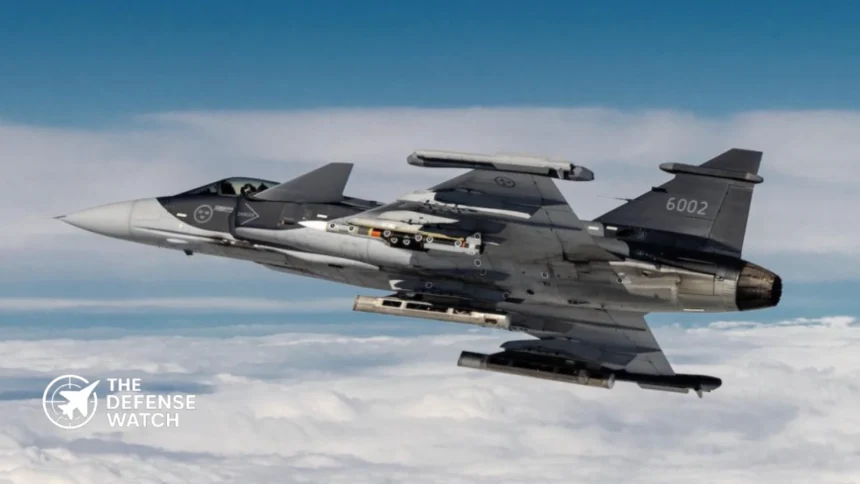
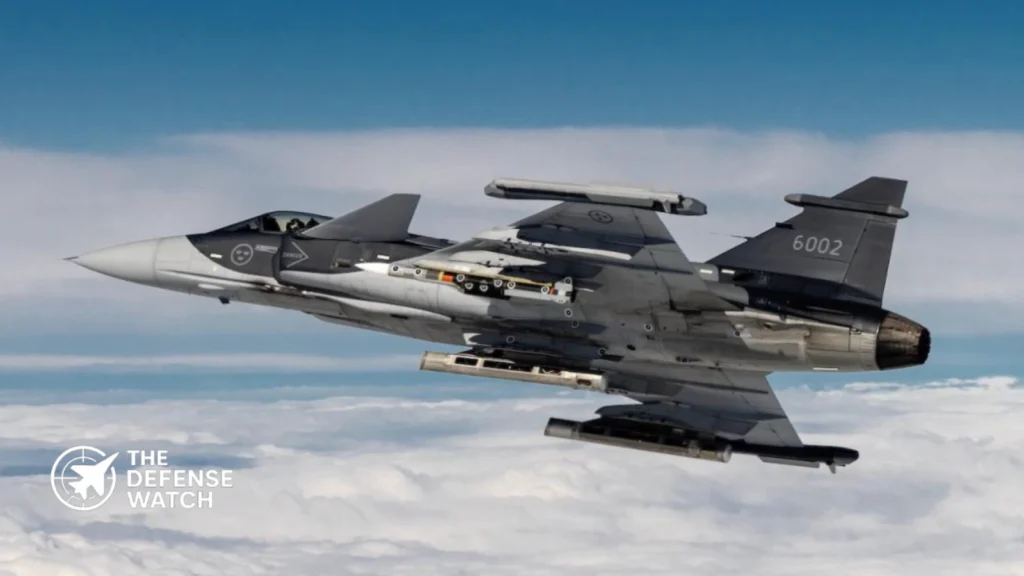
Ukraine is seeking to equip its future Saab JAS 39 Gripen fighter fleet with MBDA Meteor beyond-visual-range air-to-air missiles, giving its air force another potential means of threatening Russian aircraft that launch guided glide bombs from stand-off distances.
Sweden, Ukraine and the United Kingdom signed a Letter of Intent (LoI) in Brussels on November 17, 2026, establishing a framework for cooperation on weapons, ammunition, equipment and spare parts for the Ukrainian Gripen fleet.
The agreement was signed by Swedish Defence Minister Pål Jonson, UK Defence Secretary Wes Streeting and Ukrainian Defence Minister Evgeniy Khmara during the Ukraine Defence Contact Group meeting.
Ukraine’s Ministry of Defence identified Meteor as a priority weapon, particularly for engaging Russian aircraft carrying glide bombs. However, the agreement does not yet establish missile quantities, delivery dates or a confirmed operational deployment schedule.
A weapons package tied to the arrival of Gripen fighters
The November agreement addresses an important requirement in Ukraine’s planned fighter modernization: ensuring that aircraft arrive with the weapons, technical equipment and logistical support needed to operate them.
According to the Swedish government, the three countries intend to coordinate weapons procurement, delivery, training and integration. The arrangement also covers spare parts and continued support for the aircraft after their initial delivery.
The cooperation applies to Sweden’s donated Gripen C/D aircraft, the Gripen E/F fighters Ukraine is purchasing and potential future acquisitions.
Swedish Defence Minister Pål Jonson described the agreement as a foundation for keeping the aircraft operational over time and developing Ukraine into a long-term Gripen partner.
The arrangement builds on a series of earlier commitments between Stockholm and Kyiv.
On May 28, 2026, Sweden announced plans to facilitate the purchase of up to 20 Gripen E/F fighters while offering to donate 16 Gripen C/D aircraft from its existing fleet. Ukraine subsequently signed an agreement on June 30 to procure 16 Gripen E aircraft.
Under the announced schedule, the first 16 donated Gripen C/D fighters are expected in early 2027, while deliveries of the newly purchased Gripen E aircraft are scheduled to begin in early 2029. Regeringskansliet+1
Why Ukraine wants Meteor missiles

Gripen The Meteor is a European beyond-visual-range air-to-air missile developed by MBDA with participation from six partner nations: the United Kingdom, France, Germany, Italy, Spain and Sweden.
Unlike conventional air-to-air missiles that rely on a solid rocket motor for their powered flight, Meteor uses a solid-fuel, variable-flow ramjet propulsion system. This allows the missile to maintain propulsion during a larger portion of its flight toward the target.
The design is intended to preserve energy during the engagement and increase the target’s difficulty in escaping once the missile is launched.
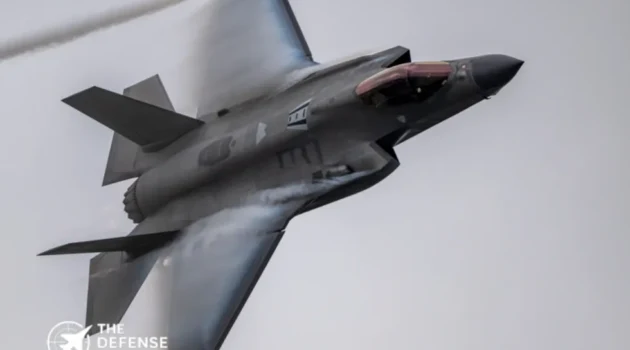
MBDA identifies the Gripen, Eurofighter Typhoon, Rafale and F-35 as compatible launch platforms. Its published specifications list a missile length of approximately 3.7 meters, a weight of 190 kilograms and a diameter of 178 millimeters.
Meteor uses active radar guidance and datalink-supported midcourse updates. These features allow the missile to receive updated target information during flight before its onboard seeker takes over during the terminal engagement.
For Ukraine, the intended operational advantage is the ability to threaten enemy aircraft without requiring Ukrainian fighters to approach as closely to Russian-controlled airspace.
The Su-34 problem behind Ukraine’s missile requirement

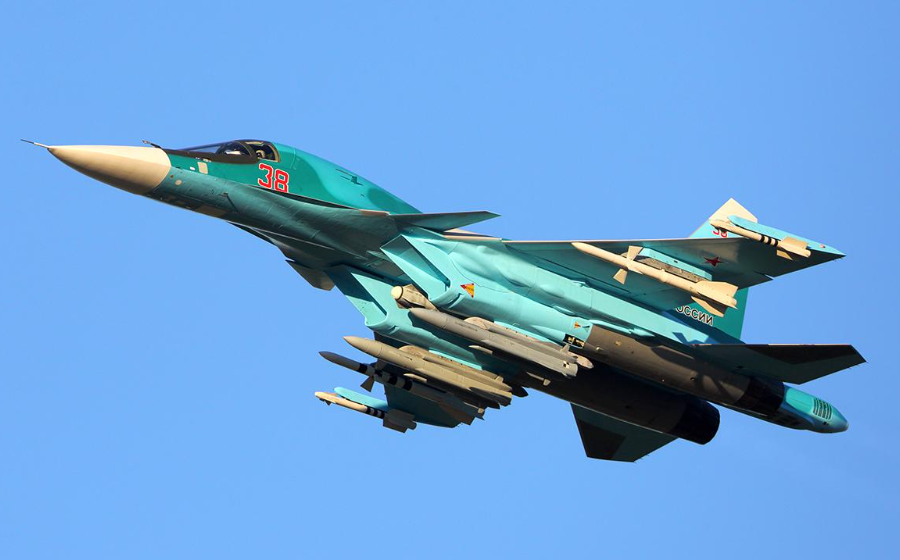
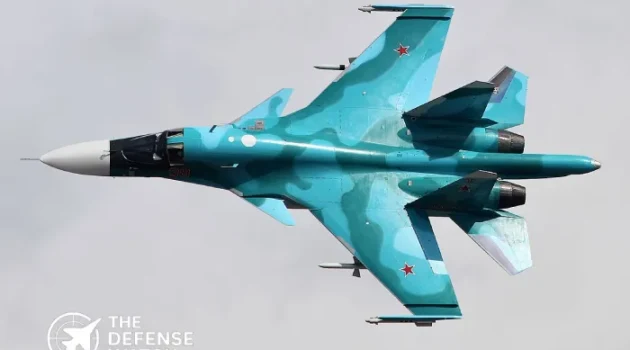
Su-34 Russia’s Su-34 Fullback fighter-bomber has become an important platform for attacks using FAB-series bombs equipped with UMPK glide and guidance kits.
These weapons allow Russian aircraft to release guided bombs from outside or near the edge of some Ukrainian ground-based air-defence engagement zones, depending on the weapon, release conditions and defensive system involved.
The stand-off employment of glide bombs creates a difficult problem for Ukraine. Ground-based air-defence systems can threaten aircraft, but their coverage, missile availability and engagement geometry do not guarantee protection across the entire frontline.
An air-launched weapon such as Meteor could give Ukrainian fighters another way to challenge the aircraft responsible for delivering these weapons.
The objective would be to increase the risk to Russian aircraft operating near the front and potentially force changes in their launch positions, flight routes or operating distances.
That possibility should not be confused with a guaranteed ability to eliminate Russia’s glide-bomb threat. Russian aircraft can operate with fighter escorts, electronic warfare support and other defensive measures. Ukrainian fighters would also face Russian long-range air-to-air weapons and integrated air-defence systems.
Meteor’s performance therefore needs to be considered within the wider air combat environment rather than as a standalone solution.
What Meteor could change in the air war
The potential value of Meteor lies in the engagement distance and energy it can provide compared with shorter-range weapons.
Ukraine currently operates Western-supplied F-16 and Mirage 2000 fighters alongside its remaining Soviet-designed aircraft. The introduction of Gripen fighters equipped with Meteor would add another air-combat capability rather than simply replace existing aircraft.
A Royal United Services Institute (RUSI) assessment published in 2026 identifies Russian Su-34 operations and the use of UMPK glide bombs as continuing challenges for Ukrainian frontline defence.
RUSI notes that Russian aircraft can release these weapons from positions that make interception difficult for existing Ukrainian fighter weapons. Meteor could potentially extend the distance at which Ukraine can threaten those aircraft.
However, the missile’s advertised performance does not translate automatically into an equivalent combat engagement range. Actual results depend on launch altitude, aircraft speed, target manoeuvres, radar detection, electronic warfare and the quality of available targeting information.
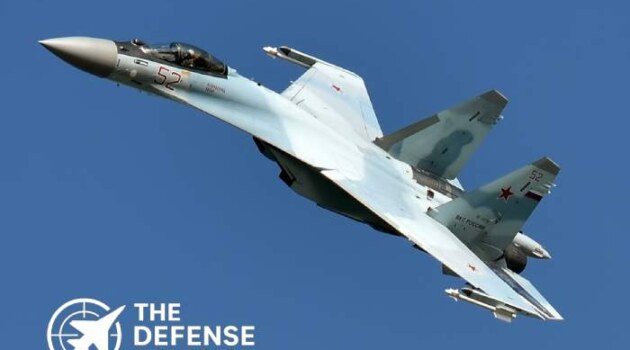
Russian Su-35 and Su-30 fighters, together with ground-based air-defence systems, would also complicate Ukrainian attempts to conduct long-range fighter interceptions.
The challenge extends beyond delivering missiles
The three-country arrangement addresses more than ammunition procurement.
Ukraine will need to establish the infrastructure and personnel required to maintain a new fighter fleet while operating other Western and Soviet-origin aircraft.
Important requirements include:
- Pilot conversion training and continued tactical training.
- Ground crews qualified to maintain Gripen aircraft and their weapons.
- Meteor missile storage, handling and maintenance arrangements.
- Spare parts and specialist technical equipment.
- Radar, mission-planning and weapon-system integration.
- Secure communications and operational coordination.
The distinction between aircraft delivery and operational readiness is particularly important.
Sweden’s Gripen design emphasizes dispersed operations and relatively limited ground-support requirements. Saab describes the C-series as capable of operating from short, prepared or unprepared road strips, with rapid refuelling and rearming procedures.
Those characteristics could be useful in Ukraine, where concentrating combat aircraft at a small number of conventional airbases would create additional vulnerability to Russian missile and drone attacks. Nevertheless, operating from dispersed locations still requires trained personnel, fuel, maintenance equipment and secure logistical arrangements.
There is also an important distinction between the two Gripen versions involved.
The donated Gripen C/D aircraft would provide Ukraine with an initial capability, while the purchased Gripen E aircraft would form a newer generation of the platform. Both versions are associated with Meteor integration, but their introduction will require appropriate aircraft configurations, software, weapons certification and national approvals.
What the November agreement does not establish
The November 17 Letter of Intent is a framework for cooperation, not evidence that a complete Meteor missile delivery contract has been concluded.
Neither the Swedish nor Ukrainian announcement disclosed:
- The number of Meteor missiles planned for Ukraine.
- A confirmed missile delivery schedule.
- The financial value of the weapons package.
- The precise division of procurement responsibilities between Sweden and the UK.
- A date for the first Ukrainian Gripen-Meteor operational deployment.
The Ukrainian Defence Ministry has identified Meteor as a priority, while the Swedish government confirms wider cooperation on weapons procurement, delivery, training and integration.
These are important commitments, but they should not be interpreted as confirmation that Ukrainian Gripen fighters are already equipped with the missile or ready for combat operations.
For now, the central objective is to ensure that Ukraine receives a complete and sustainable fighter capability, rather than aircraft deliveries without the weapons and support needed to use them effectively.
The success of the programme will depend on how quickly the partners can translate their political commitments into aircraft deliveries, missile supplies, training and long-term maintenance arrangements.

Enjoying our coverage?
Make The Defense Watch a preferred source on Google to see more of our geopolitical and defense insights when relevant to you.